35,000+ smart investors are already getting financial news, market signals, and macro shifts in the economy that could impact their money next with our FREE weekly newsletter. Get ahead of what the crowd finds out too late. Click Here to Subscribe for FREE.
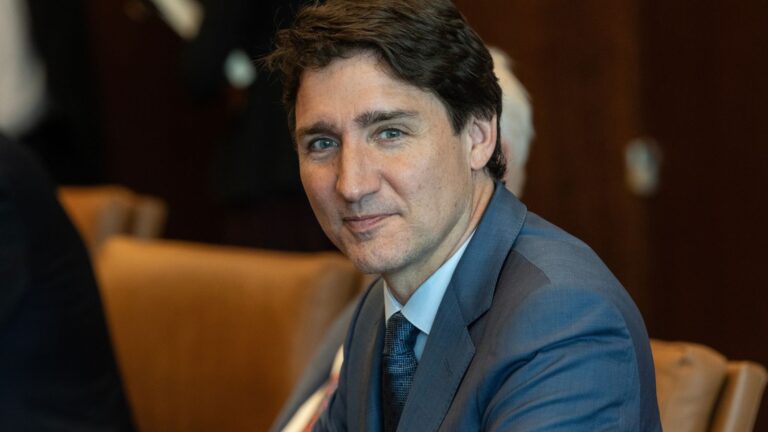
Former Canadian prime minister Justin Trudeau took his argument over U.S.-Canada trade directly to an American audience on September 22, telling a crowd at Brown University that the latest tariff confrontation is creating costs on both sides of the border. His central point was straightforward: taxing Canadian aluminum, lumber and other inputs does not necessarily stop Americans from buying them, but it can make those materials more expensive once they enter the U.S. economy.
The claim comes during a much broader escalation in bilateral trade tensions. Recent economic research supports the general principle that tariffs can flow through to U.S. prices, although tariffs are only one of several forces currently affecting inflation and individual product costs. The Trump administration, meanwhile, argues that higher trade barriers are needed to rebuild domestic industrial capacity and counter what it considers unfair foreign practices.
Trudeau Took the Trade Argument Straight to an American Audience
Trudeau Tells U.S. Audience Trump’s Canada Trade Fight Is Raising Prices for Americans
- Trudeau Took the Trade Argument Straight to an American Audience
- Aluminum Shows Why the Cost Question Is Complicated
- Lumber Connects the Trade Fight to America’s Housing Problem
- Recent Federal Reserve Research Finds Tariffs Are Reaching Consumers
- Washington Argues Higher Costs Come With Strategic Benefits
- The Scale of Canada-U.S. Trade Makes Tariffs Difficult to Contain
- Trudeau Is Commenting on a Dispute Now Being Run by Carney
Trudeau made the remarks during Brown University’s 106th Stephen A. Ogden Jr. Memorial Lecture on International Affairs in Providence, Rhode Island. The former prime minister, who led Canada from 2015 until 2025, argued that Washington’s current approach differs from the difficult but ultimately negotiated trade relationship he experienced during Donald Trump’s first presidency. Trudeau characterized the newer approach as more focused on producing a clear winner and loser rather than finding an arrangement in which both countries see advantages.
There was also some historical symmetry to the appearance. Trudeau last made a prominent trade pitch in Rhode Island in 2017, when he addressed U.S. governors while the future of the North American Free Trade Agreement was under pressure. This time, however, he spoke as a former leader rather than as Canada’s chief negotiator. His message was that the effects of tariffs do not remain neatly on the Canadian side of the border. Brown’s account highlighted his warning that the measures were “driving up prices for your consumers,” with aluminum and lumber serving as his primary examples.
Aluminum Shows Why the Cost Question Is Complicated
Aluminum provides one of the strongest examples because the United States remains heavily dependent on imported supply. The U.S. Geological Survey estimated that America’s net import reliance for aluminum equalled about 60% of apparent consumption in 2025. Looking at import sources from 2021 through 2024, Canada supplied approximately 56%, far more than any other individual country. That dependence means tariffs can affect manufacturers well beyond the companies actually bringing metal across the border, including packaging, transportation, construction and machinery producers.
The U.S. tariff regime for metals has also become substantial. Washington raised Section 232 tariffs on many steel and aluminum imports to 50% in 2025 and revised the structure again in April 2026, with rates on covered metal products ranging as high as 50%. Trudeau used beer cans as a relatable illustration of the downstream effect. The exact impact of tariffs on the retail price of a particular six-pack is difficult to isolate because energy, transportation, labour and global metal prices also matter. The broader cost mechanism, however, is well established: when imported aluminum becomes more expensive and domestic supply cannot immediately replace it, American manufacturers face higher input costs.
Lumber Connects the Trade Fight to America’s Housing Problem
Softwood lumber makes Trudeau’s argument especially relevant to housing. The National Association of Home Builders estimates that Canada supplies roughly 85% of U.S. softwood lumber imports and almost one-quarter of the total softwood lumber available in the American market. Domestic producers supply most U.S. demand, but imported lumber fills a significant gap. In 2024, NAHB calculated that imports met about 29% of U.S. softwood lumber consumption, with Canadian material alone accounting for approximately 24.7% of supply.
Canadian lumber also faces several layers of U.S. trade protection. Antidumping and countervailing duties vary by producer, while a separate 10% Section 232 tariff on certain timber and lumber products took effect in October 2025. Those charges do not translate dollar-for-dollar into the price of a finished home, but builders have argued that they add pressure to an already expensive construction market. NAHB reported framing lumber at about $516 per thousand board feet on September 18, 2026, roughly 8.4% higher than a year earlier. Its earlier builder survey estimated that recent tariff actions across building materials were adding a typical $10,900 per home, although that industry estimate covers more than Canadian lumber alone.
Recent Federal Reserve Research Finds Tariffs Are Reaching Consumers
Trudeau’s broader argument is supported by a growing body of U.S. economic research, though estimates of the size of the effect vary. A September 2026 Federal Reserve Bank of New York study examining the 2025 tariff increases estimated that about 26% of the tariff increase passed through into consumer prices. Researchers found that roughly two-thirds of the measured price effect came directly through more expensive foreign goods, while the remainder resulted from indirect effects such as costlier imported inputs and reduced competitive pressure on domestic producers.
Another Federal Reserve study released in August examined household transactions and found retail price pass-through estimates of roughly 15% to 20%, depending on how tariff exposure was measured. It also found a larger welfare burden on lower-income households and declines in purchases of affected discretionary goods. Historical evidence points in the same direction. The U.S. International Trade Commission concluded that American importers bore nearly the full cost of the earlier 2018-2021 Section 232 and Section 301 tariffs at the border. For aluminum specifically, those earlier measures increased U.S. aluminum prices by an estimated 1.6% while increasing domestic aluminum production by 3.6%.
Washington Argues Higher Costs Come With Strategic Benefits
The Trump administration presents the tariffs through a different lens. The White House says the steel and aluminum measures are intended to protect national security, discourage dependence on foreign production and create conditions for new American industrial investment. When the administration increased metals tariffs, it pointed to low domestic capacity utilization and global excess production as reasons for strengthening the Section 232 system. Its 2026 adjustments similarly described domestic steel, aluminum and copper production as strategically important industries that warrant trade protection.
Washington has separately used Section 338 of the Tariff Act of 1930 against certain Canadian products, arguing that Canadian policies involving automobiles, dairy and alcoholic beverages disadvantage U.S. commerce. Those findings are disputed by Canada, which has defended its policies and retaliatory measures. Importantly, higher prices and greater domestic production are not mutually exclusive outcomes. The USITC’s study of the earlier Section 232 tariffs found that protected U.S. steel and aluminum production increased, even as prices rose and output declined in some downstream industries that consume those metals. The disagreement is therefore partly about which costs and benefits policymakers consider most important, rather than whether tariffs have any economic cost at all.
The Scale of Canada-U.S. Trade Makes Tariffs Difficult to Contain
The reason the dispute can reach American consumers so quickly is the sheer size and integration of the bilateral relationship. The Office of the U.S. Trade Representative estimates that two-way U.S.-Canada trade in goods and services reached about $872.3 billion in 2025. Goods alone accounted for approximately $715.5 billion. Canada has consistently ranked among the United States’ two largest trading partners, and USTR describes the two economies as having deeply integrated supply chains in sectors including autos, energy and manufacturing.
That relationship remains enormous even after more than a year of trade disruption. U.S. Census Bureau figures show that from January through July 2026, the United States exported roughly $205.5 billion in goods to Canada while importing about $233.7 billion, producing more than $439 billion in two-way goods trade in just seven months. In a supply chain of that size, a tariff imposed at the border can move through wholesalers, factories and retailers before appearing in a finished product. The same interconnectedness also means Canadian retaliation can affect American exporters. Tariffs are therefore capable of redistributing costs between industries and countries rather than simply isolating economic damage on one side of the border.
Trudeau Is Commenting on a Dispute Now Being Run by Carney
Trudeau’s intervention carries political and historical weight, but he is no longer responsible for Canadian trade policy. Prime Minister Mark Carney’s government is handling the current confrontation. Carney suspended trade negotiations with Washington on August 21 after saying last-minute U.S. proposals were unacceptable. Canada subsequently introduced counter-tariffs effective September 8 covering $27.6 billion in U.S. imports, with rates of 15%, 25% and 50% depending on the product. Ottawa has said the measures are intended to match U.S. tariffs, while acknowledging that retaliation can itself raise costs for Canadian consumers.
The dispute is still evolving. On September 8, the White House announced that certain Canadian products involving motor vehicles, dairy and alcoholic beverages would move from 50% duties to import exclusions beginning September 29 unless policy changes intervene. Against that backdrop, Trudeau’s Brown appearance was less a new Canadian negotiating position than an argument from a former leader who spent years dealing with Trump-era trade policy. Recent economic evidence gives support to his central contention that tariffs can raise American prices, but it does not mean every recent price increase can be attributed to the Canada dispute. The continuing debate is over how those consumer and downstream costs compare with the administration’s goals of greater domestic capacity, bargaining leverage and reduced import dependence.
This Options Discord Chat is The Real Deal
While the internet is scoured with trading chat rooms, many of which even charge upwards of thousands of dollars to join, this smaller options trading discord chatroom is the real deal and actually providing valuable trade setups, education, and community without the noise and spam of the larger more expensive rooms. With a incredibly low-cost monthly fee, Options Trading Club (click here to see their reviews) requires an application to join ensuring that every member is dedicated and serious about taking their trading to the next level. If you are looking for a change in your trading strategies, then click here to apply for a membership.