35,000+ smart investors are already getting financial news, market signals, and macro shifts in the economy that could impact their money next with our FREE weekly newsletter. Get ahead of what the crowd finds out too late. Click Here to Subscribe for FREE.
Alberta’s separation debate is no longer confined to town halls, political rallies and arguments over Ottawa’s treatment of the province. Premier Danielle Smith says online campaigns promoting separatism appear to be receiving amplification from bot farms that may have links to Russia, adding a foreign-interference dimension to an already charged political fight. At the same time, researchers tracking the digital conversation say American political figures and influencers are also pushing narratives around Alberta independence, though often far more openly. The distinction matters. Evidence of outside amplification does not mean Alberta separatism was invented abroad, nor does it make legitimate grievances illegitimate. Instead, the emerging concern is that authentic political frustration is becoming useful material for foreign states, ideological networks and opportunistic online publishers as Alberta approaches a consequential October vote.
Smith’s Warning Raises the Stakes Without Claiming a Crime Has Been Proven
Smith Says Possible Russia-Linked Bot Farms Are Amplifying Alberta Separatism; Watchdog Points to U.S. Actors Too
- Smith’s Warning Raises the Stakes Without Claiming a Crime Has Been Proven
- The Watchdog’s Central Finding Is That Alberta’s Grievances Are Homegrown
- Researchers Say Russian-Aligned Networks Have Increased Their Alberta Focus
- The U.S. Role Is More Open — and in Some Ways Harder to Ignore
- A Past Russian Funding Case Shows Why Influence Networks Can Become Complicated
- AI-Generated “Canadian” Content Adds Another Layer of Confusion
- Alberta’s October 19 Vote Would Start a Process, Not Create a New Country
- Separatist Sentiment Is Significant, but Current Polling Still Shows a Majority for Canada
- Foreign Interference Is Not the Same Thing as Political Speech Canadians Dislike
- The Bigger Test for Alberta May Be Whether Voters Can Trust What They See
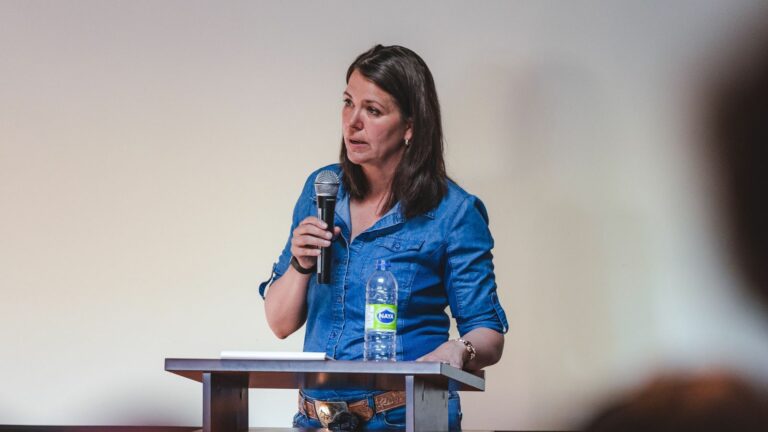
Smith drew attention to the issue after saying information supporting Alberta separation appeared to be amplified by bot farms that “may” have a connection to Russia. She said the information came from Cipher AI, a research organization that examines online influence activity. Importantly, the premier stopped well short of announcing that a criminal foreign-interference operation had been established. She said nothing she had seen had risen to the level of criminal involvement. Smith also said she receives national-security briefings from the Canadian Security Intelligence Service and RCMP, but her public attribution concerning possible bot farms was tied specifically to Cipher AI’s work.
That distinction is significant as political tensions increase ahead of Alberta’s October 19 vote. An automated account repeating separatist content can look suspicious without proving who controls it, who financed it or why it is operating. Bot networks can be run by governments, commercial operators, political activists or businesses chasing advertising revenue. Smith’s comments therefore put a spotlight on a potential vulnerability rather than closing the case. For Albertans encountering a flood of highly emotional posts, the more consequential question may be whether online popularity reflects genuine public momentum or artificial amplification layered on top of it.
The Watchdog’s Central Finding Is That Alberta’s Grievances Are Homegrown
Research cited in the debate contains an important qualification that can easily disappear beneath dramatic claims about foreign interference: Alberta separatism was not created by Russia, the United States or any other outside actor. A May report involving DisinfoWatch and Cipher AI describes longstanding grievances surrounding federal-provincial relations, energy regulation, market access and perceptions of unfair treatment as genuine political issues. Its central argument is that foreign actors are exploiting an existing fault line rather than manufacturing one from nothing.
That difference is essential for understanding the debate fairly. A person angry about pipelines, equalization or federal environmental policy does not become part of a foreign operation simply by supporting independence. The researchers instead examined how established grievances can be picked up, reframed and distributed through online networks seeking to deepen distrust. Their methodology used open-source information, natural-language processing, network analysis and machine-learning tools, with findings reviewed by human analysts. The report explicitly describes the process as structured interpretation rather than automatic attribution, an acknowledgment that identifying the true origin and intent behind internet activity remains difficult even with sophisticated analytical tools.
Researchers Say Russian-Aligned Networks Have Increased Their Alberta Focus
The clearest quantitative finding in the watchdog report involves the Pravda network, a collection of sites researchers associate with Russian information operations. From December 24, 2025, through April 25, 2026, the researchers counted 67 Canada-section stories referring to terms including “Alberta,” “Albertans” or the “51st state.” Ontario, despite having a substantially larger population, appeared only 14 times during the comparable analysis. The report says much of the Alberta-focused activity clustered around politically sensitive moments early in 2026.
Researchers identified recurring themes portraying separation as increasingly popular, depicting Alberta as economically exploited by Canada and suggesting that closer U.S. alignment could offer greater prosperity. The report also connects the broader ecosystem to Russian-linked information channels such as Sputnik and to campaigns researchers identify with the Storm-1516 influence operation. Those findings remain analytical assessments rather than proof that every pro-separation post originated in Russia. What they demonstrate more clearly is interest: Russian-aligned media infrastructure has found Alberta’s unity debate useful enough to devote disproportionate attention to it, particularly when distrust between western Canada and Ottawa is already high.
The U.S. Role Is More Open — and in Some Ways Harder to Ignore
The American dimension looks different. Rather than relying primarily on disguised media networks, U.S. involvement has included public commentary from prominent political influencers and confirmed meetings between Alberta separatist activists and American officials. Reuters reported that representatives connected to the Alberta Prosperity Project met U.S. State Department staff in Washington in January. A U.S. official characterized such contacts as routine engagement with civil-society groups and said no support or commitments were provided. The State Department also said the discussions occurred at staff level rather than with senior principals.
Meanwhile, the watchdog report highlights high-profile U.S. commentators who have discussed Alberta independence, Canadian political conflict or the possibility of closer Alberta-U.S. ties. That does not make American commentary equivalent to covert Russian interference. Americans are free to express political opinions about Canada, just as Canadians regularly comment on U.S. politics. Researchers instead describe the American influence as overt and increasingly consequential because large audiences can propel a fringe or minority political idea into millions of social-media feeds. The result can still affect how Albertans perceive the scale, legitimacy and inevitability of a movement even when the source is plainly visible.
A Past Russian Funding Case Shows Why Influence Networks Can Become Complicated
One reason researchers are cautious about drawing a clean line between Russian and American information ecosystems is the 2024 U.S. prosecution involving employees of RT, the Russian state-controlled broadcaster. The U.S. Justice Department alleged that two RT employees secretly directed nearly US$10 million to a Tennessee-based online content company. Prosecutors said the company produced close to 2,000 videos that collectively attracted more than 16 million YouTube views. The company was widely identified in reporting as Tenet Media.
The Alberta-focused watchdog report points to that episode because personalities associated with Tenet’s content ecosystem later discussed Alberta and Canadian political issues. That history does not establish that their Alberta commentary was ordered or financed by Russia, and it would be misleading to imply otherwise. The Justice Department case instead illustrates how influence networks can overlap: Russian money can enter an American media operation whose creators already have their own audiences, politics and incentives. Some creators associated with Tenet said they had been deceived about the funding source. For Canadian researchers, the episode is a warning against assuming that online influence always travels through a simple chain from a foreign government directly to a recognizable propaganda account.
AI-Generated “Canadian” Content Adds Another Layer of Confusion
Not every questionable account discussing western alienation appears to be part of a state operation. Researchers have also documented what they describe as “AI slopaganda”: inexpensive, high-volume content built with generative artificial intelligence, recycled templates, synthetic scripts and paid narration. Networks can package videos to resemble Canadian political commentary even when the creators have little connection to Canada. Investigators examining some channels found voice talent outside the country, including in the United States, while separate reporting traced other operations to people in the Netherlands.
The motivation can be financial rather than geopolitical. Outrage about Ottawa, provincial separation or alleged government conspiracies can produce engagement, and engagement can generate advertising revenue. Small factual mistakes provide clues: mispronounced Canadian place names, unfamiliarity with political institutions or recycled scripts that substitute one province for another. Yet such material can still shape a real political conversation once genuine users share it. This is why researchers warn that foreign manipulation, commercial click farming and authentic activism should not automatically be treated as the same thing. They can nevertheless become intertwined when recommendation algorithms reward whichever version of a grievance receives the strongest reaction.
Alberta’s October 19 Vote Would Start a Process, Not Create a New Country
The political backdrop is unusually consequential. Elections Alberta says voters will face 10 questions on October 19, 2026, including a choice on whether Alberta should remain a province of Canada or whether the provincial government should begin the legal process required to hold a binding referendum on separation. The separation question will be presented first on the ballot despite being formally designated Question 10. Alberta officials are preparing for a formidable counting operation: Elections Alberta says approximately 45 million individual ballot papers are being printed and at least 60,000 workers will be needed to complete the unofficial count within 48 hours.
A vote to begin the process would not make Alberta independent on October 20. Canadian constitutional law sets a much higher threshold for actual secession. The federal Clarity Act requires a clear question and a clear majority before negotiations would be triggered, while the Supreme Court framework says a province cannot leave Canada unilaterally. Any eventual negotiations would have to confront matters including borders, public assets and liabilities, minority rights and Indigenous rights and claims. The October ballot is therefore politically important, but portraying it online as an automatic independence vote would misstate what Albertans are actually being asked to decide.
Separatist Sentiment Is Significant, but Current Polling Still Shows a Majority for Canada
Outside amplification is receiving attention partly because Alberta already has a substantial constituency willing to consider separation. An Angus Reid Institute poll conducted August 10–13 found 61% of Alberta respondents preferred remaining in Canada under the October ballot wording, while 33% supported beginning the legal process toward a future binding separation referendum. When respondents were instead given a simpler stay-or-leave choice, 65% chose Canada and 30% chose independence. That gap illustrates how wording and the perceived consequences of a vote can matter.
The same research also revealed that support for the separatist option is not always synonymous with a final desire to leave Canada. Among respondents inclined toward the “leave” side, 41% described their vote primarily as a way to send Ottawa a message rather than as an expression of a firm desire for independence. That makes Alberta’s digital environment particularly susceptible to exaggeration. A viral post can present every protest vote as proof of an unstoppable independence movement even when some participants view the referendum as leverage. At the same time, dismissing roughly three in 10 Albertans as merely manipulated would ignore a real and politically meaningful level of dissatisfaction.
Foreign Interference Is Not the Same Thing as Political Speech Canadians Dislike
Canada’s security agencies draw an important boundary between foreign interference and ordinary political advocacy. CSIS defines foreign interference around clandestine, deceptive or threatening activity conducted by foreign states or their proxies. Lawful advocacy, protest and dissent are specifically outside the agency’s investigative mandate. That means neither support for Alberta independence nor sharing criticism of the federal government is, by itself, evidence of foreign interference. Provincial and municipal politics can nevertheless become targets when foreign actors see opportunities to deepen existing social divisions.
That legal and analytical distinction protects both national security and democratic debate. Overusing the “foreign interference” label can itself become damaging if Canadians begin assuming that political opponents are bots, traitors or foreign agents merely because their views are unpopular. The stronger standard is evidence about coordination, deceptive identities, financing, technical infrastructure and links to foreign state actors. CSIS has separately warned that Russian state-linked actors use proxy networks, social media and increasingly artificial intelligence to exploit contentious issues. Those capabilities justify scrutiny, but they also make careful attribution more important. A democratic response loses credibility if suspicion is allowed to substitute for proof.
The Bigger Test for Alberta May Be Whether Voters Can Trust What They See
Researchers examining Canada’s information environment say perceptions of foreign influence have already shifted sharply. In one set of rolling national data included in the DisinfoWatch report, concern about U.S. interference rose from 39% in July 2024 to 62% by April 2026, after reaching 71% earlier in the year. Concern about Russia stood at 42% in April 2026, down from 52% in the earlier period. The figures suggest that Canadians increasingly view foreign political pressure as coming from more than one direction, even though the methods and motives can differ substantially.
Canada has been strengthening its institutional response. Global Affairs Canada’s Rapid Response Mechanism monitors foreign information threats affecting democratic institutions and national sovereignty, while the federal Foreign Influence Transparency Registry came into force on August 4, 2026. The Alberta-focused researchers also recommend faster public attribution when evidence is strong, greater coordination between governments, support for independent researchers, media literacy and clearer communication about referendum rules. Those safeguards cannot settle Alberta’s constitutional argument. Their purpose is narrower but critical: ensuring that whatever Albertans decide is based as much as possible on authentic political choices rather than manufactured impressions of who is speaking, how numerous they are or whose interests they actually represent.
This Options Discord Chat is The Real Deal
While the internet is scoured with trading chat rooms, many of which even charge upwards of thousands of dollars to join, this smaller options trading discord chatroom is the real deal and actually providing valuable trade setups, education, and community without the noise and spam of the larger more expensive rooms. With a incredibly low-cost monthly fee, Options Trading Club (click here to see their reviews) requires an application to join ensuring that every member is dedicated and serious about taking their trading to the next level. If you are looking for a change in your trading strategies, then click here to apply for a membership.