35,000+ smart investors are already getting financial news, market signals, and macro shifts in the economy that could impact their money next with our FREE weekly newsletter. Get ahead of what the crowd finds out too late. Click Here to Subscribe for FREE.
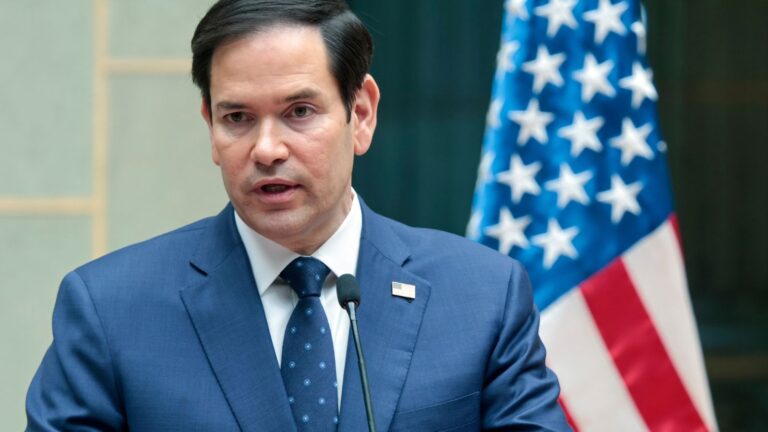
The United States is stepping back from another round of military strikes against Iran, but Washington is making clear that the economic campaign against Tehran is far from over. At a G7 foreign ministers’ meeting in Paris on November 10, Secretary of State Marco Rubio told allies, including Canada, that the Trump administration intends to maintain severe economic pressure rather than accept Iranian demands it considers unacceptable.
The message comes as President Donald Trump faces growing pressure to find a diplomatic solution to the conflict. With a U.S. naval blockade continuing in the Strait of Hormuz and Canada announcing additional sanctions against Iranian entities, the confrontation is entering a delicate phase in which financial restrictions, international diplomacy and regional security remain closely connected.
A Stark Warning Delivered Behind Closed Doors in Paris
Rubio Tells Canada’s G7 Partners Trump Will Keep Economic Pressure on Iran Despite Pause in New Strikes
- A Stark Warning Delivered Behind Closed Doors in Paris
- Trump Puts New Strikes on Hold After Appeals From Regional Allies
- Washington Is Using Sanctions as Its Main Economic Weapon
- U.S. Sanctions Have Already Reached Eight Canadian Financial Businesses
- Canada Announces New Sanctions Against 11 Iranian Entities
- The Strait of Hormuz Remains Central to the Economic Confrontation
- Qatar’s Diplomatic Intervention Creates a Possible Path Toward Peace
- European G7 Allies Push for Negotiations Without Abandoning Sanctions
- Trump’s Advisers Face Different Pressures Over the Iran Strategy
- The Next Major Test Will Be Whether Economic Pressure Produces an Agreement
Rubio’s message to G7 foreign ministers was significant because it offered a strategy that did not depend on immediately resuming large-scale military attacks. According to four diplomats who spoke to Reuters, the secretary of state argued that Washington had alternatives to both renewed warfare and accepting Iranian demands considered unacceptable. He maintained that existing economic restrictions were weakening Tehran’s ability to finance regional operations and allied armed groups. The diplomats, who requested anonymity, described unusually forceful language from Rubio, reflecting the administration’s determination to maintain pressure.
Rubio subsequently reinforced that position publicly after two days of G7 discussions. He said American sanctions and the naval blockade were inflicting mounting economic damage, making another major military operation unnecessary for the moment. The comments came during meetings involving Canada’s Foreign Affairs Minister Anita Anand and representatives of the world’s other major industrialized democracies. For those governments, the central question extends beyond Washington’s immediate military plans. They must assess whether economic restrictions can achieve meaningful diplomatic concessions without prolonging instability throughout the Middle East.
Trump Puts New Strikes on Hold After Appeals From Regional Allies
President Trump announced on November 9 that he would hold off on additional major strikes against Iran after receiving appeals from several Middle Eastern governments. Qatar played a particularly important role, with Prime Minister Sheikh Mohammed bin Abdulrahman Al-Thani meeting the American president in Washington. Trump also identified Saudi Arabia, the United Arab Emirates, Bahrain and Kuwait among countries that preferred avoiding another escalation. Their concerns reflect the difficult position facing Gulf governments, which must balance regional security, economic stability and the possibility of further attacks.
However, Trump’s decision should not be mistaken for a formal ceasefire or the end of American military operations. Speaking after his meeting with Qatar’s prime minister, he suggested that the war was effectively over from a military perspective but emphasized that American forces remained prepared to act. Thousands of U.S. troops were still deployed in the region, and the naval blockade remained in place. The Associated Press also reported recent limited American strikes and an operation against a commercial vessel accused of attempting to breach the blockade. The immediate danger of a major escalation may have eased, but military confrontation has not disappeared.
Washington Is Using Sanctions as Its Main Economic Weapon
The administration’s economic strategy has developed into a coordinated campaign targeting Iran’s ability to generate revenue and move money internationally. On August 24, the U.S. Treasury Department launched Operation Economic Outcast, an initiative aimed at financial institutions, shipping networks, digital assets and businesses accused of helping Tehran evade sanctions. The operation expanded restrictions affecting foreign entities that continue certain dealings with Iran. Rather than focusing exclusively on Iranian companies, Washington is pursuing the international intermediaries that help facilitate transactions across borders.
Recent enforcement actions demonstrate how far that approach extends. On November 4, Treasury targeted a maritime network accused of supplying fraudulent vessel registrations and documentation to ships transporting Iranian petroleum. The administration believes disrupting these arrangements can restrict Iran’s energy revenue and reduce the resources available for its military and regional partners. Rubio has argued that the resulting economic damage is becoming more severe. Nevertheless, Washington’s assessment remains a policy claim rather than proof that sanctions alone will force an agreement. Iran has operated under extensive restrictions for years, and economic hardship does not automatically translate into political concessions.
U.S. Sanctions Have Already Reached Eight Canadian Financial Businesses
The expanding American campaign has direct implications for businesses operating in Canada. On November 6, the U.S. Treasury Department sanctioned eight Canadian money services businesses, alleging they facilitated financial transactions involving sanctioned Iranian entities and networks. The targeted companies operate in Ontario and British Columbia, with Treasury identifying businesses such as Million Exchange, Amin Exchange and Darvish Exchange. American officials alleged that some of these operations used cryptocurrency transactions to move funds across international borders, including through digital wallets associated with sanctioned organizations.
The measures were coordinated with FINTRAC, Canada’s financial intelligence agency, which confirmed its participation in the American enforcement initiative. U.S. sanctions generally block designated companies’ property under American jurisdiction and prohibit most transactions involving U.S. persons. FINTRAC separately reported that it had revoked the registrations of 161 money services businesses since the beginning of 2026, highlighting broader enforcement concerns in the financial sector. The American action targets specific businesses rather than the entire Canadian remittance industry. Nevertheless, it demonstrates how Washington’s campaign against Tehran can reach companies operating thousands of kilometres from the Middle East.
Canada Announces New Sanctions Against 11 Iranian Entities
Canada moved to strengthen its own restrictions against Iran on November 10, with Foreign Affairs Minister Anita Anand announcing the reimposition of sanctions against 11 Iranian entities during the G7 gathering in Paris. The measures target organizations that Ottawa says have contributed to proliferation-sensitive nuclear activities, ballistic missile development or related financing. Among those affected are the National Iranian Oil Company, National Iranian Tanker Company, Bank Melli Iran and Bank Mellat. The restrictions prohibit specified financial and property transactions involving listed organizations for people in Canada and Canadians abroad.
The announcement also represents a reversal of sanctions relief granted a decade earlier. Canada had removed these entities from its sanctions list in 2016, after the 2015 nuclear agreement introduced restrictions and international verification measures for Iran’s nuclear program. Ottawa now argues that Iran’s subsequent failure to cooperate fully with the International Atomic Energy Agency justifies restoring the penalties. Anand emphasized Canada’s objective of preventing Iran from acquiring nuclear weapons while supporting a comprehensive, verifiable agreement. The timing places Canada firmly alongside G7 partners seeking to maintain financial pressure while leaving room for negotiations over Tehran’s nuclear activities.
The Strait of Hormuz Remains Central to the Economic Confrontation
Although Trump has delayed another major bombing campaign, the American naval blockade targeting Iran remains a critical source of pressure. The Strait of Hormuz is one of the world’s most important energy corridors, connecting oil and gas producers in the Persian Gulf with international markets. According to the International Energy Agency, approximately 20 million barrels of oil and petroleum products passed through the waterway daily in 2025, representing roughly one-quarter of global seaborne oil trade. Disruptions therefore have consequences extending far beyond Iran and its immediate neighbours.
The effects of the conflict are already visible in international energy statistics. U.S. Energy Information Administration data showed oil flows through Hormuz falling from approximately 21.6 million barrels per day in the final quarter of 2025 to 4.9 million barrels per day in the second quarter of 2026. These figures illustrate the scale of earlier disruption rather than current daily shipments. For Canada, instability in the Gulf matters because international oil prices influence gasoline, diesel, transportation and other business costs. G7 foreign ministers have previously called for safe, toll-free navigation through Hormuz, underscoring the tension between applying economic pressure and protecting global commerce.
Qatar’s Diplomatic Intervention Creates a Possible Path Toward Peace
Qatar has emerged as an important intermediary between Washington and Tehran, attempting to prevent another escalation while encouraging negotiations. After meeting Trump in Washington, Qatari Prime Minister Sheikh Mohammed bin Abdulrahman Al-Thani made an unscheduled appearance at the G7 gathering in Paris. He met European foreign ministers and Saudi Arabia’s representative to discuss the conflict’s security and economic consequences. According to Reuters, two European diplomats said the Qatari leader expressed cautious optimism that a negotiated settlement remained possible despite the considerable differences separating the two sides.
Qatar’s involvement extends beyond high-level meetings. Its foreign ministry confirmed that officials have been exchanging proposals with Iran and the United States, including discussions in Tehran. Iranian officials have also said they submitted a nuclear proposal through Qatar. However, Tehran continues to demand sanctions relief and an end to the American blockade before entering substantive negotiations, while Washington wants nuclear issues addressed from the outset. The disagreement illustrates why diplomatic progress remains difficult. Both governments have reasons to avoid another destructive confrontation, but neither has publicly accepted the other’s conditions for ending the crisis.
European G7 Allies Push for Negotiations Without Abandoning Sanctions
European governments are increasingly emphasizing diplomacy as the preferred way to resolve the confrontation. German Foreign Minister Johann Wadephul said on November 9 that he saw no military solution to the conflict and supported continuing indirect negotiations between Washington and Tehran. Germany has urged both sides to pursue concrete discussions rather than another military escalation. At the same time, Wadephul made clear that sanctions would remain necessary until Iran demonstrated meaningful willingness to address concerns involving nuclear weapons, regional security and freedom of navigation through the Strait of Hormuz.
This position reflects the complicated balance facing Canada’s European partners. They want to prevent Iran from developing nuclear weapons and restrict activities they consider destabilizing, but they also recognize the economic consequences of prolonged conflict. Germany is planning another diplomatic gathering in early December involving France, Italy, Britain and regional partners, including Türkiye, Egypt, Saudi Arabia and Pakistan. The broader objective is to establish conditions for a sustainable agreement while protecting international commerce. For Canada, these efforts reinforce the importance of coordinating diplomatic and economic measures rather than relying entirely on Washington’s military decisions.
Trump’s Advisers Face Different Pressures Over the Iran Strategy
The debate over Iran also reflects differing approaches within Trump’s administration. According to a diplomat cited by Reuters, Rubio, Treasury Secretary Scott Bessent and newly appointed White House Chief of Staff Stephen Miller support maintaining intense economic pressure. Vice President JD Vance reportedly favours reaching an agreement, while Trump currently believes an acceptable deal remains difficult to secure. These accounts describe the administration’s internal thinking rather than a formally announced policy disagreement, but they suggest that officials are weighing different methods of ending the confrontation.
Domestic political developments have added urgency to those calculations. Republicans lost control of both chambers of Congress in the November 3 midterm elections, with the Iran war becoming an important source of public frustration. Vance openly blamed the conflict for the party’s defeat, arguing that voters wanted the government to concentrate on ending the war and addressing economic concerns. Trump acknowledged that the conflict contributed to Republican losses but continued defending his decision to launch military operations. Rubio, meanwhile, told G7 partners that the election results would not fundamentally change the president’s foreign policy. The administration therefore faces pressure to demonstrate progress without appearing to abandon its objectives.
The Next Major Test Will Be Whether Economic Pressure Produces an Agreement
The immediate challenge is determining whether sanctions and the naval blockade can create enough leverage for a negotiated settlement. Iran wants restrictions on its economy lifted, access to frozen assets restored and military hostilities ended. Washington insists that any acceptable arrangement must address Iran’s nuclear activities and prevent the development of nuclear weapons. Canada and its G7 partners have also emphasized the importance of international inspections, regional stability and safe maritime navigation. These competing demands leave significant questions about the order in which concessions would be made.
Several developments could indicate whether negotiations are becoming more productive. A mutually accepted framework for lifting restrictions, expanded international nuclear verification, or an agreement restoring dependable commercial shipping through Hormuz would represent tangible progress. Without such steps, the current pause could become an extended period of economic confrontation rather than a durable peace. For Canadian policymakers, businesses and households, the consequences extend beyond diplomacy. Energy costs, financial compliance requirements and international supply chains remain exposed to decisions made in Washington and Tehran. Rubio’s message in Paris suggests the administration is prepared to maintain pressure, but whether that strategy delivers a settlement remains unresolved.
This Options Discord Chat is The Real Deal
While the internet is scoured with trading chat rooms, many of which even charge upwards of thousands of dollars to join, this smaller options trading discord chatroom is the real deal and actually providing valuable trade setups, education, and community without the noise and spam of the larger more expensive rooms. With a incredibly low-cost monthly fee, Options Trading Club (click here to see their reviews) requires an application to join ensuring that every member is dedicated and serious about taking their trading to the next level. If you are looking for a change in your trading strategies, then click here to apply for a membership.