35,000+ smart investors are already getting financial news, market signals, and macro shifts in the economy that could impact their money next with our FREE weekly newsletter. Get ahead of what the crowd finds out too late. Click Here to Subscribe for FREE.
Canada’s trade confrontation with the United States is entering another consequential phase, with Ottawa preparing to spell out both its retaliatory tariffs and additional support for workers and businesses caught in the crossfire. Finance Minister François-Philippe Champagne and several senior ministers are scheduled to announce the measures Tuesday as the federal government moves toward dollar-for-dollar counter-tariffs taking effect September 8.
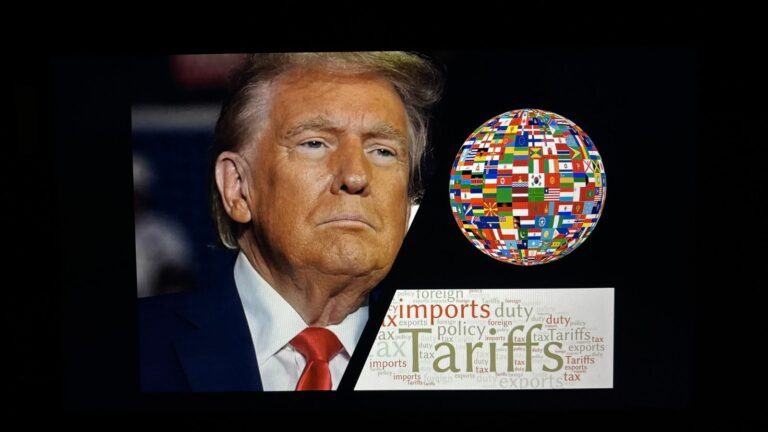
The announcement comes only days after Canada-U.S. negotiations collapsed and President Donald Trump escalated the dispute further by threatening 50% tariffs on Canadian cars, trucks and automotive parts beginning in 2027. For manufacturers, exporters and workers, the fight is increasingly moving beyond diplomatic warnings. Governments are now preparing for a potentially longer economic confrontation in which jobs, investment decisions and deeply integrated supply chains are directly exposed.
Ottawa Is Moving From Warnings to Counter-Tariffs
Ottawa Will Detail Retaliatory Tariffs and New Worker Supports as Trump Trade War Deepens
- Ottawa Is Moving From Warnings to Counter-Tariffs
- The Latest Breakdown Came After a Deal Appeared Within Reach
- Trump’s New Auto Threat Raises the Stakes Dramatically
- Worker Supports Are Becoming a Second Line of Defence
- Keeping Viable Companies Alive May Be Just as Important as Protecting Paycheques
- Provinces Are Being Pulled Deeper Into the Trade Response
- The Economic Risk Is Bigger Than the Products on a Tariff List
- September 8 Is Now the Next Major Deadline
The federal government has already established the broad shape of its response. Champagne told provincial and territorial finance ministers that Canada will introduce dollar-for-dollar counter-tariffs beginning September 8, matching the latest U.S. trade measures rather than absorbing them without retaliation. Ottawa has also asked provincial governments for input on which American products should be implicated. The detailed product list is expected to provide the clearest indication yet of how strategically Canada intends to target its response.
That distinction matters because retaliatory tariffs can serve several purposes at once. They can impose costs on American exporters, create political pressure in regions that depend on Canadian customers and demonstrate that escalating tariffs will produce consequences on both sides of the border. At the same time, they can increase costs for Canadian companies that rely on U.S. inputs. Ottawa therefore faces a difficult balancing act: responding forcefully enough to establish leverage while avoiding unnecessary damage to Canadian manufacturers and consumers already adjusting to more than a year of trade disruptions.
The Latest Breakdown Came After a Deal Appeared Within Reach
The confrontation intensified after Canada and the United States failed to complete a trade agreement that would have eased some of the most damaging tariffs already affecting key industries. According to Reuters, the proposed arrangement would have lowered the headline U.S. tariff on Canadian cars and light-duty trucks from 25% to 15%, while cutting tariffs on Canadian steel and aluminum from 50% to 25%. Negotiations ultimately collapsed amid several unresolved issues, including how tariff relief would apply to medium- and heavy-duty trucks.
The immediate consequence was severe. Washington imposed 50% tariffs on roughly $20 billion worth of Canadian goods, broadening a trade conflict that had already touched steel, aluminum, automobiles and lumber. Canadian officials suspended negotiations and committed to retaliation. The significance is not simply that another agreement failed. Businesses had been making decisions around the possibility that tariff pressure would ease. A breakdown after talks had progressed can be especially disruptive because companies must suddenly reconsider production plans, contracts, inventory and investment under a much harsher trade environment.
Trump’s New Auto Threat Raises the Stakes Dramatically
The automotive industry has quickly become the most dangerous front in the dispute. Trump said Monday that U.S. tariffs on Canadian cars, trucks and automotive parts could rise to 50% beginning January 1, 2027. The threat comes on top of existing automotive tariffs and would strike an industry whose production system was built around parts, components and finished vehicles crossing the Canada-U.S. border repeatedly before a vehicle reaches a dealership.
Canada has unusually concentrated exposure. The federal government says more than 90% of Canadian-made vehicles and about 60% of Canadian-made auto parts are exported to the United States, while the domestic automotive manufacturing industry supports roughly 125,000 direct jobs. Statistics Canada has similarly found that more than 93% of Canadian motor-vehicle exports went to the U.S. in 2025. That means even companies with healthy order books can face disruption if tariffs make Canadian production uneconomic for American customers. Communities in southern Ontario, where assembly and parts plants anchor local economies, have particularly high stakes in what happens next.
Worker Supports Are Becoming a Second Line of Defence
Ottawa’s Tuesday announcement is expected to go beyond tariffs. Champagne has said a major support package will help Canadian workers while assisting businesses with liquidity and competitiveness. Jobs Minister Patty Hajdu is among the ministers scheduled to participate, putting employment support at the centre of the federal response. Exact details remain under embargo until the planned 11 a.m. Ottawa press conference, so the scale and eligibility rules of the new measures have not yet been publicly confirmed.
Workers are not starting without protection, however. Federal tariff-related special measures under the Employment Insurance Work-Sharing Program have already been extended through March 31, 2027. Work-Sharing allows participating employees to reduce their hours while receiving EI support, giving companies an alternative to immediate layoffs during temporary declines in business. Ottawa’s 2026 automotive strategy also included a $570 million investment in employment assistance and reskilling intended to reach as many as 66,000 workers. Earlier this year, Ottawa and Quebec separately announced $122.5 million over three years for workers and businesses affected directly or indirectly by global tariffs.
Keeping Viable Companies Alive May Be Just as Important as Protecting Paycheques
Tariffs often hurt businesses before they show up clearly in national employment statistics. An exporter can remain profitable on paper while suddenly facing a cash-flow problem because customers delay purchases, inventories accumulate or tariff costs have to be paid before they can be recovered. That explains why Champagne has specifically identified liquidity as an objective of the coming package. For small manufacturers and suppliers operating on thin margins, access to financing can determine whether a temporary trade shock becomes a permanent closure.
Ottawa has already assembled several tools for that purpose. In May, the federal government announced a new $1 billion Business Development Bank of Canada program for companies manufacturing and exporting products containing steel, aluminum or copper, with loans ranging from $2 million to $50 million for qualifying businesses. Another $500 million was added to the Regional Tariff Response Initiative. Earlier federal measures also included Export Development Canada’s $5 billion Trade Impact Program. The new package will therefore land on top of a growing network of financing programs designed to help otherwise viable companies survive while markets and supply chains adjust.
Provinces Are Being Pulled Deeper Into the Trade Response
Ottawa is also treating the confrontation as a federal-provincial problem rather than simply an international trade file. Champagne met provincial and territorial finance ministers to discuss the new American tariffs, proposed Canadian countermeasures and possible supports for affected workers and businesses. Prime Minister Mark Carney separately convened premiers after negotiations were suspended. Federal officials have repeatedly framed coordination as a “Team Canada” approach, reflecting the reality that different provinces face very different types of exposure.
Ontario’s vulnerability is closely tied to automobiles and manufacturing, while steel, aluminum, forestry, agriculture and other export industries spread the risk across several regions. Discussions between governments have therefore expanded beyond retaliation to include Buy Canadian initiatives, the removal of internal trade barriers and efforts to diversify export markets. That broader strategy has some momentum. Statistics Canada reported that the U.S. share of Canadian merchandise exports fell from 75.9% in 2024 to 71.7% in 2025, while exports to countries other than the United States rose 17.2%. Diversification is happening, but replacing the scale of the American market remains a much larger challenge.
The Economic Risk Is Bigger Than the Products on a Tariff List
The direct tariff bill captures only one part of the economic impact. Trade uncertainty can cause companies to postpone equipment purchases, delay hiring or reconsider where future production should take place. A factory may avoid a major expansion even if its current exports remain tariff-free because management cannot confidently estimate what the rules will be two years from now. That effect can spread well beyond companies whose products appear on a government tariff schedule.
The Bank of Canada was already treating U.S. trade policy as one of the most important risks to the Canadian outlook before the latest escalation. Its July Monetary Policy Report assumed that North American trade would remain mostly tariff-free outside heavily affected sectors and estimated an average U.S. tariff rate on Canadian imports of about 5%. Those assumptions were based on policies in place or officially agreed as of July 10. The subsequent 50% duties on additional Canadian products and Trump’s new automotive threat make the trade landscape substantially more uncertain than the one underlying that forecast. For policymakers, the concern is increasingly about investment and confidence as much as immediate customs charges.
September 8 Is Now the Next Major Deadline
The first immediate milestone arrives Tuesday morning. Champagne, Industry Minister Mélanie Joly, Hajdu and Minister Evan Solomon are scheduled to hold an 11 a.m. press conference after a technical briefing for accredited media. That event is expected to reveal the new worker and business measures and provide greater clarity about Ottawa’s retaliatory strategy. Until then, specific benefit amounts, program eligibility rules and the final counter-tariff product list should be treated as unconfirmed.
After that, attention shifts quickly to September 8, when Canada’s dollar-for-dollar tariffs are scheduled to take effect. Beyond it looms Trump’s January 1, 2027 threat against Canadian vehicles and parts. The confrontation could still return to negotiations, but businesses can no longer plan on a quick settlement. Ottawa’s challenge is consequently becoming broader: impose retaliation without inflicting excessive damage at home, keep vulnerable employers operating, help displaced workers move through periods of reduced production and accelerate Canada’s effort to reduce its dependence on a single export market. What began as another tariff dispute is increasingly shaping the country’s industrial strategy.
This Options Discord Chat is The Real Deal
While the internet is scoured with trading chat rooms, many of which even charge upwards of thousands of dollars to join, this smaller options trading discord chatroom is the real deal and actually providing valuable trade setups, education, and community without the noise and spam of the larger more expensive rooms. With a incredibly low-cost monthly fee, Options Trading Club (click here to see their reviews) requires an application to join ensuring that every member is dedicated and serious about taking their trading to the next level. If you are looking for a change in your trading strategies, then click here to apply for a membership.