35,000+ smart investors are already getting financial news, market signals, and macro shifts in the economy that could impact their money next with our FREE weekly newsletter. Get ahead of what the crowd finds out too late. Click Here to Subscribe for FREE.
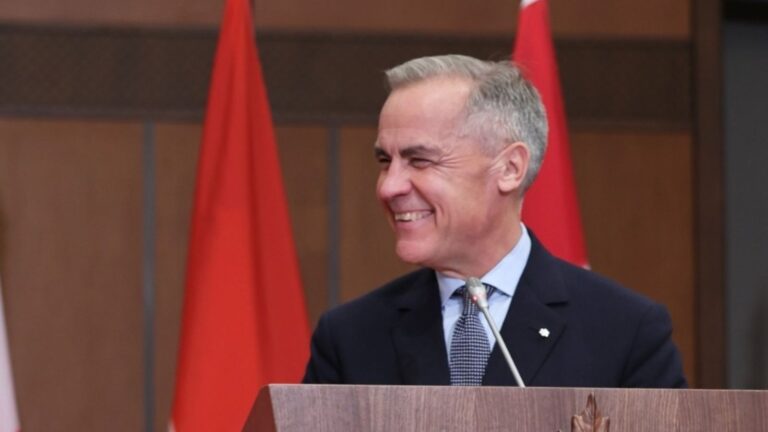
Within a single day, Prime Minister Mark Carney delivered two sharply different messages about President Donald Trump’s handling of Russia’s war in Ukraine. One challenged a new fuel arrangement with Moscow. The other welcomed an attempt to stop attacks on energy infrastructure.
On October 11, 2026, Carney’s office said he had warned Ukrainian President Volodymyr Zelenskyy that Trump’s Russian diesel agreement could provide money for Moscow’s war. Later, Ottawa said Carney had thanked Trump for working toward an energy ceasefire between Russia and Ukraine.
The apparent contradiction reflects a difficult diplomatic balance: Canada wants to maintain pressure on Russia while supporting any credible chance to protect Ukrainian civilians. The proposed ceasefire, however, remained uncertain, with Kyiv awaiting details and reporting fresh Russian strikes.
One Sunday Brought Two Messages From Ottawa
Carney Criticizes Trump’s Russian Diesel Deal, Then Thanks Him for Ukraine Ceasefire Effort
- One Sunday Brought Two Messages From Ottawa
- What Trump’s Russian Diesel Deal Actually Promises
- Why Carney Believes the Deal Undermines Peace
- Trump’s Ceasefire Claim Still Lacked Confirmation
- Ukrainian Cities Were Still Facing Deadly Strikes
- Zelenskyy Demands a Reciprocal Halt to Attacks
- Record Diesel Prices Explain Washington’s Urgency
- Energy Analysts Doubt One Deal Can Solve the Shortage
- Lawmakers Question Whether the Imports Are Legal
- Carney Points to Canadian Energy as Another Option
- Canada’s Support for Ukraine Goes Beyond Statements
- The Next Test Will Be Actions, Not Announcements
Carney’s first message emerged from a conversation with Zelenskyy that same Sunday. According to the Prime Minister’s Office, the Canadian leader condemned a new U.S.-Russia arrangement to supply millions of tonnes of diesel, arguing that additional Russian energy revenue would undermine efforts to end the war. He also expressed condolences for victims of recent Russian attacks and reaffirmed Canada’s commitment to Ukraine’s sovereignty. The discussion placed military support and diplomatic pressure firmly alongside Ottawa’s concerns about the fuel deal.
Later that Sunday, a separate official readout described Carney’s conversation with Trump in markedly different terms. Carney thanked the president for his leadership toward an energy ceasefire and supported the goal of stopping attacks on civilians and power facilities. These accounts were government summaries, not complete transcripts of private calls. Read together, they suggest Carney was distinguishing between two Trump initiatives rather than endorsing or rejecting his entire approach to Russia.
What Trump’s Russian Diesel Deal Actually Promises
Trump announced the fuel arrangement on Friday, October 9, after speaking with Russian President Vladimir Putin. He said Russia would supply over 300,000 metric tonnes of diesel to U.S. and global markets, followed by 500,000 tonnes in November and one million tonnes afterward. The first quantity is roughly equivalent to 2.25 million barrels. These were announced delivery intentions, not independently verified shipments already received by American buyers.
The administration also took a concrete regulatory step. On October 9, the U.S. Treasury’s Office of Foreign Assets Control issued General License 135, authorizing specified transactions involving Russian-origin diesel through April 7, 2027. The permission covers activities including sales, delivery, offloading and imports, subject to exceptions. That license helps explain why critics view the announcement as more than diplomatic rhetoric. Even so, permission to trade does not establish when cargoes will arrive, where all of them will go or what purchasers will pay.
Why Carney Believes the Deal Undermines Peace
Carney’s concern is that energy sales generate revenue for Moscow while Russian forces continue the devastating, prolonged war in Ukraine. Ottawa’s readout said the American arrangement would provide additional revenue that could help finance Moscow’s war. That is Canada’s stated assessment, not a verified calculation of the money Russia will receive from these particular shipments. The distinction matters because the final commercial terms and actual deliveries remain unclear.
Canada has pursued the opposite strategy through economic restrictions. The Prime Minister’s Office says Ottawa has imposed more than 3,500 sanctions in response to Russia’s violations of Ukrainian sovereignty. During Sunday’s call, Carney told Zelenskyy Canada would maintain them and tighten them where effective. Sanctions are intended to increase the cost of continued aggression, whereas greater access to fuel customers can ease financial pressure. Carney’s challenge is that a partner helping negotiate peace is also reopening a revenue channel Canada wants constrained.
Trump’s Ceasefire Claim Still Lacked Confirmation
On Sunday, Trump announced on Truth Social that Russia and Ukraine had agreed to an immediate “energy ceasefire.” The proposal concerned energy facilities, not a complete end to combat. Trump provided no terms, enforcement plan or explanation of how it was reached. At the time of the announcement, neither Kyiv nor Moscow had independently confirmed that a mutually accepted agreement was operating.
Zelenskyy said Ukraine supported a halt to energy attacks but was waiting for information from Washington and wanted Russia to demonstrate the same commitment. Carney nevertheless welcomed the effort, saying it had the potential to reduce suffering. There was an important precedent for caution: Trump had made a similar claim about energy strikes in September, without a publicly confirmed agreement taking hold. A diplomatic declaration can create an opening, but only coordinated instructions, observable compliance and sustained restraint can turn that opening into a meaningful pause in violence.
Ukrainian Cities Were Still Facing Deadly Strikes
The uncertainty mattered to people living near Ukraine’s damaged power network. Zelenskyy reported that Russian forces struck a combined heat-and-power plant in Kharkiv after Trump’s Sunday announcement. Ukrainian officials also reported attacks on energy infrastructure around Kyiv. A damaged generating station can mean dark apartments, interrupted heating and anxious nights waiting for repairs. Ukraine’s leadership has warned that attacks on electricity and heating become especially dangerous as colder weather approaches.
The violence extended beyond infrastructure. The Associated Press reported that a Russian bombing in Zaporizhzhia on Saturday killed 23 people, including four children. Separate Sunday attacks killed civilians in Kharkiv and western Ukraine. Those reported deaths illustrate why Carney and Zelenskyy stressed the need to stop attacks on people as well as essential services. An energy-only arrangement would leave other forms of warfare unresolved, and the continued strikes made it impossible to describe Trump’s announcement as an established, functioning ceasefire.
Zelenskyy Demands a Reciprocal Halt to Attacks
Ukraine offered to stop targeting Russian refineries if Moscow stops striking Ukrainian power sites. Zelenskyy repeated that condition in an interview broadcast Sunday, asking Trump to press Putin for the same commitment. Kyiv argues that stopping Ukrainian strikes alone would protect Russian revenue without keeping Ukrainian homes supplied with electricity. A reciprocal arrangement, by contrast, could reduce destruction on both sides and create room for wider negotiations.
The diplomatic argument became more personal when Trump said Ukraine needed a new president and blamed Zelenskyy’s attacks on refineries for worsening diesel shortages. Zelenskyy replied that choosing Ukraine’s leader was a decision for Ukrainians. He offered to organize elections if Russia accepted a 60-day total ceasefire. Elections are currently prohibited under Ukraine’s martial-law conditions, and wartime displacement and security risks would complicate voting. His response put the focus back on a sustained halt to fighting rather than a leadership change dictated abroad.
Record Diesel Prices Explain Washington’s Urgency
Washington’s willingness to reopen Russian diesel trade reflects high domestic fuel costs. According to figures cited by Reuters from the AAA motorists organization, average U.S. diesel reached approximately $6.28 a gallon on October 8. Prices had risen about 70% since the U.S.-Israeli war with Iran began in February. Diesel matters far beyond filling stations: it powers freight trucks, agricultural machinery and some home-heating systems, placing pressure on transport expenses and everyday budgets.
The political calendar adds urgency. Americans are scheduled to vote in congressional midterm elections on November 3, with Republicans defending control of Congress. Trump has prioritized cheaper fuel for truckers, farmers and families and argued that Ukraine’s strikes on Russian refineries are contributing to shortages. Yet the U.S. Energy Information Administration has also identified the Middle East conflict and disrupted petroleum supplies as major factors driving elevated prices. The causes are broader than any one country’s drone campaign.
Energy Analysts Doubt One Deal Can Solve the Shortage
Russia’s initial 300,000-tonne commitment sounds substantial but looks smaller alongside daily fuel flows. Reuters estimated that amount at roughly 2.25 million barrels, while the United States exports approximately 1.5 million barrels of diesel every day. That comparison does not mean all Russian cargo is destined for America. Trump described supplies for U.S. and global markets, with uncertain delivery schedules.
Energy analysts questioned whether the deal could produce lasting pump-price reductions. They noted that Russia normally ships diesel volumes abroad and that damage to its refineries limits available supply. Importantly, refinery costs also shape prices consumers eventually pay. Wood Mackenzie described the deal as another source of fuel for a tight market, not a comprehensive remedy. Shipping time, refinery output and international demand all influence whether new cargoes create genuine additional supply. A temporary market reaction is therefore different from lasting relief for a truck driver buying diesel week after week.
Lawmakers Question Whether the Imports Are Legal
Politicians in both American parties criticized the arrangement. Seven senators, including four Republicans and three Democrats, urged Trump to reverse course, arguing that Congress banned Russian energy imports after the full-scale 2022 invasion. Republican Senator Thom Tillis raised the possibility that the new deal violates federal law. Lawmakers also accused the administration of bypassing required consultation and reporting before lifting restrictions.
The legal disagreement concerns the relationship between Treasury’s new license and the Ending Importation of Russian Oil Act, enacted in April 2022. That statute sets conditions for terminating its prohibition, including congressional notification and findings concerning Russian withdrawal and Ukrainian sovereignty. U.S. Treasury Secretary Scott Bessent strongly disputed claims that the administration was acting unlawfully and said it had sufficient authority to proceed. A general license unquestionably changes specified sanctions permissions, but whether it resolves objections under the separate statute remains contested. No court ruling establishing illegality was reported.
Carney Points to Canadian Energy as Another Option
Carney’s call with Trump included a reminder about Canadian energy. Ottawa said Canada would continue maximizing exports of oil and diesel to the United States, describing those flows as yielding well over one million barrels of diesel each day. That includes crude refined into diesel in the United States, not merely finished diesel exports. Canada’s role in American refining is important. Cross-border pipelines connect American refineries with Canadian crude.
According to the Canada Energy Regulator, Canadian producers exported approximately 3.9 million barrels of crude oil daily to the United States in 2025. Canada also shipped 340,000 barrels a day of refined petroleum products, a category covering more than diesel alone. Canadian supplies represented 63.4% of U.S. crude-oil imports that year. Those figures explain Ottawa’s broader point: America has a deeply integrated, nearby supplier. They do not prove Canadian deliveries could immediately replace Russian diesel shipments without logistical or refinery adjustments.
Canada’s Support for Ukraine Goes Beyond Statements
Canada’s criticism of Russian energy revenue accompanies years of Ukrainian support. Ottawa says it has committed more than C$8.5 billion in military assistance since Russia’s full-scale invasion, along with more than C$750 million for recovery and reconstruction. During a September meeting with Zelenskyy in Calgary, Carney reaffirmed support for Ukraine’s territorial integrity and discussed protecting its cities from aerial attacks. The leaders subsequently announced C$355 million to strengthen Ukrainian air defences.
Canada has also extended Operation UNIFIER, its military training and support mission, through 2029 amid continuing attacks. Ottawa has backed Project Freya, an effort to develop more affordable interceptors for Ukraine’s air-defence needs. Sunday’s call returned to those practical concerns, with Carney and Zelenskyy discussing closer coordination with allies. For families under missile threats, air defences matter more immediately than diplomatic language. Carney’s position combines willingness to welcome negotiations with a commitment to reinforce Ukraine’s ability to withstand attacks.
The Next Test Will Be Actions, Not Announcements
Several questions now determine whether this diplomacy achieves anything tangible. Russia must publicly accept and observe any energy ceasefire, Ukraine needs clear reciprocal terms, and the parties must establish what facilities are protected. Recent strikes make compliance difficult to assess without a published agreement or monitoring system. Pausing attacks on power plants would still fall short of peace.
The diesel arrangement poses a different test. Russian fuel must actually reach buyers before anyone can measure its impact on prices or Moscow’s revenue, and American officials face unresolved questions from Congress about legal authority. Canada, meanwhile, says it will preserve sanctions and continue helping Ukrainian defences while maintaining energy trade with the United States. Carney’s contrasting messages make sense in that context. He is resisting a policy he believes benefits the Kremlin while supporting any credible step that could spare civilians another night of bombardment. These distinctions matter as winter approaches.
This Options Discord Chat is The Real Deal
While the internet is scoured with trading chat rooms, many of which even charge upwards of thousands of dollars to join, this smaller options trading discord chatroom is the real deal and actually providing valuable trade setups, education, and community without the noise and spam of the larger more expensive rooms. With a incredibly low-cost monthly fee, Options Trading Club (click here to see their reviews) requires an application to join ensuring that every member is dedicated and serious about taking their trading to the next level. If you are looking for a change in your trading strategies, then click here to apply for a membership.