35,000+ smart investors are already getting financial news, market signals, and macro shifts in the economy that could impact their money next with our FREE weekly newsletter. Get ahead of what the crowd finds out too late. Click Here to Subscribe for FREE.
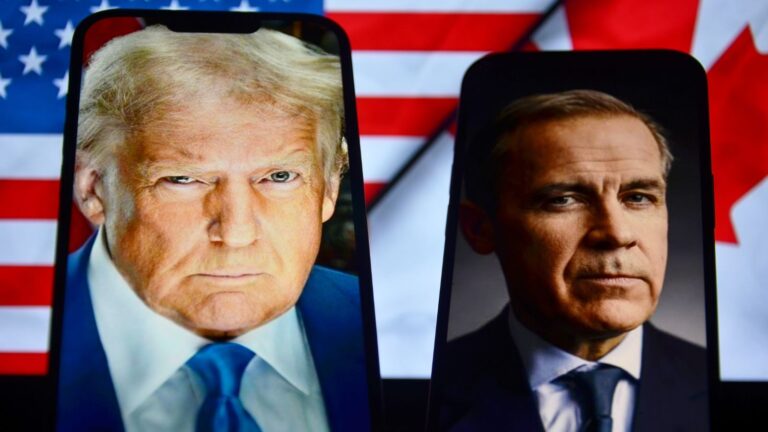
Ottawa is tightening the guardrails around its diplomats in the United States at a moment when ordinary cross-border advocacy is being pulled into an increasingly charged election dispute. Canadian foreign-service officials have been told to avoid meetings and public appearances with candidates in the November 3 U.S. midterms, and to minimize even incidental situations that could produce photographs or publicity suggesting partisan involvement. The instruction lands as the Trump administration, through its ambassador and embassy in Ottawa, accuses Canadian politicians of trying to influence American politics. Canada rejects that characterization, saying its officials are defending Canadian economic interests. The result is an unusually delicate diplomatic environment: Ottawa still needs access to governors, lawmakers and business leaders during a damaging trade fight, but it now wants that engagement conducted in a way that leaves as little room as possible for allegations of electoral meddling.
A Memo Turns Caution Into Operating Policy
Ottawa Orders Canadian Diplomats to Avoid U.S. Election Candidates as Trump Administration Escalates Interference Accusations
- A Memo Turns Caution Into Operating Policy
- The U.S. Embassy Has Put Canada on Notice
- Joly’s Tariff Strategy Is at the Center of the Dispute
- Ontario’s Reagan Ad Still Hangs Over the Relationship
- Some Examples Are More Directly Electoral Than Others
- The Meaning of “Interference” Is Now Part of the Fight
- The Midterms Make Every Contact More Sensitive
- Ottawa Is Protecting Access Without Conceding the Accusation
The clearest sign of Ottawa’s concern is a written memo sent Tuesday by Glen Linder, Global Affairs Canada’s assistant deputy minister for the Americas, to Canadian foreign-service personnel in the United States. Diplomats were told not to meet with or attend events involving midterm candidates. If they unexpectedly share the same space with a candidate or elected official, they should avoid photographs and keep their names and positions out of public communications. Meetings with elected officials who are not candidates can still occur when necessary, but senior officials should be consulted first.
Global Affairs says the approach did not begin this week. Initial election-period guidance was sent October 1, and the issue was revisited before the latest summary circulated. A department spokesperson called such limits standard practice during elections in host countries. What is different is the political temperature: the memo stresses heightened sensitivity, non-partisanship and a deliberately risk-averse approach.
The U.S. Embassy Has Put Canada on Notice
The restrictions are unfolding against warnings from Washington. U.S. Ambassador Pete Hoekstra said in October that American officials were watching Canadian politicians for midterm interference and warned them to keep their “nose out” of U.S. politics. He said Washington was monitoring Canadian activity and would respond if it crossed the line into election interference. On October 21, the U.S. Embassy followed with a document titled “Monitoring Canadian Activities in U.S. Politics.”
The fact sheet cited Industry Minister Mélanie Joly, Ontario Premier Doug Ford, Liberal MP Anthony Housefather and Canada’s consul general in Boston, Bernadette Jordan. Its examples ranged from retaliatory-tariff comments and meetings to Ontario advertising and candidate activity. The embassy told Canadians not to participate in or influence U.S. elections. Prime Minister Mark Carney rejected the allegation, saying Canada’s actions respond to American trade measures and are intended to protect Canadian workers and economy.
Joly’s Tariff Strategy Is at the Center of the Dispute
The U.S. case focuses on Mélanie Joly because she spoke about the political logic behind Canada’s trade retaliation. On August 25, Ottawa announced counter-tariffs on about US$20 billion in U.S. imports after Washington imposed duties on Canadian goods. The measures covered about 700 product categories at tariff rates of 15, 25 and 50 per cent. Joly said products were chosen to target U.S. states and create political pressure, comments highlighted by the U.S. Embassy.
Sensitivity increased after Joly met Democratic officials in Boston and Chicago in September. Asked what could happen to tariffs if Democrats won the midterms, she linked those meetings to governors and presidential candidates. Joly rejects the interference label, saying her U.S. outreach spans both parties and aims to attract investment and defend Canadian interests. Political leverage is common in trade disputes, but explicitly political language becomes riskier near an election.
Ontario’s Reagan Ad Still Hangs Over the Relationship
The Trump administration is also citing Ontario’s 2025 anti-tariff advertising campaign. Doug Ford’s government announced a C$75-million U.S. campaign using excerpts from a 1987 Ronald Reagan radio address warning that broad tariffs can trigger retaliation and hurt workers and consumers. Ford said the campaign would target Republican districts, making its audience partisan even though its stated goal was to change trade policy, not support a candidate.
President Donald Trump reacted by halting trade talks with Canada and accusing Ontario of misrepresenting Reagan. Independent fact-checkers found that the commercial rearranged parts of Reagan’s speech and omitted context, including his defense of targeted duties on Japan, but that its portrayal of his skepticism toward broad protectionism was consistent with much of the original address. The U.S. Embassy now cites the episode as part of a wider pattern. For Ottawa, it shows how policy messaging can become an election controversy.
Some Examples Are More Directly Electoral Than Others
Not every example in the embassy’s case sits close to a campaign. One candidate-specific episode involves Liberal MP Anthony Housefather, who campaigned in Florida in August for Democratic Representative Debbie Wasserman Schultz during her primary. The embassy cited Consul General Bernadette Jordan’s appearance at a Canada-U.S. trade event with Democratic candidates. Those episodes differ from a minister arguing about tariffs because they place Canadian political figures nearer to people seeking votes.
That does not settle the question. U.S. law bars foreign nationals, including foreign governments, from election contributions, expenditures and certain election-related decision-making. Federal Election Commission guidance distinguishes those restrictions from issue advocacy not connected to an election. University of Toronto scholar Randy Besco has argued that most tariff-related examples resemble efforts to influence government policy rather than election outcomes, while describing the Housefather episode as concerning. That mix helps explain Ottawa’s bright line around diplomats and candidates.
The Meaning of “Interference” Is Now Part of the Fight
The dispute is about what “interference” means. Canada’s national-security framework distinguishes normal diplomacy or transparent lobbying from foreign interference. The Canadian Security Intelligence Service describes foreign interference as activity that is clandestine, deceptive, threatening or otherwise malign. Public Safety Canada says foreign governments use legitimate tools including lobbying, political dialogue, trade negotiations and diplomacy. In Canada’s official framework, influence and interference are not synonyms.
American guidance recognizes distinctions, though agencies use different terms. Justice Department materials describe malign foreign influence through concepts such as coercive, covert or corrupt activity, while election law restricts foreign money, expenditures and campaign decision-making. The dispute is therefore slippery. The embassy is objecting to public Canadian actions—tariffs, advertising and meetings—rather than alleging a secret influence network. Washington can argue that those actions target the political process, while Ottawa can argue that diplomatic pressure traditionally belongs in a different category from covert election interference.
The Midterms Make Every Contact More Sensitive
The timing magnifies the dispute. Americans vote on November 3 in elections for all 435 House seats and 35 Senate seats. Republicans narrowly control both chambers: 218 to 214 in the House, with two vacancies, and 53 to 47 in the Senate, including two independents who caucus with Democrats. Reuters calculates that Democrats need four net seats in each chamber for control.
For Canada, the stakes go beyond party control. A different Congress could alter oversight, trade politics and pressure on the White House, but Donald Trump would remain president and the executive branch would still drive trade policy. Canada’s chief trade negotiator, Janice Charette, made that point this week. Canadian officials need relationships across party lines before and after Election Day. Yet the closing days of a tight campaign are exactly when a meeting, photograph or public remark is most likely to be interpreted as partisan activity by critics.
Ottawa Is Protecting Access Without Conceding the Accusation
Ottawa’s posture is risk management, not an admission of wrongdoing. Carney, Joly and Ford reject the suggestion that Canada is trying to decide the U.S. election. Global Affairs says its restrictions are standard practice, and its October 1 guidance predates the U.S. Embassy’s October 21 fact sheet. Reinforcing the rules shows Ottawa takes the risk seriously, especially after Hoekstra warned that Washington could respond if Canadian activity crossed a line.
The result is a narrower diplomatic field until the vote. Canadian officials can deal with government, industry and non-candidate stakeholders, but encounters involving candidates carry higher approval thresholds and communications risk. That may make relationship-building harder while trade policy becomes a campaign issue. The alternative is to leave diplomats exposed to photographs or events that can be repackaged as evidence of partisanship. Ottawa’s strategy is defensive: keep advocating for Canada while giving Washington as little material as possible.
This Options Discord Chat is The Real Deal
While the internet is scoured with trading chat rooms, many of which even charge upwards of thousands of dollars to join, this smaller options trading discord chatroom is the real deal and actually providing valuable trade setups, education, and community without the noise and spam of the larger more expensive rooms. With a incredibly low-cost monthly fee, Options Trading Club (click here to see their reviews) requires an application to join ensuring that every member is dedicated and serious about taking their trading to the next level. If you are looking for a change in your trading strategies, then click here to apply for a membership.