35,000+ smart investors are already getting financial news, market signals, and macro shifts in the economy that could impact their money next with our FREE weekly newsletter. Get ahead of what the crowd finds out too late. Click Here to Subscribe for FREE.
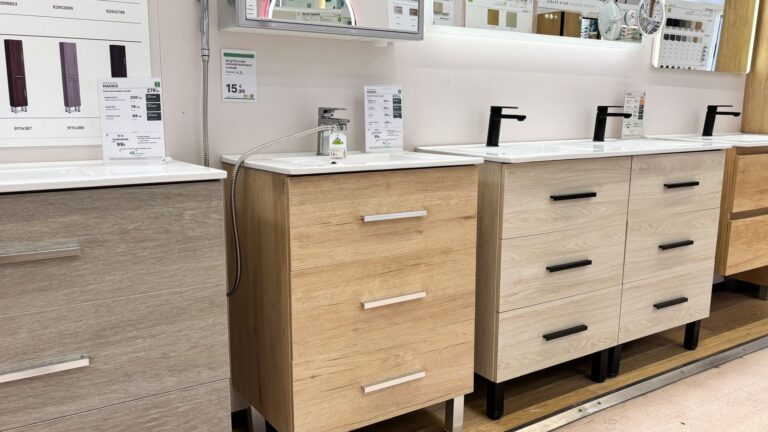
The next major escalation in Donald Trump’s wood-products tariff policy is approaching, and kitchen and bathroom projects sit directly in its path. Beginning January 1, 2027, the U.S. tariff on covered imported kitchen cabinets and vanities is scheduled to jump from 25% to 50%, unless a trading partner reaches an agreement with Washington that changes its treatment. The increase was originally supposed to arrive a year earlier, but Trump postponed it on December 31, 2025, while trade negotiations continued.
For manufacturers, builders and remodelers, that delay bought time rather than certainty. Canadian exporters are particularly exposed because the Section 232 measure does not provide an exemption simply because a product qualifies under CUSMA. With renovation activity already struggling to gain momentum, the approaching deadline is becoming an increasingly important pricing and sourcing decision.
The 25% Tariff Is Already Here — January 1 Brings the Bigger Jump
Trump’s Next Wood Tariff Increase Looms: 50% on Cabinets and Vanities Starting January 1
- The 25% Tariff Is Already Here — January 1 Brings the Bigger Jump
- Washington Is Treating Wood Products as a National-Security Issue
- Cabinets, Vanities and Their Parts Can All Fall Inside the Tariff Net
- Canada Has an Unusually Large Amount Riding on U.S. Market Access
- A 50% Tariff Does Not Automatically Mean Retail Prices Rise 50%
- The Housing and Remodeling Market Has Little Room for Another Cost Shock
- Canada Is Also Trying to Stop Tariff-Driven Trade Diversion at Home
- January 1 Is the Current Deadline, but Trade Negotiations Could Still Rewrite It
The January deadline is the second stage of a tariff regime that has been operating since October 14, 2025. Trump’s original proclamation imposed a 10% Section 232 tariff on covered softwood timber and lumber, alongside 25% tariffs on certain upholstered wooden furniture and on covered kitchen cabinets and vanities. The cabinet measure applies not only to finished products but also to specified parts intended for cabinet and vanity production.
The original plan called for the cabinet and vanity tariff to double to 50% on January 1, 2026, while the upholstered-furniture rate would rise from 25% to 30%. Trump postponed both increases by one year after U.S. officials reported continuing negotiations with trading partners. That made January 1, 2027 the new effective date. The underlying 25% cabinet and vanity tariff did not disappear during the delay, however. It has continued to apply, meaning affected importers have already spent more than a year operating with a substantial additional duty before the scheduled increase to 50%.
Washington Is Treating Wood Products as a National-Security Issue
The legal foundation is Section 232 of the Trade Expansion Act of 1962, the same national-security authority Washington has used for tariffs in industries such as steel and aluminum. The Commerce Department’s wood-products investigation concluded that the quantity and circumstances of imports were weakening domestic production capacity, contributing to mill closures and creating supply-chain vulnerabilities. The administration also argued that wood products matter beyond residential construction because they support transportation, energy infrastructure, manufacturing and defense-related activities.
That does not mean the economic effects end with protected producers. Earlier U.S. International Trade Commission analysis of Section 232 measures illustrates the trade-off. For the 2018–2021 period, the USITC estimated that steel tariffs reduced affected imports by 24% and increased domestic steel production by 1.9%, but also raised U.S. steel prices by about 2.4%. Aluminum tariffs similarly reduced affected imports by 31% and increased production by 3.6%, while raising prices. The wood tariffs therefore represent a familiar policy bet: stronger domestic capacity in exchange for higher costs and altered sourcing patterns elsewhere in the economy.
Cabinets, Vanities and Their Parts Can All Fall Inside the Tariff Net
The tariff is broader than a finished vanity sitting in a shipping container. U.S. Customs and Border Protection guidance covers completed kitchen cabinets and vanities as well as qualifying parts under specified Harmonized Tariff Schedule classifications. That can include products entered under classifications for wooden kitchen furniture, other wooden furniture and certain furniture parts when those goods meet the cabinet-and-vanity description.
Timing matters as much as product classification. The proclamation applies the duty based on when merchandise is entered for consumption in the United States or withdrawn from a warehouse for consumption. A purchase contract signed or shipment dispatched before New Year’s Day does not automatically lock in the lower rate if the relevant customs entry occurs after the new rate becomes effective. Country treatment also varies. The original policy capped the Section 232 wood tariff on United Kingdom products at 10% and established a 15% ceiling for qualifying products from the European Union and Japan, while permitting additional negotiated arrangements. Canadian products have not received a general CUSMA-based exemption from the wood measure.
Canada Has an Unusually Large Amount Riding on U.S. Market Access
Canadian cabinet manufacturers are not dealing with a distant or marginal export market. World Integrated Trade Solution data based on international merchandise-trade statistics show that Canada exported about US$447.1 million worth of wooden kitchen furniture worldwide in 2024. Roughly US$441.7 million of that total went to the United States. In other words, by that trade classification, the U.S. absorbed close to 99% of Canada’s reported exports.
Canada’s worldwide exports in that category were about US$381.9 million in 2025, underscoring why further deterioration in U.S. access matters for an industry whose geography and supply relationships have long been oriented toward the American market. The tariff can affect everything from large factory producers supplying housing developments to smaller manufacturers producing customized cabinetry for dealers and contractors across the border. Unlike some other U.S. tariff measures where CUSMA-origin goods receive preferential treatment, current Canadian government guidance explicitly says there is no CUSMA-compliant exemption from the Section 232 tariff on covered upholstered furniture, cabinets or vanities. The scheduled 50% rate therefore represents a genuine market-access risk for Canadian producers.
A 50% Tariff Does Not Automatically Mean Retail Prices Rise 50%
The distinction between a tariff rate and the eventual price seen by a homeowner is important. Consider an illustrative cabinet shipment with a customs value of US$20,000. At the current 25% Section 232 rate, the additional tariff would be US$5,000. At 50%, it would be US$10,000. That is a US$5,000 increase in tariff liability before considering freight, distribution, installation, retailer margins or other costs. Whether all of that extra expense reaches the final buyer depends on how much importers, manufacturers, dealers and contractors absorb themselves.
Recent economic research suggests that tariffs can nevertheless feed meaningfully into consumer prices. A 2026 NBER study examining the 2025–26 U.S. tariff increases estimated that about 26% of the tariff increase passed through to consumer prices, while also finding indirect effects as imported inputs became more expensive and domestic firms faced less competition from imported alternatives. Earlier research and USITC work found that U.S. importers often bore nearly the full immediate increase in import costs. The practical lesson is that a 50% tariff is not synonymous with a 50% showroom-price increase, but neither is it costless for American buyers.
The Housing and Remodeling Market Has Little Room for Another Cost Shock
The timing could be awkward for an industry already coping with a subdued housing cycle. Harvard University’s Joint Center for Housing Studies said on October 22 that annual U.S. spending on home improvements and repairs is expected to remain around US$525 billion through the third quarter of 2027, with year-over-year growth of only about 1.5%. Retail spending on building products has been weak, remodeling permits have stagnated and declining housing starts remain another headwind.
Cabinets and vanities sit directly inside that renovation economy. Kitchens and bathrooms are among the most expensive discretionary projects in a home, so even relatively modest material increases can force households to change finishes, reduce project scope or postpone work. The National Association of Home Builders already lists the 25% cabinet and vanity tariff among the trade measures affecting housing and has argued that tariffs on construction inputs increase costs for builders and buyers. Its broader tariff analysis has estimated an average impact of roughly US$10,900 per new home from tariff-related material-price increases. That figure covers many imported inputs rather than cabinets alone, but it shows how separate duties can accumulate across a construction budget.
Canada Is Also Trying to Stop Tariff-Driven Trade Diversion at Home
The pressure on Canadian producers is coming from both sides of the border. In July 2026, Ottawa imposed a provisional 25% safeguard surtax on certain imported wood cabinets, vanities and subassemblies. The federal government said the measure was intended to address injury to Canadian producers and harmful trade diversion in a rapidly changing global trade environment. The temporary measure can remain in place for up to 200 days, although its future depends on the outcome of a Canadian International Trade Tribunal investigation.
The CITT inquiry covers solid and engineered-wood cabinets and vanities along with other wood-product categories. Public hearings were held in October, with an additional hearing date scheduled for October 29, and the Tribunal is due to report to the federal government by January 15, 2027. The calendar is striking: Canada’s domestic safeguard review is reaching its conclusion only two weeks after the scheduled U.S. cabinet tariff doubles. Canadian manufacturers could therefore enter 2027 simultaneously confronting more difficult access to their dominant export market and pressure from overseas products searching for alternative destinations as U.S. barriers rise.
January 1 Is the Current Deadline, but Trade Negotiations Could Still Rewrite It
The 50% rate should be treated as the current policy rather than an irreversible outcome. The proclamation specifically allows different treatment for countries that reach agreements with the United States addressing Washington’s stated national-security concerns. The administration has already demonstrated that it is willing to change the timetable: the increase was postponed once, on the final day of 2025, because negotiations were still underway.
For Canada, however, businesses cannot plan on another reprieve. Current federal guidance continues to list a 50% tariff on covered cabinets and vanities beginning January 1, 2027 and continues to state that CUSMA compliance does not create an exemption. That leaves manufacturers, U.S. importers and contractors with a relatively short window to revisit customs classifications, sourcing, contracts and delivery schedules. The most immediate question is no longer whether Trump proposed a 50% cabinet tariff. That policy has already survived one postponement and remains on the books. The question heading into the final weeks of 2026 is whether diplomacy changes it again before shipments begin crossing the border under the higher rate.
This Options Discord Chat is The Real Deal
While the internet is scoured with trading chat rooms, many of which even charge upwards of thousands of dollars to join, this smaller options trading discord chatroom is the real deal and actually providing valuable trade setups, education, and community without the noise and spam of the larger more expensive rooms. With a incredibly low-cost monthly fee, Options Trading Club (click here to see their reviews) requires an application to join ensuring that every member is dedicated and serious about taking their trading to the next level. If you are looking for a change in your trading strategies, then click here to apply for a membership.