35,000+ smart investors are already getting financial news, market signals, and macro shifts in the economy that could impact their money next with our FREE weekly newsletter. Get ahead of what the crowd finds out too late. Click Here to Subscribe for FREE.
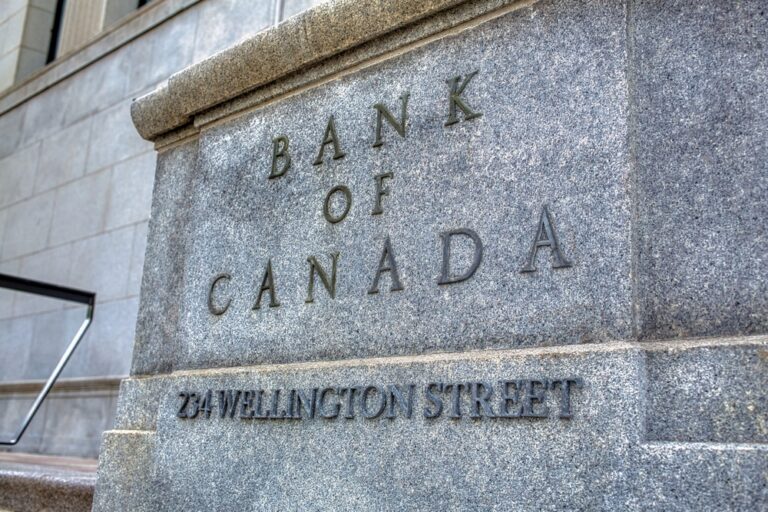
Canada’s benchmark rate did not move on April 29, 2026, but the decision still carried plenty of meaning. By holding the policy rate at 2.25%, the Bank of Canada signalled that inflation is no longer running out of control, yet the economy is not sturdy enough to absorb a fresh squeeze either. The result is a pause that feels less like celebration and more like calibration. Beneath the headline sit 10 important angles: why policymakers stood still, what inflation is still saying, how growth and jobs look, what homeowners and buyers should watch, and which risks could force the Bank to change course later this year. Together, those themes show a country that has made progress, but not enough to relax.
A Hold Was the Cautious Choice
No Rate Cut: Bank of Canada Holds at 2.25%
- A Hold Was the Cautious Choice
- Inflation Has Improved, but It Is Not Fully Tamed
- The Economy Is Growing, but Only Modestly
- The Labour Market Is No Longer a Source of Heat
- Homeowners Get Breathing Room, Not Relief
- Buyers and Sellers Are Still Stuck in an Awkward Housing Market
- Businesses Are Not Acting Like a Boom Is Coming
- Households Are Still Carrying Heavy Financial Weight
- The Decision Was Also About Credibility
- What Happens Next Depends on Two Big Risks
- The Bigger Message Is Stability, Not Victory
The simplest reading of the decision is that the Bank of Canada saw too much uncertainty to justify a move in either direction. It kept the overnight rate at 2.25%, with the Bank Rate at 2.5% and the deposit rate at 2.20%, while stressing that global conditions remain unsettled. Energy markets have been volatile, trade policy has continued to shift, and the Bank’s latest outlook assumes tariffs stay where they are now rather than escalate immediately.
That matters because central banks do not just react to today’s inflation print; they react to the path ahead. A cut could have looked premature with oil-driven price pressure still passing through the economy, while a hike would have risked hitting an already soft domestic backdrop. In that sense, the hold was not an inactive decision. It was a choice to wait for cleaner evidence before taking the next step.
Inflation Has Improved, but It Is Not Fully Tamed
Canada’s inflation backdrop is calmer than it was during the worst of the price surge, but it is not comfortably settled. Statistics Canada reported that the Consumer Price Index rose 2.4% year over year in March 2026, up from 1.8% in February. The Bank said the jump was driven largely by sharply higher gasoline prices, and it also noted that inflation could rise to around 3% in April before moving back down later.
That split between headline inflation and the deeper trend is crucial. The Bank said core inflation has been easing and was holding just above 2% in the latest data, while the share of CPI components rising more than 3% has also fallen. In plain terms, the broad inflation picture looks better than the headline number alone suggests. Still, policymakers clearly do not want a temporary energy shock to spread into wages, services, or long-term expectations.
The Economy Is Growing, but Only Modestly
A rate hold at this stage reflects an economy that is still moving, though not with much force. The Bank’s latest outlook says Canada is expected to grow at a moderate pace as it adjusts to tariffs and a changing global trade landscape. Reuters’ summary of the Monetary Policy Report said the Bank now sees GDP growth at 1.2% in 2026, 1.6% in 2027, and 1.7% in 2028, with first- and second-quarter 2026 growth both projected around a 1.5% annualized pace.
That is not recession language, but it is hardly booming either. The same reporting said Canada experienced a GDP contraction in the fourth quarter of 2025 before showing early signs of recovery. Consumer and government spending have helped keep activity afloat, yet exports, business investment, and housing remain subdued. The hold at 2.25% therefore reflects a Bank trying to preserve stability in an economy that is functioning, but still feels one negative shock away from renewed weakness.
The Labour Market Is No Longer a Source of Heat
For much of the inflation fight, a tight labour market complicated the Bank’s job. That pressure has eased. Statistics Canada said employment was little changed in March, up by 14,000, while the national unemployment rate held at 6.7%. The employment rate also stayed at 60.6%, a sign that the market is no longer generating the kind of broad-based tightness that once pushed wages and prices higher at the same time.
The Bank’s own language points in the same direction. Its April material described labour conditions as soft, and Reuters reported that policymakers see the unemployment rate staying in a 6.5% to 7% zone. That range is meaningful: it suggests the labour market has cooled enough to reduce inflation pressure, but not so much that the Bank feels forced into an emergency cut. It also means households are likely to feel more caution than confidence, especially in sectors exposed to trade, construction, or interest-sensitive spending.
Homeowners Get Breathing Room, Not Relief
For homeowners, the decision mostly preserves the current landscape rather than improving it. A hold means no new policy-driven jump in variable-rate borrowing costs, but it also means no fresh break lower for households hoping monthly payments would fall again right away. That distinction matters in a country where many borrowers are still navigating mortgage renewals after the sharp rate run-up of earlier years.
The policy backdrop also remains restrictive for new entrants. OSFI says the current minimum qualifying rate for uninsured mortgages is the greater of the contract rate plus 2% or 5.25%, even though straight switches at renewal between federally regulated lenders are treated differently. In practical terms, a family can hear that the Bank held at 2.25% and still feel little improvement in real buying power. The policy rate may be far below its peak, but the housing finance system remains designed to keep borrowing discipline intact.
Buyers and Sellers Are Still Stuck in an Awkward Housing Market
Canada’s housing market has not fully broken out, even after earlier rate cuts. CREA said national home sales activity was little changed in March 2026, while new listings edged down 0.2% month over month. At the end of March, there were 167,524 properties listed for sale on Canadian MLS systems, up just 1% from a year earlier and still 10.6% below the long-term average for that time of year.
That combination helps explain why the market still feels strange in many regions. Supply is not abundant enough to create a broad buyers’ market, but confidence is not strong enough to unleash a true rebound either. CREA’s April forecast downgrade also showed how fragile sentiment remains: it now expects the national average home price to rise only 1.5% in 2026, with virtually no growth in Ontario, British Columbia, and Alberta. A stable policy rate may help prevent new damage, but it has not solved affordability.
Businesses Are Not Acting Like a Boom Is Coming
The Bank’s own business surveys help explain why policymakers were content to wait. In the first quarter of 2026, the Business Outlook Survey said firms’ sentiment remained subdued and that expectations for domestic and export sales were still soft. Most businesses planned to maintain or decrease current staffing levels, while investment intentions stayed restrained. Many firms were focusing more on routine maintenance than on ambitious expansion.
That is not the behaviour of a business sector expecting a near-term surge in demand. It is the behaviour of managers protecting margins and conserving flexibility. A lower rate might have provided some emotional lift, but the survey suggests financing costs are not the only issue. Trade uncertainty, weak demand, and caution about future pricing power are all still weighing on decisions. The hold therefore fits a wider reality: monetary policy can ease pressure, but it cannot single-handedly create confidence when the business climate remains uneasy.
Households Are Still Carrying Heavy Financial Weight
Even with the policy rate well below its earlier highs, Canadian households remain stretched. Statistics Canada’s household sector credit data showed credit market debt at roughly 174.78% of disposable income in the fourth quarter of 2025. That is down from the most extreme periods, but it still means debt levels remain very large relative to after-tax income. In a country this leveraged, even a stable rate environment can still feel expensive.
Consumer sentiment data tells a similar story. The Bank of Canada’s first-quarter 2026 Survey of Consumer Expectations said spending plans remained muted, held back by worries about high prices and economic uncertainty. There was some improvement from the prior quarter, but not enough to describe consumers as relaxed. That helps explain why many households are behaving carefully even without a new rate hike. The hold at 2.25% reduces the risk of fresh financial stress, yet it does not erase the after-effects of years of higher borrowing costs.
The Decision Was Also About Credibility
Central banking is partly mechanical and partly psychological. By holding steady rather than reacting too quickly to either weaker growth or higher gasoline prices, the Bank is trying to protect its credibility on both sides of the mandate. It wants Canadians to believe inflation will return to the 2% target over time, but it also wants businesses and households to understand that policy will not become erratic every time one data point surprises.
That is why Governor Tiff Macklem’s message mattered as much as the rate itself. Reuters reported that he said future rate changes would likely be small if the Bank’s forecasts hold. That line was an attempt to calm markets without pretending uncertainty has vanished. It tells borrowers that dramatic swings are not the base case, while also reminding them that the Bank remains flexible. In a nervous environment, steadiness can be a policy tool of its own.
What Happens Next Depends on Two Big Risks
The next move is unlikely to depend on one factor alone. The Bank has made clear that it is watching two broad risks especially closely: whether higher energy prices feed into broader inflation, and whether trade shocks intensify enough to weaken growth more materially. Its April outlook assumes tariffs remain unchanged and oil eventually falls back toward US$75 a barrel by mid-2027. If those assumptions hold, the Bank’s job becomes easier.
If they do not, the path gets murkier. A larger trade hit could justify cuts to support the economy, while a more stubborn inflation spillover could delay cuts or even reopen the door to tightening. That tension is what makes the 2.25% hold significant. It is not a final answer about where Canadian rates are headed. It is a marker that says the economy is currently balanced between two very different threats, and the Bank is not ready to declare either one defeated.
The Bigger Message Is Stability, Not Victory
The most human way to read this decision is to see it as an attempt to buy time. The Bank of Canada is acknowledging progress without overselling it. Inflation is much less alarming than it once was, the labour market has cooled, and the economy is still growing. Yet none of those improvements looks strong enough to justify a triumphant turn toward easy money.
For Canadians, that means the present moment is defined less by relief than by steadiness. Mortgage pain has stopped getting worse at the policy level, but affordability is still difficult. Businesses are still wary. Consumers are still careful. The hold at 2.25% is therefore important because it reflects a country in transition: past the emergency phase of inflation, but not yet into a phase that feels easy, cheap, or fully secure. Stability has returned faster than comfort.
This Options Discord Chat is The Real Deal
While the internet is scoured with trading chat rooms, many of which even charge upwards of thousands of dollars to join, this smaller options trading discord chatroom is the real deal and actually providing valuable trade setups, education, and community without the noise and spam of the larger more expensive rooms. With a incredibly low-cost monthly fee, Options Trading Club (click here to see their reviews) requires an application to join ensuring that every member is dedicated and serious about taking their trading to the next level. If you are looking for a change in your trading strategies, then click here to apply for a membership.