35,000+ smart investors are already getting financial news, market signals, and macro shifts in the economy that could impact their money next with our FREE weekly newsletter. Get ahead of what the crowd finds out too late. Click Here to Subscribe for FREE.
A drone strike on Saudi Aramco’s Jazan refinery has revived a risk Canadians have already felt this year: a Middle East security shock can travel quickly from an oil facility thousands of kilometres away to fuel bills, grocery costs and inflation readings at home. Saudi authorities said the fire from the August 9 incident was extinguished without injuries, while Yemen’s Houthis claimed responsibility.
The latest strike has not been shown to cause a major new loss of Saudi supply. That distinction matters. But it comes as global oil inventories are depleted, the Strait of Hormuz remains heavily disrupted and Canadian inflation has only recently cooled from a gasoline-driven spike. For households, businesses and the Bank of Canada, the concern is less one isolated fire than the possibility of repeated attacks keeping energy prices higher for longer.
The Latest Strike Is More About Escalation Than a Fresh Supply Loss
New Saudi Oil Attack Puts Canada’s Inflation and Fuel Risks Back in Focus
- The Latest Strike Is More About Escalation Than a Fresh Supply Loss
- The Oil Market Has Less Cushion Than It Looks
- Canada’s Inflation Has Already Shown the Gasoline Link
- Why an Oil-Producing Country Still Pays Global Pump Prices
- Fuel Costs Spread Far Beyond the Gas Station
- The Bank of Canada’s Rate Path Gets Harder to Read
- Canada Can Gain From Higher Oil—But Not Evenly
- What Would Turn This Into a Bigger Canadian Shock
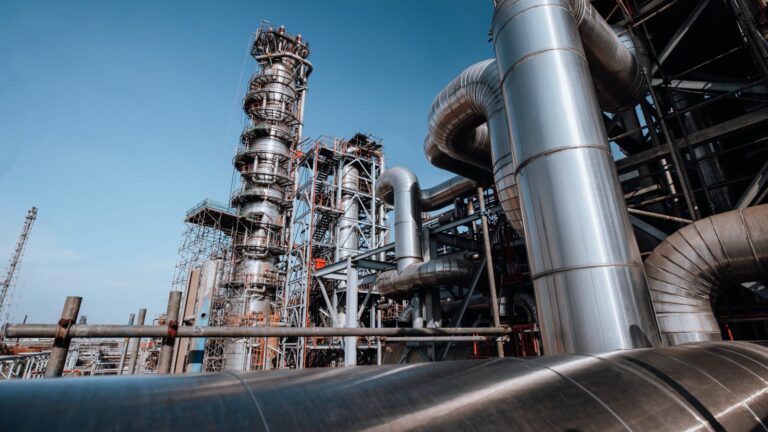
The latest attack matters partly because it landed on infrastructure that was already under pressure. The Houthis said a drone targeted Saudi Aramco’s Jazan refinery on August 9, and Saudi Arabia’s energy ministry confirmed a fire that was later extinguished with no injuries. Jazan can process about 400,000 barrels of crude a day. However, the facility had already been shut following a late-July attack, according to industry information reported by Reuters.
That makes it misleading to treat the August 9 strike as an automatic fresh loss of 400,000 barrels a day from world supply. The immediate concern is cumulative risk. Jazan and Yanbu have both been targeted, while the Houthis have threatened Saudi oil operations in the Red Sea. Even when physical damage is contained, repeated attacks can increase security, insurance and shipping pressures while forcing operators to rely more heavily on alternative routes. Energy markets price not only the barrels unavailable today, but the possibility that strategically important infrastructure could become harder to operate tomorrow.
The Oil Market Has Less Cushion Than It Looks
The global oil market entered the weekend with less room for error than the headline price might suggest. Brent crude closed August 7 at $83.55 a barrel, while West Texas Intermediate finished at $78.18. Those levels were below peaks reached during earlier bouts of fighting, but the underlying supply picture remains unusually strained. Saudi Aramco chief executive Amin Nasser said on August 4 that more than 2.6 billion barrels had effectively been lost from the global market since the U.S.-Israeli war with Iran began in February—close to one month of normal worldwide crude production.
The Strait of Hormuz remains the central vulnerability. Before the current disruption, roughly one-fifth of global oil and liquefied natural gas traffic passed through the waterway. Aramco has relied on inventories, alternative terminals and overland infrastructure to maintain flows, but Nasser warned that global refining capacity is stretched and depleted inventories will require time to rebuild. That leaves less protection against another major refinery, pipeline or shipping disruption.
Canada’s Inflation Has Already Shown the Gasoline Link
Canada has already had a real-time demonstration of how quickly an energy shock can reshape inflation. Statistics Canada reported that the Consumer Price Index increased 2.8% year over year in June, down from 3.2% in May. Gasoline played a central role in that improvement. Pump prices fell 10.2% in June compared with May, yet remained 20.5% higher than a year earlier. When gasoline was removed from the calculation, annual inflation stood at 2.2%, illustrating just how heavily energy had been influencing the headline number.
The Bank of Canada put an even sharper figure on the effect. Its July analysis estimated that the peak impact from higher gasoline prices added roughly 1.4 percentage points to CPI inflation during the second quarter of 2026. That does not mean every increase in crude oil will produce an identical result, but it demonstrates the sensitivity. A prolonged rebound in crude prices or refinery margins could interrupt the easing Canada has only recently begun to see.
Why an Oil-Producing Country Still Pays Global Pump Prices
Canada’s status as a major crude producer does not isolate motorists from international energy markets. Natural Resources Canada breaks retail gasoline prices into several major components, including crude oil, refining and marketing costs and margins, and taxes. Canadian petroleum markets remain connected to North American and global pricing, meaning a supply scare in Saudi Arabia or a disruption around Hormuz can eventually influence what motorists pay in Toronto, Vancouver or Halifax even when their gasoline was produced domestically.
Crude oil is only part of the equation. The Bank of Canada has emphasized that gasoline refinery margins widened during the Middle East conflict and have remained an important contributor to pump prices. Currency movements can add another complication, because a weaker Canadian dollar raises the domestic cost of many internationally priced products and imported goods. As a result, gasoline prices do not necessarily rise and fall in perfect synchronization with crude. Refining conditions, regional supply, transportation, taxes and exchange rates can all influence how much of an overseas oil shock reaches Canadian pumps.
Fuel Costs Spread Far Beyond the Gas Station
Fuel inflation rarely remains confined to the gasoline station. Higher diesel and gasoline costs raise expenses for trucking companies, farms, construction firms, airlines and other fuel-intensive businesses. The Bank of Canada reported that some companies have already introduced fuel surcharges and that Middle East disruptions have contributed to higher costs for energy-related inputs such as petrochemicals and plastic resins, as well as fertilizer. Those pressures can eventually emerge in everything from food packaging and manufactured goods to agricultural production and transportation.
For households, the first effect is much simpler: money spent filling a tank cannot be spent somewhere else. The Bank’s July outlook specifically noted that higher gasoline prices leave households with less money for other purchases. A family relying on two vehicles for commuting may respond by postponing a restaurant meal, a renovation or a discretionary trip. A delivery business may raise fees or accept thinner margins. Multiplied across millions of households and companies, those ordinary decisions can transform an energy-price shock into both an inflationary force and a restraint on consumer demand.
The Bank of Canada’s Rate Path Gets Harder to Read
The Bank of Canada is now balancing forces that point in opposite directions. On July 15, it held its target for the overnight rate at 2.25%. Its latest projections anticipate inflation easing to around 2.5% during the second half of 2026 before returning toward the 2% target. Importantly, that forecast assumes oil prices decline along the futures curve and gasoline refinery margins narrow. A prolonged Saudi or Red Sea disruption could challenge those assumptions, particularly if another fuel-price surge starts feeding into food, transportation and other consumer costs.
At the same time, policymakers have reasons not to react mechanically to every geopolitical jump in crude. Core inflation has moderated to around 2%, while excess capacity can limit businesses’ ability to pass every cost increase to customers. Canada also added 75,100 jobs in July—far exceeding expectations—and unemployment fell to a two-year low of 6.4%. The Bank’s next scheduled rate announcement is September 2. A brief oil spike is unlikely to determine that decision, but persistent energy inflation could reduce its room to lower rates.
Canada Can Gain From Higher Oil—But Not Evenly
Higher oil prices are not purely negative for the Canadian economy. Canada remains one of the world’s major petroleum producers, with the Canada Energy Regulator reporting record crude oil and equivalent production averaging 5.35 million barrels per day in 2025. The country exported approximately 4.3 million barrels of crude per day that year, with those exports valued at about $140 billion. When global oil prices rise, producer revenues can increase and higher profitability can support investment, employment, government tax receipts and provincial royalties.
The benefits, however, land in different places from many of the costs. An Alberta oil producer may gain from a stronger benchmark price while an Ontario commuter or a small trucking operator in Atlantic Canada faces a larger fuel bill. The Bank of Canada has described higher oil prices as producing broadly offsetting effects: Canada benefits as a net energy exporter, but consumers lose purchasing power because gasoline and other energy-intensive products become more expensive. That split helps explain how national economic indicators can remain resilient while individual households simultaneously feel financially squeezed.
What Would Turn This Into a Bigger Canadian Shock
The most important question is not how dramatic the August 9 refinery fire appeared, but whether disruption becomes persistent. More serious warning signs would include confirmed additional losses of Saudi production or refining capacity, sustained attacks on the East-West Pipeline or the Yanbu export system, worsening conditions for Red Sea shipping and continued disruption through the Strait of Hormuz. Saudi Arabia has relied heavily on moving crude toward Yanbu through its East-West Pipeline to bypass problems around Hormuz, making pressure on both routes substantially more consequential than an isolated refinery incident.
Diplomacy remains the biggest potential counterweight. Iran said on August 9 that an agreement negotiated with Oman concerning shipping arrangements through Hormuz was in its final stages, but also said reopening the waterway depended on further U.S. actions. For Canada, the practical indicators are therefore straightforward: Brent and WTI prices, gasoline refinery margins, the Canadian dollar and actual tanker traffic. If those measures stabilize, the latest attack may remain a contained event. If they deteriorate together, Canada’s recent relief on gasoline and headline inflation could disappear surprisingly quickly.
This Options Discord Chat is The Real Deal
While the internet is scoured with trading chat rooms, many of which even charge upwards of thousands of dollars to join, this smaller options trading discord chatroom is the real deal and actually providing valuable trade setups, education, and community without the noise and spam of the larger more expensive rooms. With a incredibly low-cost monthly fee, Options Trading Club (click here to see their reviews) requires an application to join ensuring that every member is dedicated and serious about taking their trading to the next level. If you are looking for a change in your trading strategies, then click here to apply for a membership.