35,000+ smart investors are already getting financial news, market signals, and macro shifts in the economy that could impact their money next with our FREE weekly newsletter. Get ahead of what the crowd finds out too late. Click Here to Subscribe for FREE.
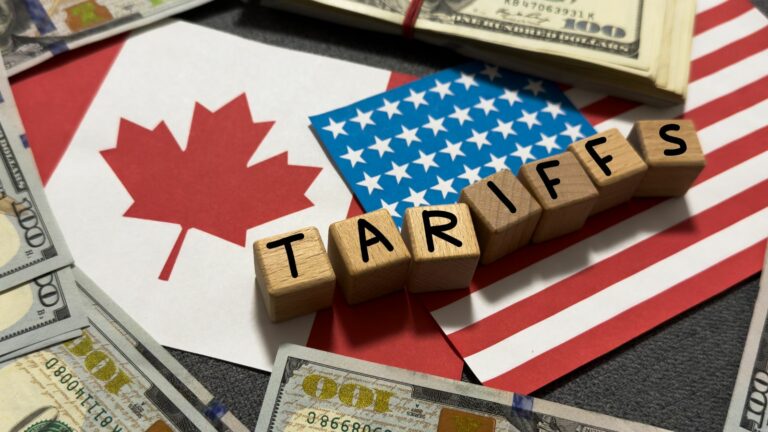
When trade negotiations fail in Washington, the first consequences can appear far from diplomatic rooms: in the price of an aluminum can at a Merrimack brewery, imported flowers in Nashua, or an empty room at a New Hampshire inn. That is the position facing businesses after the United States began enforcing 50% tariffs on roughly $20 billion of Canadian goods on August 22. The measure arrived after talks collapsed, with each capital blaming the other. U.S. Trade Representative Jamieson Greer says Ottawa rejected unusually favorable terms; Prime Minister Mark Carney says Washington changed the terms at the last minute and asked too much in return. For New Hampshire, the dispute is not abstract. Canada is a major supplier, customer, investor and source of visitors, leaving smaller firms exposed to higher costs, weaker demand and a level of uncertainty that can be difficult to price into everyday business decisions.
The Tariff Shock Is No Longer Hypothetical
New Hampshire Firms Feel Canada Tariff Shock While Washington Says Ottawa Already Had ‘Best Deal’
- The Tariff Shock Is No Longer Hypothetical
- Canada Is Woven Into New Hampshire’s Economy
- Brewers and Retailers Are Already Feeling Price Whiplash
- A Nashua Florist Shows How Small Margins Become Consumer Prices
- Manufacturers Face Costs Customers Rarely See
- Lumber and Machinery Expose the Border’s Supply-Chain Logic
- Tourism Adds a Second Trade Shock
- Washington Says Canada Walked Away From the ‘Best Deal’
- Ottawa Says the Terms Changed at the Eleventh Hour
- Retaliation Could Turn a Border-State Squeeze Into a Longer Cycle
For months, tariff threats gave businesses something uncomfortable but familiar: uncertainty. The August 22 change was different. U.S. customs officials began enforcing a 50% tariff on roughly $20 billion worth of Canadian goods after negotiations broke down before a deadline. The affected products span categories that can reach ordinary companies quickly, including some dairy products, alcohol, cement, hockey equipment, furniture and other manufactured goods. Once duties are collected at the border, importers must decide whether to absorb the cost, renegotiate with suppliers, change sourcing or raise prices.
That distinction matters in New Hampshire, where many firms have limited room to absorb sudden expenses. A tariff does not automatically translate into an identical increase at checkout, but it creates an immediate cost somewhere in the supply chain. Federal Reserve research on the broader 2025 tariff wave found substantial pass-through into U.S. goods prices. For a small company, the challenge is less theoretical: a shipment ordered under one cost assumption can arrive under another.
Canada Is Woven Into New Hampshire’s Economy
New Hampshire’s exposure starts with the scale of its commercial ties to Canada. The state imported about $1.9 billion in Canadian goods in 2024, according to analysis of federal trade data by the New Hampshire Fiscal Policy Institute. Another estimate cited by New Hampshire Business Review put two-way trade at roughly $2.75 billion. The more important point is what sits behind those numbers: fuel, machinery, forest products, aerospace inputs, medical instruments and other goods that feed local businesses.
The relationship also runs through investment and jobs. More than 90 Canadian-owned companies were reported to be operating in New Hampshire, supporting about 5,000 jobs. That makes a Canada-U.S. tariff fight more complicated than a contest between foreign sellers and American buyers. A Canadian parent company may employ New Hampshire workers, while a New Hampshire manufacturer may depend on a Canadian processor or customer. When tariffs interrupt one link, pressure can travel in both directions.
Brewers and Retailers Are Already Feeling Price Whiplash
At Able Ebenezer Brewing Company in Merrimack, the trade fight has shown up in something as basic as the can around the beer. The brewery told WMUR that can prices have been fluctuating, forcing it to absorb changes rather than rewrite retail prices whenever an input moves. The company also worried about malted barley from Canada before learning that the grain it relies on remained exempt. That combination—higher costs in one place and relief in another—shows why broad tariff headlines can be difficult for small firms to translate into a stable budget.
Retailers are seeing a different problem: fewer Canadian customers. Manchester Craft Market at the Mall of New Hampshire said Canadian-origin business had fallen by roughly 15% to 20% since trade tensions began, including fewer French-speaking shoppers. For a shop built around discretionary purchases, lost foot traffic can be as damaging as a higher wholesale invoice. One pressure raises costs; the other removes sales that might have helped cover them.
A Nashua Florist Shows How Small Margins Become Consumer Prices
Fortin Gage Flowers and Gifts in Nashua offers a clear picture of how tariffs can reach a Main Street business. Owner Amber Morgan told the Nashua Ink Link that tariff-related costs had already run into thousands of dollars. The shop imports planters and other goods, and roughly 15% of its flowers come from Canada. Fresh flowers are difficult to stockpile or delay: they are perishable, seasonal and often tied to weddings, funerals, holidays and other purchases that cannot simply be postponed for months.
Morgan said further tariffs could force price increases. That is not unusual for a small company facing repeated input shocks. The Federal Reserve’s 2026 Small Business Credit Survey found that more than four in ten employer firms saw tariff-related costs as a financial challenge, with the share reaching 69% in retail and 62% in manufacturing. Small firms may absorb part of an increase initially, but margins eventually impose a limit.
Manufacturers Face Costs Customers Rarely See
The pressure is also visible at Ambix Manufacturing in Freedom, where president Melissa Florio described higher expenses involving raw materials, energy, transportation and logistics. Because the company works under fixed customer contracts, it cannot always raise prices immediately when suppliers do. Florio said Ambix had paid some costs out of pocket, including expenses tied to injection molds, while receiving frequent supplier notices about increases. Eventually, she said, the company reached the point where some higher costs had to be passed through.
That experience matches the broader pattern reported by the Federal Reserve. Among small firms that sourced inputs from abroad and faced higher costs, 76% said they passed at least some increases to customers, while 60% also absorbed at least some themselves. Only a minority changed suppliers. For manufacturers, switching is rarely as simple as finding a cheaper catalogue item; specifications, tooling, quality controls and customer approvals can lock a supplier relationship in place.
Lumber and Machinery Expose the Border’s Supply-Chain Logic
New Hampshire’s Canada trade is full of products that cross the border because the two economies developed as a shared production system. Equipment and machinery accounted for about 18% of the state’s Canadian imports in figures cited by the Nashua Ink Link, while forest products represented about 9%. One example is lumber harvested in the United States, processed in Canada and brought back across the border. When it returns, it can still be treated as an import for tariff purposes, even though part of its economic origin was American.
The tariff map is not uniform. Fuel oil, which represents a large share of New Hampshire’s Canadian imports, has been excluded from the new duties, limiting the immediate hit where heating fuels are economically important. Other categories remain exposed. The uneven treatment can soften the statewide impact while making it sharper for particular firms. A contractor buying Canadian-processed building materials may feel a shock that a heating-oil distributor largely avoids.
Tourism Adds a Second Trade Shock
Goods are only one part of New Hampshire’s Canada problem. Canadian visitors have historically been important to the state’s tourism economy, particularly in the Lakes Region, White Mountains and Seacoast. At the Nutmeg Inn in Meredith, owners reported a 15% revenue decline from 2024 to 2025, driven largely by fewer international guests, especially Canadians. They said that during summer 2025, only one Canadian couple stayed at the inn—a striking change for a property where Canadian travelers had previously been a regular presence.
State park data showed the same direction. Canadian campground reservations fell from about 3,400 in 2024 to a little over 1,200 in 2025, a decline of roughly 64%. Visit New Hampshire describes tourism as the state’s second-largest revenue-generating industry and says it supports about 70,000 jobs. Trade friction can therefore hurt twice: tariffs can raise the cost of goods while political tension and weaker cross-border sentiment reduce customers arriving to spend money.
Washington Says Canada Walked Away From the ‘Best Deal’
Washington’s explanation for the breakdown is straightforward: Canada had favorable terms available and chose not to finalize them. U.S. Trade Representative Jamieson Greer said Ottawa declined to complete an agreement under terms he said had been settled earlier. He argued that the United States was offering Canada better treatment than any other major exporter, including tariff reductions affecting steel, aluminum, autos and lumber. The package also included cooperation on aerospace supply chains, critical minerals, forced-labor enforcement and the formal review of the U.S.-Mexico-Canada Agreement.
Greer later sharpened the message, saying Canada had already enjoyed “the best deal” and could have secured an even better one. That is Washington’s characterization, not an uncontested description of the negotiations. Still, it explains why the administration is presenting the tariffs as a consequence of Canada’s refusal rather than a breakdown caused by new U.S. demands. From that perspective, the duties reinforce leverage after Ottawa walked away.
Ottawa Says the Terms Changed at the Eleventh Hour
Canada tells almost the opposite story. Prime Minister Mark Carney said his government was prepared to make concessions, including dropping remaining retaliatory tariffs on U.S. steel, aluminum and automobiles if Washington substantially lowered its own duties. Ottawa was also prepared to encourage provinces to restore U.S. alcohol sales and take administrative steps involving supply management. Carney said the talks failed because the United States introduced last-minute terms Canada viewed as unfair, uneconomic and unreliable, while seeking commitments Ottawa believed would constrain Canadian sovereignty and future policy choices.
Reuters reported that disagreements included tariff treatment for larger vehicles and limits affecting Canada’s flexibility in other trade relationships. Carney summarized his position by saying Washington had asked too much and offered too little. That leaves two incompatible narratives: Greer says Canada rejected the best treatment on offer, while Carney says the offer deteriorated near the deadline. The public record confirms the disagreement, but not a mutually accepted version of who changed what first.
Retaliation Could Turn a Border-State Squeeze Into a Longer Cycle
The immediate U.S. tariffs may only be the first round. Canada says it will impose dollar-for-dollar retaliatory tariffs beginning September 8, targeting U.S. goods in sectors including steel, dairy, appliances, agricultural equipment, pulp and paper, and electronics. Ottawa has also announced nearly $25 billion in support for Canadian workers and businesses affected by U.S. tariffs. For New Hampshire exporters, that creates another channel of risk: companies can face higher costs on Canadian inputs while confronting weaker demand or new barriers when selling north.
A February New Hampshire House resolution cited Canada as the state’s largest goods export market, worth about $1.4 billion annually. Academic and Federal Reserve research on recent U.S. tariffs suggests part of tariff increases eventually appears in consumer prices, while indirect effects move through input costs and markups over time. The USMCA remains in force, but its July 2026 joint review ended without U.S. agreement to renew it in its current form. For firms near the border, uncertainty itself is becoming a cost.
This Options Discord Chat is The Real Deal
While the internet is scoured with trading chat rooms, many of which even charge upwards of thousands of dollars to join, this smaller options trading discord chatroom is the real deal and actually providing valuable trade setups, education, and community without the noise and spam of the larger more expensive rooms. With a incredibly low-cost monthly fee, Options Trading Club (click here to see their reviews) requires an application to join ensuring that every member is dedicated and serious about taking their trading to the next level. If you are looking for a change in your trading strategies, then click here to apply for a membership.