35,000+ smart investors are already getting financial news, market signals, and macro shifts in the economy that could impact their money next with our FREE weekly newsletter. Get ahead of what the crowd finds out too late. Click Here to Subscribe for FREE.
Rising fuel prices have a way of turning a policy announcement into an everyday conversation almost instantly. The Liberal government says it will suspend federal fuel excise taxes on gasoline and diesel until Labour Day, a move meant to soften the shock of higher energy costs during the busiest travel and shipping months of the year. In practical terms, the headline promise is simple, but the real-world effects are more layered.
These 10 key angles explain what the tax suspension means, why Ottawa is acting now, where the savings may show up, and why the debate goes well beyond a few cents at the pump. The measure touches household budgets, freight costs, inflation, provincial price gaps, federal revenues, and climate policy all at once, which is why it is likely to remain one of the most closely watched affordability decisions of the season.
What the proposal actually does
Liberals Suspend Federal Fuel Excise Taxes – Here’s What This Means For You
- What the proposal actually does
- Why Ottawa moved now
- The savings will be real, but not life-changing
- Diesel is where the broader economic story begins
- This does not erase every fuel-related charge
- Why drivers may not feel every cent for long
- Regional differences will still be obvious
- Ottawa is giving up a meaningful revenue stream
- The climate tension has not gone away
- Labour Day may become the next pressure point
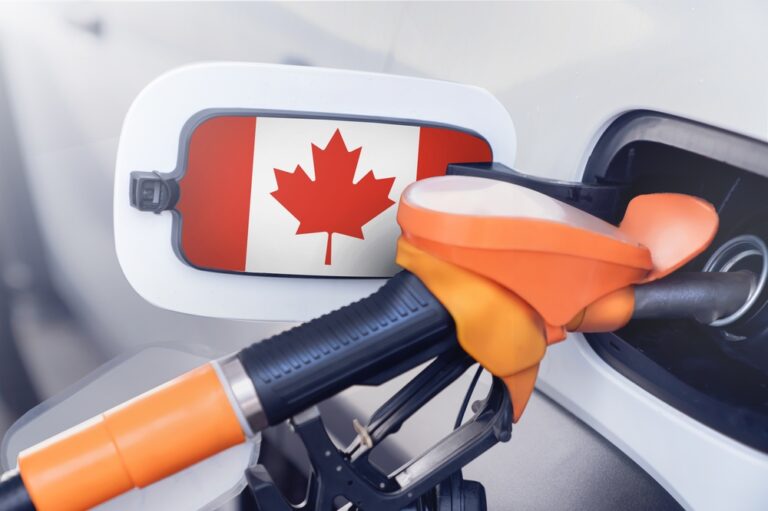
The Liberal government says it will suspend the federal excise tax on gasoline and diesel from April 20 through Labour Day. That sounds technical, but it matters because this is one of the long-standing fixed taxes built into the pump price. For regular gasoline, the federal excise tax is 10 cents per litre. For diesel, it is 4 cents per litre. Removing it temporarily is designed to create immediate, visible relief without waiting for a rebate, tax credit, or year-end filing.
The timing matters almost as much as the tax itself. A suspension running to Labour Day covers the spring and summer driving season, when road trips pick up, construction is active, and freight networks stay busy moving food, retail goods, and building materials. It is also important to separate this move from the old consumer carbon charge. That charge was already removed in 2025, so this new decision targets a different federal layer of fuel taxation entirely.
Why Ottawa moved now
Fuel policy rarely changes in a vacuum, and this decision is plainly tied to rising energy pressure. Ottawa presented the suspension as a response to higher fuel costs that are squeezing both households and businesses. That matters because gas and diesel do not only affect drivers filling up personal vehicles. They also filter into trucking, agriculture, delivery fleets, construction activity, and, eventually, the price of goods on store shelves.
Recent inflation data and central bank commentary help explain the urgency. Statistics Canada has already noted that gasoline prices were rising month over month ahead of the latest escalation in Middle East tensions, while the Bank of Canada warned that higher gasoline prices can add costs for businesses and restrain consumer spending. In other words, the pressure does not stay confined to gas stations. Once fuel costs climb, they ripple through family budgets and the wider economy faster than many other price shocks.
The savings will be real, but not life-changing
On paper, the direct savings are easy to understand. A 50-litre gasoline fill-up would be about $5 cheaper if the full 10-cent cut is passed through at the pump. For diesel, a 100-litre fill-up would be roughly $4 lower from the excise suspension alone. That is real money, especially for commuters, contractors, delivery operators, and rural households that drive longer distances and have fewer transportation alternatives.
Still, this is better described as pressure relief than transformation. Canadian households spent an average of $12,090 on transportation in 2023, according to Statistics Canada, which helps explain why any reduction at the pump draws attention. But it also shows the limits of a tax holiday. Vehicle payments, insurance, maintenance, and parking remain major costs, and gasoline’s weight in the CPI basket was 3.86% based on 2023 expenditures. In other words, the measure can help, but it is unlikely to rewrite the affordability story on its own.
Diesel is where the broader economic story begins
Gasoline grabs more headlines because it is tied to personal driving, but diesel may be the more economically important side of this announcement. Diesel powers much of the country’s goods movement and supports essential industries that affect everyday prices. When Ottawa says the measure is meant to reduce costs for truckers, food, agriculture, housing, construction, and delivery, that is not political filler. Those sectors sit deep inside the cost structure of daily life.
That is why even a smaller 4-cent-per-litre diesel cut can matter beyond the pump. A trucking fleet, farm operation, excavation company, or delivery network buys fuel in volumes that turn a few cents into something more meaningful over weeks and months. The benefit may not show up as dramatically as a cheaper fill-up for a private driver, but businesses that burn fuel steadily tend to notice tax changes quickly. Whether consumers ultimately feel that relief in grocery prices or delivery costs is another question, but diesel is often where affordability policy meets the real economy.
One reason fuel-tax debates get confusing so quickly is that pump prices are made up of more than one tax and more than one policy. The federal excise tax is only one layer. Provincial fuel taxes still exist, sales taxes still apply, and local market conditions still shape the final price. That means nobody should confuse this move with wiping out all government charges on gasoline or diesel. It is a temporary federal excise holiday, not a full reset of fuel pricing in Canada.
It also does not revive or rework the federal consumer carbon charge, because that system was already ended. In fact, Ottawa permanently removed the federal consumer fuel charge from legislation earlier this year after previously setting the fuel charge rate to zero effective April 1, 2025. That distinction matters politically and financially. The current announcement is about a fixed excise tax that has existed for decades, not a return to the old carbon-pricing fight that once dominated affordability debates around gasoline.
Why drivers may not feel every cent for long
Tax cuts on fuel are among the most visible forms of relief, but they do not operate in isolation. Gasoline and diesel prices still move with crude oil markets, refinery conditions, transportation bottlenecks, and local competition. Natural Resources Canada notes that prices are built from several components, including crude, refining, distribution, margins, and taxes. That means a tax suspension can help immediately, yet still be partly overshadowed by a surge in oil prices or a refinery outage.
Recent Canadian data shows how quickly those non-tax forces can matter. Statistics Canada reported that gasoline prices rose 3.6% month over month in February, and British Columbia saw a 9.6% jump that month, driven largely by tighter supply linked to refinery maintenance and closures in the Pacific Northwest. That is the practical caution built into every fuel announcement: a government can remove one layer of cost, but it cannot guarantee calm global oil markets or a smooth refining season. Relief is real, but it competes with forces much larger than tax policy.
Regional differences will still be obvious
Canadians rarely pay the same price for fuel from one province to another, and this policy will not change that. The federal excise tax is uniform, but provincial taxes and local supply dynamics are not. That means the suspension should narrow prices somewhat everywhere it applies, yet drivers will still see meaningful regional variation because each province and city has its own tax mix, infrastructure constraints, and competitive landscape.
This is one reason fuel politics so often feels local even when the policy is federal. In some regions, a 10-cent gasoline cut will feel more noticeable because prices were already relatively stable. In others, the benefit may be harder to spot if crude prices climb, refineries tighten supply, or local retail margins widen. Western cities, Atlantic markets, and major urban centres can move differently even in the same month. The result is that the suspension may produce a shared national headline, but not one identical consumer experience. Canadians will still compare pump prices across regions and wonder why the gap remains so wide.
Ottawa is giving up a meaningful revenue stream
Temporary tax holidays are politically attractive because they are easy to explain, but they still carry a fiscal cost. The Parliamentary Budget Officer reported that the federal government collected $5.6 billion in excise taxes on gasoline, aviation fuel, and diesel in fiscal 2023-24, and fuel taxes made up the largest share of federal “other excise taxes and duties.” That does not translate directly into the exact cost of this particular suspension, but it does show that Ottawa is stepping away from a revenue source measured in billions, not millions.
That trade-off matters because governments do not lose revenue in a vacuum either. Every dollar forgone through lower fuel taxes is a dollar that cannot be used elsewhere unless it is offset by stronger revenue in another area, additional borrowing, or spending restraint. Politically, the argument is that immediate relief is worth the cost during a period of energy stress. Economically, the open question is whether temporary broad tax relief is the best-targeted tool compared with measures aimed more narrowly at lower-income households or sectors under the greatest strain.
The climate tension has not gone away
Affordability may be winning the day politically, but the environmental tension around fuel taxes remains. Transport remains a major source of Canadian emissions, and Environment and Climate Change Canada’s data shows transportation is one of the country’s biggest pollution drivers. Its latest black carbon inventory also underscores how significant transportation and mobile equipment remain, especially diesel-related activity. That makes any move to lower pump prices politically understandable, yet environmentally complicated.
The broader policy question is not whether Canadians like cheaper fuel in the middle of a price spike. They usually do. The harder question is whether repeated tax relief weakens the long-term signal that higher-emitting energy use should gradually become less attractive. OECD work has shown that fuel taxes are an important part of the broader carbon-pricing picture and that governments often face pressure to cut them during energy shocks. That tension is now front and centre again: short-term affordability argues for relief, while long-term climate strategy argues for stable price signals.
Labour Day may become the next pressure point
Temporary relief measures often create their own deadline politics, and this one is no exception. By definition, the hardest question may arrive when the suspension ends. If fuel markets are calmer by early September, Ottawa may argue the policy did its job. But if global energy pressure is still elevated, Labour Day could become a new flashpoint, with fresh demands to extend the tax holiday or replace it with another affordability measure.
There is also a more practical issue. Temporary fuel-tax cuts can create a noticeable snapback once they expire. Research examining Germany’s 2022 fuel-tax reduction found that the cut was largely passed through to consumers and that gasoline prices jumped by roughly the size of the tax reduction after it ended. That does not guarantee the same path in Canada, but it is a reminder that temporary relief can feel especially sharp when it disappears. In that sense, Labour Day is not just an end date. It is the moment when this policy will face its real political and economic test.
This Options Discord Chat is The Real Deal
While the internet is scoured with trading chat rooms, many of which even charge upwards of thousands of dollars to join, this smaller options trading discord chatroom is the real deal and actually providing valuable trade setups, education, and community without the noise and spam of the larger more expensive rooms. With a incredibly low-cost monthly fee, Options Trading Club (click here to see their reviews) requires an application to join ensuring that every member is dedicated and serious about taking their trading to the next level. If you are looking for a change in your trading strategies, then click here to apply for a membership.