35,000+ smart investors are already getting financial news, market signals, and macro shifts in the economy that could impact their money next with our FREE weekly newsletter. Get ahead of what the crowd finds out too late. Click Here to Subscribe for FREE.
The mood in Lacombe on Wednesday night felt less like a technology launch than a public reckoning. Alberta Technology Minister Nate Glubish faced a packed room of hundreds at the province’s first AI data-centre town hall, where jeers and boos punctuated a broader argument over resource use, electricity, public oversight and trust. The confrontation exposes an unusually large collision of ambitions: Alberta is pursuing an industry measured in gigawatts and tens of billions of dollars, while communities are asking whether water supplies, power infrastructure, privacy protections and public finances can keep pace. The province insists its framework protects ratepayers, tightly controls water and ensures Albertans share in the economic gains. Skeptics remain unconvinced, particularly because major projects were already moving ahead before the town halls began.
A Town Hall Turns Into a Warning Shot
Hundreds Boo Alberta Government’s AI Data-Centre Push Over Water, Privacy and Taxpayer Risk
- A Town Hall Turns Into a Warning Shot
- The Economic Prize Is Enormous—At Least on Paper
- Water Has Become the Simplest Way to Understand the Scale
- The Electricity Numbers Are Even Harder to Ignore
- Privacy Is a Different Risk, but It Belongs in the Debate
- Taxpayer Risk Is About the Rules Behind the Promise
- The Political Problem Is Increasingly About Timing and Trust
The scene in Lacombe made clear that Alberta’s data-centre strategy has moved beyond a technical debate among utilities, regulators and investors. Glubish was jeered, badgered and booed at the August 19 meeting, according to reporting from The Canadian Press, with hundreds filling the room. Dozens lined up to question the minister, and none of those who reached the microphone before the meeting ended offered an endorsement. One attendee had travelled from neighbouring Ponoka, illustrating how concerns surrounding individual projects are spilling beyond the municipalities where facilities might actually be built. The hostility also followed an earlier protest outside Sturgeon County’s offices connected with Meta’s massive project north of Edmonton.
The significance is not simply that a government minister received an unfriendly reception. Alberta has spent years building a strategy around attracting AI computing infrastructure, yet some residents now appear to feel that the investment drive has moved faster than the public conversation surrounding it. Opponents have raised concerns ranging from electricity bills and water consumption to pollution, consultation and the sheer physical scale of industrial developments. That creates a difficult political problem: government officials are selling projects as a generational diversification opportunity at the same moment that some communities are asking whether the most important decisions have effectively already been made. Town halls can provide information, but they also give frustrated residents a microphone—and Lacombe demonstrated how combustible that combination has become.
The Economic Prize Is Enormous—At Least on Paper
Alberta’s eagerness to win the AI infrastructure race is not difficult to understand. Its official strategy is built around three pillars—power capacity, sustainable cooling and economic growth—and promotes the province’s natural gas resources, cold climate, tax structure and comparatively business-friendly regulatory system. In August, the government said its data-centre strategy had attracted between $100 billion and $200 billion in potential private investment. The word “potential” matters: proposals and investment interest are not the same as completed facilities. Even so, the scale explains why the government is willing to devote considerable political capital to the sector. Few emerging industries arrive promising projects worth billions of dollars each.
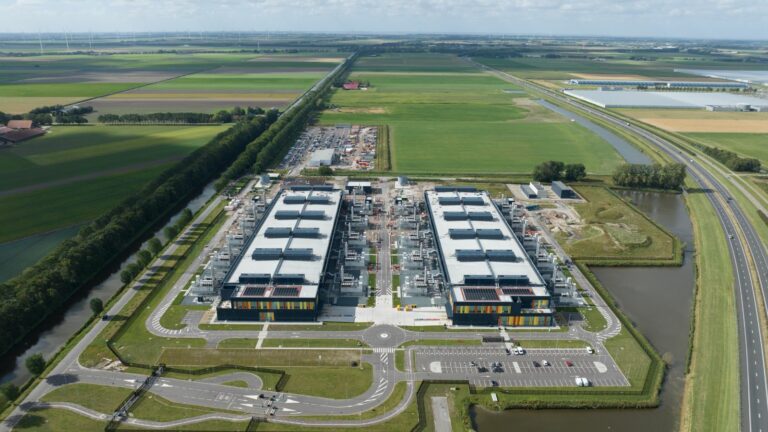
Meta’s Sturgeon County development shows what proponents have in mind. The company announced an investment exceeding $13 billion for a one-gigawatt Canadian data-centre campus, with more than 3,000 workers expected during peak construction and roughly 300 permanent positions once operating. Meta has also committed approximately $60 million for local road and water infrastructure. Those figures help explain the enthusiasm from provincial economic-development officials, but they also sharpen questions about what happens after construction. A facility employing thousands while being built may employ only hundreds once running because data centres are extraordinarily capital-intensive and highly automated. Alberta’s economic case therefore depends on much more than direct employment: tax revenue, energy development, construction spending, supplier activity and the possibility that large-scale computing capacity helps attract a wider technology ecosystem all become central to determining whether the promised payoff reaches ordinary communities.
Water Has Become the Simplest Way to Understand the Scale
Water is one of the most emotionally powerful issues because every community understands immediately what competition for a limited local resource can mean. Yet treating every data centre as though it has the same water footprint can also produce misleading conclusions. Meta says its Sturgeon County campus will use closed-loop liquid cooling combined with dry cooling, meaning the cooling system itself will not require ongoing operational water consumption. The company projects total annual operational water requirements—from other facility needs—to be less than those of a typical Alberta golf course or a 50-acre canola farm. Alberta’s own project information similarly describes the facility as using closed-loop cooling rather than continuously drawing surrounding water for cooling.
Other proposed developments show why residents still want project-specific answers. The proposed Wonder Valley AI industrial development near Grande Prairie has become tied to a legal dispute involving Sturgeon Lake Cree Nation and a proposed diversion of six billion litres of water per year. The First Nation has argued that consultation was inadequate, and a Court of King’s Bench judge recently rejected an attempt by the developer to strike its application for judicial review. The contrast between that figure and Meta’s dry-cooling design is important. “How much water do data centres use?” does not have one Alberta-wide answer. Cooling technology, electricity generation, site design and local water sources can radically change the result. That is precisely why communities are demanding detailed assessments before accepting broad assurances that the industry’s water impact will be modest.
The Electricity Numbers Are Even Harder to Ignore
The electricity challenge can be expressed in one striking comparison. In June 2025, the Alberta Electric System Operator said 29 proposed large-load projects were seeking more than 16 gigawatts of grid connections. AESO responded with an interim limit allowing only 1,200 megawatts of additional large-load connections through 2028 because connecting everything being requested would impair grid reliability. For context, AESO said Edmonton’s entire electrical load was approximately 1,400 megawatts. Those proposals have continued to evolve since then, but the episode demonstrated the extraordinary scale of demand that AI infrastructure can bring to a power system.
Meta’s planned facility alone is rated at one gigawatt, close to the magnitude of Edmonton’s load in AESO’s comparison. Alberta is increasingly pushing developers toward “bring your own power” arrangements rather than expecting the existing grid to absorb every project. Meta says it will fully fund the new generation and grid infrastructure required for its campus, with the planned Greenlight natural-gas generating facility becoming a major source of electricity. The province has gone further, arguing that additional generation associated with the project could reduce transmission costs for existing consumers by as much as six per cent. That is an important promise, but it is also why residents are focusing so intensely on implementation. A project that pays for its own infrastructure looks very different financially from one that requires system-wide upgrades, and Albertans increasingly want proof that the distinction will survive once multiple enormous facilities seek power simultaneously.
Privacy Is a Different Risk, but It Belongs in the Debate
Privacy requires a careful distinction from the physical concerns surrounding a data-centre site. Building a server facility near an Alberta community does not by itself create a privacy violation, and questions about cooling water or transmission capacity are fundamentally different from questions about who collects, processes or controls personal information. Nevertheless, the infrastructure boom is happening within a larger national debate about AI governance and data sovereignty. In May 2026, Alberta’s privacy commissioner joined federal, British Columbia and Quebec counterparts in concluding that the initial development of ChatGPT had not complied with applicable Canadian privacy laws. Regulators identified issues involving personal information used during the training and deployment of certain models, while noting steps OpenAI was taking to address concerns.
Canada’s new national AI strategy makes a related distinction between simply having computing capacity located in Canada and possessing sovereign computing infrastructure. The federal government says Canadian organizations remain heavily dependent on foreign providers and warns that sensitive Canadian information stored under foreign jurisdictions can become subject to legal regimes outside Canada’s control. That does not mean a foreign-owned Alberta data centre is inherently unsafe. It means geography is only one component of data sovereignty. Ownership, contractual control, applicable law, cybersecurity, data residency and the identity of the organizations running workloads can matter as much as the building’s postal code. As Alberta races to become a physical home for AI computing, the deeper policy question is whether that growth also strengthens Canadian control over important data—or simply hosts more infrastructure for global technology companies.
Taxpayer Risk Is About the Rules Behind the Promise
The government’s position on taxpayer exposure is unusually clear: its August information campaign states that Albertans will not pay for data-centre projects, the grid will come first and residents will share in the economic upside. Alberta has also changed electricity rules to encourage large data centres to supply their own generation and move transmission costs caused by their projects toward the developers rather than ordinary ratepayers. Meta says it will pay the full energy costs associated with its Sturgeon County campus and fund new generation and grid infrastructure. That means it would be inaccurate to portray the current Meta development simply as a government-funded technology project.
There is still room for legitimate debate over how the financial framework works. Alberta’s data-centre levy took effect on January 1, 2026 and can reach 2% of the value of computing equipment at large facilities. However, the levy is fully deductible against a company’s Alberta corporate income taxes, and facilities that avoid drawing electricity from the broader grid can qualify for a zero-per-cent levy rate under the government’s power-consumption approach. The design is deliberately intended to collect revenue without making Alberta uncompetitive. For residents, the important question therefore goes beyond whether the government writes an up-front subsidy cheque. Roads, water infrastructure, grid upgrades and municipal services all carry measurable costs. Meta’s $60-million local infrastructure commitment is one example of a developer absorbing some of them. The credibility of Alberta’s “Albertans won’t pay” promise will ultimately depend on whether equally transparent cost allocation follows every project rather than only the highest-profile development.
The Political Problem Is Increasingly About Timing and Trust
The government is now offering town halls, online information and routes for public participation, but critics argue that consultation should have happened earlier. Meta publicly announced its $13-billion-plus project in July, construction activity began, demonstrators gathered outside Sturgeon County offices in early August, and only afterward did the provincial town-hall series get underway. That sequence helps explain why the Lacombe meeting became more than an exchange of technical questions. When residents believe consultation is occurring after momentum behind major developments has already become difficult to reverse, even accurate government information can be received as salesmanship rather than engagement.
At the same time, recent decisions show that data-centre development is not simply receiving automatic approval across Alberta. The Alberta Utilities Commission recently rejected a proposed natural-gas generating facility associated with a large data-centre complex near Olds, finding the proposed plant too close to the surrounding community. Rocky View County has also paused new data-centre proposals while it develops clearer rules. Those decisions complicate both extremes of the debate: Alberta is neither waving every project through nor abandoning its effort to become a major AI infrastructure hub. The political test is whether regulators and governments can convince communities that local concerns can materially change projects before irreversible commitments are made. The boos in Lacombe suggest that investment announcements alone will not create that confidence. For the province’s strategy to retain public legitimacy, the benefits, costs and risks will have to be demonstrated project by project.
This Options Discord Chat is The Real Deal
While the internet is scoured with trading chat rooms, many of which even charge upwards of thousands of dollars to join, this smaller options trading discord chatroom is the real deal and actually providing valuable trade setups, education, and community without the noise and spam of the larger more expensive rooms. With a incredibly low-cost monthly fee, Options Trading Club (click here to see their reviews) requires an application to join ensuring that every member is dedicated and serious about taking their trading to the next level. If you are looking for a change in your trading strategies, then click here to apply for a membership.