35,000+ smart investors are already getting financial news, market signals, and macro shifts in the economy that could impact their money next with our FREE weekly newsletter. Get ahead of what the crowd finds out too late. Click Here to Subscribe for FREE.
Canada’s latest trade confrontation with the United States has moved from months of brinkmanship to a matter of hours. Foreign Affairs Minister Anita Anand is set to meet U.S. Secretary of State Marco Rubio at the White House on Thursday as officials race to convert substantial negotiating progress into finalized terms before a new Saturday tariff deadline. President Donald Trump has publicly described an agreement as essentially reached, while Prime Minister Mark Carney has been more cautious, stressing that important work remains. That distinction matters. Reported tariff relief for Canadian autos, steel and aluminum could be economically significant, but questions involving dairy, American alcohol, provincial cooperation and the longer-term future of CUSMA remain unresolved. Anand’s Washington visit therefore comes at a moment when diplomacy, trade policy and domestic political pressure are converging at unusually high speed.
A White House Meeting With More Than Diplomatic Weight
Anand Heads to White House for Rubio Meeting as Canada-U.S. Trade Talks Enter Final Stretch
- A White House Meeting With More Than Diplomatic Weight
- The Saturday Deadline Is Driving Every Decision
- Autos, Steel and Aluminum Are the Biggest Economic Prize
- Dairy and Alcohol Remain the Political Tripwires
- Premiers Can Determine Whether Parts of a Deal Actually Stick
- CUSMA Is the Bigger Contest Behind This Agreement
- The Deal Still Has to Survive Canada’s Political Test
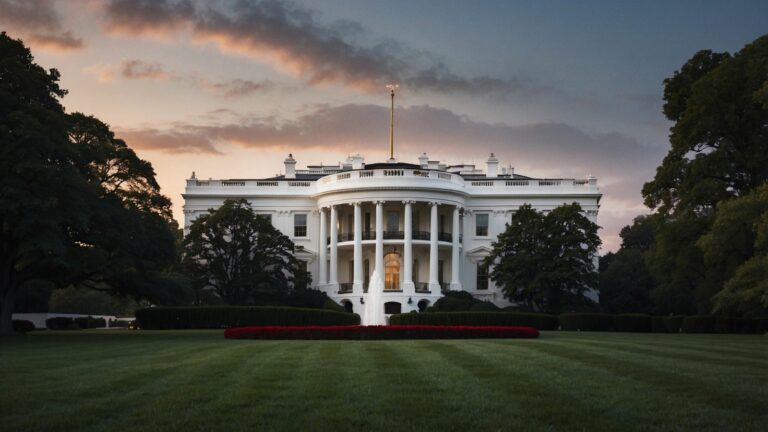
Anand’s scheduled meeting with Rubio puts Canada’s top foreign-policy representative inside the White House at one of the most sensitive moments in the bilateral relationship this year. Reuters reported that the U.S. State Department confirmed the Thursday meeting while Canadian and American officials continued working toward final trade terms. The timing is notable because it comes after Trump postponed threatened tariffs for only three days, rather than withdrawing them outright. Carney has acknowledged substantial progress, but Ottawa has stopped short of presenting the emerging arrangement as a completed agreement. That leaves Anand arriving in Washington with both governments publicly projecting optimism while negotiators still have consequential details to settle. Even without Anand personally drafting tariff schedules, ministerial-level contact can help manage the broader political relationship when disputes spill beyond customs rates into agriculture, provincial policy, economic security and the future structure of North American trade.
The distinction between diplomacy and direct trade negotiation is important. Canada’s minister responsible for Canada-U.S. trade is Dominic LeBlanc, while Janice Charette serves as Canada’s chief trade negotiator to the United States. Both have been deeply involved in the Washington negotiations, including meetings with U.S. Trade Representative Jamieson Greer. Anand’s involvement adds another senior channel rather than replacing that negotiating team. Rubio, meanwhile, sits at the centre of the Trump administration’s foreign-policy apparatus, making the encounter broader than a technical tariff discussion. For Canadian businesses trying to make investment, production or hiring decisions, that high-level engagement offers some reassurance that both sides want a political landing zone. Yet a cordial meeting cannot substitute for finalized language. Until tariff orders are formally modified and both governments explain what they have actually agreed to, optimism will remain provisional.
The Saturday Deadline Is Driving Every Decision
The urgency originates in a set of additional 50% U.S. tariffs that had been scheduled to take effect this week. The Trump administration announced the measures in July under Section 338 of the Tariff Act of 1930, targeting roughly $20 billion in Canadian goods over disputes involving motor vehicles, dairy and alcoholic beverages. Unlike earlier tariff actions that provided protection for many CUSMA-compliant products, the new Section 338 duties were designed to apply to covered goods regardless of their North American origin status. The White House excluded categories including energy, potash and goods already subject to certain Section 232 measures. Trump then postponed implementation for three days as negotiations advanced. Reuters reported that the revised deadline is 12:01 a.m. Eastern time Saturday, leaving negotiators with an unusually compressed period to turn political commitments into workable documents.
That temporary reprieve explains why statements from Washington and Ottawa can sound more confident than the legal position actually is. Trump has spoken as though a deal is in hand, while Carney has emphasized that negotiations still require work. Both statements can be true if leaders have agreed on the broad exchange but officials are still defining rates, quotas, exemptions and implementation rules. Businesses care about those details because a percentage point written differently into a customs notice can change whether a shipment remains profitable. The Section 338 proclamations also show how quickly the dispute moved beyond symbolic politics: covered Canadian products ranged from food and beverages to manufactured goods. For smaller exporters with less capacity to absorb a sudden 50% border cost, another weekend of uncertainty is not merely diplomatic drama. It affects orders, inventory decisions, contracts and whether customers postpone purchases.
Autos, Steel and Aluminum Are the Biggest Economic Prize
The most economically significant reported concessions involve industries already carrying substantial U.S. tariff costs. Reuters reported that Washington has considered lowering its tariff on Canadian-made vehicles from 25% to 15%, while Canadian negotiators have pushed for a 10% rate. The effective burden on a vehicle could fall further depending on how U.S.-made content is treated when the tariff is calculated, although the two sides have differed over exactly which North American components should qualify. Steel and aluminum tariffs could reportedly fall from 50% to 25%. For steel, discussions have included a quota of roughly four million metric tons annually, with volumes above the threshold still facing the higher rate. None of those terms should be treated as final until governments publish the implementing documents, but even partial relief would materially change the economics facing Canadian producers.
The scale of the auto relationship shows why seemingly small differences in tariff rates matter. Innovation, Science and Economic Development Canada’s Trade Data Online, using Statistics Canada data, recorded about C$67.8 billion in 2025 exports to the United States across Canadian motor vehicle manufacturing, motor vehicle body and trailer manufacturing, and parts manufacturing. The human concentration of that trade is particularly visible in southern Ontario. Statistics Canada estimated in early 2025 that 68.3% of jobs in automotive manufacturing depended on U.S. demand for Canadian exports. In Windsor-Sarnia, the sector accounted for 38.3% of manufacturing employment and 7.3% of total employment at the time. Those numbers turn tariff negotiations into something more concrete than percentages on a negotiating sheet. A lower rate can influence production assignments, supplier volumes, overtime and future investment decisions in communities where the border is embedded in the local economy.
Dairy and Alcohol Remain the Political Tripwires
Dairy and alcohol have become unusually powerful bargaining issues because they combine trade rules with domestic political identity. The Trump administration argues that Canada’s allocation of dairy tariff-rate quotas treats some U.S. cheese exporters less favourably than European suppliers operating under the Canada-European Union trade agreement. Washington has similarly characterized provincial restrictions on American alcoholic beverages as discriminatory. Canada disputes the broader implication that its supply-management system should be dismantled, and Canadian officials have maintained that supply management remains protected in the emerging negotiations. That point matters particularly in Quebec and other dairy-producing regions, where any perception that Ottawa traded away agricultural protections for industrial tariff relief would carry a considerable political cost. The difference between adjusting the administration of import quotas and weakening the entire supply-management system is therefore likely to receive intense scrutiny once formal language becomes available.
Alcohol is complicated for a different reason: Ottawa does not control every lever. Provincial and territorial governments generally regulate liquor distribution, and several jurisdictions removed or restricted U.S. products during the trade conflict. The Associated Press reported that eight of Canada’s 10 provinces had restrictions or bans on American alcohol. Ontario’s LCBO alone had sold close to C$1 billion worth of U.S. products annually before the products were pulled, illustrating why American producers have pressed Washington to make liquor access part of the negotiations. Carney has reportedly encouraged premiers to restore U.S. products, but the federal government cannot simply dictate what provincial liquor boards put back on shelves. A concession that looks straightforward in a Washington negotiating document can therefore become considerably more complicated when implementation reaches Toronto, Quebec City or another provincial capital.
Premiers Can Determine Whether Parts of a Deal Actually Stick
Carney’s decision to brief the provincial premiers reflects how deeply the negotiations reach into areas where provincial governments have economic and political influence. Reuters reported that the prime minister spoke with the premiers as negotiations intensified and asked provinces to consider bringing American alcohol back to their retail systems. That request immediately exposed the challenge of selling a bilateral compromise at home. Provinces whose economies depend heavily on autos, steel, aluminum, forestry or agriculture will judge the package through different lenses. A province may welcome relief for a major employer while resisting a concession involving liquor stores or farm policy. The result is an unusual negotiating dynamic: Ottawa can bargain with Washington at the international level, but certain promises become much easier to implement if premiers believe their regions have received enough in return.
Quebec has already demonstrated that tension. Premier Christine Fréchette said the negotiations were still far from settled and sought greater clarity about dairy and forestry, while resisting the idea that Quebec must automatically return U.S. alcohol to SAQ shelves. The province also faces an election in October, raising the political stakes around any perceived weakening of supply management. The dispute illustrates why the final agreement will be judged differently across Canada. At a factory in Ontario, attention may centre on whether auto tariffs fall enough to protect production. In an aluminum-producing region, the central question may be whether the 50% duty is genuinely cut. For a Quebec dairy farmer, the critical language could be buried in a technical section on quota allocation. The same agreement can therefore produce relief, suspicion and political resistance at the same time.
CUSMA Is the Bigger Contest Behind This Agreement
Even a successful short-term deal would not resolve the larger argument over the future of continental trade. Canada, the United States and Mexico conducted CUSMA’s first mandatory joint review on July 1, six years after the agreement entered into force. The United States declined to extend the pact in its current form for another 16-year term, meaning the review process will continue. That does not mean CUSMA has suddenly expired. The agreement remains in force until 2036 under its existing rules, with additional reviews creating opportunities for the three countries to reach an extension or negotiate changes. The current Canada-U.S. negotiations should therefore be understood as an attempt to stabilize immediate bilateral problems while a much larger debate continues over rules of origin, manufacturing policy, agricultural access and the long-term architecture of the North American market.
The economic exposure explains why Ottawa has strong incentives to secure near-term predictability even while pursuing diversification. Statistics Canada reported that 71.7% of Canadian merchandise exports still went to the United States in 2025, despite that share falling from 75.9% a year earlier. Global Affairs Canada says the two countries exchanged nearly C$3.5 billion in goods and services every day in 2025. Those figures make geographic proximity difficult to replace, even as Canadian exporters expand in Europe and the Indo-Pacific. A temporary tariff settlement could therefore buy something businesses value almost as much as lower rates: time. It could reduce the immediate risk of another tariff shock while Canada prepares for further CUSMA negotiations. But it would be misleading to portray the current talks as a permanent settlement. Saturday’s problem and the next decade of North American trade policy are related, but they are not the same problem.
The Deal Still Has to Survive Canada’s Political Test
The final challenge may come after negotiators stop negotiating. Recent polling suggests Canadians want economic stability but remain wary of visibly yielding to Washington. Reuters cited a Leger poll in which 56% of respondents favoured making no further concessions. An Abacus Data poll of 1,499 Canadians conducted from August 7 to 12 found only 18% selected offering concessions as their preferred response if new U.S. tariffs were imposed. In the same research, 55% said Canada should prepare to move on from CUSMA and build trade relationships elsewhere, compared with 34% who favoured continuing to preserve and update the agreement. The findings do not mean Canadians oppose every compromise, but they illustrate the narrow political space Carney’s government occupies: avoiding damaging tariffs is popular, while appearing to surrender leverage may not be.
That is why the most important information will arrive in the fine print rather than in declarations that a deal has been reached. Businesses will be watching for the exact auto rate and content formula, the steel quota and above-quota tariff, the treatment of aluminum, the formal status of Saturday’s Section 338 duties and any commitments involving dairy or provincial alcohol markets. Canadians will also need to know which measures take effect immediately and which are deferred to broader CUSMA negotiations. Anand’s White House meeting with Rubio is significant because it comes when that package is nearing its decisive stage, but a diplomatic photograph cannot settle those questions. The real measure of success will be whether the final documents reduce costs, preserve important Canadian protections and give companies enough certainty to plan beyond the next tariff deadline.
This Options Discord Chat is The Real Deal
While the internet is scoured with trading chat rooms, many of which even charge upwards of thousands of dollars to join, this smaller options trading discord chatroom is the real deal and actually providing valuable trade setups, education, and community without the noise and spam of the larger more expensive rooms. With a incredibly low-cost monthly fee, Options Trading Club (click here to see their reviews) requires an application to join ensuring that every member is dedicated and serious about taking their trading to the next level. If you are looking for a change in your trading strategies, then click here to apply for a membership.