35,000+ smart investors are already getting financial news, market signals, and macro shifts in the economy that could impact their money next with our FREE weekly newsletter. Get ahead of what the crowd finds out too late. Click Here to Subscribe for FREE.
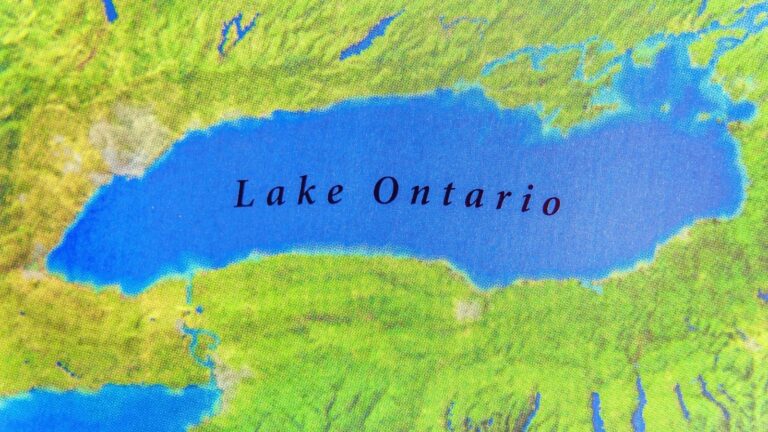
A map label that once seemed fixed has become the latest fault line in the Canada–U.S. relationship. Google Maps is now showing “Lake America” to users in the United States after President Donald Trump ordered U.S. federal agencies to replace “Lake Ontario” in official American geographic records. Canadians, however, still see “Lake Ontario,” while users outside the two countries are shown both names.
The split-screen geography is more than a quirky software change: it reflects a widening political dispute over trade, sovereignty, history and who gets to name a shared international landmark. Prime Minister Mark Carney has rejected the U.S. designation, Ontario Premier Doug Ford has turned the response into a giant lakeside message, and even some American political leaders have declined to adopt Trump’s new name.
Google Maps Now Shows Different Names Across the Border
Google Maps Changes ‘Lake Ontario’ to ‘Lake America’ for U.S. Users as Canada Rejects Trump Renaming
- Google Maps Now Shows Different Names Across the Border
- Trump’s Executive Order Triggered the Change
- Canada Answers With a Giant ‘Lake Ontario’ Sign
- The Name ‘Ontario’ Reaches Back Centuries
- Lake Ontario Has Always Been a Shared Waterway
- Some U.S. Leaders Are Rejecting ‘Lake America’ Too
- Google Already Faced This With the Gulf of Mexico
- Apple and MapQuest Are Taking Different Approaches
- The Naming Fight Grew Out of a Much Bigger Trade War
- One Lake Now Has Two Digital Identities
Google’s change is unusually visible because the company has made the lake’s label depend on where a Maps user is located. In the United States, the waterway appears as “Lake America.” In Canada, it remains “Lake Ontario.” For people elsewhere, Google says both names will be displayed. The company announced the rollout on August 29 after the U.S. Geographic Names Information System, or GNIS, formally updated its federal record. That means two people looking at the same body of water on the same platform can now see different official labels based simply on geography.
Google says this is an application of its long-standing approach to places whose names differ between countries, not a special political exception created for Trump. Its 2025 handling of the Gulf of Mexico followed the same formula: “Gulf of America” for U.S. users, “Gulf of Mexico” for users in Mexico, and both names elsewhere. The Lake Ontario decision therefore turns a diplomatic dispute into a daily consumer experience, visible on phones, browsers, directions and search results.
Trump’s Executive Order Triggered the Change
The chain of events began with Trump’s August 27 executive order, titled “Honoring the American History of the Great Lakes and Renaming Lake Ontario as Lake America.” The order directed the U.S. secretary of the interior and the Board on Geographic Names to change the federal designation and update GNIS. It also instructed federal departments and agencies to use “Lake America” in maps, contracts, documents and official communications. The White House framed the decision as recognition of the lake’s importance to U.S. commerce, security, shipping and Great Lakes history.
What the order does not do is rename the lake for Canada or for the world. Reuters reported that the directive applies to U.S. federal usage and does not govern what Canada, international bodies or independent organizations call the waterway. The distinction matters because Lake Ontario is not contained within one country. The Canada–U.S. boundary runs through the lake, and official Canadian records continue to list both “Lake Ontario” and “Lac Ontario.” Trump can change the terminology used by his own federal government; he cannot compel Ottawa to make the same change.
Canada Answers With a Giant ‘Lake Ontario’ Sign
Canada’s response has combined formal rejection with highly visual political theatre. Carney said the name predates both Canada and the United States as modern states and insisted that Canadians would continue calling it Lake Ontario. Ford went further on the shoreline. At Fifty Point Conservation Area near Grimsby, Ontario, he unveiled a billboard-sized sign reading “Lake Ontario. Now and Always,” with the message repeated in French. The sign measures 24 feet by 12 feet and sits on six-foot legs, making the display roughly two storeys high.
Ford’s point was deliberately simple: a U.S. federal directive does not alter Canadian naming practice. He said the lake would still be called Lake Ontario long after Trump leaves office. The response also served a domestic political purpose by turning an abstract argument over databases and executive authority into an image that could be photographed, shared and understood instantly. At a moment when tariff disputes are already straining relations, the sign lets Ontario frame the naming fight as a question of continuity and Canadian self-definition rather than merely another Washington policy change.
The Name ‘Ontario’ Reaches Back Centuries
The resistance is also rooted in the history carried by the word “Ontario.” Canadian Heritage says the name comes from an Iroquoian word, “kanadario,” associated with “sparkling” water, and notes that “Ontario” was used in 1641 for land along the north shore of the easternmost Great Lake. Other Indigenous-language traditions give closely related meanings. Reuters cited Wendat Nation Grand Chief Pierre Picard saying the name originates in the Wendat language and conveys the idea that the lake is beautiful and great.
That history is why Indigenous leaders have described the U.S. renaming as more than a cosmetic change. Picard accused Trump of trying to erase Indigenous history, while the Seneca Nation also called for the order to be reversed. The Canadian province did not give the lake its name; the relationship runs the other way. The province adopted “Ontario” when it entered Confederation in 1867, centuries after Indigenous-derived versions of the name were already in use. In that sense, the dispute is partly about which historical layer a modern government chooses to privilege on a map.
Lake Ontario’s geography makes unilateral naming especially sensitive. Canada’s freshwater agency describes it as the last of the Great Lakes that straddle the international border, with Ontario on the Canadian shore and New York on the American side. The lake covers about 18,960 square kilometres and is the smallest of the five Great Lakes by surface area. It is still a massive transboundary system: the international boundary passes through the lake and continues into the St. Lawrence River, while water from the upper Great Lakes ultimately flows through Lake Ontario toward the Atlantic.
Its management has been binational for more than a century. The 1909 Boundary Waters Treaty created the framework through which Canada and the United States address shared-water disputes, and the International Joint Commission oversees major questions involving levels and flows. The Lake Ontario–St. Lawrence River system is regulated through institutions that include officials and experts from both countries. That governance history makes the naming clash striking: the practical management of the waterway is built around cooperation even as the political language surrounding it is becoming more nationalized.
Some U.S. Leaders Are Rejecting ‘Lake America’ Too
Opposition to “Lake America” is not confined to Canada. New York Governor Kathy Hochul, whose state forms the lake’s entire U.S. shoreline, said New York would not use Trump’s new name. Vermont Governor Phil Scott, a Republican, called the decision “petty and disappointing.” Their reactions matter because they show that a federal naming rule does not automatically create uniform usage even inside the United States. States, local governments, schools, media organizations, residents and businesses can continue using the older name in everyday life.
The disagreement also highlights the unusual politics of the move. Reuters reported that roughly 52% of Lake Ontario’s surface area lies in Canada, with the remainder in New York. That makes the label “Lake America” especially provocative to critics because it assigns a strongly national name to a body of water physically divided between two countries. The White House order is binding for federal nomenclature, but common usage is harder to command. Place names become durable through maps, signs, institutions, habits and generations of repetition, not only through entries in a federal database.
Google Already Faced This With the Gulf of Mexico
Google had already rehearsed this exact problem with the Gulf of Mexico. After Trump ordered the U.S. government in January 2025 to use “Gulf of America,” GNIS changed the federal record and Google Maps adjusted what users saw. Americans were shown “Gulf of America,” users in Mexico saw “Gulf of Mexico,” and people elsewhere saw both. Google says country location can be determined through device information such as network, SIM and locale, while web users can also be affected by selected regional settings.
That precedent helps explain why Lake Ontario changed so quickly after GNIS was updated. Google is not claiming that one name has become universally correct; it is localizing labels according to official sources and user location. The result, however, can look political even when the company describes it as a technical policy. A traveller crossing the border can effectively cross into a different map vocabulary without the shoreline changing at all. The episode shows how digital cartography has evolved from static reference material into software that can present different geopolitical realities to different audiences in real time.
Apple and MapQuest Are Taking Different Approaches
Other mapping companies are not moving in lockstep with Google. An Axios review on August 30 found that Google Maps displayed “Lake America” on U.S. mobile and desktop views while Apple Maps still showed “Lake Ontario.” Apple had not publicly explained its Lake Ontario position at the time of that review. MapQuest took an even clearer stance, saying it would not change the lake’s name and using the controversy to promote its refusal on social media.
The split illustrates how much discretion private platforms retain even when governments change official terminology. Google has chosen to follow GNIS for U.S. naming, but other services can apply different editorial or technical standards. That means the public may encounter competing labels across phones, car dashboards, websites and navigation apps. It also raises a practical question for institutions that rely on commercial map data: which label appears in embedded maps, travel information or location services may depend on the provider and the user’s region. The disagreement is therefore no longer only Canada versus Washington; it is also a contest among digital platforms over how official geographic changes should be represented.
The Naming Fight Grew Out of a Much Bigger Trade War
The renaming did not emerge in a diplomatic vacuum. It followed the collapse of intensive U.S.–Canada trade negotiations and a sharp escalation in tariffs. The United States imposed 50% tariffs on roughly $20 billion worth of Canadian goods after talks failed, while Canada announced retaliatory tariffs on about $20 billion in American imports. Ottawa’s measures, scheduled to take effect September 8, cover more than 700 products at rates of 15%, 25% and 50%, including steel, aluminum, dairy products, appliances, seafood and clothing.
Against that backdrop, the lake became a symbol in a much broader power struggle. Trump had already criticized Canadian leaders and threatened further trade penalties, while Carney’s government accused Washington of using economic integration as leverage. The naming order arrived after Trump first floated the idea publicly during the tariff confrontation. For businesses and households, the material stakes remain prices, jobs and supply chains; for politicians, however, symbols can condense those larger disputes into something emotionally immediate. A tariff schedule is technical. A familiar lake suddenly appearing under another country’s preferred name is instantly personal.
One Lake Now Has Two Digital Identities
For now, the most important reality is that the lake has two official digital identities depending on the jurisdiction being consulted. The U.S. federal government and Google’s U.S. Maps experience use “Lake America.” Canada’s official geographical names database continues to list “Lake Ontario” and “Lac Ontario.” The underlying border, treaties and binational water-management institutions have not changed. The executive order changes U.S. federal nomenclature; it does not transfer territory, rewrite the international boundary or alter Canada’s authority over its side of the lake.
The longer-term question is whether the new U.S. name survives beyond federal documents and localized digital maps. Common geographic names often depend on widespread social adoption, and the early response shows resistance from Canada, New York, Vermont and some mapping services. Google’s decision nevertheless gives the Trump designation enormous visibility because Maps is woven into everyday navigation. Even if “Lake America” remains mostly an American federal term, millions of users can now encounter it as ordinary map text. That makes this dispute a revealing example of how political decisions can move almost immediately from an executive order into the digital infrastructure people use to understand the world.
This Options Discord Chat is The Real Deal
While the internet is scoured with trading chat rooms, many of which even charge upwards of thousands of dollars to join, this smaller options trading discord chatroom is the real deal and actually providing valuable trade setups, education, and community without the noise and spam of the larger more expensive rooms. With a incredibly low-cost monthly fee, Options Trading Club (click here to see their reviews) requires an application to join ensuring that every member is dedicated and serious about taking their trading to the next level. If you are looking for a change in your trading strategies, then click here to apply for a membership.