35,000+ smart investors are already getting financial news, market signals, and macro shifts in the economy that could impact their money next with our FREE weekly newsletter. Get ahead of what the crowd finds out too late. Click Here to Subscribe for FREE.
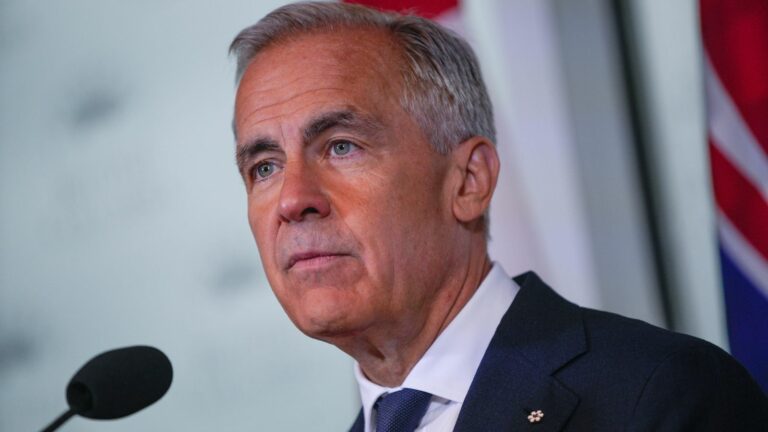
Canada is looking to strengthen its economic ties with one of the world’s fastest-growing economies as Prime Minister Mark Carney pursues new trade and investment opportunities beyond the United States.
On October 14, 2026, Carney spoke with Guyanese President Mohamed Irfaan Ali about expanding bilateral commerce, encouraging investment and making greater use of an existing agreement that helps Canadian companies pursue government contracts in Guyana.
The conversation builds on a May meeting in Toronto, where both leaders identified opportunities in energy, technology, agriculture and mining.
Guyana’s expanding oil industry has transformed its economic outlook, creating demand for infrastructure, specialized equipment and professional services. For Canada, the opportunity is part of a larger effort to develop reliable trading relationships as American tariffs and changing trade policies put pressure on traditional export markets.
Carney and Guyana’s President Discuss Expanding Economic Cooperation
Carney Courts More Trade and Investment With Guyana as Canada Seeks Markets Beyond the U.S.
- Carney and Guyana’s President Discuss Expanding Economic Cooperation
- Guyana’s Rapid Economic Growth Is Attracting International Attention
- Canada’s Existing Trade With Guyana Has Room to Grow
- An Eight-Year Agreement Could Help Canadian Companies Win Government Contracts
- Canadian Mining Companies Already Have Major Investments in Guyana
- Opportunities Extend Beyond Oil Into Agriculture, Technology and Infrastructure
- The Guyanese Community in Canada Provides a Strong Economic Connection
- Environmental Protection Is Becoming Part of the Investment Conversation
- Canadian Development Funding Is Already Supporting Guyana’s Economy
- Regional Security Concerns Add Another Layer to the Relationship
- Guyana Fits Into Carney’s Larger Strategy to Reduce U.S. Trade Dependence
- November’s Commonwealth Meeting Could Provide the Next Opportunity
Prime Minister Mark Carney’s October 14 conversation with President Mohamed Irfaan Ali placed trade and investment at the centre of Canada’s relationship with Guyana. According to the Prime Minister’s Office, the leaders discussed ways to strengthen commercial ties and explored additional cooperation through an existing memorandum of understanding involving the Canadian Commercial Corporation. The discussion represents another diplomatic effort by Ottawa to identify markets where Canadian businesses can expand their international operations.
The leaders also addressed environmental protection and biodiversity conservation, with Carney commending Ali’s work in those areas. Both agreed to maintain close communication ahead of the Commonwealth Heads of Government Meeting in Antigua and Barbuda in November. Importantly, the announcement did not identify any newly signed commercial contracts, investment commitments or free-trade negotiations. Instead, it emphasized opportunities for cooperation through arrangements already in place. For Canadian businesses, the significance lies in continued high-level political engagement with a rapidly developing economy rather than an immediate announcement of new export revenue.
Guyana’s Rapid Economic Growth Is Attracting International Attention
Guyana has experienced an extraordinary economic transformation since offshore oil production began in 2019. The World Bank estimates that its economy expanded by 19.3% in 2025, following growth of 43.8% in 2024. An International Monetary Fund report published in October 2026 projects further economic expansion of approximately 22.3% this year. Those growth rates place Guyana among the world’s fastest-expanding economies and help explain why international businesses are increasingly interested in establishing operations there.
Much of the momentum comes from offshore petroleum developments led by ExxonMobil and its partners. Oil production exceeded 900,000 barrels per day by late 2025, generating government revenues that are helping finance infrastructure and social development. However, the expansion extends beyond petroleum. The IMF reports strong activity in construction, agriculture, mining and manufacturing. For Canadian companies, that creates opportunities to supply equipment, engineering expertise, financial services and technology. The challenge will be distinguishing commercially viable projects from ambitious development proposals that have not yet secured financing or government approval.
Canada’s Existing Trade With Guyana Has Room to Grow
Despite their longstanding relationship, trade between Canada and Guyana remains relatively modest compared with Canada’s largest international markets. Global Affairs Canada reported bilateral merchandise trade of approximately C$272.7 million in 2023, including C$59.1 million in Canadian exports and C$213.5 million in imports. More recent United Nations Comtrade-based figures place Canadian exports to Guyana at approximately US$42.6 million in 2025. Machinery, measuring and medical equipment, and metal products were among the leading Canadian export categories.
Guyana’s reported exports to Canada reached approximately US$202.4 million in 2025, with precious metals and petroleum-related products accounting for much of the value. These figures indicate an existing commercial relationship but also demonstrate its relatively limited scale. For Canadian companies hoping to enter Guyana, opportunities may be more attractive in specialized industrial equipment or services than in large volumes of ordinary consumer goods. The two countries already exchange valuable products, but expanding trade will require stronger commercial relationships, reliable transportation arrangements and competitive proposals that meet Guyana’s development needs.
An Eight-Year Agreement Could Help Canadian Companies Win Government Contracts
A key part of the October discussion was the memorandum of understanding between Guyana and the Canadian Commercial Corporation, a federal Crown corporation that helps Canadian companies secure contracts with foreign governments. Originally established in April 2022, the agreement was renewed on April 10, 2025, for another eight years. It is designed to facilitate discussions, information sharing and procurement opportunities involving Canadian goods and services. The renewal was signed by Guyana’s Finance Minister Ashni Singh and Canadian Commercial Corporation representative Boris Jacouty.
The arrangement gives both governments a practical mechanism for identifying projects where Canadian suppliers may be competitive. Under the corporation’s government-to-government contracting model, foreign governments can purchase equipment, services or major infrastructure through agreements with the Canadian agency. Such projects may include hospitals, airports, water-treatment facilities and specialized industrial systems. However, the memorandum itself does not guarantee contracts or financing. Individual projects still require negotiations, commercial terms and appropriate approvals. For smaller Canadian exporters unfamiliar with Guyana’s procurement processes, the framework could help reduce some barriers to pursuing government business.
Canadian Mining Companies Already Have Major Investments in Guyana
Canadian investment in Guyana is not limited to government discussions. Quebec-based G Mining Ventures is developing the Oko gold project, which combines the Oko West and Oko-Ghanie deposits following its acquisition of fellow Canadian company G2 Goldfields in July 2026. The transaction created a larger mining development in Guyana’s mineral-rich interior. G Mining Ventures has described the combined operation as a potential major gold-producing district, although production forecasts remain dependent on construction, commissioning and future development decisions.
The company’s August financial update reported that more than 1,700 employees and contractors were working at the project as of June 30, with approximately 77% being Guyanese nationals. About US$423 million had been spent on construction, representing 44% of the initial capital budget. The company was targeting its first gold production in the second half of 2027. These numbers provide a concrete example of Canadian businesses contributing to Guyana’s expanding economy. They also illustrate how investment can generate local employment, equipment demand and construction activity well before a mine begins producing commercial quantities of gold.
Opportunities Extend Beyond Oil Into Agriculture, Technology and Infrastructure
Guyana’s offshore oil wealth has attracted global attention, but its government is also working to expand other industries. During their May 8, 2026, meeting in Toronto, Carney and Ali specifically identified energy, technology, agriculture and mining as areas where Canadian investment could increase. Those sectors align with capabilities developed by Canadian engineering firms, agricultural equipment manufacturers, technology companies and financial institutions. Rapid economic expansion also creates demand for dependable electricity, modern roads, water systems, communications networks and other infrastructure needed by businesses and households.
Still, Guyana’s energy opportunities involve commercial uncertainties. Reuters reported on October 13 that the country was considering scaling back proposed liquefied natural gas developments because offshore producers may need more gas for reinjection into oil reservoirs. A proposed six-million-tonne-per-year LNG facility could consequently face delays or reduced capacity. The decision had not been finalized. For potential Canadian investors, this illustrates why economic growth alone does not guarantee the success of individual projects. Companies must assess supply availability, infrastructure requirements and financing before committing capital.
The Guyanese Community in Canada Provides a Strong Economic Connection
Canada and Guyana have a relationship that reaches far beyond government offices and corporate boardrooms. The countries established diplomatic relations following Guyana’s independence in May 1966, and Canada had already opened a high commission in Georgetown two years earlier. Today, approximately 100,000 Canadians of Guyanese ancestry help maintain connections between the two countries. Family relationships, cultural organizations, educational exchanges and established business networks give the partnership a personal dimension that new commercial agreements cannot easily recreate.
Those connections were visible during President Ali’s May 2026 visit to Toronto. The president met Carney and participated in activities surrounding the Canada–Guyana Chamber of Commerce’s business forum, which brought investors and business leaders together during the 60th anniversary of Guyana’s independence and diplomatic relations with Canada. The chamber itself was launched in 2020 to encourage commercial cooperation. For an entrepreneur considering an unfamiliar overseas market, personal connections and experienced local partners can be valuable sources of information. They can help bridge differences in business practices while creating opportunities for partnerships that benefit companies and workers in both countries.
Environmental Protection Is Becoming Part of the Investment Conversation
Environmental cooperation formed a notable part of the October 14 discussion. Guyana has one of the world’s most extensive tropical forest landscapes relative to its size, with forests covering approximately 85% of its territory. Its Low Carbon Development Strategy 2030 seeks to balance economic expansion with forest preservation, climate resilience and biodiversity protection. According to Guyanese government figures released in June 2026, the country has earned approximately US$353 million from forest carbon-credit sales since entering that market in 2022.
President Ali has promoted forests and biodiversity as economic assets that can attract investment while supporting conservation. For Canada, this creates potential opportunities in environmental monitoring, renewable energy, climate-resilient infrastructure and sustainable resource management. The challenges are substantial, however. Guyana’s growing petroleum industry generates economic benefits while raising questions about long-term emissions and environmental protection. The World Bank also identifies coastal flooding as a serious vulnerability, particularly around Georgetown and agricultural areas. Any expanded Canadian partnership will need to consider these competing economic and environmental priorities.
Canadian Development Funding Is Already Supporting Guyana’s Economy
Canada’s involvement in Guyana extends beyond conventional trade and private investment. Global Affairs Canada has committed up to C$9.5 million toward the One Guyana Digital Skills Development Programme, designed to help young people acquire skills needed in an increasingly technology-driven economy. Ottawa also announced C$120 million in funding over ten years through a policy-based loan arrangement with the Inter-American Development Bank. That initiative aims to strengthen Guyana’s social protection systems and improve services for vulnerable communities.
The loan arrangement includes a climate-resilient debt provision that can defer repayments following qualifying disasters or other serious disruptions. Canada has separately supported regional Caribbean initiatives involving renewable energy, agricultural resilience and institutional development. These programs establish relationships between governments, educators, technical experts and development organizations. They are distinct from commercial contracts and should not be counted as new investment secured during the October discussions. Nevertheless, they help explain why Canada’s relationship with Guyana already includes practical cooperation. Investments in education, institutions and infrastructure can also improve the conditions that allow private businesses to operate sustainably over time.
Regional Security Concerns Add Another Layer to the Relationship
Economic cooperation between Canada and Guyana also operates within a sensitive regional security environment. Guyana has a longstanding territorial dispute with neighbouring Venezuela concerning the Essequibo region. Canada publicly reaffirmed its support for Guyana’s sovereignty and territorial integrity in December 2023, advocating a peaceful resolution through international law and the International Court of Justice. In May 2026, Guyana’s Foreign Secretary Robert Persaud thanked Canada for its support during discussions with senior Canadian diplomatic officials.
Those May discussions also covered stronger security cooperation alongside trade and investment. Global Affairs Canada reports that Ottawa has supported Guyana through security capacity-building initiatives since 2015, including work involving transnational crime, cybersecurity and illicit trafficking. These efforts matter for commercial development because businesses require predictable rules, secure transportation and confidence that investments can operate without major disruptions. A mining company transporting equipment into Guyana or an engineering firm considering an infrastructure project must evaluate those conditions alongside potential profits. The October conversation did not announce new security agreements, but the existing partnership provides a broader foundation for economic cooperation.
Guyana Fits Into Carney’s Larger Strategy to Reduce U.S. Trade Dependence
Guyana’s role becomes clearer when viewed against Canada’s broader trade strategy. According to Global Affairs Canada, Canadian merchandise exports to the United States totalled approximately C$564.6 billion in 2025, representing about 72.5% of the country’s goods exports. A separate measure covering both goods and services shows that non-American markets accounted for 32.8% of Canada’s exports that year, the highest proportion in roughly four decades. These figures illustrate both Canada’s continued reliance on the American market and its growing efforts to diversify.
Carney’s government has established a goal of doubling Canadian exports to non-U.S. destinations over the next decade. It is pursuing stronger commercial relationships with countries including India, China and members of the European Union, while expanding engagement with other emerging economies. Guyana cannot replace the scale of American demand, and its current Canadian trade relationship remains relatively small. Nevertheless, diversification does not depend on finding one enormous alternative market. A collection of growing destinations can provide Canadian exporters with additional customers, reducing the consequences of policy changes in any single country.
November’s Commonwealth Meeting Could Provide the Next Opportunity
The next important diplomatic milestone is the Commonwealth Heads of Government Meeting, scheduled for November 1–4, 2026, in St. John’s, Antigua and Barbuda. Leaders and representatives from the Commonwealth’s 56 member countries are expected to discuss trade, investment, climate resilience, innovation and sustainable development. The meeting’s theme focuses on accelerating partnerships and investment, closely matching the priorities raised during Carney’s latest conversation with President Ali. Both leaders have agreed to maintain contact ahead of the gathering, although no specific bilateral meeting or commercial announcement has been confirmed.
For Canadian exporters, the most meaningful developments will come after diplomatic discussions turn into concrete opportunities. Signed procurement agreements, new investment commitments, successful joint ventures and measurable job creation would provide stronger evidence of progress than statements of shared interest. Guyana’s rapid growth offers substantial possibilities, but competition, project financing and regulatory requirements remain important considerations. Canada already has historical connections, business relationships and a procurement framework to build upon. The October 14 conversation strengthens that foundation, while leaving the central question unanswered: how much additional trade and investment will the two countries actually generate?
This Options Discord Chat is The Real Deal
While the internet is scoured with trading chat rooms, many of which even charge upwards of thousands of dollars to join, this smaller options trading discord chatroom is the real deal and actually providing valuable trade setups, education, and community without the noise and spam of the larger more expensive rooms. With a incredibly low-cost monthly fee, Options Trading Club (click here to see their reviews) requires an application to join ensuring that every member is dedicated and serious about taking their trading to the next level. If you are looking for a change in your trading strategies, then click here to apply for a membership.