35,000+ smart investors are already getting financial news, market signals, and macro shifts in the economy that could impact their money next with our FREE weekly newsletter. Get ahead of what the crowd finds out too late. Click Here to Subscribe for FREE.
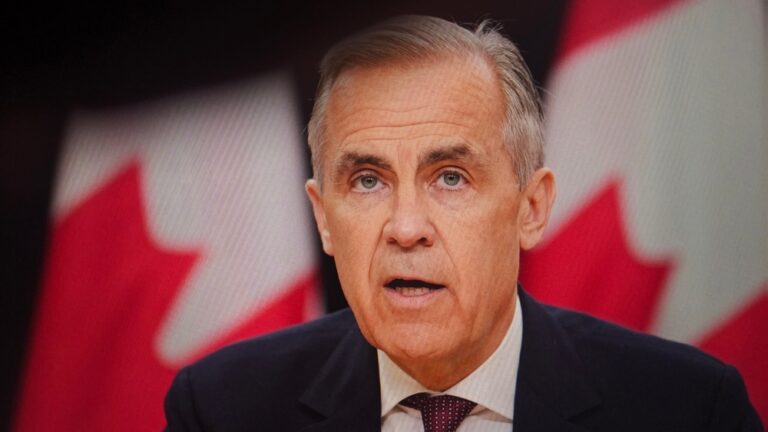
A $2.3-billion Arctic defence contract has pushed one of Ottawa’s biggest technology bets back into the political spotlight. The federal Defence Investment Agency awarded the deal to Telesat LEO ULC on August 4, giving the Canadian company a central role in future military communications across the North. Conservative criticism has renewed demands for greater transparency around the decision, with particular attention on Prime Minister Mark Carney’s longstanding friendship with Telesat chief executive Dan Goldberg and the company’s earlier multibillion-dollar federal financing.
The controversy turns on two questions that are related but not identical: whether Telesat is the right strategic choice for Canada, and whether taxpayers have enough information to judge how the government arrived at that choice. The friendship is documented, but it is not evidence by itself that Carney influenced the procurement. That makes the paper trail especially important.
The $2.3B Contract Could Ultimately Grow Larger
Conservatives Demand Ottawa Open the Books on $2.3B Telesat Deal Over Carney-CEO Ties
- The $2.3B Contract Could Ultimately Grow Larger
- The Carney-Goldberg Friendship Is Well Documented
- Ottawa Was Already Deeply Invested in Telesat
- Ottawa Says the Deal Is About Arctic Sovereignty
- The Procurement Process Is Now the Key Question
- Ottawa Has a National-Security Case for Going Canadian
- The Contract Is Potentially Transformative for Telesat
- Disclosure Could Settle Questions Neither Side Can Answer With Rhetoric
The $2.3-billion figure is only the starting point. Ottawa says the initial contract, before tax, is worth approximately $2.3 billion, while two option periods are valued at about $214 million and $218 million. Telesat describes the agreement as a services contract tied to its Lightspeed low-Earth-orbit network, with service expected to begin in 2028. If the options are ultimately exercised, the company says the overall value could reach roughly $2.7 billion.
That scale helps explain why the political scrutiny is intense. Telesat calls it the largest contract in its roughly six-decade history, and the agreement immediately expands the planned Lightspeed constellation by 69 satellites, from 156 already in production to 225. The government says those additional satellites will be built by MDA Space in Montreal. For taxpayers, the central issue is therefore larger than a single cheque: Ottawa is committing to a long-term communications architecture that could shape defence spending, domestic aerospace jobs and Arctic connectivity for years.
The Carney-Goldberg Friendship Is Well Documented
The relationship at the centre of the controversy is not speculative. A 2019 Ottawa Business Journal profile described Goldberg visiting his “good friend” Carney in London and said the two first met when their children played in the same preschool soccer league in Ottawa. In 2024, when Conservatives raised similar questions about federal financing for Lightspeed, Goldberg confirmed that Carney was a friend.
Goldberg also said at the time that Carney had “absolutely nothing” to do with the 2024 loan. That distinction matters. A personal connection can create difficult political optics and trigger legitimate questions about safeguards, but it does not establish that a procurement was directed, manipulated or improperly influenced. The strongest case for transparency is therefore not built on assuming wrongdoing. It is built on showing the decision-making record clearly enough that Canadians can see who evaluated the contract, what role ministers or political staff played, whether recusals were required and how officials concluded that the arrangement served the public interest.
Ottawa Was Already Deeply Invested in Telesat
The new military contract is not Ottawa’s first major financial commitment to Telesat. In September 2024, the federal government announced a $2.14-billion repayable loan to support construction of Lightspeed. Government briefing material says the 15-year loan carries a floating interest rate of 4.75 percentage points above the Canadian Overnight Repo Rate Average, while Ottawa also receives warrants equal to 10 per cent of the project. Quebec separately committed another $400 million on similar terms.
That earlier deal became a political flashpoint. Conservatives challenged the price tag and argued that other satellite options should have received greater consideration. Ottawa countered that the project was about more than household internet: it involved Canadian-controlled infrastructure, domestic manufacturing, northern connectivity and national-security resilience. The federal government also maintained a separate $600-million commitment to purchase Lightspeed capacity once the system became operational. Those earlier commitments matter now because the $2.3-billion defence deal arrives on top of an already deep public-sector relationship with the company.
Ottawa Says the Deal Is About Arctic Sovereignty
Ottawa says the contract is the first major phase of the Enhanced Satellite Communications Project–Polar, or ESCP-P. Its purpose is to give the Canadian Armed Forces secure and reliable communications in the Arctic and other high-latitude regions, where geography makes conventional communications infrastructure difficult. The government says the project is intended to strengthen Canadian sovereignty, support northern operations and improve the ability of military personnel to communicate reliably in remote parts of the country.
The deal also significantly changes the physical scale of Lightspeed. Telesat says the 69 additional satellites will increase the constellation from 156 satellites already in production to 225. MDA Space is expected to manufacture the new satellites in Montreal, while other components of Canada’s broader military communications program will involve additional infrastructure and contracts. That means the $2.3-billion award is not simply the earlier broadband program repackaged as defence spending. Ottawa is incorporating Lightspeed into a much larger effort to modernize Canadian communications capabilities in the North.
The Procurement Process Is Now the Key Question
One of the most important public questions is how Ottawa moved from identifying its preferred Canadian partners to signing a multibillion-dollar contract. The government announced a strategic partnership with Telesat and MDA Space in December 2025 and awarded an initial $2.92-million contract for engineering and options analysis. The August 2026 announcement says the new $2.3-billion agreement followed that work and subsequent negotiations.
What the public announcement does not provide is a detailed comparison of alternative proposals, competing architectures, scoring criteria or the complete value-for-money analysis behind the final choice. That absence is not proof that the procurement was improper, but it explains why calls for disclosure can resonate. For a contract of this size, opening the books would ideally mean publishing as much as security and commercial-confidentiality rules permit: the procurement rationale, evaluation criteria, relevant conflict safeguards, major pricing assumptions and decision-making chain. Transparency is most useful when documents can replace political suspicion with verifiable facts.
Ottawa Has a National-Security Case for Going Canadian
The government has a substantive policy argument for choosing a Canadian-led system. Arctic communications are difficult, expensive and strategically sensitive, while low-Earth-orbit systems can improve connectivity in remote regions. During the earlier 2024 debate over Telesat financing, Arctic-security experts cited by The Canadian Press argued that long-term dependence on a single foreign-controlled communications provider could create strategic risks, even if that provider could satisfy some immediate technical requirements.
Ottawa is also tying the procurement directly to industrial policy. The Defence Investment Agency estimates that, through Canada’s Industrial and Technological Benefits Policy, the project has the potential to create or maintain about 2,600 jobs annually and contribute roughly $335 million a year to Canadian GDP over approximately seven years. Those are projections rather than guaranteed outcomes. The political question is whether the security, sovereignty and employment benefits justify the cost — and whether Ottawa can demonstrate that comparable results could not have been obtained through a less expensive or more competitive approach.
The Contract Is Potentially Transformative for Telesat
The financial stakes are unusually large for Telesat itself. In its latest reported quarter before the contract announcement, the company posted $87 million in consolidated revenue, $35 million in adjusted EBITDA and a $151-million net loss. It also invested $171 million in the Lightspeed program during the quarter. Those figures are not directly comparable with the value of a multiyear government services contract, but they help illustrate how significant the new agreement is to the company’s future.
Telesat says the expanded 225-satellite Lightspeed network will represent approximately $7 billion in total investment, with roughly $2.7 billion already invested by the time of the August announcement. The new defence agreement is expected to help fund the 69-satellite expansion through milestone-based government payments beginning in the third quarter of 2026. Taxpayers are therefore not simply purchasing service from an already completed network. Public spending is becoming an important part of the build-out of a major Canadian space project whose commercial and government ambitions are increasingly intertwined.
Disclosure Could Settle Questions Neither Side Can Answer With Rhetoric
Canada’s Conflict of Interest Act provides a useful framework for separating political optics from an actual conflict. The law says a public office holder can be in a conflict when exercising official power creates an opportunity to further the private interests of the office holder, relatives or friends, or to improperly further another person’s private interests. It also prohibits public office holders from using their position to influence decisions that further a friend’s private interests and requires recusal when a conflict exists.
For the Telesat controversy, the decisive facts are therefore procedural. Did Carney participate in discussions about the company? Was he briefed on the selection? Did he attempt to influence officials? Was a recusal or another safeguard considered, and was the process properly documented? The publicly verified information establishes the friendship, the contract, the previous financing and the history of Conservative criticism. It does not, by itself, establish preferential treatment. Releasing the relevant records could either reinforce Ottawa’s position that the procurement was professionally handled or identify weaknesses deserving greater scrutiny.
This Options Discord Chat is The Real Deal
While the internet is scoured with trading chat rooms, many of which even charge upwards of thousands of dollars to join, this smaller options trading discord chatroom is the real deal and actually providing valuable trade setups, education, and community without the noise and spam of the larger more expensive rooms. With a incredibly low-cost monthly fee, Options Trading Club (click here to see their reviews) requires an application to join ensuring that every member is dedicated and serious about taking their trading to the next level. If you are looking for a change in your trading strategies, then click here to apply for a membership.