35,000+ smart investors are already getting financial news, market signals, and macro shifts in the economy that could impact their money next with our FREE weekly newsletter. Get ahead of what the crowd finds out too late. Click Here to Subscribe for FREE.
Canada’s long-running pipeline debate has suddenly become part of a much larger conversation about global security. At the G7 summit in Évian-les-Bains, France, Prime Minister Mark Carney said another expansion of the Trans Mountain system would proceed as allied governments looked for safer and more diversified energy supplies.
The statement came as the G7 pledged to reduce global dependence on vulnerable shipping routes, particularly the Strait of Hormuz. Yet Carney’s announcement requires an important distinction: the original Trans Mountain Expansion entered service in 2024. The next phase would increase capacity again through pump upgrades, operating improvements and other changes to the existing system. With the pipeline now running at full capacity, Ottawa is presenting those upgrades as a relatively fast way to deliver more Canadian oil to international markets.
A G7 Endorsement—But Not a Purchase Order
Carney Says Trans Mountain Expansion ‘Will Go Ahead’ as G7 Seeks More Canadian Energy
- A G7 Endorsement—But Not a Purchase Order
- What Carney Means by Another Expansion
- Full Capacity Changes the Political Calculation
- A West Coast Outlet Is Reshaping Trade
- Oil Is Only Part of Canada’s Energy Pitch
- The Economics Are Stronger—and Still Complicated
- Indigenous Participation Could Define the Next Phase
- Marine and Climate Risks Remain in the Foreground
- The Promise Now Faces an Execution Test
The G7’s interest in Canadian energy was unusually explicit. In a joint statement released on June 17, leaders committed to diversifying energy supply routes, building larger stockpiles and reducing the world economy’s exposure to disruptions around the Strait of Hormuz. The statement specifically welcomed Canada’s potential to provide substantial additional energy capacity in the coming years. Carney responded by pointing to Canadian liquefied natural gas production and another increase in Trans Mountain’s capacity.
That language gives Ottawa a valuable diplomatic endorsement, but it should not be confused with a binding order for Canadian oil or gas. No purchase volumes, prices, construction funding or delivery dates were included in the G7 declaration. Instead, the statement signals that politically stable energy-producing countries are becoming more valuable to allies worried about war, sanctions and shipping interruptions. For Canada, the opportunity is to turn that broad interest into long-term contracts. Energy infrastructure becomes much easier to finance when producers can show that overseas buyers are prepared to commit for years rather than simply responding to a temporary crisis.
What Carney Means by Another Expansion
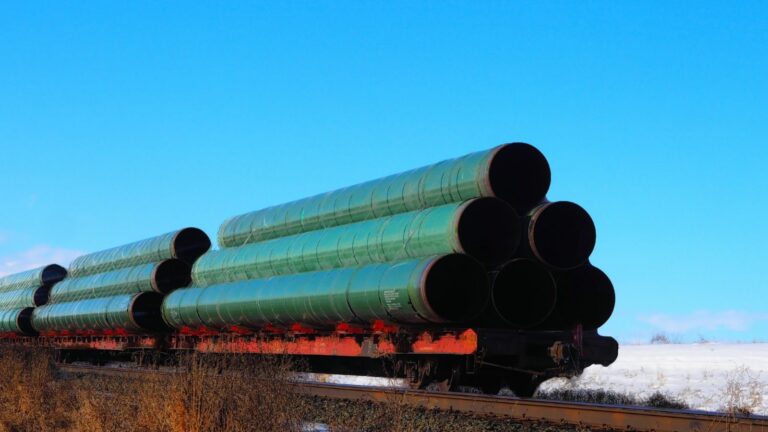
The terminology surrounding Trans Mountain can be confusing because its best-known expansion is already finished. The original system, built in 1953, could move approximately 300,000 barrels of petroleum products per day. The Trans Mountain Expansion Project added a second pipeline along much of the route between Alberta and British Columbia, lifting total capacity to about 890,000 barrels per day when commercial operations began in May 2024.
The new work discussed by Carney would be less dramatic than building another full pipeline corridor. Trans Mountain has proposed using drag-reducing additives, installing or upgrading pumps, modifying facilities and improving sections of the existing system. The company has publicly outlined near-term projects that could lift capacity to approximately 1.19 million barrels per day by the end of 2028. Federal briefing materials describe a broader range of upgrades that could eventually raise capacity to roughly 1.25 million barrels per day. That difference reflects projects at varying stages of development. Regulatory approvals, engineering studies and shipper commitments are still required before all of the potential capacity becomes available.
Full Capacity Changes the Political Calculation
For much of its first year in service, the expanded pipeline still had room available. From June 2024 through June 2025, the system averaged about 82 per cent utilization. Roughly 80 per cent of capacity was reserved for companies with long-term contracts, while the remainder was offered to uncommitted shippers each month. That arrangement allowed producers to test overseas demand without immediately signing decades-long agreements.
Conditions have since tightened. Trans Mountain reached apportionment in June 2026, meaning demand from companies seeking space exceeded the capacity available. The pipeline was effectively full for the first time since the 2024 expansion opened. Growing Canadian production, stronger overseas interest and uncertainty in global crude markets all contributed. That milestone strengthens the argument for optimization because the additional capacity would respond to demonstrated shipper demand rather than a purely theoretical forecast. Still, one full month does not guarantee permanent congestion. Oil prices, production decisions and geopolitical events can change quickly, which is why Trans Mountain has been asking potential shippers to make firm contractual commitments before it invests in major upgrades.
A West Coast Outlet Is Reshaping Trade
Trans Mountain’s strategic value comes from geography. Most Canadian crude traditionally moved south to the United States, leaving producers heavily dependent on one customer and vulnerable to bottlenecks in the North American pipeline network. The expanded system connects Alberta production to the Westridge Marine Terminal in Burnaby, where tankers can reach refineries on the U.S. West Coast and across the Pacific.
The Canada Energy Regulator estimates that the 2024 expansion increased Western Canada’s overall crude-export pipeline capacity by 13 per cent and its capacity to reach tidewater by approximately 700 per cent. Statistics Canada reported that crude exports to countries other than the United States rose by nearly 60 per cent in 2024, although the U.S. remained overwhelmingly Canada’s largest customer. Federal briefing materials identify China as the leading Asian destination for Trans Mountain cargoes, with shipments also reaching South Korea, India and Brunei. The result is not independence from the American market. It is negotiating leverage: when producers have more than one realistic buyer, the price discount applied to Western Canadian heavy oil is less likely to widen simply because export pipelines are congested.
Oil Is Only Part of Canada’s Energy Pitch
Carney’s G7 message was broader than Trans Mountain. Canada is also trying to establish itself as a major supplier of liquefied natural gas. LNG Canada, located in Kitimat on the traditional territory of the Haisla Nation, shipped its first cargo in June 2025. Its two processing trains have a combined nameplate capacity of about 14 million tonnes annually, creating Canada’s first large-scale route for sending natural gas directly from the Pacific coast to overseas customers.
More capacity is under development. Woodfibre LNG near Squamish is expected to begin operating as early as 2027, while the Indigenous-majority-owned Cedar LNG project near Kitimat is targeting 2028. A possible second phase of LNG Canada could eventually double that facility’s output, although a final investment decision is still required. These projects make the Canadian energy offer more flexible: Trans Mountain serves global crude markets, while LNG facilities can supply power utilities and industrial consumers seeking alternatives to coal, Russian gas or Middle Eastern cargoes. Geography remains a limitation. Western Canadian LNG is naturally positioned for Asia, while supplying Europe from British Columbia can require longer and more expensive shipping routes.
The Economics Are Stronger—and Still Complicated
The case for adding capacity is strengthened by Trans Mountain’s improving utilization, but the pipeline’s public finances remain controversial. The federal government purchased the system in 2018 after its private owner was prepared to abandon the expansion. Construction delays and difficult terrain pushed the estimated expansion cost to approximately $34.5 billion, far above early projections. Those overruns turned the project into one of the largest government-owned infrastructure investments in Canadian history.
Higher utilization can improve revenue and make the asset more attractive to future buyers. Federal briefing materials show that Trans Mountain paid the government $938 million in interest and dividends during the first three quarters of 2025. However, the Parliamentary Budget Officer estimated in 2024 that the pipeline system’s value ranged from $29.6 billion to $33.4 billion under two long-term tolling scenarios. Both estimates were below the asset value then recorded on Trans Mountain’s balance sheet. The eventual result for taxpayers will depend on utilization, regulated tolls, operating costs, the timing of a sale and what buyers are willing to pay. Optimization may increase the system’s earning power, but it does not erase the financial risks created during construction.
Indigenous Participation Could Define the Next Phase
Indigenous communities are not a single bloc in the Trans Mountain debate. Some communities have opposed the pipeline because of concerns about land, water, treaty rights and marine shipping. Others have pursued construction contracts, revenue-sharing opportunities or a potential ownership stake. Federal records say approximately one-quarter of the original expansion’s contract value went to Indigenous businesses and partnerships, representing about $6.5 billion in work.
Ottawa has repeatedly promised meaningful Indigenous economic participation when Trans Mountain is eventually sold, but a final ownership structure has not been announced. The existing Indigenous Advisory and Monitoring Committee includes representatives selected from communities potentially affected along both the pipeline route and marine shipping corridor. Its work is shifting from construction oversight to long-term operational safety, emergency preparedness and environmental monitoring. Trans Mountain says Indigenous groups will be engaged before regulatory applications for the optimization work are filed. That consultation will be closely watched. A smaller engineering footprint may make optimization easier than building a new corridor, but changes affecting throughput, facilities or tanker movements can still raise legal, environmental and rights-related questions.
Marine and Climate Risks Remain in the Foreground
Moving more oil through the existing pipeline could also mean greater activity around the Westridge terminal and the Salish Sea. The approvals for the original expansion allow the terminal to accommodate a maximum of 34 Aframax tankers per month, compared with about five before the project. Actual traffic can vary, and proposed dredging near Vancouver’s Second Narrows could allow vessels to load more fully, potentially reducing the number of tanker trips needed for a given volume of oil.
The marine debate is particularly sensitive because the region is habitat for the endangered southern resident killer whale population. Ottawa’s 2026 economic update proposed additional funding for whale protection, underwater-noise monitoring and measures responding to increased West Coast vessel traffic. Pipeline growth also complicates Canada’s climate commitments. The federal government’s latest projections indicate that existing policies would reduce national emissions by about 21 per cent below 2005 levels by 2030, well short of the official target of 40 to 45 per cent. Supporters argue Canadian energy can displace less secure or more emissions-intensive supplies abroad. Critics respond that expanding fossil-fuel infrastructure can lock in production for decades. Neither claim eliminates the need for credible domestic emissions reductions.
The Promise Now Faces an Execution Test
Carney’s declaration gives the Trans Mountain optimization effort political momentum, but several practical steps remain. Trans Mountain must demonstrate sustained commercial demand, complete engineering work and submit the necessary applications to the Canada Energy Regulator. Its planned upgrades have been described in phases, including an initial increase of approximately 90,000 barrels per day and a larger mainline optimization expected to add about 210,000 barrels per day by the end of 2028.
Ottawa will also have to coordinate decisions involving the Port of Vancouver, marine safety, Indigenous consultation and environmental protection. At the same time, the government must avoid presenting every potential barrel as guaranteed capacity before permits and contracts are secured. The G7 statement is significant because it places Canadian energy inside an allied security strategy rather than treating it solely as a regional economic issue. The next measure of success will be less rhetorical: whether Canada can deliver additional oil and gas reliably, competitively and with enough public confidence to prevent the delays, legal battles and cost increases that defined the original Trans Mountain expansion.
This Options Discord Chat is The Real Deal
While the internet is scoured with trading chat rooms, many of which even charge upwards of thousands of dollars to join, this smaller options trading discord chatroom is the real deal and actually providing valuable trade setups, education, and community without the noise and spam of the larger more expensive rooms. With a incredibly low-cost monthly fee, Options Trading Club (click here to see their reviews) requires an application to join ensuring that every member is dedicated and serious about taking their trading to the next level. If you are looking for a change in your trading strategies, then click here to apply for a membership.