35,000+ smart investors are already getting financial news, market signals, and macro shifts in the economy that could impact their money next with our FREE weekly newsletter. Get ahead of what the crowd finds out too late. Click Here to Subscribe for FREE.
Canada is positioning itself for a potentially delicate role in the emerging agreement between the United States and Iran. Prime Minister Mark Carney says Ottawa is prepared to help implement the peace framework, including by acting as a third party overseeing funds tied to Iran’s compliance with the deal. The offer does not involve Canadian financial contributions, troops or direct control over Iran’s nuclear inspections. Instead, it could place Canada between Washington, Tehran and international institutions as they try to turn a preliminary understanding into an enforceable settlement. Carney has described the agreement as a possible “game changer,” but many of its most consequential provisions remain unresolved. With only 60 days scheduled for negotiations, the success of the deal may depend less on its ambitious promises than on who verifies that each side is keeping them.
What Carney Actually Put on the Table
Carney Offers Canada as Third-Party Monitor for Trump’s Iran Deal
- What Carney Actually Put on the Table
- A Deal With Enormous Promises and Major Blanks
- Why Independent Oversight Could Determine Whether It Survives
- Canada’s Relationship With Iran Is Anything but Neutral
- The 2015 Nuclear Deal Offers Both a Model and a Warning
- The $300-Billion Fund Is Designed to Create Leverage
- The Strait of Hormuz Makes the Deal an Economic Issue for Canada
- Carney Is Testing His Middle-Power Strategy
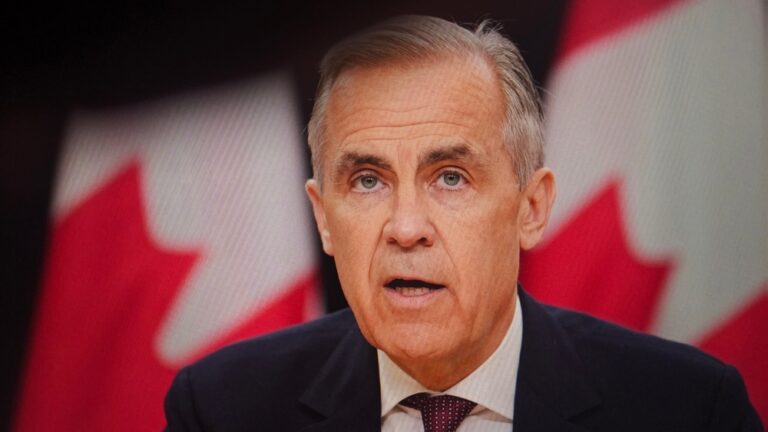
Carney’s offer came as the G7 summit in Évian, France, concluded on June 17, 2026. He said Canada would do what it could to help implement the U.S.-Iran framework, provided Canadian involvement was considered useful and appropriate. His comments went beyond a general expression of diplomatic support. Carney specifically discussed the need for third countries to serve as moderators when money is released only after certain conditions have been fulfilled. Such a role could involve reviewing compliance reports, confirming that requirements have been met and helping ensure that funds are used for their stated purpose.
That is more precise than simply supporting negotiations, but it is also narrower than independently policing Iran’s entire nuclear program. The International Atomic Energy Agency remains the institution equipped to inspect nuclear facilities and verify nuclear material. Canada’s possible contribution appears more likely to focus on implementation, financial oversight or coordination between the parties. Carney also made clear that Ottawa was not offering Canadian taxpayer money for Iran’s reconstruction. The proposal is therefore best understood as an offer of diplomatic and administrative credibility rather than cash, military personnel or nuclear inspectors.
A Deal With Enormous Promises and Major Blanks
The framework reviewed by Reuters contains 14 broad points and is intended to end the immediate conflict, reopen the Strait of Hormuz and create a pathway toward a permanent settlement. Iran and the United States would have up to 60 days to negotiate the final agreement, with an extension possible by mutual consent. During that period, Iran would maintain the status quo on its nuclear activities, while Washington would refrain from imposing new sanctions or increasing its military presence in the region.
Yet several of the hardest questions have been deferred. The preliminary document does not settle what will happen to Iran’s enriched uranium, how much enrichment Iran may retain for civilian purposes or how disputed nuclear sites will be inspected. The timing and scope of sanctions relief also require further negotiation. Even the promised end to hostilities is connected to unresolved conflicts involving Israel, Lebanon and Hezbollah. President Donald Trump has warned that military action could resume if Iran fails to meet American expectations. The framework may stop the immediate fighting, but it does not yet provide the detailed technical rules needed to prevent another confrontation.
Why Independent Oversight Could Determine Whether It Survives
Peace agreements often fail when the parties disagree not only about their responsibilities, but about whether those responsibilities have been met. The draft U.S.-Iran framework acknowledges that problem by calling for an implementation mechanism to oversee compliance with the final agreement. It also anticipates involvement from international and regional partners, including the International Atomic Energy Agency. The G7 has publicly said it is prepared to contribute to implementation.
Canada could be useful precisely because it is not one of the two principal parties. A third-party moderator could document decisions, review whether financial conditions have been satisfied and provide reports that neither Washington nor Tehran controls. That would not eliminate political disputes, but it could give both governments a common set of facts. The distinction is important. Nuclear verification requires specialized inspectors, environmental sampling, surveillance equipment and access to declared and potentially undeclared locations. Financial and diplomatic monitoring requires different expertise, including sanctions compliance, auditing and dispute resolution. Canada is more likely to complement the IAEA than replace it, helping connect technical findings to the economic benefits or penalties contained in the final arrangement.
Canada’s Relationship With Iran Is Anything but Neutral
Canada may be a third party, but it is not a politically neutral observer of the Iranian government. Ottawa closed its embassy in Tehran and expelled Iranian diplomats from Canada in 2012. It has maintained extensive sanctions targeting Iranian officials, military organizations and entities connected to human-rights abuses, nuclear proliferation and threats to international security. Additional Canadian sanctions were imposed as recently as March 2026.
The most painful issue remains the destruction of Ukraine International Airlines Flight PS752. The aircraft was shot down by two Iranian surface-to-air missiles shortly after leaving Tehran on January 8, 2020. All 176 people aboard were killed, including 55 Canadian citizens and 30 permanent residents. Canada continues to pursue accountability and reparations alongside other affected countries. Ottawa also listed the Islamic Revolutionary Guard Corps as a terrorist entity in 2024. For families connected to PS752 and members of the Iranian-Canadian community, any Canadian role will therefore carry emotional weight. Carney would need to demonstrate that helping administer a peace agreement does not mean abandoning demands for justice, human rights or accountability.
The 2015 Nuclear Deal Offers Both a Model and a Warning
The earlier Joint Comprehensive Plan of Action shows why detailed verification matters. Under the 2015 agreement, Iran accepted strict limits on uranium enrichment, reduced its enriched-uranium stockpile, cut the number of installed centrifuges and modified nuclear facilities. In exchange, nuclear-related sanctions were lifted. The arrangement placed the International Atomic Energy Agency at the centre of monitoring, with inspectors reporting regularly on Iran’s implementation.
The agreement initially produced measurable limits on Iran’s nuclear activity. The IAEA repeatedly reported that Iran was implementing its nuclear commitments before the United States withdrew from the deal in May 2018. Washington then restored sanctions, and Iran began exceeding key limits in 2019. Over time, access and monitoring deteriorated, making it increasingly difficult for inspectors to reconstruct parts of the program. The lesson for the new negotiations is not simply that verification must be strong. The political bargain surrounding it must also endure. Inspectors can count centrifuges and measure uranium, but they cannot keep an agreement alive if one side withdraws, sanctions return or promised economic benefits never materialize.
The $300-Billion Fund Is Designed to Create Leverage
One of the most unusual provisions is a proposed Reconstruction and Development Fund worth at least US$300 billion. According to Reuters, the fund would be financed through private investment rather than American government spending, with more than half of the targeted amount already committed. Potential investors reportedly include companies from the United States, Gulf countries, Asia, Africa and South America. Projects could cover energy, transportation, logistics and manufacturing.
The sequencing is crucial. Iran would not simply receive the entire amount after signing the preliminary framework. Investment would be connected to progress toward a final agreement and compliance with its conditions. That is where a third-party country could become important. Investors, governments and Iranian authorities would need a credible process for determining when requirements have been satisfied and money can safely move. Canada could potentially help oversee that process without contributing financially. However, administering such a fund would be politically and technically difficult. Sanctions may be lifted gradually, private companies will demand legal certainty, and any allegation that money benefited sanctioned organizations could freeze investment almost immediately.
The Strait of Hormuz Makes the Deal an Economic Issue for Canada
The agreement matters far beyond Iran’s borders because it is intended to restore commercial traffic through the Strait of Hormuz. Roughly 20 million barrels of crude oil and petroleum products normally pass through the waterway each day, representing about one-fifth of global petroleum consumption and roughly one-quarter of seaborne oil trade. Significant volumes of liquefied natural gas also use the route. There are few practical alternatives capable of replacing that capacity.
The conflict and collapse in tanker traffic pushed Brent crude close to US$120 a barrel in March and above US$126 during another period of tension in April. Prices later fell below US$80 as hopes for an agreement increased. Canada produces more oil than it consumes, but Canadian households and businesses are not insulated from global prices. Refining costs, transportation expenses, airline fuel bills and inflation expectations can all respond to an international supply shock. A durable reopening of Hormuz could ease those pressures. A failed agreement, renewed fighting or uncertainty over mines and shipping security could reverse the relief. Canada’s diplomatic involvement would therefore intersect with a direct economic interest in stable energy markets.
Carney Is Testing His Middle-Power Strategy
Carney has argued that countries such as Canada should build practical coalitions around specific international problems rather than waiting for the old global order to function as it once did. Helping implement the Iran framework would be a clear test of that approach. Canada would be working alongside the United States while relying on institutions such as the IAEA and the United Nations to make the agreement credible. It would also need cooperation from Qatar, European governments, Gulf states and other countries involved in mediation or investment.
There are obvious political risks. Canada could be accused of giving legitimacy to an agreement that remains incomplete, aligning too closely with Trump or overlooking Iran’s record. Washington could reject findings it considers too cautious, while Tehran could portray Canadian oversight as an extension of Western sanctions policy. The role could also become irrelevant if the parties fail to reach a final settlement within 60 days. Success would look less dramatic: independently verified nuclear restrictions, phased sanctions relief, transparent investment and ships moving safely through Hormuz. Carney’s offer places Canada near the machinery that could make those outcomes possible, but it also places Ottawa close to the consequences if the machinery breaks down.
This Options Discord Chat is The Real Deal
While the internet is scoured with trading chat rooms, many of which even charge upwards of thousands of dollars to join, this smaller options trading discord chatroom is the real deal and actually providing valuable trade setups, education, and community without the noise and spam of the larger more expensive rooms. With a incredibly low-cost monthly fee, Options Trading Club (click here to see their reviews) requires an application to join ensuring that every member is dedicated and serious about taking their trading to the next level. If you are looking for a change in your trading strategies, then click here to apply for a membership.