35,000+ smart investors are already getting financial news, market signals, and macro shifts in the economy that could impact their money next with our FREE weekly newsletter. Get ahead of what the crowd finds out too late. Click Here to Subscribe for FREE.
Washington’s political landscape has shifted dramatically, but Ottawa is refusing to treat the results as an immediate reset in Canada–U.S. relations. Following the Democrats’ sweeping victory in the November 3, 2026, U.S. midterm elections, Prime Minister Mark Carney made clear that Canada’s priorities remain unchanged. Affordability, economic opportunity, national sovereignty, and reducing dependence on the United States continue to guide his government’s decisions.
The election handed Democrats control of both chambers of Congress, potentially creating new obstacles for President Donald Trump’s trade agenda. However, with negotiations between Ottawa and Washington still underway, Carney is emphasizing stability rather than celebrating a political shift south of the border. For Canadian workers, businesses, and families facing economic uncertainty, the central question is whether Washington’s new political balance will eventually produce meaningful changes.
Carney’s Message Is Continuity, Not Celebration
Carney Says Democrats’ U.S. Election Victory Won’t Change Canada’s Approach to Trump
- Carney’s Message Is Continuity, Not Celebration
- Democrats Deliver a Sweeping Rebuke to Republicans
- Trump Still Holds the Powers That Matter Most in Trade
- Negotiations Were Already Moving Before Election Night
- Tariffs Remain the Central Economic Dispute
- Canada’s Dependence on the U.S. Remains Enormous
- Ontario’s Factories Show What Is at Stake
- Sovereignty Remains a Condition of Any Agreement
- Diversification Is Becoming Policy, Not Just Rhetoric
- A Political Opening Is Not Yet a Trade Breakthrough
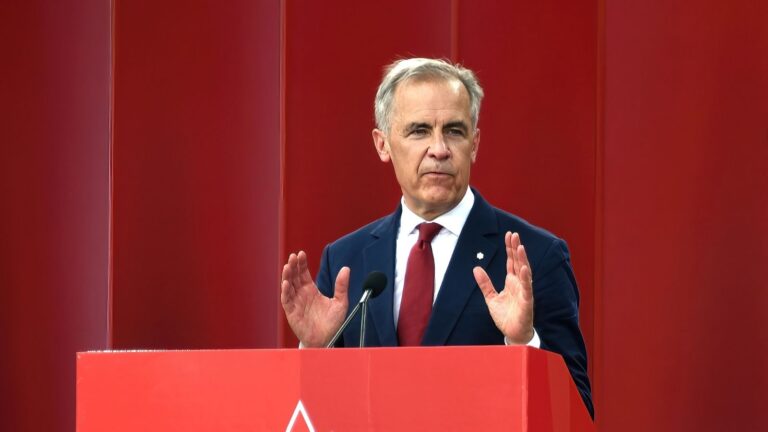
Carney’s response on November 5 remained focused on Canadian priorities over U.S. politics. Asked whether the Democrats’ success would alter his approach to Washington, he emphasized affordability, opportunity and the country’s right to make its own decisions. He called Canada a confident partner while acknowledging American developments matter. The distinction was important: Ottawa was not dismissing the election, but refusing to build its negotiating strategy around a possible change in Washington’s mood.
For families watching grocery bills and businesses calculating the cost of another shipment across the border, that message was less about political theatre than practical uncertainty. A change in Congress does not immediately rewrite customs rules or restore an order book. Carney’s position suggests Canada will judge progress by concrete outcomes—more predictable market access, investment and jobs—rather than by which party controls congressional committees. The government is also maintaining its broader push for economic independence.
Democrats Deliver a Sweeping Rebuke to Republicans
The November 3 midterms gave Democrats control of both the House of Representatives and the Senate, a result confirmed by the Associated Press. Democrats made gains in territory that had backed Trump in 2024, including Senate victories in Texas, Kansas and South Carolina. The results will reshape the political environment for the final two years of Trump’s presidency, replacing Republican congressional majorities with opponents prepared to challenge his administration.
Cost-of-living concerns featured prominently. Associated Press reporting and voter polling pointed to frustration over high prices, the war with Iran and questions about government conduct. Trump’s tariffs were part of that economic debate, but it would oversimplify the outcome to claim every Democratic vote was a rejection of trade barriers. For Canada, the election creates a potentially more sympathetic audience in Congress. It does not guarantee that lawmakers will agree on how to reduce tariffs or how quickly they should act.
Trump Still Holds the Powers That Matter Most in Trade
The next Congress is scheduled for January 3, 2027, unless lawmakers set another date, leaving a gap between the election result and any congressional action. Even after Democrats take their seats, Trump remains president. He can veto legislation, and reversing a veto requires a two-thirds vote in both chambers. Democratic majorities alone do not meet that threshold, a limitation for anyone expecting a swift repeal of Canadian tariffs.
The American Constitution assigns Congress authority over trade and duties, but lawmakers have delegated substantial tariff powers to presidents through federal statutes. Democrats can investigate the administration, hold hearings, question exemptions and attempt to change those laws. They can also seek compromises over government funding. None of these tools automatically cancels existing duties. For a Canadian manufacturer preparing next month’s export orders, legal authority and the president’s willingness to negotiate may matter more immediately than the political headlines celebrating a new Congress.
Negotiations Were Already Moving Before Election Night
Carney and Trump had renewed contact before Americans voted. Following a November 1 conversation, Carney said negotiators would work in the coming weeks toward a trade deal. Trump sounded optimistic, describing the outline of a possible deal. Their comments marked a change from August, when Canada suspended negotiations after rejecting last-minute U.S. demands it considered unacceptable. Yet expressions of confidence were not a signed agreement.
On November 4, Canada–U.S. Trade Minister Dominic LeBlanc reinforced the government’s approach. He said the midterm results would not significantly affect Ottawa’s work and indicated that he expected to speak with U.S. Commerce Secretary Howard Lutnick and Trade Representative Jamieson Greer. That schedule helps explain Carney’s restraint. Canadian negotiators must deal with the officials empowered to make decisions, not wait for congressional leaders to take office in January. Until terms are settled, tariff relief remains a possibility rather than a result.
Tariffs Remain the Central Economic Dispute
The trade conflict involves multiple tariffs. The United States imposed 50 per cent tariffs on selected Canadian products in August under Section 338 of a 1930 trade law, including furniture, plastics, machinery and paper products. Those duties can apply even to products qualifying under the Canada–United States–Mexico Agreement. Other restrictions affect steel, aluminum and vehicles, complicating matters for exporters.
The Bank of Canada estimated in its October outlook that roughly 80 per cent of Canadian merchandise exports to the United States remained tariff-free. However, the average U.S. tariff rate on Canadian goods had increased from 5.0 per cent in July to 7.5 per cent in October. Canada responded to the duties with counter-tariffs on about $28 billion in U.S. goods. Those numbers explain why Ottawa wants stability, not just encouraging political signals: a narrow set of tariffs can still cause disruption in exposed industries.
Canada’s Dependence on the U.S. Remains Enormous
The economic relationship cannot be changed by one election. Statistics Canada reported that 29.8 per cent of Canadian goods exports went to destinations outside the United States in September 2026. More than seven in ten Canadian merchandise export dollars still depended on American buyers. Geography and shared production networks mean companies cannot replace U.S. customers with distant buyers overnight.
September figures showed exports to the United States rising 0.7 per cent, helped by crude oil and gold, while exports to other markets slipped 1.1 per cent. That pattern illustrates how uneven diversification can be. Meanwhile, the Bank of Canada projected economic growth of 1 per cent in 2026 and identified U.S. trade policy as a major source of uncertainty. For exporters, a percentage point in tariff costs may determine whether an existing contract remains profitable, making predictable rules more valuable than political optimism alone.
Ontario’s Factories Show What Is at Stake
In Ontario’s industrial communities, the dispute has a human cost. Stelco announced plans in September to lay off up to 500 workers in Hamilton and Lake Erie amid weak demand and tariff pressures. Other provincial steel job reductions had been planned. For an affected millworker’s family, the prospect of friendlier lawmakers in Washington does little to resolve an immediate question about shifts, wages or the next mortgage payment.
Provincial data show pressure: Ontario’s steel exports to the United States were worth $4.1 billion in the first eight months of 2026, down from $8.4 billion over the comparable period in 2024. Automotive supply chains are vulnerable. Statistics Canada reported a 7.0 per cent decline in exports of passenger cars and light trucks in September, alongside reduced Canadian light-truck production. Not every slowdown results from tariffs alone, but the pressures show why Ottawa continues to prioritize concrete industry protections.
Sovereignty Remains a Condition of Any Agreement
Trade talks now test Canada’s control over economic and cultural decisions. When Carney suspended talks on August 21, he said last-minute American changes were unfair and called into question the reliability of a deal. He outlined objectives that included protecting small businesses, reducing tariffs on strategic industries and preserving Canada’s independence. Disputes involved automotive tariffs, Canadian cultural protections and Ottawa’s freedom to negotiate with other trading partners.
Those issues reach beyond the balance sheets of large exporters. Language protections matter to cultural businesses, while trade flexibility determines whether Canadian firms can pursue customers in markets outside North America. Carney’s comments fit that framework: cooperation with the United States remains essential, but not at the expense of decisions that Ottawa believes belong to Canadians. The election may reshape U.S. politics, but underlying disagreements remain on both sides. Any successful agreement would need to reconcile tariff relief with those longstanding priorities.
Diversification Is Becoming Policy, Not Just Rhetoric
Ottawa’s November 5 budget proposed investment and tax incentives to improve productivity, infrastructure and trade over time. The government has set a goal of doubling exports to markets beyond the United States by the end of 2035. This remains a target rather than an achievement. Meeting it requires companies to find new buyers and improve infrastructure that connects them to customers overseas.
Canada has also intensified its relationship with Europe. At the October 30 Canada–European Union summit in Montréal, Carney promoted closer cooperation in areas including energy, technology and critical minerals. The relationship already represented approximately $178 billion in goods and services trade in 2025, according to the prime minister’s office. Such partnerships offer opportunities to spread economic risk, but they cannot instantly substitute for the scale of U.S. demand. That is why diversification and negotiations with Washington are being pursued together rather than treated as competing strategies.
A Political Opening Is Not Yet a Trade Breakthrough
Canadian reactions differed. Conservative Leader Pierre Poilievre argued that the vote gave Ottawa greater leverage and urged tariff-free trade. Ontario Premier Doug Ford welcomed the Democratic gains but warned that the trade conflict was far from over. In Washington, Democrats have called for action against Trump’s tariffs, including Senator Ron Wyden, who targeted duties on Canada. That creates pressure, not a remedy.
The next tests will be practical. Canadian and American negotiators must decide whether they can settle the outstanding differences raised in August, while the incoming Congress may hold hearings and consider changes to tariff laws. The North American trade pact also faces review after Washington declined to extend it in its current form in July; the agreement remains in force. Carney’s position is therefore a calculated one: welcome any opening, keep negotiating with the administration in power and avoid mistaking an election victory for a completed economic deal.
This Options Discord Chat is The Real Deal
While the internet is scoured with trading chat rooms, many of which even charge upwards of thousands of dollars to join, this smaller options trading discord chatroom is the real deal and actually providing valuable trade setups, education, and community without the noise and spam of the larger more expensive rooms. With a incredibly low-cost monthly fee, Options Trading Club (click here to see their reviews) requires an application to join ensuring that every member is dedicated and serious about taking their trading to the next level. If you are looking for a change in your trading strategies, then click here to apply for a membership.