35,000+ smart investors are already getting financial news, market signals, and macro shifts in the economy that could impact their money next with our FREE weekly newsletter. Get ahead of what the crowd finds out too late. Click Here to Subscribe for FREE.
The numbers are still far below the worst moments Canada has lived through, but the direction is what has officials worried. A wildfire season that began more slowly than the country’s brutal 2023 and 2025 seasons is now showing signs of escalation, with dozens of fires burning beyond control lines and summer heat still ahead.
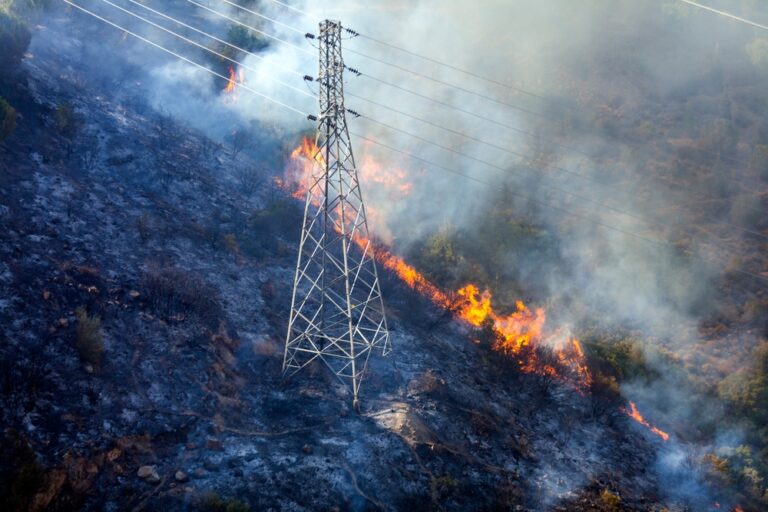
Federal officials say Canada had recorded 1,747 wildfires this year as of June 10, with 95 still active and 44 classified as out of control. The warning is not just about flames on a map. It is about smoke drifting into cities, remote communities preparing evacuation plans, aircraft being staged before crises peak, and a country learning that wildfire risk is no longer confined to one province, one bad month, or one unusually dry year.
A Slow Start Has Turned Sharply
Canada Warns Wildfires Will Intensify as 44 Blazes Burn Out of Control
- A Slow Start Has Turned Sharply
- Why Officials Expect the Risk to Build
- Canada’s Climate Signal Is Hard to Ignore
- The Geography of Fire Risk Is Shifting
- Smoke Is Now a Health Emergency, Too
- Indigenous Communities Remain on the Front Line
- Firefighting Is Becoming a Coordination Test
- The Cost Extends Far Beyond the Fireline
- Preparedness Is Becoming a Year-Round Job
Canada’s 2026 wildfire season opened with a measure of relief. Compared with the explosive early pace of 2023 and the heavy losses of 2025, the first stretch of the season appeared more manageable. In late May, federal officials reported 65 active wildfires across the country, with six listed as out of control. The year-to-date burn area was just under 19,000 hectares, a figure that seemed modest beside the millions of hectares lost in recent landmark seasons.
That picture changed quickly. By June 10, the number of active fires had climbed to 95, and the out-of-control count had jumped to 44. The area burned had risen to 166,400 hectares. For residents in fire-prone regions, those numbers translate into a familiar anxiety: the smell of smoke before sunrise, highway signs warning of changing conditions, and community leaders watching wind forecasts as closely as fire maps. The season may have started slowly, but officials are now warning that the dangerous part of summer is still ahead.
Why Officials Expect the Risk to Build
The federal concern is rooted in the basic ingredients of fire weather: heat, dryness, wind, and available fuel. Ottawa’s latest outlook points to warmer-than-normal temperatures across much of Canada this summer. Even in places that received helpful rain earlier in the year, officials warned that vegetation can dry rapidly once sustained heat arrives. A few weeks of hot, breezy weather can turn a damp forest floor into something far more combustible.
Natural Resources Canada’s modelling shows fire danger building through July and August, with British Columbia facing the highest and most sustained risk in earlier federal forecasts. Other regions could see risk emerge quickly, including parts of northern, central, and eastern Canada. That matters because the wildfire threat is no longer only a western story. The 2023 season showed how fires in Quebec, Nova Scotia, Alberta, British Columbia, and the North could all strain crews and equipment at the same time. When fires burn simultaneously across multiple regions, the challenge shifts from fighting one emergency to managing a national system under pressure.
Canada’s Climate Signal Is Hard to Ignore
No single fire can be blamed on one factor alone. Ignitions, local fuel conditions, terrain, firefighting access, and weather all matter. But scientists have become increasingly clear that a warmer climate is loading the dice toward longer fire seasons and more dangerous fire weather. Canada’s annual average temperature has increased at roughly twice the global average rate, with northern Canada warming even faster. That national trend helps explain why fire managers are treating wildfire as a changing risk, not just a recurring summer hazard.
The 2023 wildfire season remains the clearest warning sign. Research published in Nature Communications found that the season was driven largely by extreme weather enabled by human-caused climate change, including hotter and drier-than-normal conditions. World Weather Attribution also concluded that climate change more than doubled the likelihood of the extreme fire-weather conditions that hit eastern Canada in May and June 2023. The lesson for 2026 is not that this season will repeat 2023. It is that the background conditions are becoming more favorable for sudden, severe fire growth when heat, drought, wind, and ignition line up.
The Geography of Fire Risk Is Shifting
Canada’s fire map is complicated because conditions can improve in one region while worsening in another. Federal officials said fire danger was expected to remain low across much of Alberta, Saskatchewan, and southern Manitoba through June. At the same time, drought in the eastern Northwest Territories and Atlantic provinces was expected to keep fire potential elevated. This uneven pattern can make the season feel confusing: one province may be getting rain while another is preparing for evacuation alerts.
That unevenness is part of the new challenge. Fire crews, aircraft, and emergency shelters must be moved based on shifting risk, not fixed assumptions about where the next crisis will happen. A wet spring may delay danger, but it does not eliminate it if July brings heat and drying winds. In some communities, the practical response is already visible: fuel is cleared from around homes, local officials review evacuation routes, and residents keep a closer eye on smoke forecasts. Wildfire preparedness is becoming less about reacting to flames and more about reading the conditions that allow flames to spread.
Smoke Is Now a Health Emergency, Too
For many Canadians, the first sign of wildfire danger is not a visible flame but a yellow-grey sky. Smoke can travel hundreds or even thousands of kilometres, turning distant fires into local health events. Environment and Climate Change Canada now provides wildfire smoke forecast maps showing how fine particulate matter may move across North America over a 72-hour period. Those forecasts matter because PM2.5, the fine particles commonly used to measure smoke exposure, can reach deep into the lungs.
Health Canada has found that wildfire smoke increases the risk of serious health effects, including premature death, breathing difficulties, and worsening asthma or chronic obstructive pulmonary disease. It has also estimated that wildfire smoke contributed to hundreds of short-term exposure deaths and thousands of long-term exposure deaths annually in Canada between 2013 and 2018. The public-health burden falls hardest on children, seniors, pregnant people, outdoor workers, and people with existing heart or lung conditions. That is why wildfire season now affects schools, sports leagues, construction sites, hospitals, and families far from the nearest burn scar.
Indigenous Communities Remain on the Front Line
Wildfire risk is not shared equally. Indigenous Services Canada reported that since April 1, 2026, wildland fires had affected 10 First Nations on reserve or eligible under the Emergency Management Assistance Program and led to the evacuation of 2,167 people. As of June 10, six First Nations were still affected by wildland fires and 165 people remained evacuated. These figures capture only part of the toll, because displacement also disrupts schooling, health care, work, language, culture, and connection to land.
Public health research has found that First Nations communities account for an estimated 42 percent of wildfire-related evacuations while representing about 5 percent of Canada’s population. Remote and northern communities often face added barriers, including limited roads, fewer local firefighting resources, communication challenges, and long distances to temporary shelter. For a family forced to leave by plane or bus, evacuation can mean days or weeks in a hotel far from home, with uncertainty about pets, medications, elders, and whether the community will be safe to return to. The human cost of wildfire is measured not only in hectares, but in disruption.
Firefighting Is Becoming a Coordination Test
Canada’s wildfire response system depends on local, provincial, territorial, federal, Indigenous, and international coordination. Local authorities usually respond first. If a fire exceeds local capacity, provinces or territories can request federal assistance. That structure can work well, but it becomes more complicated when several jurisdictions face serious fires at once. In those moments, aircraft, crews, emergency lodging, communications, and supplies all become part of a national balancing act.
Ottawa says it has moved to expand capacity, including $316.7 million over five years for the Canadian Interagency Forest Fire Centre to establish a national aerial firefighting surge capacity. The federal government said CIFFC has leased 10 firefighting aircraft and two support assets for the 2026 season, including air tankers, a birddog aircraft, and heavy-lift helicopters. These resources can be prepositioned based on expected fire activity and moved as conditions change. The bigger point is that Canada is preparing for wildfire seasons that may require faster decisions, more shared equipment, and a stronger backup plan when provincial resources are stretched.
The Cost Extends Far Beyond the Fireline
Wildfires leave damage long after the smoke clears. The Jasper wildfire of 2024 became a stark example of how recovery can stretch on for months or years. The Insurance Bureau of Canada said insured losses from the Jasper fire had risen to nearly $1.3 billion, and that the July 2024 wildfire destroyed 358 homes and businesses in the town. One year later, only a small share of destroyed properties had been approved for reconstruction, showing how rebuilding can be slowed by permits, debris removal, soil testing, labour shortages, and emotional exhaustion.
The financial pressure is not limited to one community. Canada’s severe weather insured damage surpassed $9.2 billion in 2024, the first time it had crossed that level. Wildfire, flood, hail, and storm losses are now shaping conversations about premiums, land-use planning, building codes, and whether homes should be built in high-risk zones without stronger protection. For households, the cost appears in insurance renewals, evacuation expenses, missed work, spoiled food, damaged vehicles, and months of uncertainty. For governments, the bill arrives through emergency response, military support, road closures, health costs, and long-term rebuilding.
Preparedness Is Becoming a Year-Round Job
The message from federal officials is clear: Canada cannot treat wildfire as a short summer interruption anymore. Longer, more complex seasons require earlier planning, better public alerts, faster resource-sharing, and more investment before flames reach communities. The federal government has pointed to spending on firefighting aircraft, emergency workforce capacity, public alerting, Parks Canada fire management, FireSmart programs, Indigenous preparedness, equipment, and firefighter training as part of that shift.
Preparedness also happens at the household and neighbourhood level. Communities in high-risk areas are increasingly clearing dry vegetation, checking evacuation routes, preparing go-bags, and watching local fire-danger ratings. Urban residents far from forests are learning to track air quality, seal indoor spaces, and plan around smoke days. The warning about 44 out-of-control fires is therefore not only a snapshot of one week in June. It is a reminder that wildfire response is becoming part of Canada’s civic infrastructure, touching health care, housing, insurance, emergency management, climate policy, and daily life.
This Options Discord Chat is The Real Deal
While the internet is scoured with trading chat rooms, many of which even charge upwards of thousands of dollars to join, this smaller options trading discord chatroom is the real deal and actually providing valuable trade setups, education, and community without the noise and spam of the larger more expensive rooms. With a incredibly low-cost monthly fee, Options Trading Club (click here to see their reviews) requires an application to join ensuring that every member is dedicated and serious about taking their trading to the next level. If you are looking for a change in your trading strategies, then click here to apply for a membership.