35,000+ smart investors are already getting financial news, market signals, and macro shifts in the economy that could impact their money next with our FREE weekly newsletter. Get ahead of what the crowd finds out too late. Click Here to Subscribe for FREE.
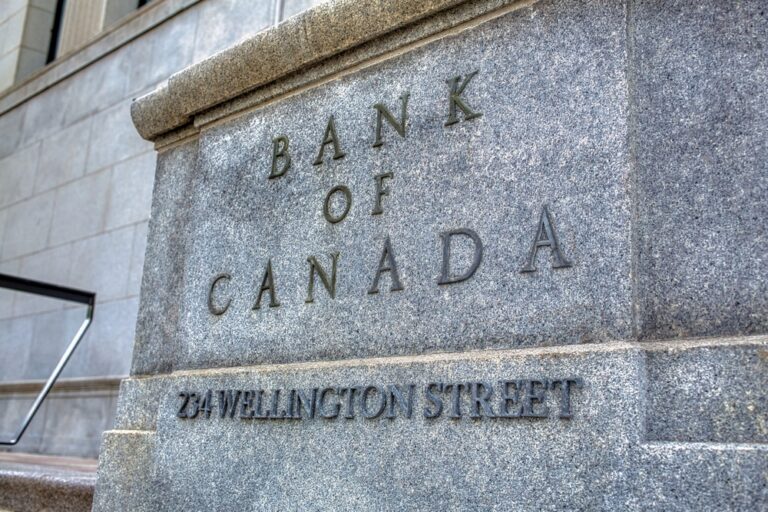
For central bankers, patience is rarely passive. The Bank of Canada’s latest account of its April 29 deliberations shows a Governing Council that believes it still has room to hold steady, even after a sudden inflation flare-up tied to energy prices. But the tone is less relaxed than the headline pause might suggest: policymakers see a soft economy, easing core pressures and enough slack to buy time, yet they are plainly alert to how quickly another inflation scare could spread.
That tension matters. Canada is still absorbing U.S. trade disruptions, slower hiring, housing strain and a large mortgage renewal wave, while war-driven oil prices have lifted gasoline costs and darkened the near-term outlook. The Bank’s message is clear: policy can wait only as long as broader inflation does. Once price pressures begin moving beyond the pump and into expectations, wages or everyday services, the pause stops looking prudent and starts looking dangerous.
A Hold Built on Conditional Confidence
Bank of Canada Minutes Show Policymakers Are Ready to Wait — Until Inflation Forces Their Hand
- A Hold Built on Conditional Confidence
- March Inflation Changed the Mood, Not the Framework
- Oil Is the Shock, but Persistence Is the Real Threat
- A Soft Economy Is Buying the Bank Time
- Trade Tensions Still Linger in the Background
- Labour Market Slack Is Still Doing Important Work
- Expectations, Not Just Prices, Are the True Tripwire
- Households Are Still the Pressure Point
- The Real Message Is About Optionality
- What Canadians Should Watch Before the Next Decision
The Bank of Canada left its policy rate at 2.25% on April 29, and the reasoning was more nuanced than a simple “inflation is under control” message. Officials judged that the current stance still offered support to an economy growing only modestly, and they signalled that if events unfold broadly as expected, something close to today’s rate would likely remain appropriate. That is not an all-clear. It is a conditional hold, built on the assumption that oil prices cool, U.S. tariffs do not intensify materially, and inflation settles back toward target without a second wave.
What makes the pause interesting is the way the Bank framed it. Policymakers effectively argued that they could look through the first jolt from higher gasoline prices because the economy is not overheating. Core inflation had been easing, the labour market was soft, and broad price pressures had not yet re-accelerated. In other words, this was not a central bank freezing in place. It was one deliberately staying still while watching for signs that stillness may no longer be safe.
March Inflation Changed the Mood, Not the Framework
Canada’s March inflation report did not blow up the Bank’s broader strategy, but it did sharpen the conversation. Headline CPI rose 2.4% year over year in March, up from 1.8% in February, with gasoline doing much of the damage. On a monthly basis, prices rose 0.9%, while gasoline surged 21.2% from the previous month, the largest monthly increase on record. That kind of jump is exactly the sort of number that can rattle households, dominate headlines and change the emotional temperature around inflation, even if policymakers believe the initial shock may fade.
Still, the details mattered. Excluding gasoline, CPI rose 2.2%, slower than in February, and the Bank noted that core measures remained near 2%. It also pointed out that the share of CPI components rising faster than 3% had declined in recent months. That is why the March report changed the mood without yet changing the framework. Policymakers saw enough evidence to take the spike seriously, but not enough to conclude that inflation had become broad-based again. The distinction is technical, but it is also the difference between a pause and a panic.
Oil Is the Shock, but Persistence Is the Real Threat
The Bank’s core judgment is that higher oil prices are a problem, but not automatically a rate-hike problem. Canada is a net energy exporter, so pricier crude does not hit the country the same way it hits a large energy importer. Higher oil lifts export revenues and parts of the resource economy even as it squeezes consumers at the gas station. That is why policymakers said the overall growth impact could remain small even while inflation rises in the near term. In the base case, the Bank expects oil prices to ease over time, allowing inflation to drift back down.
The real danger is not the first move in energy prices. It is what happens after that. If higher oil lasts long enough, it can lift freight costs, fertilizer prices, food prices and a broad range of business inputs. Once firms feel more comfortable passing those costs on, and households begin assuming higher inflation will stick, the problem changes shape. The Bank’s deliberations make that risk explicit. Officials were willing to look through the initial shock, but they were equally clear that a more persistent oil surge could force monetary tightening to stop inflation from becoming entrenched.
A Soft Economy Is Buying the Bank Time
One reason policymakers feel they can wait is that the economy is not sending urgent overheating signals. In its April Monetary Policy Report, the Bank said the Canadian economy likely grew modestly in early 2026, supported by consumption and government spending, while housing and exports dragged on growth. It estimated first-quarter growth at about 1.5% on an annualized basis and projected GDP growth of 1.2% for 2026 before a gradual pickup in 2027 and 2028. That is not a recession call, but it is also not the kind of pace that usually justifies aggressive rate increases.
The composition of growth matters almost as much as the headline number. Residential investment has been revised down because affordability remains difficult, and business investment is still being shaped by tariff uncertainty and structural change. The Bank is effectively saying that Canada has enough forward motion to avoid alarm, but not enough strength to absorb unnecessary policy tightening. That helps explain the “wait” message. If growth were booming, officials might treat a jump in inflation very differently. Instead, they are dealing with an economy that looks steady on the surface and fragile underneath.
Trade Tensions Still Linger in the Background
Oil may be the new inflation story, but U.S. trade policy remains a major part of the Bank’s caution. In its April report, the Bank said Canada’s outlook was highly conditional on U.S. tariffs remaining unchanged. That is a reminder that the central bank is not navigating one shock but several at once. The economy is still adjusting to tariff-heavy trade rules, supply-chain rewiring and uncertainty around the future review of CUSMA. For policymakers, that creates a strange mix: inflation risks on one side, weaker growth risks on the other.
The sector-level evidence is telling. The Bank says industries facing sectoral tariffs account for about 1% of Canadian output and employment and around 15% of exports. Steel has been hit especially hard, with exports to the United States down by half. Lumber exports were roughly 20% below 2024 averages by February 2026, while aluminum exporters partially adapted by rerouting shipments to Europe. Motor vehicle exports, by contrast, have been relatively steadier. The bigger lesson is that trade damage has been real, but uneven, which makes the economy harder to read and monetary policy harder to calibrate.
Labour Market Slack Is Still Doing Important Work
The labour market is another reason the Bank is willing to wait. Statistics Canada reported that employment was little changed in April, while the unemployment rate rose to 6.9% from 6.7% in March. Among young workers aged 15 to 24, unemployment climbed to 14.3%. Long-term unemployment remained above pre-pandemic norms, and the participation rate rose as more people searched for work. That is not the profile of an economy bursting with wage-driven inflation pressure. It is the profile of one where demand is soft enough to reduce firms’ ability to push through higher costs.
This matters because labour-market slack gives central banks cover to look through temporary shocks. If businesses are facing weaker demand, tighter competition and more cautious consumers, they are less likely to respond to higher energy costs by raising prices across the board. The Bank said exactly that in its deliberations. A soft labour market does not solve the inflation problem on its own, but it reduces the risk that a gasoline spike automatically turns into a generalized price spiral. For now, that slack is doing some of the work that higher interest rates would otherwise have to do.
Expectations, Not Just Prices, Are the True Tripwire
Central banks do not react only to inflation itself. They react to what people begin to expect inflation will do next. That is why the Bank’s latest surveys are so important. In the first quarter, firms’ one-year-ahead inflation expectations ticked up slightly, especially among those surveyed after the war in the Middle East began. Businesses also reported higher input costs linked to energy, fertilizer and freight. Meanwhile, the Bank’s consumer survey showed that near-term inflation expectations remained above the survey’s historical average, with food prices still a major driver of household concern.
Yet the same surveys also help explain why the Bank has not moved. Consumer long-term inflation expectations eased somewhat from a year earlier, and market participants still see the policy rate sitting at 2.25% through the rest of 2026 on the median view. That balance is crucial. Policymakers can tolerate short-term anxiety if they believe longer-term expectations remain anchored. But once that anchor starts dragging, patience becomes expensive. The Bank’s minutes read like an institution trying to prevent exactly that shift: calm enough to wait, but too scarred by the last inflation surge to be casual about warning signs.
Households Are Still the Pressure Point
This policy debate can sound abstract until it lands in a household budget. Higher gasoline and food prices hit fast because they are visible, frequent purchases. The Bank’s special consumer survey after the outbreak of war in the Middle East found that a strong majority of households expected the conflict to weaken the Canadian economy and raise prices. Some had already changed behaviour: 21% reported cancelling or postponing trips, while 28% said they had postponed or reduced major spending more broadly. That kind of behavioural response matters because it can cool growth even before official data fully show the strain.
Mortgage renewals add another layer. A Bank of Canada analysis published last year estimated that about 60% of mortgage holders renewing in 2025 and 2026 would see payment increases, and that average monthly payments for those renewing in 2026 could be 6% higher than in December 2024. CMHC said this week that renewal volumes are easing through 2026 but still dominate the market, and that most borrowers renewing continue to face significantly higher interest costs. For policymakers, that is a reminder that even without another rate hike, financial conditions are still tightening for many families in real life.
The Real Message Is About Optionality
The most important takeaway from the deliberations may be that the Bank wants to preserve room to go either way. Policymakers explicitly said the rate might need to be cut further if the United States imposes significant new trade restrictions on Canada. But they also said that if oil prices stay elevated and broader inflation takes hold, the policy rate may need to rise, potentially through consecutive increases. That is a central bank trying hard not to get trapped by a single narrative. It is keeping optionality because the economy is being pulled by conflicting forces.
That is also why the Bank’s tone feels firmer than the unchanged rate suggests. Officials are telling markets and households that they are not mechanically committed to holding forever. They are waiting because the evidence still allows it, not because the job is done. In practical terms, that means the current pause is less a resting place than a checkpoint. It gives policymakers time to test whether the inflation shock stays narrow or spreads wider. If it stays narrow, the hold looks sensible. If it spreads, the Bank has already prepared the public for a different answer.
What Canadians Should Watch Before the Next Decision
Between now and the Bank’s next rate announcement on June 10, the most important question is whether inflation broadens. A jump in gasoline alone will not be enough to force action if core measures stay contained and consumers pull back elsewhere. But if higher fuel prices begin feeding more clearly into groceries, travel, freight-heavy goods or services pricing, the Bank’s patience will start wearing thin. Food and rent will matter especially because they shape household psychology. If those categories stay stubborn, near-term inflation expectations could become harder to keep in check.
The calendar matters too. Statistics Canada is scheduled to release the April CPI report on May 19, and the Bank has already signalled that inflation likely rose to about 3% in April. That figure, by itself, will not settle the question. What matters is what sits underneath it. A narrow, energy-led rise would support the Bank’s current wait-and-watch stance. A broader pickup would make the title of these minutes feel less like a warning and more like a countdown. The Bank is ready to wait, but it has also made clear that waiting is a privilege inflation can revoke.
This Options Discord Chat is The Real Deal
While the internet is scoured with trading chat rooms, many of which even charge upwards of thousands of dollars to join, this smaller options trading discord chatroom is the real deal and actually providing valuable trade setups, education, and community without the noise and spam of the larger more expensive rooms. With a incredibly low-cost monthly fee, Options Trading Club (click here to see their reviews) requires an application to join ensuring that every member is dedicated and serious about taking their trading to the next level. If you are looking for a change in your trading strategies, then click here to apply for a membership.