35,000+ smart investors are already getting financial news, market signals, and macro shifts in the economy that could impact their money next with our FREE weekly newsletter. Get ahead of what the crowd finds out too late. Click Here to Subscribe for FREE.
A long-planned expansion of Alberta’s natural gas network has crossed its final major regulatory threshold. On July 20, 2026, the Alberta Utilities Commission approved ATCO’s Yellowhead Pipeline for construction and operation, allowing work to begin immediately on a $2.9-billion project stretching from the Peers area to Fort Saskatchewan.
The decision moves the project from hearings, route reviews and demand studies into a high-stakes construction phase that could reshape how gas reaches Alberta’s industrial heartland. Supporters see a backbone for petrochemicals, power generation and population growth. The more difficult test now begins: delivering a 235-kilometre pipeline on schedule, controlling costs and turning forecast economic benefits into durable jobs and investment.
Final Approval Removes the Last Major Regulatory Barrier
Alberta Clears $2.9-Billion Yellowhead Pipeline for Immediate Construction
- Final Approval Removes the Last Major Regulatory Barrier
- A 235-Kilometre Link Across Central Alberta
- Capacity Built for a Growing Gas Market
- The Industrial Heartland Is the Main Prize
- Dow’s Path2Zero Project Remains a Critical Customer
- Job and GDP Forecasts Are Large but Not Guaranteed
- Communities Along the Route Enter Construction Mode
- Indigenous Participation Moves From Consultation to Field Work
- Environmental Oversight Continues After Approval
- The Schedule Is Ambitious—and Now Measurable
The July decision is more significant than the preliminary approval Yellowhead received in August 2025. That earlier ruling accepted ATCO’s case that Alberta’s integrated gas system needed additional capacity, but it did not authorize crews to build a specific route. The latest Alberta Utilities Commission decision covers construction and operation of the physical facilities. In practical terms, the project has moved from proving why it is needed to receiving permission to put steel in the ground.
The distinction matters because the commission reviewed a detailed facilities application filed in November 2025 and held a public hearing beginning May 12, 2026. That process examined the proposed route, land impacts, technical design and broader public interest. ATCO says construction is now set to begin immediately, although “immediately” will first mean mobilizing contractors, staging materials, preparing access and beginning work in approved areas. It does not mean all 235 kilometres will be under active construction at once.
A 235-Kilometre Link Across Central Alberta
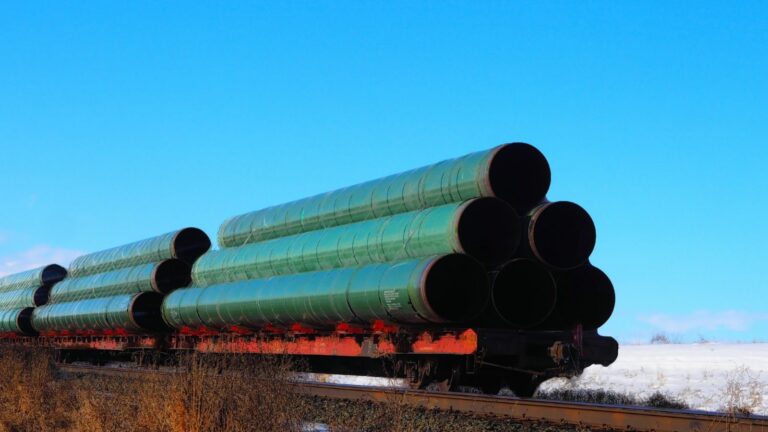
Yellowhead will run from the Peers area west of Edmonton to the Fort Saskatchewan area northeast of the city. The approved design calls for roughly 235 kilometres of 914-millimetre, or 36-inch, high-pressure natural gas pipeline, along with a compressor station and a control station. The route passes through or near communities including Niton Junction, Wildwood, Evansburg, Entwistle, Gainford, Onoway, Calahoo and Namao before reaching Alberta’s Industrial Heartland.
That geography explains the project’s strategic value. The western end connects with gas supply moving through Alberta’s existing network, while the eastern end reaches one of Canada’s largest concentrations of refineries, petrochemical plants, fertilizer facilities and energy-intensive industrial sites. ATCO says route planning considered environmental sensitivity, construction difficulty, existing utility corridors, roads, railways, property lines and overall cost. Using established linear corridors where possible can reduce new disturbance, but land access, traffic, drainage and reclamation will still be immediate concerns for rural residents along the route.
Capacity Built for a Growing Gas Market
Once operating, Yellowhead is expected to deliver more than 1.1 billion cubic feet of natural gas per day into Alberta’s system. That is a substantial addition. Alberta consumed about 6.9 billion cubic feet per day domestically in 2024, according to the Alberta Energy Regulator, meaning Yellowhead’s planned capacity is equivalent to roughly 16 per cent of that total. The regulator forecasts provincial demand reaching about 7.8 billion cubic feet per day by 2034.
The demand story is not based only on distant projections. ATCO says the pipeline is already fully contracted, a key signal that customers have reserved the new capacity before construction. Alberta’s gas use has been rising in electricity generation, residential and commercial buildings, oil sands operations and other industries. The regulator also says potential data-centre development could add further demand. Full contracting lowers one commercial risk, but it does not guarantee every downstream project will arrive on its original schedule or use its reserved capacity at the same pace.
The Industrial Heartland Is the Main Prize
Yellowhead is designed to do more than keep furnaces running during a cold Alberta winter. Its destination places the pipeline beside industries that use natural gas as fuel, feedstock or both. Petrochemical plants can transform gas liquids into plastics and other manufactured products, while fertilizer, hydrogen, power and building-material projects require large, reliable energy supplies. That is why the line is being framed as an industrial-enabling project rather than simply another transmission expansion.
The Alberta government’s major-projects database says Yellowhead could support more than $20 billion in associated downstream investment. That estimate includes projects whose economics depend partly on dependable gas delivery, but it should be read as potential rather than money already spent. Infrastructure can remove a constraint without guaranteeing investment decisions. Companies will still weigh commodity prices, global demand, labour availability, carbon costs and financing conditions. Yellowhead’s strongest economic argument is therefore not that it creates every promised factory, but that inadequate pipeline capacity is less likely to be the reason a viable project goes elsewhere.
Dow’s Path2Zero Project Remains a Critical Customer
Dow’s Fort Saskatchewan Path2Zero expansion has been central to Yellowhead’s development from the beginning. The petrochemical project is listed by Alberta at about $10.1 billion and is intended to expand and modernize Dow’s existing site. Dow says the finished complex would add ethylene and polyethylene capacity while using hydrogen, carbon capture and other systems to target net-zero Scope 1 and Scope 2 emissions at the integrated site.
The timing, however, has changed. Alberta’s project database says Dow delayed completion by two years, with the first phase now expected in 2029 and the second in 2030. That does not erase Yellowhead’s commercial case, especially because the pipeline is fully contracted and serves multiple customers, but it changes the near-term narrative. The pipeline may be ready before some of the largest new industrial loads fully arrive. That could provide useful capacity for other customers, yet it also makes construction discipline more important because the economic payoff depends on a broader portfolio of projects, not one high-profile development alone.
Job and GDP Forecasts Are Large but Not Guaranteed
ATCO estimates Yellowhead itself will create approximately 2,000 direct construction jobs. Those positions would include pipeline crews, heavy-equipment operators, welders, inspectors, environmental specialists, safety personnel, drivers and project managers. The benefits would also spread to hotels, restaurants, fuel suppliers, equipment-rental businesses and local service companies in communities along the route. For smaller towns, even a temporary construction wave can noticeably affect business activity and housing demand.
The larger numbers come from the downstream investment the pipeline is expected to enable. ATCO and Alberta project materials cite roughly 12,000 additional construction jobs, more than 20,000 ongoing jobs supported once associated investments are operating and an estimated $3.9 billion in annual provincial GDP. Those are economic-model projections, not a count of positions already created. Their accuracy will depend on which industrial projects proceed, when they start and how much local labour and supply-chain spending they generate. The clearest near-term measure will be Yellowhead’s direct hiring and contracting, followed by actual—not announced—capital spending in the Industrial Heartland.
Communities Along the Route Enter Construction Mode
For residents between Peers and Fort Saskatchewan, approval turns a distant infrastructure proposal into a local construction project. ATCO held a third round of open houses in June 2026 and reported meeting hundreds of landowners, residents, municipal officials, job seekers and community representatives across seven locations. The practical questions now become more specific: when crews will arrive, which roads will carry equipment, how long individual work fronts will remain active and how disturbed land will be restored.
Pipeline construction typically advances in spreads rather than as one continuous operation from start to finish. Surveying, clearing, grading, trenching, welding, lowering-in, testing and reclamation can occur at different locations simultaneously. That creates economic activity but also short-term disruption, especially around rural roads, farms and acreages. ATCO has said construction updates and local advisories will be posted by community. The quality and timeliness of those notices will matter. A technically successful project can still lose public trust if residents feel surprised by road restrictions, noise, access changes or reclamation problems.
Indigenous Participation Moves From Consultation to Field Work
The pipeline crosses Treaty 6 territory, making Indigenous participation a central part of construction and oversight. ATCO says major pipeline and compressor contracts have been awarded and that the project includes significant contracting opportunities for Treaty 6 Nations and local subcontractors. The company has also created an Indigenous inspector training program intended to help participants build experience toward pipeline-inspection certification and related careers in safety, quality and environmental work.
A separate Indigenous Monitor Program allows participating communities to identify representatives who can observe and document construction activity on Crown land. ATCO says monitors may include Elders, Knowledge Keepers, environmental monitors and other community members, with observations shared directly with the project team and their home communities. These programs can create jobs and bring traditional knowledge into field decisions, but they should not be treated as a substitute for the Crown’s legal consultation obligations or continuing nation-to-nation relationships. The meaningful test will be whether concerns raised during construction produce visible changes, timely responses and lasting economic participation.
Environmental Oversight Continues After Approval
Regulatory approval does not eliminate environmental risk; it sets the conditions under which that risk must be managed. ATCO says its route-selection process considered sensitive areas, wildlife, wetlands, constructability and opportunities to parallel existing infrastructure. The company also conducted environmental, geotechnical and field assessments before confirming the preferred route. During construction, erosion control, water crossings, topsoil handling, wildlife timing restrictions and spill prevention will require daily attention.
Reclamation will be one of the project’s longest-running obligations. After the pipe is installed and tested, disturbed land must be stabilized and restored so vegetation, drainage and agricultural use can recover. Some effects can be addressed quickly, while others may require monitoring over multiple growing seasons. The AUC’s public-interest review is only one layer of oversight; applicable provincial permits, environmental rules and safety standards continue through construction and operation. For landowners, the real evidence will not be found in approval documents but in how well fields, access routes, wetlands and water flows perform after crews leave.
The Schedule Is Ambitious—and Now Measurable
ATCO has previously targeted service as early as the fourth quarter of 2027, leaving a relatively compressed window for a project of this size. The company says all major pipeline and compressor contracts, including materials and supply agreements, have already been awarded. That advance procurement should reduce some exposure to equipment shortages and contractor availability, although weather, ground conditions, permitting details, labour productivity and unexpected field discoveries can still affect the schedule.
Large infrastructure projects routinely face cost and timing pressure, a pattern documented extensively in academic research on megaprojects. Yellowhead is not automatically destined to repeat those problems, but the $2.9-billion estimate and late-2027 target should be treated as benchmarks to test rather than guaranteed outcomes. From this point forward, progress can be measured through kilometres installed, construction spreads opened, safety performance, reclamation completed and whether the line enters service when promised. Final approval is a major milestone. Successful delivery will be determined by what happens after the celebration ends.
This Options Discord Chat is The Real Deal
While the internet is scoured with trading chat rooms, many of which even charge upwards of thousands of dollars to join, this smaller options trading discord chatroom is the real deal and actually providing valuable trade setups, education, and community without the noise and spam of the larger more expensive rooms. With a incredibly low-cost monthly fee, Options Trading Club (click here to see their reviews) requires an application to join ensuring that every member is dedicated and serious about taking their trading to the next level. If you are looking for a change in your trading strategies, then click here to apply for a membership.