35,000+ smart investors are already getting financial news, market signals, and macro shifts in the economy that could impact their money next with our FREE weekly newsletter. Get ahead of what the crowd finds out too late. Click Here to Subscribe for FREE.
Few numbers are as reassuring as 95% when the subject is whether teenagers feel secure in a place where they spend most of their weekdays. But the headline figure needs an important qualifier: the verified 95% result comes from one Quebec secondary school, rather than a provincewide measurement of all high-school students. The broader evidence across Quebec is more complicated. The province’s largest recent student-health dataset covers 70,825 teenagers in 483 schools and reveals encouraging signs alongside continuing concerns about violence, cyberbullying, belonging and mental health. That distinction matters. A school can be widely perceived as safe while a meaningful minority still encounters intimidation or feels disconnected. The 95% result therefore offers a useful window into school climate—but not proof that the safety challenge has been solved across Quebec.
The 95% Figure Is Encouraging—but It Is Local
95% of Quebec High-School Students Say They Feel Safe at School, Survey Finds
- The 95% Figure Is Encouraging—but It Is Local
- Quebec’s Provincewide Evidence Is Much Broader
- Safety Can Coexist With Real Experiences of Violence
- School Safety Is Not Uniform Across Quebec
- Belonging Reveals Another Side of the School Experience
- Mental Health Makes “Feeling Safe” More Complicated
- Online Harassment Has Expanded the Boundaries of the Schoolyard
- Quebec Schools Have a Legal Responsibility to Respond
- Prevention Efforts Are Already Widespread, but Coverage Varies
- The Strongest Number Is the One Schools Keep Testing
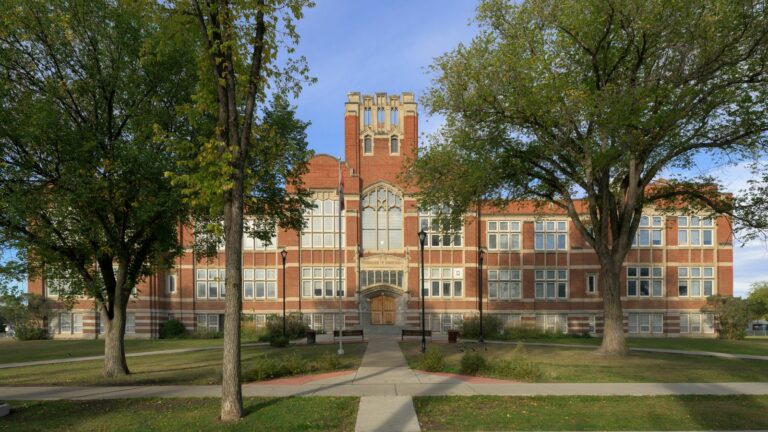
The 95% figure appears in the 2024-2025 anti-bullying and anti-violence plan for École secondaire de la Rencontre, part of Quebec’s Centre de services scolaire de la Côte-du-Sud. According to the school document, 95% of responding students agreed or partly agreed that they felt good and safe at their school. Parents gave a similarly positive assessment: 93% of those who responded agreed or partly agreed. Those are substantial numbers for any secondary school because perceptions of safety often capture more than whether serious incidents occur. They can reflect how students experience hallways, classrooms, lunch periods, relationships with adults and the general atmosphere of the building.
The same document, however, provides an important counterweight. Thirty-five per cent of responding students said they perceived violence at school, including pushing, hitting, insults, mockery or exclusion. Among responding parents, 24% perceived violence in their child’s school. Far from making the 95% figure meaningless, the apparent contradiction shows why school-climate statistics require context. A teenager may generally consider a school safe while still witnessing arguments, exclusion or occasional aggressive behaviour. Safety is rarely an all-or-nothing experience.
Quebec’s Provincewide Evidence Is Much Broader
For a province-level picture, the strongest recent source is the Enquête québécoise sur la santé des jeunes du secondaire 2022-2023, conducted by the Institut de la statistique du Québec. It included 70,825 students at 483 public and private, French- and English-language schools. Students from Secondary I through Secondary V participated across 16 health regions. Because of its size and design, the research offers a much stronger basis for describing Quebec teenagers collectively than results from any single school.
That distinction is especially important when percentages are turned into headlines. The provincial research covers mental health, social environments, violence, school attachment, work, health behaviours and other aspects of adolescent life, but its published findings do not establish that 95% of Quebec secondary students as a whole feel safe at school. It also has defined exclusions, including schools in Nunavik and the Cree Territory of James Bay and certain other institutions. In other words, even Quebec’s most comprehensive student data come with methodological boundaries. A local 95% result can still be worth examining, but it should not be transformed into a provincewide rate without matching provincewide evidence.
Safety Can Coexist With Real Experiences of Violence
One of the most striking findings in the provincial data is that approximately 39% of Quebec secondary students reported experiencing at least one act of violence at school or on the way to school during the relevant measurement period. That number sounds difficult to reconcile with very high safety ratings at some individual schools, but the two concepts measure different things. Feeling generally secure does not necessarily mean never being pushed, insulted, threatened or otherwise mistreated.
Daily school life makes that distinction easier to understand. A student might feel comfortable in most classrooms, trust teachers and walk through the building without fear, yet still experience a hostile exchange in a corridor or repeated ridicule from classmates. Provincewide statistics can also contain sharply different experiences among groups of students. Quebec’s findings therefore caution against using one positive indicator as a substitute for examining specific forms of victimization. Schools with strong overall climates still need systems that identify the smaller group of students for whom the environment feels very different. A high safety score is an encouraging baseline; it is not a reason to stop looking for problems hidden beneath the average.
School Safety Is Not Uniform Across Quebec
Local school and service-centre data demonstrate just how much perceptions can vary. At École secondaire de la Ruche, a recent anti-violence plan reported that 86% of students said they felt safe every week or several times a week. The result came from a school-climate exercise completed by 1,374 students, representing 76% of the student population. That is a strong majority, but noticeably below the 95% recorded at École secondaire de la Rencontre.
Elsewhere, the Centre de services scolaire du Chemin-du-Roy established a starting point of 68.3% for the proportion of Secondary I and III students who considered themselves safe at school. Its strategic objective is to lift that measure to 85% by 2027. The gap between roughly two-thirds at one baseline and more than nine in ten respondents at another school illustrates why Quebec cannot be described by a single local percentage. School size, physical spaces, relationships, supervision, community conditions and how questions are worded can all influence results. Local measurements are most valuable when schools use them to identify weaknesses and track whether targeted improvements are actually changing students’ experiences.
Belonging Reveals Another Side of the School Experience
Physical and emotional security are closely related to another important measure: whether students actually feel that they belong. Quebec’s 2022-2023 data show that only 43% of secondary students had a high level of school belonging. That was a substantial decline from 59% in 2016-2017. Boys were somewhat more likely than girls to report strong belonging, at 46% compared with 40%.
The decline matters because a school can be orderly and relatively free of physical danger without necessarily being a place where every teenager feels connected. A student who is rarely threatened may still feel isolated at lunch, disconnected from classmates or reluctant to approach an adult with a problem. Quebec public-health material describes school belonging as a protective factor linked to educational success and the prevention of risky behaviours. That makes belonging a useful companion measure to safety. A high safety percentage answers an important question about the environment, but belonging asks a deeper one: whether students feel that they have a meaningful place within that environment. Strong schools need both, rather than assuming one automatically produces the other.
Mental Health Makes “Feeling Safe” More Complicated
The wider picture of Quebec teenagers’ well-being has become less reassuring in recent years. In 2022-2023, 37% of secondary students were classified as having flourishing mental health, down from 47% in 2016-2017. Boys were more likely than girls to fall into that category, at 44% compared with 29%. Nearly 41% of students also said they believed their mental health had deteriorated because of the pandemic.
Self-esteem indicators point in a similar direction. The proportion of Quebec high-school students with a high level of self-esteem fell from about 20% in 2010-2011 to 16% in 2016-2017 and 12% in 2022-2023. Those trends illustrate why a positive school-safety result should not be interpreted as a comprehensive measure of adolescent well-being. A teenager can feel physically secure in a classroom while struggling with anxiety, loneliness, academic pressure or low confidence. For educators and policymakers, the practical lesson is that safety initiatives and mental-health supports cannot be separated neatly. Students need protection from violence, but they also need relationships and resources that help them cope once they enter a supposedly safe building.
Online Harassment Has Expanded the Boundaries of the Schoolyard
School safety no longer begins at the front entrance and ends when the final bell rings. Quebec’s 2022-2023 student-health data found that 14% of secondary students had experienced cyberbullying during the previous 12 months, with girls reporting it more often than boys. A separate Quebec study covering young people aged 12 to 17 found that 13% had experienced cyberbullying at least two or three times a month in one of the environments studied, with 11% reporting it in a school context.
That digital dimension can make traditional safety measurements harder to interpret. A student may feel secure sitting in a classroom but face harassment through messages, social platforms or group chats later in the day. The conflict may then return to school the next morning through strained relationships, exclusion or rumours. Quebec law recognizes that connection: school rules must address prohibited conduct carried out through social media and communication technologies, and anti-violence plans must include procedures for reporting cyberbullying. The modern definition of a safe school therefore reaches beyond lockers, cafeterias and playgrounds. Schools increasingly have to respond to social conflicts that move repeatedly between physical and digital spaces.
Quebec Schools Have a Legal Responsibility to Respond
Quebec does not leave anti-bullying efforts entirely to individual school preference. Under the Education Act, governing boards must adopt anti-bullying and anti-violence plans proposed by school principals. Those plans are required to analyze the local situation, establish prevention measures, explain how incidents can be reported or complained about, outline disciplinary consequences and specify what follow-up will occur. Plans must also be reviewed annually and updated when necessary.
The rules have continued to evolve. Current legislation requires a distinct portion of the plan to address sexual violence, including mandatory training for management and staff and specific safety measures. School employees are also required to collaborate in implementing the plan and work to prevent students from becoming victims of bullying or violence. Quebec’s 2023-2028 prevention strategy adds measures such as intervention teams for higher-risk schools and professional resources to coordinate prevention efforts across school service centres, boards and the private network. Those requirements put the 95% figure into perspective: measuring whether students feel safe is not simply a public-relations exercise. The results are supposed to feed an ongoing system of prevention, reporting, intervention and accountability.
Prevention Efforts Are Already Widespread, but Coverage Varies
Academic research provides another indication of how Quebec secondary schools approach student well-being. A Public Health Agency of Canada study examining 48 Quebec high schools between 2016 and 2019 found that 89% offered health-promoting interventions related to bullying or exclusion. Eighty-one per cent reported interventions concerning personal safety and injury prevention, while 66% offered initiatives focused on mental health and well-being. Sex-education programming was the most widespread of the categories measured, reaching 94% of participating schools.
Those figures show that many schools are already doing more than reacting after a serious incident. Prevention can include staff training, clearer reporting procedures, relationship-building, supervision, awareness programs and supports designed to address problems before they escalate. Yet the uneven availability of different programs also highlights a continuing challenge. Students do not encounter identical resources from one school to another, just as they do not report identical levels of safety or belonging. A 95% positive result is most useful when viewed as one performance signal among many—alongside violence reports, cyberbullying, mental health, belonging and the accessibility of trusted adults who can intervene.
The Strongest Number Is the One Schools Keep Testing
High safety ratings deserve recognition. When most teenagers say they feel secure at school, it suggests that everyday routines, adult supervision and relationships are working well for a large share of the student body. The verified 95% result from École secondaire de la Rencontre is especially notable because parents expressed similarly strong confidence. Yet the same school’s own data acknowledged perceptions of violence among a sizeable minority, demonstrating a willingness to look beyond its most flattering statistic.
That approach is more useful than treating any single percentage as a final verdict. Across Quebec, the evidence shows considerable variation between schools, a decline in strong school belonging, substantial exposure to violence and cyberbullying, and worsening indicators of psychological well-being. None of those findings erase positive perceptions of safety. Instead, they define what the next stage of improvement looks like. For Quebec schools, success is not merely getting a large majority to check the “safe” box. It is discovering who did not, understanding why, and making sure that an encouraging average does not leave vulnerable students invisible.
This Options Discord Chat is The Real Deal
While the internet is scoured with trading chat rooms, many of which even charge upwards of thousands of dollars to join, this smaller options trading discord chatroom is the real deal and actually providing valuable trade setups, education, and community without the noise and spam of the larger more expensive rooms. With a incredibly low-cost monthly fee, Options Trading Club (click here to see their reviews) requires an application to join ensuring that every member is dedicated and serious about taking their trading to the next level. If you are looking for a change in your trading strategies, then click here to apply for a membership.