
35,000+ smart investors are already getting financial news, market signals, and macro shifts in the economy that could impact their money next with our FREE weekly newsletter. Get ahead of what the crowd finds out too late. Click Here to Subscribe for FREE.
Across Canada, housing fatigue is changing the map of where people imagine a realistic future. The most expensive metro areas still dominate headlines, but a quieter shift is underway as buyers, renters, remote workers, young families, and retirees look toward places where everyday life still feels within reach.
These 22 Canadian places stand out because they combine relative affordability with something more durable: jobs, universities, health care access, transportation links, natural beauty, or a growing sense of momentum. Some are already rising fast. Others remain undervalued compared with nearby alternatives. The common thread is timing—these communities may not stay overlooked for long.
Moncton, New Brunswick
22 Canadian Places People Are Escaping to Before Prices Catch Up
- Moncton, New Brunswick
- Saint John, New Brunswick
- Fredericton, New Brunswick
- Charlottetown, Prince Edward Island
- St. John’s, Newfoundland and Labrador
- Trois-Rivières, Quebec
- Sherbrooke, Quebec
- Quebec City, Quebec
- Saguenay, Quebec
- Drummondville, Quebec
- Winnipeg, Manitoba
- Brandon, Manitoba
- Regina, Saskatchewan
- Saskatoon, Saskatchewan
- Moose Jaw, Saskatchewan
- Edmonton, Alberta
- Red Deer, Alberta
- Lethbridge, Alberta
- Medicine Hat, Alberta
- Windsor, Ontario
- Greater Sudbury, Ontario
- Thunder Bay, Ontario
- Nanaimo, British Columbia
- Kamloops, British Columbia
- 19 Things Canadians Don’t Realize the CRA Can See About Their Online Income

Moncton has become one of Atlantic Canada’s clearest examples of a smaller city no longer feeling small. Its appeal comes from a practical mix: lower housing costs than most large Canadian markets, a central location in the Maritimes, and a growing service, logistics, health, education, and retail base. For newcomers priced out of Ontario or British Columbia, Moncton can feel like a reset button rather than a compromise.
The catch is that people have noticed. Population growth has been strong, and local housing demand has followed. A couple moving from the GTA might still find Moncton’s detached homes and townhouses relatively attainable, but the gap is narrowing as more buyers chase the same value. That is why Moncton feels less like a hidden bargain now and more like a place people are trying to reach before the next affordability jump.
Saint John, New Brunswick
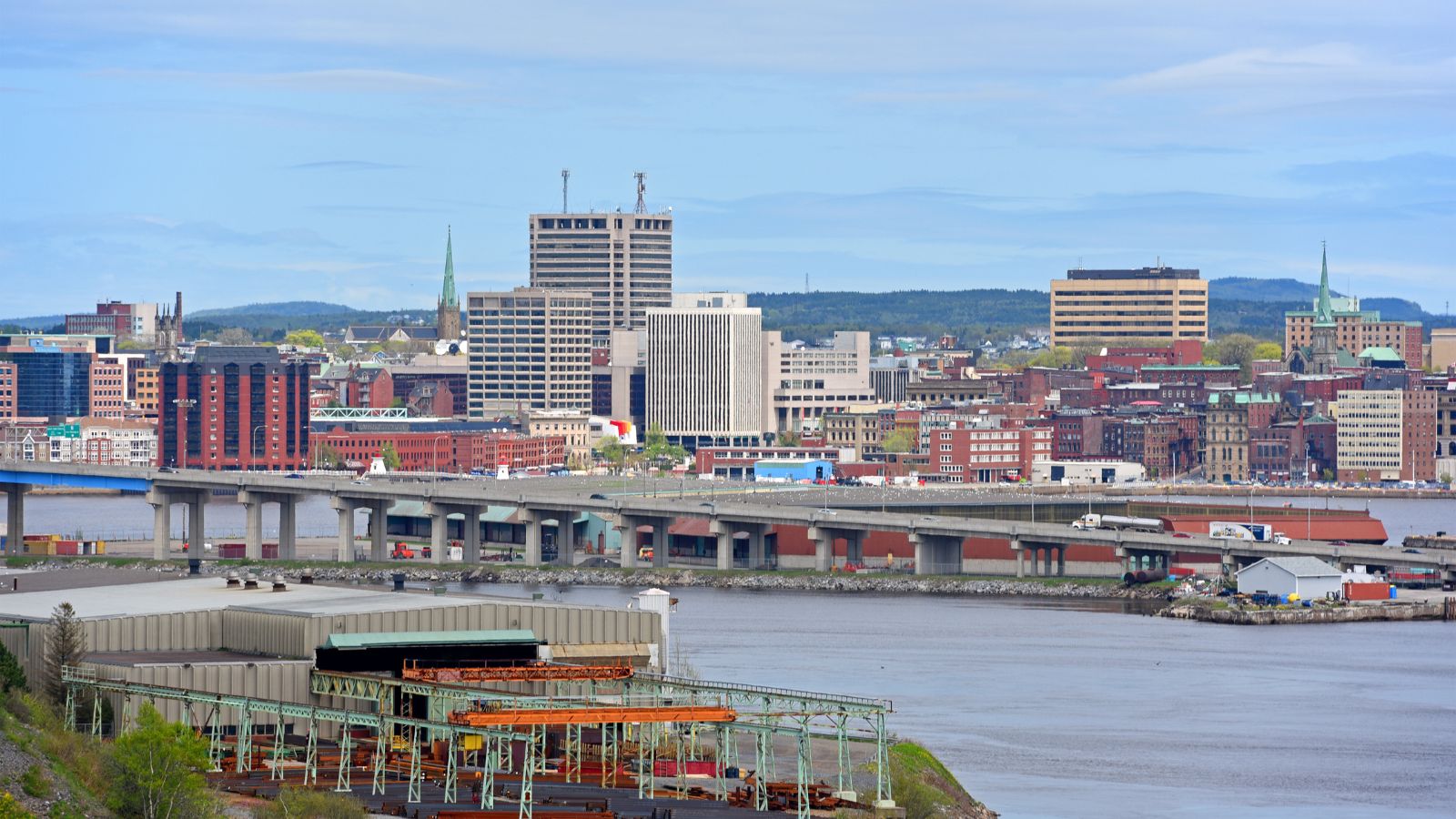
Saint John offers the kind of coastal character that usually costs far more in Canada. It has an active port, historic brick streets, neighbourhoods with older homes, and proximity to the Bay of Fundy. For buyers who want urban bones without big-city prices, Saint John has become increasingly attractive, especially because New Brunswick housing remains far below the national average.
What makes Saint John interesting is that it still carries the feel of a working city rather than a polished lifestyle brand. That can be part of the opportunity. People relocating there often find that everyday expenses, home prices, and commuting stress remain more manageable than in larger centres. The risk is that as Atlantic Canada keeps drawing interprovincial movers, the city’s affordability advantage could shrink. In a market where coastal places are rarely cheap for long, Saint John’s window looks meaningful.
Fredericton, New Brunswick

Fredericton has a different kind of appeal from Moncton or Saint John. As New Brunswick’s capital, it benefits from government employment, universities, health services, and a stable professional base. That gives the city a steadier feel than many smaller markets. It is the sort of place where a family can picture schools, trails, work, and a manageable mortgage fitting into the same life.
The city’s charm also comes from scale. Fredericton has a walkable downtown, the Saint John River, cultural institutions, and access to nature without the intensity of a large metro area. For remote workers and public-sector employees, that balance matters. Prices have already climbed compared with the pre-pandemic era, but relative to many Canadian capitals and university cities, Fredericton can still look underpriced. That mix of stability and livability is exactly what tends to attract long-term demand.
Charlottetown, Prince Edward Island

Charlottetown has long been loved for its harbour, compact downtown, and slower pace, but it is increasingly being viewed through an affordability lens as well. The city offers a capital-city lifestyle on a much smaller scale, with government jobs, tourism, education, health care, restaurants, and waterfront access all packed into a relatively accessible setting.
The challenge is that Prince Edward Island is small, and small markets can change quickly when demand rises. Housing supply is limited by geography, construction capacity, and the popularity of the island as both a retirement and lifestyle destination. People moving from larger provinces may still see Charlottetown as reasonable, but local residents have felt the squeeze. That tension is exactly why it belongs on this list: the city still has appeal before prices fully reflect its coastal charm, but that gap is not guaranteed to last.
St. John’s, Newfoundland and Labrador

St. John’s offers something rare: a true provincial capital with dramatic ocean scenery, established institutions, and housing costs that can still compare favourably with many Canadian cities. Its colourful row houses, steep streets, harbour views, university presence, and strong cultural identity give it a sense of place that is hard to manufacture.
The city is not for everyone. Weather, distance from central Canada, and a smaller labour market matter. But for remote workers, health-care professionals, public-sector employees, retirees, and people with roots in Atlantic Canada, St. John’s can offer a compelling trade-off. It provides urban services without the same housing shock found in Toronto, Vancouver, or even Halifax. As more Canadians reassess what they need from a city, St. John’s may draw people who once dismissed it as too far away but now see distance as part of the value.
Trois-Rivières, Quebec

Trois-Rivières sits between Montreal and Quebec City, which is exactly why it keeps appearing on affordability radar screens. It offers access to two major urban regions without fully inheriting their costs. Its riverfront, university presence, older housing stock, and central location make it especially appealing to buyers who want Quebec’s culture and services without paying Montreal prices.
The city’s value story is already changing. Quebec’s smaller urban markets have seen stronger attention as households look beyond the province’s largest centres. Trois-Rivières still tends to be more attainable than Montreal, but its affordability is no longer invisible. A first-time buyer who once stretched for a condo near Montreal might find more space here, while still staying within reach of major highways and regional employment. That combination can push prices upward once demand becomes self-reinforcing.
Sherbrooke, Quebec

Sherbrooke has become one of Quebec’s most talked-about mid-sized alternatives. It has universities, hospitals, a scenic setting in the Eastern Townships, and a lower-cost profile than Montreal. For students who stay, young families leaving larger centres, and retirees seeking culture without metropolitan prices, Sherbrooke offers a strong everyday case.
What gives Sherbrooke staying power is that it is not just a cheap fallback. It has education, health care, research activity, outdoor access, and a bilingual-adjacent economy that connects to both local and broader markets. That makes it more resilient than places built around one industry. The city’s affordability advantage remains real, but its lifestyle story is becoming easier to sell. Once a place is seen as both practical and desirable, price pressure tends to follow.
Quebec City, Quebec

Quebec City is not unknown, but it remains one of Canada’s more striking value comparisons. It offers a capital-city economy, major institutions, historic architecture, strong public services, and a high quality of life, often at housing costs below many similarly prominent Canadian cities. For people who can work in French or remotely, the city can feel like an unusually complete package.
Its appeal is not just about lower prices. Quebec City has stable employment, a strong tourism sector, universities, hospitals, and an identity that gives it global recognition. Families may be drawn by safety, schools, and shorter commutes; retirees may like the cultural depth and health-care access. The reason people are moving before prices catch up is simple: cities with this level of beauty, infrastructure, and stability rarely remain undervalued forever.
Saguenay, Quebec

Saguenay offers affordability with a landscape that feels bigger than its price tag. Set along the Saguenay River and near fjords, forests, and outdoor recreation, it appeals to people who want space, nature, and a lower cost of living while still having urban services. Compared with Quebec’s largest cities, housing can remain meaningfully more accessible.
The city also has a practical base. It is not just a scenic escape; it has education, health care, aluminum-related industry, public services, and regional retail. For remote workers or tradespeople, that blend matters. Saguenay may not offer the same job depth as Montreal or Quebec City, but it can offer a less pressured life. As more Canadians look for affordable places with natural beauty, communities like Saguenay may gain attention quickly because they offer both lower costs and a strong sense of place.
Drummondville, Quebec

Drummondville benefits from one of the most valuable real estate advantages: location without major-city pricing. Positioned between Montreal and Quebec City, it has long served as a manufacturing, logistics, and regional service centre. That gives it appeal for people who want access to larger markets while living somewhere less expensive and less congested.
The city’s value lies in practicality. Housing can still look attainable compared with Montreal suburbs, and the local economy is diversified enough to support everyday life. A household that does not need the constant pace of Montreal may find Drummondville offers enough amenities, shorter commutes, and more space for the money. The more Quebec buyers expand their search radius, however, the more places like Drummondville risk becoming “discovered” rather than overlooked.
Winnipeg, Manitoba

Winnipeg remains one of Canada’s most important affordability stories because it is not a small town trying to act like a city. It is a major urban centre with universities, hospitals, arts institutions, professional sports, logistics, government employment, and diverse neighbourhoods. Yet its housing costs have often remained below those of larger Canadian metros.
That gap gives Winnipeg unusual appeal for people who want city infrastructure without coastal pricing. The trade-offs are real: winters are severe, property taxes and older housing stock require attention, and neighbourhood choice matters. Still, the city offers a scale of opportunity that many cheaper places cannot match. For a family leaving Ontario or British Columbia, Winnipeg can mean moving from a cramped condo budget to a detached-home conversation. That kind of difference is powerful, and it is why its affordability may attract more attention.
Brandon, Manitoba

Brandon offers a quieter version of Manitoba affordability. As the province’s second-largest city, it has regional health care, education, agriculture-related business, food processing, retail, and military connections nearby. It is large enough to provide services, but small enough that housing and commuting can feel far more manageable than in bigger Canadian cities.
Its appeal is especially clear for people who do not need a major downtown economy. Families, trades workers, health-care workers, and retirees may find Brandon practical because the city provides enough structure without overwhelming costs. It also benefits from its role as a service hub for western Manitoba. Places like Brandon often gain attention later than capital cities, but that can be the point. By the time smaller regional centres become widely fashionable, the best affordability gap may already be gone.
Regina, Saskatchewan

Regina often gets overlooked because it lacks the scenery-driven reputation of coastal or mountain cities. But affordability conversations are increasingly practical, and Regina has a strong case. As Saskatchewan’s capital, it has government jobs, insurance, agriculture, energy, education, and health-care employment. Housing costs have generally remained more approachable than in many larger provinces.
The city’s wide streets, established neighbourhoods, and relatively short commutes appeal to people tired of paying premium prices for less space. Regina can also be attractive to newcomers who want a stable urban base without the intensity of Toronto, Vancouver, or Calgary. The risk is that Saskatchewan’s affordability story is becoming more visible. If interprovincial migration and economic investment keep building, Regina may not remain as easy to overlook as it once was.
Saskatoon, Saskatchewan

Saskatoon combines a university city, a riverfront setting, and a growing provincial economy. It has research, mining, agriculture, technology, health care, and education all contributing to its appeal. For many buyers, it feels more dynamic than its price point suggests, especially compared with Canada’s largest urban markets.
The city has already seen stronger housing demand, and that makes timing important. Saskatoon’s value proposition is not simply “cheap housing”; it is the chance to live in a growing, youthful city with real economic drivers. The South Saskatchewan River, trails, restaurants, and university culture add lifestyle appeal. A household arriving early may still find relative value, while a latecomer could find that the market has already priced in Saskatoon’s momentum.
Moose Jaw, Saskatchewan

Moose Jaw has a smaller-city charm that increasingly matters to people priced out elsewhere. It is close enough to Regina for regional access, but distinct enough to offer its own identity, historic downtown, tourism base, mineral spa reputation, and lower-pressure housing market. For buyers seeking affordability without isolation, that proximity is a major advantage.
The city is not likely to become a major metro, and that is part of its appeal. A retiree or remote worker may find Moose Jaw offers enough amenities, character homes, and community life without the costs of larger centres. Smaller markets can be sensitive to even modest demand increases, especially when the stock of desirable older homes is limited. That makes Moose Jaw the sort of place people may look back on as obvious only after prices have already adjusted.
Edmonton, Alberta

Edmonton stands out because it offers big-city amenities at prices that often look restrained compared with Calgary, Toronto, Vancouver, and many Ontario markets. It has universities, hospitals, government employment, energy, construction, logistics, festivals, river valley trails, and a large labour force. For people who want opportunity without paying the highest urban premiums, Edmonton is one of Canada’s most compelling options.
Its affordability advantage is not unlimited. Alberta has been attracting interprovincial migrants, and Edmonton’s market has shown signs of strength even while remaining more attainable than many peers. A buyer may still find condos, townhomes, and detached homes at prices that would be difficult in larger coastal markets. That difference keeps pulling attention west. If Alberta’s population and employment growth continue, Edmonton’s relative discount may become less generous.
Red Deer, Alberta

Red Deer sits between Calgary and Edmonton, giving it a location advantage that is easy to understand. It is not trying to compete with either city on scale. Instead, it offers a smaller, more affordable base with highway access to both of Alberta’s largest metros. That can appeal to tradespeople, commuters, business owners, retirees, and families who want space without losing regional connectivity.
The city has also become more interesting as Calgary prices have risen and buyers look farther out. Red Deer’s housing market can offer lower entry points while still providing schools, retail, health services, parks, and a central Alberta lifestyle. Its future depends partly on Alberta’s broader economy, but its geography gives it staying power. When two larger cities become more expensive, the city between them rarely stays ignored forever.
Lethbridge, Alberta

Lethbridge has been gaining attention as a lower-cost Alberta city with education, agriculture, health care, and renewable-energy connections. It has a university, a college, regional hospitals, and a milder southern Alberta climate than many prairie cities. For people seeking Alberta wages and lower housing costs, Lethbridge can look like a practical alternative to Calgary.
The lifestyle case is also stronger than outsiders may assume. Coulees, parks, nearby mountains, and a manageable urban footprint help the city feel livable rather than merely inexpensive. A family leaving a more expensive metro may find that Lethbridge provides enough services without the same monthly pressure. Like many affordable Alberta cities, however, its advantage could narrow if more buyers look beyond Calgary and Edmonton. The more it is seen as a complete city, the faster prices may adjust.
Medicine Hat, Alberta

Medicine Hat has long appealed to people who want Alberta affordability with a slower pace. It offers lower housing costs than many larger cities, sunny weather by Canadian standards, a strong seniors’ community, and a practical economy tied to energy, utilities, agriculture, and regional services. For retirees and remote workers, it can feel especially attractive.
The city’s affordability is helped by its distance from Calgary and Edmonton, but that distance is less of a barrier than it once was for people who no longer commute daily to big-city offices. Medicine Hat offers detached-home possibilities, quiet neighbourhoods, and access to parks and trails at costs that can still surprise buyers from larger provinces. As remote work, retirement migration, and Alberta’s broader affordability story continue, this southeastern city may draw a wider audience.
Windsor, Ontario

Windsor is one of Ontario’s most obvious affordability pressure valves. It sits across from Detroit, has deep auto-sector roots, growing battery and manufacturing investment, a university, a college, and some of the province’s warmer weather. Compared with the GTA, Windsor can still feel dramatically more attainable, especially for buyers who want detached homes.
The city’s story is changing because it is no longer viewed only through the lens of old manufacturing. Cross-border trade, electric-vehicle investment, health care, education, and logistics have given Windsor renewed attention. Commuters are not moving there for Toronto access; they are moving for a different economic geography altogether. That matters because Windsor’s affordability is paired with real industrial momentum. If job growth keeps strengthening, prices could catch up faster than many Ontario buyers expect.
Greater Sudbury, Ontario

Greater Sudbury offers one of Ontario’s more practical escape routes for people who want lower housing costs without leaving the province. It has mining, health care, education, government services, lakes, trails, and a regional role across northeastern Ontario. For buyers priced out of southern Ontario, Sudbury can look like a way to stay in Ontario while gaining space.
The city is not merely a cheap alternative. It has a major hospital, Laurentian University, mining innovation, and a distinctive landscape shaped by lakes and rocky terrain. A household relocating from the GTA may need to adjust to distance and winter, but the trade-off can be meaningful: more room, lower purchase prices, and less daily congestion. As northern Ontario gains attention from remote workers and resource-sector investment, Sudbury’s affordability advantage may narrow.
Thunder Bay, Ontario

Thunder Bay is one of Ontario’s strongest “value plus scenery” markets. It offers Lake Superior views, access to wilderness, a university, a college, a regional hospital, a port, and a service role for northwestern Ontario. For people leaving high-cost southern markets, the city can offer a dramatically different housing equation.
The appeal is not universal. Thunder Bay is far from Ontario’s largest cities, and its job market is more specialized. But that distance also preserves its price advantage. A buyer who values outdoor access, shorter commutes, and a lower mortgage may see Thunder Bay as an opportunity rather than a compromise. As remote work and lifestyle migration make geography more flexible, places with strong natural amenities and regional services can reprice quickly. Thunder Bay has both.
Nanaimo, British Columbia

Nanaimo is not cheap in the way prairie or Atlantic cities can be, but within British Columbia’s coastal context, it remains a key escape valve. It offers Vancouver Island living, ferry and air connections, a university, health services, beaches, trails, and a growing downtown. For people priced out of Victoria or Metro Vancouver, Nanaimo can still look relatively attainable.
The warning is built into the appeal. Island communities have limited land, strong lifestyle demand, and a powerful retirement draw. Once people decide they want Vancouver Island but cannot afford Victoria, Nanaimo becomes an obvious next choice. That can push prices upward even when national conditions cool. Buyers are not escaping to Nanaimo because it is undiscovered; they are going because it still offers a coastal lifestyle at a lower price than the province’s most expensive urban areas.
Kamloops, British Columbia

Kamloops has become a serious alternative for people who want interior British Columbia rather than coastal prices. It offers a university, health-care services, a regional airport, outdoor recreation, and a dry climate that appeals to retirees and active households. It is also positioned on major transportation routes, giving it a practical role beyond lifestyle appeal.
Affordability is relative here. Kamloops is not a bargain compared with much of Canada, but it can still look more reachable than Vancouver, Victoria, or parts of the Okanagan. That is why people are watching it closely. A family or retiree might find the city offers enough services and scenery without the same coastal price shock. As British Columbians keep searching inland for space, Kamloops’ mix of climate, amenities, and location could keep demand firm.
19 Things Canadians Don’t Realize the CRA Can See About Their Online Income

Earning money online feels simple and informal for many Canadians. Freelancing, selling products, and digital services often start as side projects. The problem appears at tax time. Many people underestimate how much information the CRA can access. Online platforms, banks, and payment processors create detailed records automatically. These records do not disappear once money hits an account. Small gaps in reporting add up quickly.
Here are 19 things Canadians don’t realize the CRA can see about their online income.
This Options Discord Chat is The Real Deal
While the internet is scoured with trading chat rooms, many of which even charge upwards of thousands of dollars to join, this smaller options trading discord chatroom is the real deal and actually providing valuable trade setups, education, and community without the noise and spam of the larger more expensive rooms. With a incredibly low-cost monthly fee, Options Trading Club (click here to see their reviews) requires an application to join ensuring that every member is dedicated and serious about taking their trading to the next level. If you are looking for a change in your trading strategies, then click here to apply for a membership.