
35,000+ smart investors are already getting financial news, market signals, and macro shifts in the economy that could impact their money next with our FREE weekly newsletter. Get ahead of what the crowd finds out too late. Click Here to Subscribe for FREE.
For many Canadian seniors, a pension deposit is more than a calendar entry. It anchors grocery bills, housing costs, prescriptions, utilities, and countless smaller expenses that arrive throughout the month. With the next federal CPP and Old Age Security payment scheduled for August 27, 2026, a few checks beforehand can help explain an unexpected change or prevent a problem from becoming a financial headache.
Payment amounts are not identical from one senior to another, and several factors can affect what reaches the bank account. Income, marital status, age, tax withholding, travel and even continued employment can matter. These 18 checks cover the details worth reviewing before the next payment arrives, particularly for Canadians receiving CPP, OAS or the Guaranteed Income Supplement.
Confirm the Actual Payment Date
18 Things Canadian Seniors Should Check Before Their Next Payment Date
- Confirm the Actual Payment Date
- Check Which Benefits Should Be in the Deposit
- Verify the Direct-Deposit Account
- Make Sure the Mailing Address Is Current
- Compare the Deposit With the New Quarterly OAS Rates
- Look for the Age-75 OAS Increase
- Recheck GIS Eligibility Against Current Income Limits
- Confirm the 2025 Tax Return Was Filed
- Make Sure Marital Status Is Correct
- Report a Major Drop in Retirement Income
- Review Any Voluntary Tax Withholding
- Check for an OAS Recovery-Tax Deduction
- See Whether Working Has Added a CPP Post-Retirement Benefit
- Ask About the Rules When Spouses Must Live Apart
- Review Long Trips Before Leaving Canada
- Check GIS and Allowance Rules Before an Extended Absence
- Know What to Do if the Deposit Is Late
- Treat “Extra Senior Payment” Messages With Suspicion
- 16 Costco Canada Habits That Could Be Costing Shoppers More Than They Save
The first check is simple but important: make sure the expected date comes from the official federal calendar rather than a social-media post, financial blog or remembered date from last year. For both the Canada Pension Plan and Old Age Security program, including GIS, the next scheduled federal payment is August 27, 2026. The dates are not always the final weekday of the month, so guessing based on previous deposits can create unnecessary concern.
The rest of the 2026 calendar also varies slightly. Payments are scheduled for September 25, October 28, November 26 and December 22. That early December date is especially worth noting because households accustomed to a late-month deposit could otherwise budget as though another payment were coming closer to New Year’s. Provincial seniors’ programs and CRA-administered credits can follow different calendars, so a deposit expected from another program should be checked separately rather than assumed to arrive with CPP or OAS.
Check Which Benefits Should Be in the Deposit
CPP, OAS and GIS are often discussed together, but they are different programs with different calculations. A senior receiving all three should know roughly which benefits contribute to the monthly total. For July through September 2026, the maximum OAS pension is $751.97 a month for people aged 65 to 74 and $827.17 for those 75 and older. Those are maximums, not amounts every recipient automatically receives.
CPP varies even more because it depends on contribution history, earnings and the age at which the pension began. The maximum CPP retirement pension for someone starting at age 65 in January 2026 is $1,507.65 a month, while the average amount for new age-65 beneficiaries reported for 2026 is considerably lower at $877.01. That difference is a useful reminder not to compare one retiree’s deposit with another’s. Checking the payment details in My Service Canada Account can make an unexpected increase or reduction much easier to identify.
Verify the Direct-Deposit Account

Changing banks around retirement can create an easily avoidable pension problem. Seniors using direct deposit should confirm that Service Canada has the correct institution, transit and account information before closing an older bank account. Federal guidance specifically advises recipients changing banking information not to close the old account until a payment has successfully reached the new one.
Another complication is that updating banking information for one government payment does not necessarily change it for every federal program. The Government of Canada notes that people receiving several payments may need to deal with more than one department. CRA-administered benefits, for example, use CRA direct-deposit information, while CPP and OAS are administered through Service Canada. A retiree who recently switched banks may therefore see one payment move correctly while another still heads toward the old account. Reviewing the destination before August 27 is far easier than tracing a payment afterward.
Make Sure the Mailing Address Is Current

Direct deposit reduces dependence on the mail, but an outdated address can still cause trouble. Service Canada may send benefit decisions, tax information or requests for documentation to the address it has on record. Seniors who have downsized, entered a retirement residence, moved in with family or begun spending substantial time at a second home should make sure their contact information reflects their circumstances.
The address becomes even more important for anyone still receiving a CPP payment by cheque. Service Canada says CPP cheques are mailed during the last three business days of each month, rather than deposited electronically on the scheduled direct-deposit date. Mail therefore introduces additional delivery time and another point at which incorrect information can create delays. A move that seemed fully handled after updating a bank, driver’s licence and utility company may still require a separate Service Canada update. Keeping both residential and mailing information accurate also helps prevent important pension correspondence from reaching a former address.
Compare the Deposit With the New Quarterly OAS Rates

An amount that changed in July is not automatically an error. OAS benefits are reviewed four times each year—in January, April, July and October—to reflect movements in the Consumer Price Index. For the July-to-September 2026 quarter, OAS benefits increased by 1.2%, leaving payments 2.3% higher than they had been a year earlier.
That adjustment also affects income-tested benefits under the OAS program, although individual payments can still change for other reasons. A senior comparing the August deposit with an older bank statement from the spring could therefore see a difference even when nothing else about the household has changed. The useful comparison is the July 2026 payment, assuming income and personal circumstances stayed the same. Seniors should also remember that OAS rates cannot fall simply because the CPI declines; the federal program states that pension amounts are increased when cost-of-living adjustments warrant it but do not decrease when the measured cost of living falls.
Look for the Age-75 OAS Increase

Turning 75 can produce a noticeable change in Old Age Security. Eligible recipients receive an automatic 10% increase in their OAS pension beginning in the month after their 75th birthday. No separate application is required simply to receive that age-based increase.
That timing is worth understanding. Someone whose 75th birthday falls during August would not necessarily see the higher amount in the August payment merely because the birthday occurred before the deposit date; the increase begins the following month under the federal rule. For July through September 2026, the maximum regular OAS rate is $751.97 for recipients aged 65 to 74, compared with $827.17 for recipients aged 75 and older. The 10% age increase applies to the OAS pension itself and does not increase the recipient’s GIS amount. Seniors approaching that birthday can therefore check the next month’s payment details rather than assuming the entire combined federal benefit should rise by 10%.
Recheck GIS Eligibility Against Current Income Limits

GIS is especially sensitive to household income, which means a relatively small change in circumstances can alter the monthly amount. For July through September 2026, a single, widowed or divorced OAS recipient generally needs annual income below $22,800 to qualify, with a maximum GIS payment of $1,123.17 a month.
For couples, the thresholds depend on the other person’s benefit status. A recipient whose spouse or common-law partner receives the full OAS pension faces a combined-income threshold of less than $30,096, while other limits apply when the partner receives the Allowance or does not receive OAS. These are not one-size-fits-all cutoffs. GIS is also unusual because employment and self-employment earnings receive a partial exemption: the first $5,000 can be exempt, while only half of earnings between $5,000 and $15,000 count toward reducing the benefit. Seniors who worked part-time during retirement should therefore avoid assuming that every dollar earned reduces GIS dollar for dollar.
Confirm the 2025 Tax Return Was Filed

For GIS recipients, filing an income-tax return is not merely a tax-season chore. Service Canada normally uses tax information to reassess eligibility for the new benefit year beginning each July. The deadline for most Canadians to file their 2025 income tax and benefit return was April 30, 2026, and federal guidance specifically warns that late filing can interrupt income-tested benefits.
This matters in August because a missing or reduced July payment can carry forward if the income information needed for renewal is still unresolved. The federal government has warned GIS recipients who have not filed their 2025 taxes that payments may stop or be reduced. Seniors who missed the deadline should therefore not assume that eligibility has disappeared permanently; Service Canada also provides ways to report income information directly so entitlement can be established. A family member helping an older relative with finances may find that an unexplained summer reduction traces back to an unfiled return rather than a change in the underlying pension rules.
Make Sure Marital Status Is Correct
GIS calculations can change significantly when a senior marries, begins a common-law relationship, separates, divorces or loses a spouse. Service Canada specifically requires recipients to report these changes because GIS for couples is generally calculated using combined income, while the rules for single, widowed or divorced recipients are different.
The practical effect can be substantial. For July through September 2026, the maximum GIS for a single, widowed or divorced recipient is $1,123.17 monthly. Someone whose spouse receives a full OAS pension can receive up to $676.09, subject to the couple’s income. The figures demonstrate why an outdated marital status can produce a payment that appears puzzling even when each person’s income has not changed much. Service Canada’s current OAS account tools also allow income information to be managed, and couples may need information from both partners. Any recent marriage, separation or death therefore deserves attention before assuming that a changed deposit is simply a government calculation error.
Report a Major Drop in Retirement Income

GIS is usually calculated using income from the previous year, but that approach can create a problem when a senior’s financial circumstances suddenly worsen. Someone who retired recently may have had a relatively high employment income in 2025 even though 2026 income is dramatically lower. The same issue can arise when an employer pension is reduced or another pension benefit stops.
Service Canada specifically tells GIS recipients to contact the department when the senior or a spouse has lower annual income because of retirement or because pension income has been reduced or stopped. In eligible situations, the government can calculate the benefit using an estimate of current-year income instead of simply relying on the previous year’s income. That can make a meaningful difference for someone moving from a final year of full-time wages into a much leaner retirement budget. Seniors should not assume they must wait until next year’s tax return for the lower income to be recognized.
Review Any Voluntary Tax Withholding

OAS and CPP payments can create an unpleasant tax surprise when no income tax has been withheld during the year. Old Age Security is taxable, and the federal government states that taxes are not automatically deducted from OAS. Recipients can request voluntary deductions if they would rather pay some tax throughout the year than face a larger balance at filing time.
Service Canada allows recipients to start, change or stop voluntary federal tax deductions, including through My Service Canada Account in supported situations. Payment information can show the estimated gross amount, the deduction and the resulting net amount. That makes withholding one of the first things to check when a deposit is lower than expected. A $100 reduction, for example, may reflect a deduction the recipient requested rather than a cut to pension entitlement. Seniors who changed their withholding recently should compare the gross and net figures before contacting Service Canada about a supposedly missing portion of the payment.
Check for an OAS Recovery-Tax Deduction

Higher-income OAS recipients should distinguish ordinary income-tax withholding from the Old Age Security recovery tax, commonly called the OAS clawback. For payments covering July 2026 through June 2027, the calculation is based on 2025 income. The 2025 net-income threshold is $93,454.
The government’s example shows how quickly the calculation becomes visible. A recipient with $100,000 of relevant income in 2025 is $6,546 above the threshold. Applying the 15% recovery calculation produces $981.90 for the year, which can translate into reduced monthly OAS payments during the July 2026-to-June 2027 recovery period. That means a senior whose OAS suddenly became smaller in July or August should check the recovery-tax notice before assuming the pension rate itself was reduced. The threshold changes over time, so figures remembered from an older tax year should not be used to judge a 2026 deposit.
See Whether Working Has Added a CPP Post-Retirement Benefit

Retirement does not always mean leaving the workforce entirely. Canadians who keep working while receiving CPP may accumulate a Post-Retirement Benefit, or PRB, that adds to future monthly CPP income. For working CPP recipients under age 65, contributions are generally mandatory. From age 65 to 70, eligible workers can choose to stop contributing; after age 70, CPP contributions stop.
The additional benefit is not enormous in a single year, but it can still be worth checking. In 2026, the maximum new PRB for a 65-year-old is $54.69 per month for someone who earned at the applicable maximum and made maximum contributions in the previous year. The average new PRB reported for April 2026 was $25.76. For a senior who continues working several years, separate annual PRBs can accumulate. A small increase in CPP may therefore be legitimate rather than an unexplained adjustment, particularly for someone who has continued to see CPP deductions on employment income.
Ask About the Rules When Spouses Must Live Apart

A couple can still be married while living at different addresses for reasons neither person chose. One spouse may need long-term care, for example, while the other remains in the family home. Because GIS calculations normally consider a couple’s combined circumstances, these situations can create real financial pressure.
Service Canada recognizes this problem. When spouses or common-law partners must live apart for reasons beyond their control, including long-term care needs, they may qualify for a higher benefit amount. The government provides a specific declaration form for spouses or common-law partners living apart involuntarily. This is an important distinction from an ordinary relationship separation: the couple may remain together while their living arrangement changes because of health or care requirements. Families managing a move into a nursing or long-term care facility should therefore check the benefit rules instead of assuming the same household calculation will automatically continue indefinitely.
Review Long Trips Before Leaving Canada

OAS can continue outside Canada in many circumstances, but extended absences deserve attention before a senior assumes every future deposit will continue unchanged. Someone living outside Canada generally needs at least 20 years of Canadian residence after age 18 to receive OAS abroad, although international social-security agreements can sometimes help a person meet the requirement.
The rule is different from the basic requirement for someone living in Canada, where at least 10 years of residence after age 18 can be enough for OAS eligibility. Service Canada also tells OAS recipients planning to be outside Canada for more than six months to report the absence if their situation could affect benefits. For snowbirds, extended family visits or a late-life move abroad, the important question is not simply whether a Canadian bank account remains open. Residence history and the length of absence matter. Sorting that out before departure can prevent an overpayment that later has to be repaid.
Check GIS and Allowance Rules Before an Extended Absence

GIS is more restrictive than OAS when it comes to living abroad because GIS is intended for eligible low-income seniors residing in Canada. Service Canada warns that OAS and GIS may stop when someone is away for more than six months and does not qualify to keep receiving the payment outside Canada.
Allowance recipients face a similarly explicit restriction: the federal government says the Allowance cannot be collected while outside Canada for more than six months. Service Canada asks recipients to report a planned extended absence and to contact the department again after returning so payments can be restarted where appropriate. This can matter for seniors spending a prolonged period with children overseas or staying in a warmer country for an unusually long winter. Continuing to receive a deposit does not automatically prove continued entitlement. Reporting the absence in advance reduces the chance of building up an overpayment that the government later seeks to recover.
Know What to Do if the Deposit Is Late
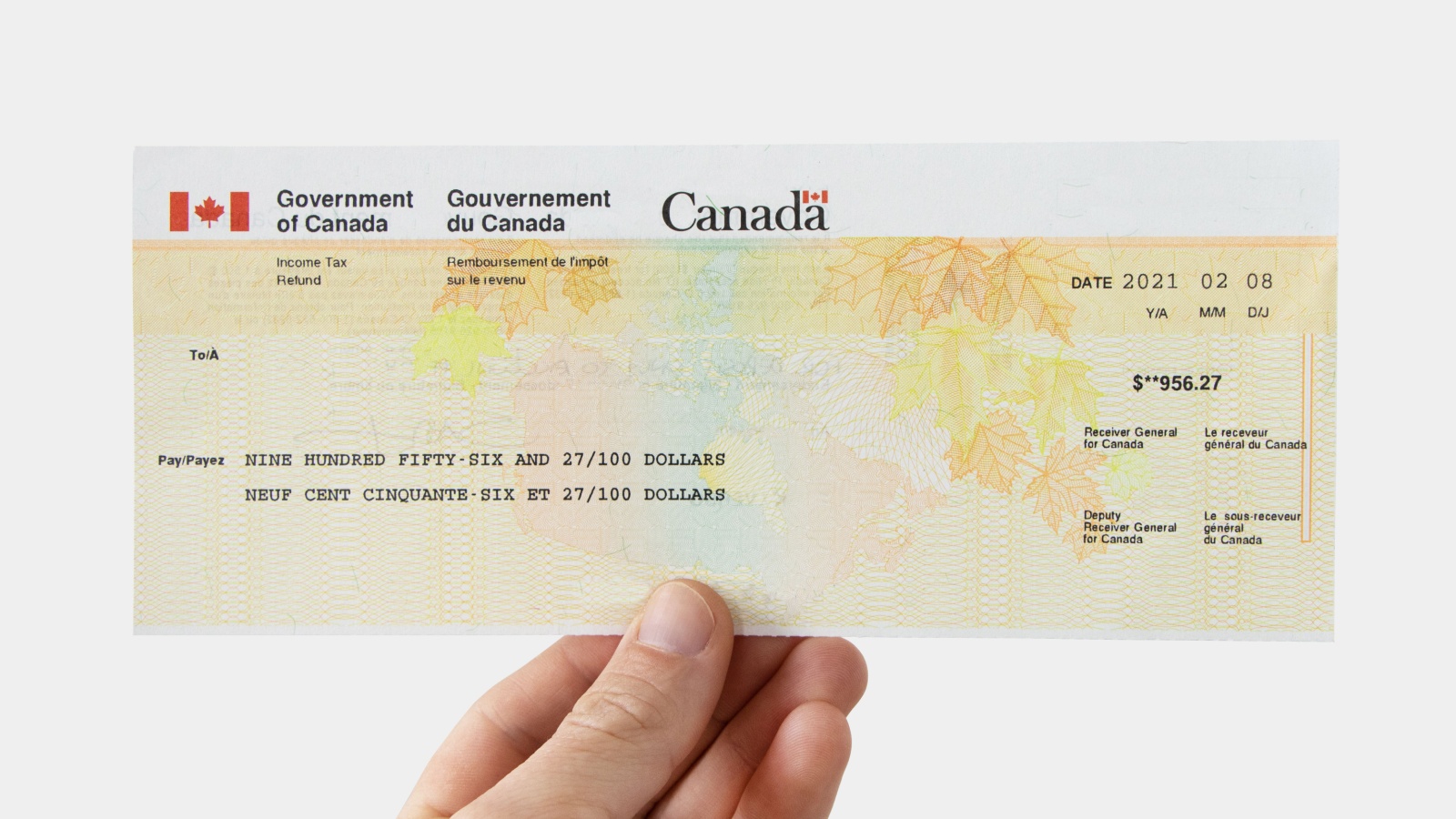
A payment scheduled for August 27 does not mean every recipient should assume something is wrong at 12:01 a.m. if the money is not visible. The federal benefits calendar notes that payments are issued on the listed dates but can take a few days to arrive. Mailed cheques can take longer than direct deposit.
Government guidance asks recipients to wait 5 to 10 business days before contacting the relevant program about a payment that has not arrived. That window is useful because weekends, mail delivery and financial-institution processing can affect when money becomes accessible. Seniors can also use My Service Canada Account to examine payment information; CPP payment details for the current year and the previous two years are available online. Checking the official payment record and bank activity first can help establish whether the issue is a delayed transfer, a changed benefit amount or a payment that was never issued.
Treat “Extra Senior Payment” Messages With Suspicion

Payment dates attract scammers because recipients are already expecting government money. The CRA currently warns of a scam aimed specifically at seniors that falsely claims the agency is sending extra payments to low-income seniors. Some misleading websites direct people into Telegram or WhatsApp groups, creating an opportunity to collect personal or financial information.
Service Canada provides an equally important rule: suspicious emails, texts or links should never be used to provide passwords or personal information. Official guidance states that Service Canada will not ask for a password or personal information through emails, text messages or links. That makes an unexpected message promising a new pension bonus, requesting banking confirmation or warning that a payment will be cancelled unless a link is opened a reason for caution—not urgency. The safest check is to ignore the embedded link and independently sign into the official government account or contact the relevant program through published government channels.
16 Costco Canada Habits That Could Be Costing Shoppers More Than They Save

The Executive Membership can feel like an obvious upgrade because the 2% annual reward sounds straightforward. For households that spend heavily at Costco Canada, the extra fee may be easy to justify. But the habit becomes costly when shoppers upgrade first and calculate later. A Gold Star Membership costs less, while Executive costs more and only pays off if eligible annual spending is high enough to offset the difference.
16 Costco Canada Habits That Could Be Costing Shoppers More Than They Save
This Options Discord Chat is The Real Deal
While the internet is scoured with trading chat rooms, many of which even charge upwards of thousands of dollars to join, this smaller options trading discord chatroom is the real deal and actually providing valuable trade setups, education, and community without the noise and spam of the larger more expensive rooms. With a incredibly low-cost monthly fee, Options Trading Club (click here to see their reviews) requires an application to join ensuring that every member is dedicated and serious about taking their trading to the next level. If you are looking for a change in your trading strategies, then click here to apply for a membership.