
35,000+ smart investors are already getting financial news, market signals, and macro shifts in the economy that could impact their money next with our FREE weekly newsletter. Get ahead of what the crowd finds out too late. Click Here to Subscribe for FREE.
For years, some of the most familiar names in Canadian portfolios were treated like background noise: dependable, dividend-friendly, and rarely exciting. In 2026, that changed. A higher-for-longer rate backdrop, heavier infrastructure spending, new power demand tied to AI, and a tougher consumer economy have started rewarding stability in new ways while also exposing weak spots in old assumptions.
That shift has made 17 once-predictable stocks more interesting than their reputations suggest. Some are finding fresh growth in electricity, data, and logistics. Others are proving that “defensive” does not always mean static. Together, they show how quickly the market can rethink a company once a sleepy business starts producing sharper numbers, bigger projects, or a more complicated risk-reward story.
Enbridge: More Than a Pipeline Toll Collector
17 Stocks Canadians Thought Were Boring Until 2026 Started Changing the Story
- Enbridge: More Than a Pipeline Toll Collector
- TC Energy: A Gas Demand Story Hiding Inside a Utility-Like Name
- Fortis: The “Sleepy Utility” With a Very Un-Sleepy Buildout
- Hydro One: Grid Expansion Made the Utility Story Bigger
- TELUS: The Telecom That Became a Cash-Flow and Execution Story
- Rogers: From Mature Carrier to Sports-and-Cash-Flow Platform
- Loblaw: A Grocer Turning Scale Into a Bigger Strategic Advantage
- Metro: Quietly Turning the Grocery Model Into a Better Business Mix
- Canadian National Railway: Efficiency Became the Real Plot
- Canadian Pacific Kansas City: A Rail Merger Finally Becoming a Continental Story
- Royal Bank of Canada: The Bank Story Became Broader Than Banking
- Scotiabank: The Perpetual Laggard Suddenly Looked More Focused
- National Bank of Canada: The CWB Deal Changed the Scale Question
- Sun Life: The Insurer Became a Bigger Asset-Management Story
- Intact Financial: Underwriting Discipline Is Getting Proper Credit
- Thomson Reuters: Suddenly an AI Stock in Conservative Clothing
- Dollarama: A Discount Staple With a More Complicated Future
- 19 Things Canadians Don’t Realize the CRA Can See About Their Online Income

Enbridge long fit the classic Canadian “boring stock” mold: essential assets, a large dividend, and a business many investors treated almost like an inflation-adjusted utility bill. What changed in 2026 is that the company started looking less like a passive transporter and more like a key supplier to North America’s next power buildout. Its fourth-quarter results beat expectations, management reaffirmed 2026 guidance, and the secured project backlog grew to a scale that made the growth case harder to ignore. That is not the usual script for a stock people mostly bought for yield.
The more important change is where that growth is coming from. Enbridge has been tying its opportunity set to liquefied natural gas exports, rising gas demand, and electricity needs from AI and data centres. It has also been linking renewable projects directly to large technology customers, which changes the narrative from “steady pipeline cash flow” to “infrastructure platform with multiple demand engines.” When a company once viewed as dependable but dull starts sounding central to the energy needs of the digital economy, the story naturally gets re-rated.
TC Energy: A Gas Demand Story Hiding Inside a Utility-Like Name

TC Energy was often filed away beside other pipeline giants as a stock built for patience rather than surprise. That label started to wear thin in 2026. The company beat fourth-quarter profit expectations, talked openly about a major step-up in North American natural gas demand over the next decade, and entered the year with a visible slate of projects already placed into service or scheduled to arrive soon. That matters because investors are no longer just asking whether pipeline cash flow is steady. They are asking whether pipeline networks will become more valuable as electricity systems lean harder on gas.
The company’s recent announcements point exactly in that direction. TC Energy said it expects a huge increase in North American gas demand from 2025 to 2035, tied to LNG, power generation, data centres, and related industrial load. It also approved a new multibillion-dollar Columbia Gas expansion backed by a long-term contract, giving investors something more concrete than generic optimism. A business once seen as a sleepy income vehicle is increasingly being judged as a scarce connector between rising power demand and the assets needed to serve it.
Fortis: The “Sleepy Utility” With a Very Un-Sleepy Buildout

Fortis has spent years being praised in almost the same breath every time: reliable, regulated, conservative. None of that disappeared in 2026, but the scale of its growth plan made the stock feel less static than many assumed. The company’s annual results showed improved adjusted earnings, while its five-year capital plan laid out a striking path for rate-base growth through 2030. For a utility, that kind of visibility can be more compelling than a flashy headline because it turns predictability into something closer to a compounding machine.
The numbers behind that plan help explain why attention has picked up. Fortis expects its rate base to rise from the low-$40 billions in 2025 to nearly $58 billion by 2030, implying 7% annual growth. It also raised the dividend again, extending one of the longest increase streaks in the market. That combination matters in a year when investors are looking for businesses that can still grow without depending on a roaring economy. Fortis remains calm and regulated, but in 2026 calm started to look unusually powerful rather than merely safe.
Hydro One: Grid Expansion Made the Utility Story Bigger

Hydro One rarely drew excitement because its appeal seemed easy to summarize: regulated electricity transmission and distribution in Ontario, dependable earnings, and modest but durable growth. In 2026, the market started to see a bigger angle. The company’s quarterly results improved year over year, but the real shift was strategic: Hydro One has been selected for several priority transmission projects that put it closer to the centre of Ontario’s long-term power expansion. That makes the stock look less like a passive owner of wires and more like a builder of the province’s next grid chapter.
That distinction matters because electricity demand is no longer a sleepy policy topic. Rising industrial demand, electrification, and data-centre growth are forcing provinces to think harder about transmission capacity, timing, and reliability. Hydro One’s recent project pipeline, including major new lines and partnerships involving First Nations, gives investors a more visible link between public policy and shareholder growth. In prior years, the stock could be dismissed as steady but unremarkable. In 2026, it started to resemble a direct way to participate in a long, politically supported infrastructure cycle.
TELUS: The Telecom That Became a Cash-Flow and Execution Story

TELUS was once easy to categorize: a national telecom with a decent dividend and the usual worries about competition, capital spending, and subscriber growth. In 2026, the conversation broadened. The company closed 2025 with stronger earnings, healthier profitability in key segments, and a clearer plan for free-cash-flow growth through 2028. That gave the market something it had been craving from telecoms for years: a story centred less on defensive income and more on financial discipline. At the same time, its health and digital businesses gave the stock a layer of optionality beyond plain wireless service.
That does not mean the picture suddenly became simple. A March cybersecurity incident reminded investors that modern telecoms are no longer just sellers of connectivity; they are sprawling digital operators exposed to data, software, and trust risks. Oddly, that may be part of why the stock became more interesting. TELUS in 2026 looks like a business balancing telecom cash generation, health-tech expansion, AI-linked infrastructure ambitions, and operational risk management all at once. For a company many people once treated like portfolio wallpaper, that is a far more dynamic investment case.
Rogers: From Mature Carrier to Sports-and-Cash-Flow Platform

Rogers used to be viewed mainly as a conventional wireless and cable incumbent, with growth tied to pricing, bundling, and the slow grind of subscriber adds. In 2026, that view started to look incomplete. The company’s first-quarter revenue topped expectations, it continued adding postpaid wireless customers, and management sharply lowered capex guidance for the year. That combination has a powerful effect on perception: when capital intensity falls and free cash flow rises, the same business can suddenly look much more attractive even without explosive revenue growth.
What makes Rogers more interesting now is that the company is not just telling a telecom story. It is also leaning into sports, media, and entertainment as a distinct asset base. Earlier results showed just how much that mix can matter, with media revenue getting a major lift from sports and content. Plans to own all of MLSE and package those assets more clearly suggest that investors may have to value Rogers differently than a plain Canadian carrier. A stock once bought for scale and stability is increasingly being examined for strategic asset quality.
Loblaw: A Grocer Turning Scale Into a Bigger Strategic Advantage

Loblaw has long been the sort of stock investors called “boring” with almost affectionate respect. It sold groceries, prescriptions, and household essentials, and it usually benefited when consumers got more cautious. In 2026, however, the company’s investment pace and operating leverage made the story more ambitious than simple defensiveness. Its latest quarterly results showed continued earnings growth and resilient same-store sales, while management laid out a very large capital plan for new stores, renovations, jobs, and supply-chain upgrades. That scale makes the company look less like a static retailer and more like a logistics-and-retail system widening its lead.
The details matter because they show where the edge may come from. Loblaw plans to spend billions this year, open dozens of stores, renovate nearly two hundred more, and keep building automated distribution capacity. That is not merely maintenance spending. It is an attempt to defend market share, improve efficiency, and stay relevant across food, pharmacy, and discount formats at a moment when Canadians remain value-conscious. The old view was that Loblaw simply benefited from tough times. The newer view is that it may be using those tough times to strengthen its moat.
Metro: Quietly Turning the Grocery Model Into a Better Business Mix

Metro does not often dominate market chatter, which is one reason it still gets filed under “boring” by so many investors. Yet its 2026 results have made that label feel lazy. Sales rose, food same-store sales remained positive, pharmacy growth was stronger, earnings improved at a healthy pace, and the company kept returning capital through buybacks. None of those items alone is dramatic. Together, they suggest a business that is executing with more precision than its reputation implies, especially when consumers remain price-sensitive and retailers cannot rely on easy volume growth.
The pharmacy angle is a big reason the story feels different. Grocery companies are often judged as low-margin volume businesses, but pharmacy gives Metro a second earnings driver with a different demand profile. That mix can make cash flow sturdier and margins more resilient than outsiders assume. Metro is also benefiting from the simple fact that consistency has become more valuable again in a market still unsettled by rates and uneven consumption. Investors once treated it as a hold-and-forget staple. In 2026, it began to look more like a disciplined compounder hiding in plain sight.
Canadian National Railway: Efficiency Became the Real Plot

Canadian National was traditionally seen as a broad economic proxy wrapped in a premium-quality rail franchise. That remains true, but 2026 changed the emphasis. After first-quarter results, investors were focused less on the old “it moves the economy” line and more on the operational details. CN posted record first-quarter revenue ton-miles, stronger free cash flow, and some of its best productivity and fuel-efficiency measures in years. That is the sort of update that turns a seemingly mature industrial into an execution story, where small operational gains can materially change how the market values the franchise.
The reaction also showed that the stock is no longer given a free pass simply because it is CN. Shares fell sharply after results, underlining how sensitive the market has become to margins, costs, and expectations. In one sense, that makes the stock look less boring because it now trades more like a company that must keep proving itself quarter by quarter. In another sense, it highlights why CN still matters: when volumes are setting records and efficiency is improving at the same time, the company remains one of the clearest ways to bet on disciplined industrial performance in Canada.
Canadian Pacific Kansas City: A Rail Merger Finally Becoming a Continental Story

CPKC used to be easy to misunderstand. Before the Kansas City Southern deal, many investors saw Canadian Pacific as a solid but familiar railway with limited surprise potential. By 2026, the combined company’s network was starting to make the investment case feel different. First-quarter results showed that even with macro headwinds, volumes rose and management reaffirmed full-year guidance. That matters because the real appeal of CPKC is no longer simply rail efficiency. It is the idea of a single-line network connecting Canada, the United States, and Mexico in a way no other railway can duplicate.
The story is still a work in progress, which is exactly what makes it more interesting now. Revenues were softer and certain operating metrics were mixed, so the bullish case is not based on perfection. It is based on strategic uniqueness. As North American trade patterns shift and supply chains keep adjusting, CPKC has the sort of geographic advantage that can create long-term value even when quarter-to-quarter numbers are uneven. A stock once dismissed as just another railroad is increasingly being judged as a continent-spanning logistics platform with scarce assets and a longer runway.
Royal Bank of Canada: The Bank Story Became Broader Than Banking
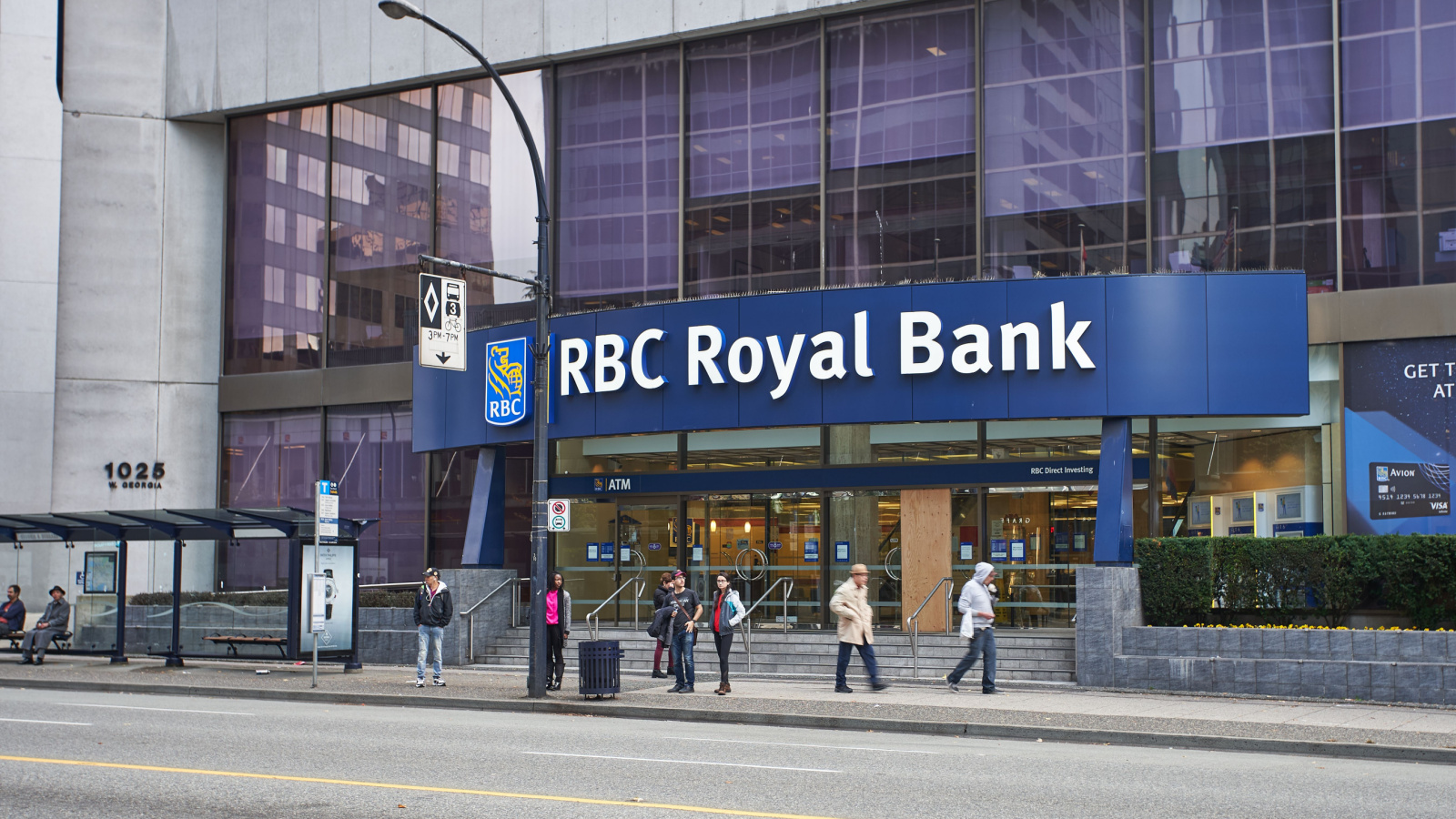
RBC has always been important, but importance is not the same thing as excitement. Many investors treated it as the definition of a blue-chip Canadian bank: high quality, diversified, and maybe a little too obvious. In 2026, that familiar reputation was strengthened by numbers strong enough to make the stock feel newly relevant. First-quarter profit reached a record level, earnings per share rose at a double-digit pace, and the business benefited from strength in wealth management, domestic banking, and capital markets. That is a reminder that a “boring” bank can still surprise when multiple earnings engines fire together.
The other reason the story looks different is scale after the HSBC Canada acquisition. That deal was initially discussed in strategic terms, but in 2026 it started to show up more clearly in the operating picture. Investors are seeing a bank that is not merely defending market share but deepening its position across personal, commercial, and fee-based businesses. In a slower economy, that kind of diversification matters. RBC may never become flashy, but the current narrative is more about structural earnings power than simple dependability, and that is a meaningful upgrade from its old reputation.
Scotiabank: The Perpetual Laggard Suddenly Looked More Focused

Scotiabank spent years carrying an awkward reputation: still large and profitable, but often seen as the Canadian bank with more cleanup work and less clarity than peers. In 2026, that script began to soften. The bank’s first-quarter results topped estimates, adjusted earnings per share rose, and management said it expected to hit a key target earlier than planned. Wealth management and capital markets both contributed, while Canadian banking also improved. For investors who had been waiting for a cleaner, more coherent performance profile, that mattered more than one quarter’s headline alone.
The attraction here is not that Scotiabank suddenly turned into a high-growth disruptor. It is that the bank appears to be moving from “prove it” territory toward “steady execution” again. That can be a powerful shift in perception, especially for a stock that had long traded under the weight of skepticism. When a bank once seen as the complicated one starts posting better-than-expected results and talking confidently about targets, the market pays attention. In 2026, Scotiabank has started to look less like a turnaround question and more like a bank reclaiming its footing.
National Bank of Canada: The CWB Deal Changed the Scale Question

National Bank was rarely ignored by professionals, but it was often overlooked by ordinary investors who defaulted to the bigger names first. That is one reason 2026 has felt different. The first quarter showed strong profit growth, and a meaningful part of that jump came from the completed Canadian Western Bank acquisition. Suddenly, National Bank was not just the disciplined Quebec-based operator with strong wealth and capital markets exposure. It was also a larger, more geographically expanded bank with an immediate boost to its personal and commercial banking footprint.
That acquisition matters because it shifts how the stock can be framed in portfolios. Instead of being admired mostly for efficiency and niche strength, National Bank now has a broader national growth angle. The CWB deal lifted revenue and earnings in the acquired banking segment sharply, while the core franchise continued to perform well. For years, the stock was “good, but smaller.” In 2026, it began to look like a bank that may have crossed into a more interesting scale bracket, with enough momentum to pull more attention from investors who used to stop at the Big Five.
Sun Life: The Insurer Became a Bigger Asset-Management Story

Sun Life has often been placed in the conservative corner of Canadian finance: a respectable insurer, global enough to be diversified, but not usually where investors looked for fresh narrative energy. In 2026, the company’s strong quarterly results and follow-up deal activity made that view feel outdated. Underlying earnings were solid, North American performance improved, and assets under management climbed. That on its own would have been a good start to the year. But the bigger shift came from Sun Life completing the purchase of the remaining stakes in BGO and Crescent Capital, deepening its position in asset management.
That changes the way the stock can be understood. Sun Life is still an insurer, but it is increasingly also a larger alternative-assets and fee-income platform. In a market where investors prize recurring fees and diversified growth streams, that matters. It also helps explain why the company can feel less tied to the old stereotype of insurance as a plodding business. The stock is becoming easier to read as a broader financial-services compounder with multiple sources of growth, and that makes 2026 look like more than just another steady year.
Intact Financial: Underwriting Discipline Is Getting Proper Credit

Insurance stocks are often called boring because the business appears mechanical: collect premiums, pay claims, raise rates when needed, repeat. Intact’s 2026 numbers showed why that view can miss the point. The company reported strong per-share operating income growth, an excellent combined ratio, and continued expansion in direct premiums written. Book value also rose meaningfully, and another dividend increase extended its long streak of annual hikes. Those are not the signs of a sleepy enterprise. They are signs of a business that keeps turning disciplined underwriting into measurable shareholder value.
What is changing in the story is not the industry, but the market’s willingness to appreciate quality inside it. In a year when catastrophe risk, inflation, and pricing discipline remain central to the insurance conversation, Intact looks less like a generic property-and-casualty name and more like a top-tier operator. Strong underwriting performance across geographies suggests the company is doing more than riding rate trends. It is executing. That distinction matters because investors increasingly reward insurers that can prove they are not just exposed to risk, but skilled at pricing and managing it better than peers.
Thomson Reuters: Suddenly an AI Stock in Conservative Clothing

Thomson Reuters was the kind of name many Canadians respected without ever finding particularly exciting. It sold mission-critical information and software to professionals, which sounded durable but not especially market-moving. In 2026, that changed quickly. The company reported healthy organic growth, guided to faster growth and better margins for the year ahead, increased its dividend again, and paired that with new buybacks and a return-of-capital plan. Then came the sharper narrative turn: CoCounsel, its AI legal assistant, passed one million users, and the stock posted its biggest one-day jump since 2009.
That kind of reaction matters because it reframes the company entirely. Rather than being treated as a legacy information provider trying to defend itself from AI disruption, Thomson Reuters started to look like a business actively monetizing AI through trusted proprietary content and established customer relationships. That is a much stronger place to stand. Investors no longer have to ask only whether the old franchise is resilient. They can also ask how much new value AI can unlock inside that franchise. For a supposedly boring stock, that is a dramatic shift in tone.
Dollarama: A Discount Staple With a More Complicated Future

Dollarama used to feel almost effortless as an investment idea. If budgets were tight, shoppers traded down; if inflation rose, value retail stayed relevant. In 2026, the stock became more interesting because the old simplicity started to break. The company still delivered solid recent results and met or exceeded fiscal 2026 guidance, but its fiscal 2027 sales outlook came in largely below what the market wanted. At the same time, margins were affected by the lower-margin Australian business it acquired through The Reject Shop. That means the stock is no longer just a clean Canadian discount-retail story.
Paradoxically, that complexity is what makes it more worth watching. A company once treated as a near-automatic inflation hedge is now being judged on international execution, sourcing mix, consumer resilience, and margin management. The market’s sharp reaction to its forecast showed that expectations had become higher than the “boring retailer” label suggested. Dollarama still has the structural strengths that made it popular in the first place, but 2026 made clear that even Canada’s most dependable discount name can no longer rely on a one-line investment thesis.
19 Things Canadians Don’t Realize the CRA Can See About Their Online Income

Earning money online feels simple and informal for many Canadians. Freelancing, selling products, and digital services often start as side projects. The problem appears at tax time. Many people underestimate how much information the CRA can access. Online platforms, banks, and payment processors create detailed records automatically. These records do not disappear once money hits an account. Small gaps in reporting add up quickly.
Here are 19 things Canadians don’t realize the CRA can see about their online income.
This Options Discord Chat is The Real Deal
While the internet is scoured with trading chat rooms, many of which even charge upwards of thousands of dollars to join, this smaller options trading discord chatroom is the real deal and actually providing valuable trade setups, education, and community without the noise and spam of the larger more expensive rooms. With a incredibly low-cost monthly fee, Options Trading Club (click here to see their reviews) requires an application to join ensuring that every member is dedicated and serious about taking their trading to the next level. If you are looking for a change in your trading strategies, then click here to apply for a membership.