
35,000+ smart investors are already getting financial news, market signals, and macro shifts in the economy that could impact their money next with our FREE weekly newsletter. Get ahead of what the crowd finds out too late. Click Here to Subscribe for FREE.
A restaurant bill can grow surprisingly quickly even when the menu prices looked reasonable at the start of the meal. Beyond food, drinks and sales tax, diners may encounter automatic gratuities, service charges, payment surcharges, reservation penalties and an expanding collection of delivery-related fees. Some charges are common only at certain restaurants or in particular provinces, while others appear mainly on group bookings, special events or app-based orders.
The important distinction is that many of these costs are legitimate when properly disclosed, but they can still be easy to overlook until checkout. These 15 restaurant fees Canadians should watch for show where extra costs can appear, what they may mean, and which details deserve a second look before the final payment is approved.
Automatic Gratuities for Larger Parties
15 Hidden Fees Canadians Should Watch on Their Next Restaurant Bill
- Automatic Gratuities for Larger Parties
- Mandatory Service or House Charges
- Tax Added to Mandatory Service Charges
- Credit-Card Surcharges
- Takeout Bag and Packaging Charges
- Delivery Platform Service Fees
- Separate Delivery Fees
- Small-Order Fees
- Priority and Express Delivery Fees
- Reservation Cancellation and No-Show Charges
- Reservation Deposits and Prepaid Experiences
- Corkage Fees
- Cake-Cutting and Outside Dessert Fees
- Private-Dining Minimum Spends
- Live-Music and Entertainment Cover Charges
- 16 Costco Canada Habits That Could Be Costing Shoppers More Than They Save

Group dinners are one of the most common situations in which a restaurant can replace an optional tip with an automatically added gratuity or service percentage. The threshold and percentage are not standardized across Canada. Vancouver’s The Acorn, for example, states that it automatically adds a 20% gratuity for groups of six or more. Toronto’s Prime Seafood Palace says a 21% service charge applies to parties of seven or more. The key is checking the reservation terms and menu notes before assuming the tip remains entirely discretionary.
The costly mistake occurs when an automatic charge is overlooked and another full gratuity is added through the payment terminal. A $500 group meal with a 20% automatic gratuity already includes another $100 before applicable taxes on mandatory charges. If the terminal subsequently presents familiar percentage buttons, someone paying quickly can effectively tip twice. Large groups should therefore examine the printed bill first, looking specifically for terms such as “gratuity,” “service charge” or “auto-grat.”
Mandatory Service or House Charges

A line labelled “service fee,” “hospitality charge” or “house operations fee” should not automatically be treated as identical to a voluntary tip. Restaurants can use mandatory charges under different compensation and operating models, and the language matters. Toronto’s Enigma Yorkville, for instance, states that final bills include both an 18% automatic gratuity and a separate 5% house operations fee. Another Toronto venue, Alice, describes its 20% group service fee as a mandatory charge rather than a gratuity.
That distinction becomes important when deciding whether any additional tip is expected. A diner seeing a 20% service fee may reasonably assume the entire amount functions as the server’s gratuity, yet a restaurant’s written policy may define the charge differently. Conversely, some establishments explicitly say no extra gratuity is required. The safest approach is to read the wording attached to the fee rather than guessing from the percentage. On a larger dinner, even a seemingly modest 5% house charge can add $25 to a $500 subtotal.
Tax Added to Mandatory Service Charges

One of the least obvious costs appears after a mandatory gratuity or service charge has already increased the subtotal. Canada Revenue Agency guidance distinguishes voluntary tips from charges placed directly on the bill. A gratuity freely given by a customer generally is not subject to GST/HST. When a restaurant adds a mandatory or suggested service charge to the bill, however, the CRA says GST/HST applies to that amount.
That means the arithmetic can be different from simply calculating tax on food and then adding a tip. The CRA gives the example of a $1,000 banquet dinner with a $150 mandatory gratuity: GST/HST is calculated on $1,150. Provincial location also matters because applicable GST/HST rates vary. Ontario currently uses 13% HST, while Nova Scotia’s HST is 14%, and provinces outside the harmonized system generally apply the 5% GST alongside any applicable provincial sales-tax rules. The extra tax on the fee may be small individually, but it becomes noticeable on expensive group meals.
Credit-Card Surcharges

Paying by credit card can create another line item in much of Canada. Federal consumer guidance says merchants may add a credit-card surcharge outside Quebec, subject to payment-network requirements. Those requirements can include a maximum surcharge of 2.4%, a prohibition on charging more than the merchant’s actual acceptance cost, and clear disclosure before the customer authorizes the transaction. Consumers must also be given an opportunity to use an alternative payment method.
Quebec is the major exception. The province’s consumer-protection authority states that merchants cannot add a fee because someone pays by debit or credit card. Elsewhere, a 2% surcharge on a $200 restaurant payment would mean another $4 before considering the tax treatment that may apply. It may not sound dramatic, but frequent dining and large group bills magnify the difference. Diners paying by credit card should therefore check entrance signage, menus, checkout screens and receipts rather than assuming every payment method produces the same total.
Takeout Bag and Packaging Charges
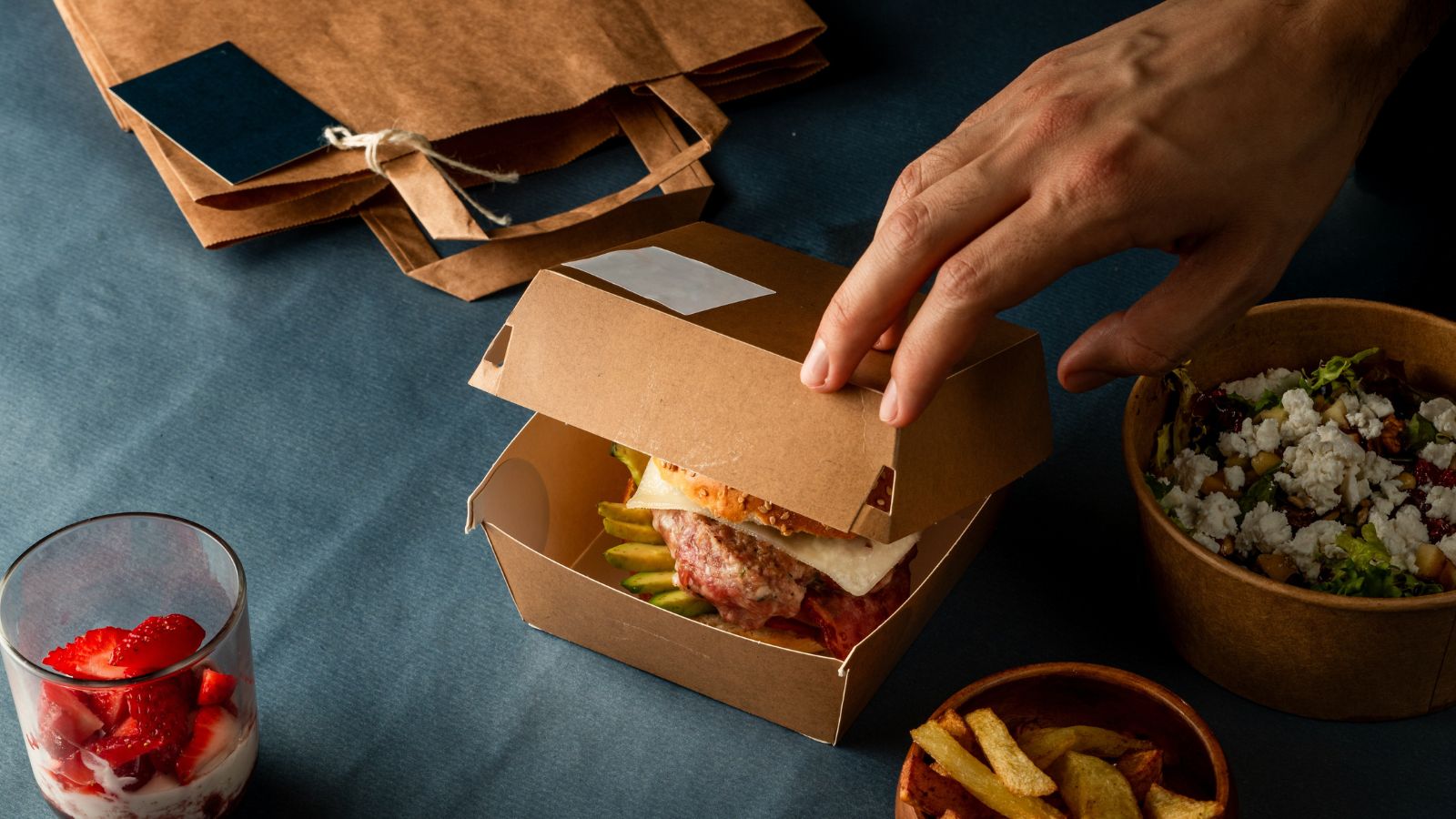
A takeout order can attract small packaging-related charges that barely register individually but still change the advertised total. The rules are especially visible in British Columbia. Vancouver requires minimum charges for certain shopping bags: the city’s rules specify at least $0.25 for a paper shopping bag and $2 for a new reusable bag. Bag charges also have to appear separately on receipts, making them easy to identify once the customer knows where to look.
Provincial regulations add another layer. British Columbia’s single-use rules also establish minimum fees for paper and reusable shopping bags, although exemptions apply in some contexts, including certain food-delivery and drive-through situations. The result is that a packaging charge can vary depending on location, whether the meal is picked up or delivered, and the type of bag supplied. A quarter is not likely to derail a dinner budget, but repeated coffee, lunch and takeout purchases make seemingly trivial charges accumulate over time.
Delivery Platform Service Fees

Ordering dinner through an app can produce a “service fee” that is completely separate from the restaurant’s food prices, the delivery charge and the courier tip. Current DoorDash consumer information says service fees help cover platform and fulfilment costs and can vary according to factors such as the order. Uber Eats similarly discloses service fees as a separate component of some delivery orders rather than treating them as gratuities.
That distinction matters because a low advertised delivery fee does not necessarily mean a low-fee order. A restaurant might appear with a $0 or discounted delivery charge while a service fee remains in the checkout breakdown. Membership programs may reduce certain charges, but eligibility and minimum-subtotal conditions can apply. Before ordering, it is worth comparing the final checkout total rather than choosing a restaurant based solely on the menu subtotal or delivery-fee banner. On several orders a month, a few additional dollars each time can become a meaningful dining expense without ever appearing in the price of a single menu item.
Separate Delivery Fees

The delivery fee is another charge that can move independently from the service fee. Uber Eats says its delivery charge may depend on factors including the customer’s location, restaurant, courier availability and demand. When a restaurant uses its own delivery staff, the restaurant may determine the fee instead. DoorDash likewise notes that delivery fees can vary by merchant and other circumstances.
This makes the delivery cost less predictable than a fixed restaurant cover charge. A location that was inexpensive to order from last week may cost more at a different address or during a busier period. Uber also warns that delivery charges can rise during high-demand periods, including bad weather or peak ordering times. For families comparing two similar meals, the cheaper menu can therefore produce the more expensive final checkout. The useful comparison is “all-in before tip” — food subtotal, service fee, delivery charge and other mandatory fees — rather than simply deciding which restaurant lists the cheaper burger, pizza or entrée.
Small-Order Fees

Ordering only one inexpensive meal or snack can trigger a fee designed specifically for small baskets. DoorDash’s Canadian help information says a small-order fee may apply when the subtotal does not meet a specified minimum. Uber Eats also identifies small-order fees among the charges that can appear when a restaurant order is below the relevant threshold. Depending on the platform and merchant, adding another item can sometimes eliminate the charge.
This creates an unusual piece of restaurant arithmetic: spending slightly more on food can occasionally produce nearly the same checkout total as ordering less. A diner sitting just below a minimum might pay a fee that disappears after adding a drink, side or dessert. That does not mean extra food is automatically the better purchase, but it does mean the fee deserves attention before checkout. It is particularly relevant for solo diners, late-night snack orders and small lunches, where the mandatory charges can represent a much larger percentage of the underlying food cost than they would on a family-sized order.
Priority and Express Delivery Fees
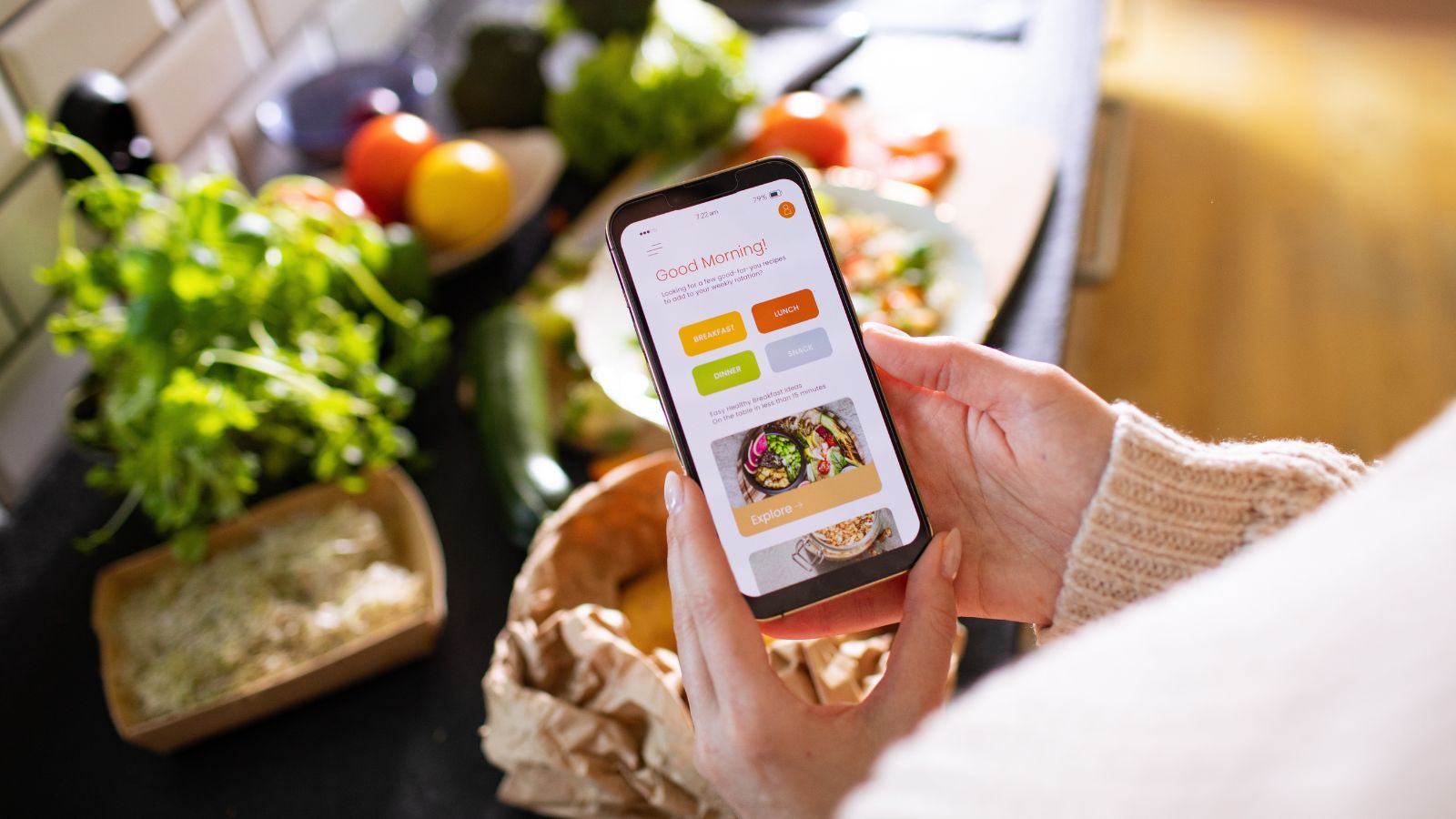
Delivery apps increasingly offer optional faster-delivery choices, creating another charge that can blend into an already busy checkout screen. Uber Eats’ Canadian help material says its Priority option can add a fee so that an order is dropped off first when a courier is handling multiple deliveries. The company lists the charge separately from its standard service and delivery fees. DoorDash also identifies optional Express delivery fees among charges that may appear in supported markets and ordering situations.
The important word is “optional.” A customer trying to complete an order quickly may select a faster option without noticing that the total changed. Uber’s guidance also makes clear that priority service is about delivery sequencing rather than an absolute guarantee that food will arrive at a specific time. For an inexpensive meal, even a few dollars can substantially increase the effective cost. Checking whether “Standard,” “Priority,” “Express” or another speed option is selected is therefore worthwhile before approving payment, especially during busy dinner periods when delivery estimates already look long.
Reservation Cancellation and No-Show Charges

The cost of dinner can start before anyone reaches the restaurant. More Canadian establishments now secure high-demand reservations with a credit card and impose charges when customers cancel too late or fail to appear. Toronto’s aKin, for example, discloses a $100 credit-card hold for certain tasting-menu reservations that may be charged after a no-show or late cancellation. Prime Seafood Palace says cancellations inside its 48-hour window and no-shows may carry a $50-per-guest fee.
Policies differ dramatically between venues. Some impose a modest per-person penalty; others can charge the entire menu price for late cancellations. OpenTable’s current Canadian terms make clear that participating restaurants can require card details and apply their own disclosed cancellation rules. A dinner for four can therefore create a significant financial commitment days before the meal. Reservation confirmation emails should be treated almost like hotel bookings: the cancellation deadline, party-size rules and no-show amount are worth checking as soon as plans become uncertain.
Reservation Deposits and Prepaid Experiences

A reservation deposit is not always an extra fee because some restaurants return it or apply it toward the meal. The risk appears when the deposit is non-refundable or becomes forfeitable after a cancellation deadline. Enigma Yorkville currently lists prepaid deposits for several tasting experiences, including deposits described as non-refundable in the event of cancellation or no-show. The Acorn takes a different approach, stating that its $25-per-person reservation hold is refunded when guests arrive, subject to its cancellation conditions.
The distinction between a refundable hold, an applied deposit and a non-refundable prepayment deserves careful attention. They can look almost identical when entering a card number online. A group of four facing a $50-per-person deposit has effectively committed $200 before ordering a drink. Special dinners, tasting menus and holiday experiences are particularly likely to use prepayment structures because restaurants have limited seats and higher preparation costs. Reading the refund rules before clicking “Reserve” can prevent an unpleasant surprise if plans later change.
Corkage Fees

Bringing a treasured bottle of wine from home can save money compared with buying a similar bottle from a restaurant list, but corkage can erase much of that advantage. Canadian restaurants set their own policies and amounts. Vancouver’s The Acorn lists a $40 corkage charge per 750-millilitre bottle, while Toronto’s Prime Seafood Palace lists $85 per standard bottle, with limits on how many bottles may be brought. Some restaurants also restrict outside wine that already appears on their own list.
The fee covers more than simply removing a cork: restaurants may provide glassware, service, storage or sommelier attention while losing the markup they would otherwise earn from selling wine. Still, customers need to do the calculation. Bringing two bottles to a restaurant charging $75 each can add $150 to the evening before tax or other service charges. Corkage policies are often placed in reservation FAQs rather than prominently on the dinner menu, so calling or checking the restaurant’s website before arriving with wine can avoid a costly misunderstanding.
Cake-Cutting and Outside Dessert Fees

A birthday cake carried into a restaurant may seem like something that should cost nothing once it has already been purchased elsewhere. Many restaurants see it differently. Prime Seafood Palace currently lists an $8-per-guest cake-cutting charge for outside desserts. Vancouver’s The Acorn lists a $3-per-person outside-dessert or cake-cutting fee, while other establishments use a flat fee for the entire cake instead of charging each diner.
The per-person format is the version that can become expensive quickly. An $8 fee sounds modest until a 15-person birthday dinner turns it into a $120 charge before taxes. Restaurants generally use these policies to cover plates, cutlery, staff handling, cleanup and the lost sale of their own desserts. Not every venue permits outside cakes at all. Anyone organizing a birthday, anniversary or office meal should therefore ask about outside-food rules while making the reservation rather than after the cake arrives. A restaurant dessert package can occasionally cost less than paying an outside-dessert fee for a large group.
Private-Dining Minimum Spends

A “minimum spend” is not technically an extra charge when the group purchases enough qualifying food and beverages. It becomes one when spending falls short. Toronto restaurants offering private rooms and buyouts commonly use this structure. SCHOOL Restaurant, for example, lists event minimums ranging from several thousand dollars depending on the day and duration, with applicable taxes and gratuities excluded. Other Toronto restaurants publish separate minimums for private rooms, sections and complete buyouts.
The catch is that minimums are often commitments, not estimates. If a private room requires $3,000 in qualifying food and beverage purchases and the group finishes at $2,500, the host may still owe the $500 shortfall under the contract. Deposits, service charges, taxes, audiovisual equipment and room-related extras may also sit outside the amount that counts toward the minimum. Anyone arranging a birthday, corporate dinner or rehearsal meal should ask exactly what spending qualifies. “Minimum spend” can sound friendlier than “room rental,” but the financial obligation can be just as real.
Live-Music and Entertainment Cover Charges

Some restaurants double as performance venues, and dinner can therefore include an entertainment charge that is separate from food and drinks. Vancouver’s il Nido currently states that a $2.50-per-person cover applies during live music on Friday and Saturday evenings. Toronto’s Jazz Bistro says cover charges apply to performances on its stages except during certain free piano-bar periods. Other venues use pay-what-you-can models or larger fixed charges for special performances.
For a couple, a small cover is unlikely to transform the bill. For a table of eight, even a $10 entertainment charge adds $80 before anyone considers dinner, drinks, tax or gratuity. The challenge is that customers may think of the venue primarily as a restaurant and overlook event information posted elsewhere on the booking page. Dates and times matter too: the same establishment may have no cover on one evening and a mandatory charge the next. Checking the entertainment calendar can reveal whether the reservation includes more than the meal itself.
16 Costco Canada Habits That Could Be Costing Shoppers More Than They Save
The Executive Membership can feel like an obvious upgrade because the 2% annual reward sounds straightforward. For households that spend heavily at Costco Canada, the extra fee may be easy to justify. But the habit becomes costly when shoppers upgrade first and calculate later. A Gold Star Membership costs less, while Executive costs more and only pays off if eligible annual spending is high enough to offset the difference.
16 Costco Canada Habits That Could Be Costing Shoppers More Than They Save
This Options Discord Chat is The Real Deal
While the internet is scoured with trading chat rooms, many of which even charge upwards of thousands of dollars to join, this smaller options trading discord chatroom is the real deal and actually providing valuable trade setups, education, and community without the noise and spam of the larger more expensive rooms. With a incredibly low-cost monthly fee, Options Trading Club (click here to see their reviews) requires an application to join ensuring that every member is dedicated and serious about taking their trading to the next level. If you are looking for a change in your trading strategies, then click here to apply for a membership.