35,000+ smart investors are already getting financial news, market signals, and macro shifts in the economy that could impact their money next with our FREE weekly newsletter. Get ahead of what the crowd finds out too late. Click Here to Subscribe for FREE.
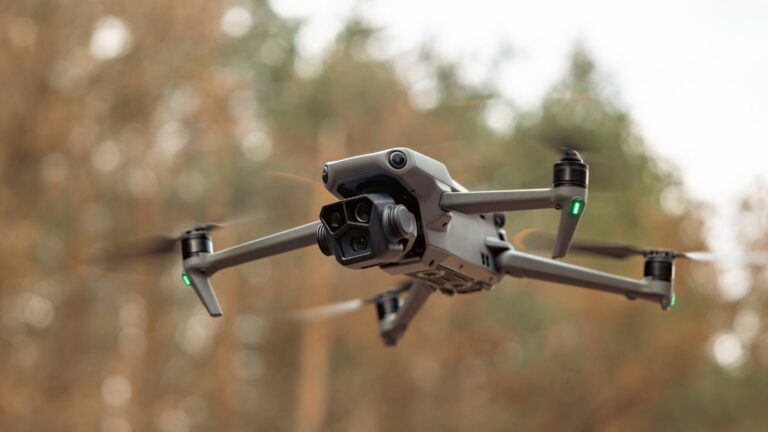
Canada’s push to rebuild its military is moving from policy documents and procurement tables onto the test range. On August 12, Canadian Armed Forces personnel gathered with domestic drone manufacturers in the Ottawa Valley to put emerging uncrewed systems through realistic scenarios at RED COBALT, an accelerator designed to bring operators and developers closer together.
The timing is significant. Ottawa has identified drones and autonomous systems as a sovereign defence priority while creating new pathways intended to move Canadian technology from development to operational testing and, potentially, production much faster. The effort reflects lessons from Ukraine, concerns about fragile foreign supply chains and a broader goal of making billions in new defence spending strengthen industrial capacity inside Canada. The difficult part will be turning successful demonstrations into equipment that troops can actually receive, maintain and upgrade at scale.
The Test Range Is Becoming Part of the Procurement Process
Canada Tests Homegrown Military Drones as Ottawa Races to Build More Defence Capacity at Home
- The Test Range Is Becoming Part of the Procurement Process
- Ottawa Wants Drones to Move From Prototype to Production Faster
- The Ukraine War Changed the Military Value of Cheap Drones
- A New Quebec Hub Is Supposed to Bridge the Development Gap
- Drones Fit Into a Much Bigger Made-in-Canada Defence Strategy
- Canada Is Starting With More Than a Blank Sheet of Paper
- Procurement Speed May Be the Hardest Test of All
- Success Will Depend on Scale, Supply Chains and Constant Adaptation
RED COBALT is more than a conventional defence trade show. The Canadian Joint Forces Command event brings together Canadian Armed Forces operators, Department of National Defence officials, Canadian Coast Guard personnel, public-safety partners and industry representatives. Participants are demonstrating drone and counter-drone technology in realistic scenarios at an AREA X.O facility in the Ottawa Valley. AREA X.O is also part of NATO’s Defence Innovation Accelerator for the North Atlantic test-centre network, connecting the site with a larger allied defence-technology ecosystem.
The practical value is the direct connection between the people designing systems and those expected to use them. Lieutenant-General Darcy Molstad, commander of Canadian Joint Forces Command, has described events like RED COBALT as part of a faster way of doing business with industry. Instead of a manufacturer spending years refining technology before operators see it, military personnel can provide feedback earlier. That feedback can involve seemingly small issues — controls, setup time, communications or how quickly equipment can be repaired — that become major problems when a system reaches the field.
Ottawa Wants Drones to Move From Prototype to Production Faster
The testing comes only weeks after Ottawa launched its Defence Drone Initiative on July 23. The program is designed to accelerate the development, testing and production of Canadian uncrewed and autonomous systems for both the Canadian Armed Forces and the Canadian Coast Guard. It covers far more than small aerial drones. Ottawa has identified possible applications including tactical surveillance aircraft, uncrewed ground vehicles, maritime surface and underwater systems, counter-drone interceptors, standardized drone payloads and deep precision-strike systems.
A new supply-arrangement process is intended to create a pool of qualified Canadian companies that can compete for future work. The initial application window remains open until August 14, with successful applicants potentially being notified as early as September. Qualification itself does not guarantee a contract. It can, however, open the door to testing, prototype development, limited purchases and eventual production. That distinction matters. Canada is effectively trying to create a pipeline in which promising equipment can be tested, modified and purchased without restarting an entirely new procurement process each time the technology changes.
The Ukraine War Changed the Military Value of Cheap Drones
Canada’s urgency reflects a transformation that has been impossible for defence planners to ignore. The war in Ukraine has shown how comparatively inexpensive uncrewed systems can perform reconnaissance, identify targets, move supplies and threaten equipment costing many times more. Molstad is overseeing work to determine what combination of uncrewed platforms the Canadian military requires, including lower-cost systems similar to those now widely used in Ukraine. The lesson is not that traditional aircraft, artillery or armoured vehicles have become irrelevant, but that drones increasingly operate alongside them.
Canada has already seen its own technology enter that environment. In 2024, Ottawa announced that more than 800 SkyRanger R70 drones sourced from Teledyne FLIR in Waterloo, Ontario, would be provided to Ukraine. The package was valued at more than $95 million. Those systems were designed for tasks including surveillance and intelligence gathering and could carry different sensors and payloads. The experience demonstrated that Canada possesses some of the engineering and manufacturing expertise required for military drones. Ottawa’s newer challenge is creating a domestic market large and predictable enough for that expertise to expand.
A New Quebec Hub Is Supposed to Bridge the Development Gap
Testing individual drones is only one part of Ottawa’s plan. In July, Defence Minister David McGuinty announced $29.6 million over two years for an Espace Aéro-led consortium to establish an Uncrewed Systems Defence Innovation Secure Hub centred in Mirabel, Quebec. The consortium includes roughly 30 organizations spanning industry, academia and the not-for-profit sector. Its purpose is to provide the secure infrastructure and military access required to move promising technology beyond laboratory development and closer to operational use.
The work is deliberately broader than building aircraft that can simply fly. Priority areas include uncrewed and counter-uncrewed systems, human-machine teaming, operations in contested environments and sensor integration. The hub is also expected to examine electronic warfare, command and control, autonomous logistics, Arctic operations and cooperation among multiple robotic systems. Those problems matter because a drone that performs well during a controlled demonstration may struggle when navigation signals are disrupted, communications are unreliable or extreme weather affects batteries and sensors. Canada’s defence challenge is therefore not simply manufacturing airframes. It is developing systems that remain useful when conditions become hostile.
Drones Fit Into a Much Bigger Made-in-Canada Defence Strategy
Ottawa’s interest in domestic drones is part of a substantially larger industrial policy. Canada’s 2026 Defence Industrial Strategy identifies 10 sovereign capability priorities, ranging from aerospace and ammunition to digital systems, sensors, space technology and uncrewed systems. The government has committed $6.6 billion over five years specifically to strengthen the defence industry as part of the broader military buildup. Its strategy projects approximately $180 billion in defence procurement and $290 billion in defence-related infrastructure investment in Canada by 2035.
The policy introduces a “Build–Partner–Buy” approach. In priority areas where Canadian capacity exists or can realistically be developed, Ottawa intends to favour domestic production. Where Canada cannot build an entire capability alone, it plans to co-develop or co-produce equipment with trusted allies. Purchasing completed foreign systems becomes the third option. Drones are particularly suited to the first two categories because Canada already has aerospace, robotics, communications, artificial-intelligence and advanced-manufacturing companies capable of supplying pieces of the ecosystem. The objective is greater control over technology, intellectual property, maintenance and critical supply chains.
Canada Is Starting With More Than a Blank Sheet of Paper
The domestic drone push is not starting from zero. Beyond the Waterloo-built SkyRanger systems supplied to Ukraine, Ottawa has been funding companies working on longer-endurance platforms, sensors and autonomous capabilities. In May 2026, Prairies Economic Development Canada announced $3 million in repayable funding for Canadian UAVs to develop a deployable drone platform and intelligence suite for reconnaissance and situational awareness, including operations beyond visual line of sight.
Canada is also attempting to import hard-earned Ukrainian expertise while expanding production at home. In May, the Canadian and Ukrainian defence ministries announced an arrangement supporting production of Ukrainian uncrewed aerial systems in Canada. The initiative established the Airlogix-Sentinel partnership between Ukraine’s Airlogix and Canadian manufacturer Sentinel Research and Development. That model illustrates what Ottawa’s industrial strategy could look like in practice: Canadian manufacturing capacity combined with technology refined through actual conflict. Rather than treating domestic production as isolation from allies, Canada is trying to make international defence partnerships create engineering knowledge, manufacturing capacity and supply chains that remain available inside the country.
Procurement Speed May Be the Hardest Test of All
Canada has spent years facing criticism over the time required to move major military purchases from identified requirements to delivered equipment. Ottawa itself acknowledged in Budget 2025 that defence procurement had become fragmented across departments, complicated and too slow for rapidly changing military needs. The Defence Investment Agency was created to consolidate parts of that process, reduce duplicated approvals and bring military requirements and industry capabilities together earlier.
Drones expose why speed matters so much. A procurement cycle appropriate for a ship expected to serve for several decades can be disastrous for software-driven equipment whose sensors, communications, autonomy and countermeasures may change quickly. Ottawa’s Defence Drone Initiative therefore allows qualified suppliers to compete for activities ranging from testing and prototypes to limited acquisitions and potential production. Yet safeguards remain necessary. Companies must demonstrate that equipment works, taxpayers still need value for money, and military systems require security, reliability and interoperability. The federal government has explicitly warned that qualifying for the new drone supply arrangement does not guarantee business. RED COBALT will matter most if strong performers can progress beyond demonstrations without abandoning those standards.
Success Will Depend on Scale, Supply Chains and Constant Adaptation
The long-term test will be whether Canada can manufacture useful systems in meaningful numbers and keep improving them after they enter service. Ottawa’s own defence strategy recognizes that sophisticated equipment depends on supply chains for specialized components, materials and electronics. It has therefore paired its drone push with programs supporting domestic industrial resilience, Canadian intellectual property and small and medium-sized defence companies. The government says smaller firms represent 92 per cent of the country’s defence industrial base, making their ability to obtain financing and reach military customers especially important.
There is also an unavoidable defensive side to the drone race. Canada’s military innovation programs are investing in technologies capable of detecting, tracking and defeating hostile small drones, including a 2026 counter-uncrewed-aircraft sandbox offering up to $1.75 million in prizes for promising technologies. The emerging requirement is therefore a cycle: build better drones, learn how an opponent might stop them, improve the systems and repeat. RED COBALT represents one visible piece of that cycle. Whether it produces lasting military capacity will depend on what happens after the demonstrations end.
This Options Discord Chat is The Real Deal
While the internet is scoured with trading chat rooms, many of which even charge upwards of thousands of dollars to join, this smaller options trading discord chatroom is the real deal and actually providing valuable trade setups, education, and community without the noise and spam of the larger more expensive rooms. With a incredibly low-cost monthly fee, Options Trading Club (click here to see their reviews) requires an application to join ensuring that every member is dedicated and serious about taking their trading to the next level. If you are looking for a change in your trading strategies, then click here to apply for a membership.