35,000+ smart investors are already getting financial news, market signals, and macro shifts in the economy that could impact their money next with our FREE weekly newsletter. Get ahead of what the crowd finds out too late. Click Here to Subscribe for FREE.
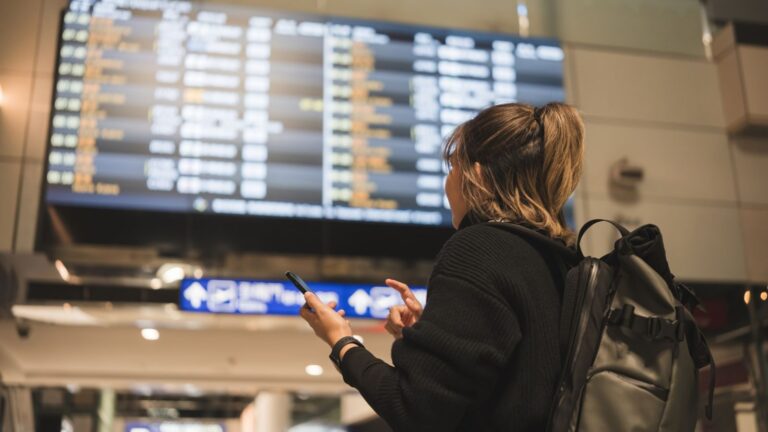
The journey home for Thanksgiving has become a test of patience across the United States. On Wednesday, November 25, flight-tracking service FlightAware recorded more than 3,700 delayed flights and 60 cancellations nationwide as millions of Americans headed toward family gatherings. Crowded security checkpoints, unsettled weather and memories of recent aviation technology failures added to the strain.
For Canadians travelling to the United States, or returning through American airports, the risks extend beyond a single departure board. A late inbound aircraft, a missed connection or a sudden weather restriction can disrupt an itinerary that begins or ends north of the border. With a powerful East Coast storm forecast for Thanksgiving Day, the busiest part of the holiday journey is not necessarily over.
More Than 3,700 Delays, but Not a Nationwide Shutdown
U.S. Thanksgiving Travel Rush Sees More Than 3,700 Flight Delays as Canadians Face Cross-Border Disruptions
- More Than 3,700 Delays, but Not a Nationwide Shutdown
- The Busiest Thanksgiving Skies in 16 Years
- Near-Record Travel Despite Higher Ticket Prices
- A Powerful Storm Threatens the Thanksgiving Journey
- Recent Technology Failures Have Shaken Confidence
- Why Canadians Are Exposed to Disruptions South of the Border
- Preclearance Helps, but It Cannot Fix a Delayed Flight
- Canadian Passenger Rights Depend on the Cause of the Delay
- U.S. Refund Rules Offer a Different Kind of Protection
- The Return Rush May Test Travellers Again
Wednesday’s tally painted a picture of an aviation system under pressure rather than one that had stopped moving. The Associated Press reported more than 3,700 delayed U.S. flights and 60 cancellations, citing FlightAware. That distinction matters: a delayed flight may eventually operate, while a cancelled service requires a different travel arrangement or a change of plans. The figures describe U.S. flight activity on November 25, not the number of Canada–U.S. services affected, and they can change as flight trackers update their records.
At several airports, the frustration started before anyone boarded. Security waits at Miami International and New York’s John F. Kennedy International exceeded an hour at times, AP reported. A traveller leaving Fort Lauderdale for a family visit described encountering a crowded terminal before dawn, despite arriving for an early flight. Yet AP also found that many major airports were operating with comparatively short delays. The mixed experience explains why one passenger might reach dinner on schedule while another, booked on a seemingly similar itinerary, spends the day watching a departure time move farther back.
The Busiest Thanksgiving Skies in 16 Years
The unusually crowded schedule helps explain how disruptions can spread. The Federal Aviation Administration projected more than 417,000 flights over a nine-day Thanksgiving travel period, calling it the busiest holiday airspace in 16 years. Tuesday, November 24, was expected to be the peak day, with more than 52,000 flights. U.S. Transportation Secretary Sean Duffy subsequently said roughly 52,000 flights operated that day. Even when most aircraft move as planned, such volume leaves little room for bad weather, airport restrictions or equipment trouble.
The Transportation Security Administration separately anticipated screening about 17.6 million passengers between Tuesday and Monday. Those numbers are not competing estimates: the FAA counts flights, while the TSA measures people passing through U.S. security checkpoints. For a family connecting through a hub, the distinction is less important than the resulting crowding. Each arriving aircraft must fit into a larger sequence of gates, crews and departure slots. A temporary slowdown at one large airport can therefore affect passengers whose own departure city has clear skies and no apparent local problem.
Near-Record Travel Despite Higher Ticket Prices
Americans have not abandoned Thanksgiving trips, even as travel has become more expensive. AAA forecasts 81.5 million people travelling at least 50 miles from home between November 24 and 30, only 0.1% below last year’s estimate of 81.6 million. Of those travellers, about 72.9 million are expected to drive, while 5.96 million are projected to take domestic flights. Another 2.6 million are expected to travel by bus, train or cruise, a category growing as some households look beyond the airport.
Cost is shaping those decisions. AAA says the domestic round-trip airfares in its Thanksgiving booking data averaged $800, up 17% from the previous year. Reuters described a North Carolina mother who chose a roughly 17-hour drive to Dallas rather than pay approximately $1,500 for flights for herself and two children. Her situation illustrates a difficult calculation familiar to many holiday travellers: paying more does not buy immunity from delays. For Canadians travelling south to see relatives or take a short break, the same trade-off can become more complicated when another country’s holiday rush determines both ticket availability and the reliability of connecting flights.
A Powerful Storm Threatens the Thanksgiving Journey
The greatest immediate concern is weather, particularly along the eastern United States. In a November 25 forecast, the National Weather Service warned that a strong coastal storm would bring heavy rain, damaging winds and significant coastal flooding through Thanksgiving. Its outlook included gusts above 60 miles per hour along parts of the coast and more than 45 miles per hour inland near the Interstate 95 corridor. That creates obvious problems on roads, but aviation can also be affected when wind, visibility or runway conditions limit safe operations.
The threat extends beyond the Atlantic seaboard. The Weather Service expected wet snow in parts of Missouri and Illinois, while Washington and Oregon faced periods of heavy precipitation and mountain snow. On Wednesday, the FAA identified weather-related delays at Miami and low cloud ceilings affecting San Francisco, according to AP. None of this means every delayed flight was caused by a storm, or that every airport in an affected region will close. It does mean a traveller’s itinerary can deteriorate as the weather moves: a plane that reaches its first destination late may then be late for the next group of passengers, even after conditions improve locally.
Recent Technology Failures Have Shaken Confidence
Holiday travellers are also arriving at airports with fresh memories of failures unrelated to weather. Reuters reported that a November 13 FAA router outage triggered a nearly five-hour nationwide air-traffic disruption, affecting more than 18,000 flights and roughly one million passengers. Subsequent technology problems at United Airlines and Delta Air Lines delayed more than 2,000 flights combined. Those incidents occurred before Wednesday’s Thanksgiving delay tally and should not be confused with its direct causes, but they help explain why travellers have become more cautious about tight itineraries.
The risk resurfaced on Tuesday when an airport ground-surveillance radar problem disrupted Chicago O’Hare International Airport. According to Reuters, the FAA temporarily paused most incoming flights, and 373 flights were delayed at the hub during the incident; reported average delays reached 47 minutes. The equipment helps controllers track aircraft and vehicles on runways and taxiways, an essential part of managing a crowded airfield. For a passenger heading from Canada through Chicago, the practical lesson is that technology problems can matter as much as thunderstorms. A missed connection can begin with a disruption that never appears in the weather forecast.
Why Canadians Are Exposed to Disruptions South of the Border
The cross-border travel market is large enough that U.S. operational problems cannot be treated as somebody else’s holiday story. Statistics Canada reported 625,500 Canadian-resident return trips from the United States by air in September 2026, an increase of 10.3% from September 2025. That is a monthly measure of travel, not a Thanksgiving delay count, but it illustrates how many journeys depend on functioning aviation links between the two countries. American visitors flying north also rely on the same interconnected network of aircraft, airports and crews.
Consider a Canadian passenger flying home through a U.S. connection, or an aircraft scheduled to travel from an American hub to Toronto, Montreal or Vancouver. A late arrival at the hub can squeeze a connection; an aircraft held there can postpone its later departure for Canada. Conversely, a flight leaving a Canadian airport on time can still land late if U.S. air-traffic restrictions develop en route. The confirmed 3,700-plus figure does not establish how many of these cross-border flights were delayed. What it establishes is the scale of the U.S. disruption to which travellers with Canadian itineraries may be exposed.
Preclearance Helps, but It Cannot Fix a Delayed Flight
Many Canadians flying south encounter the U.S. border before their aircraft leaves Canada. U.S. Customs and Border Protection operates preclearance at airports including Toronto Pearson, Vancouver, Montreal, Calgary and several others. Passengers complete U.S. immigration and customs processing before departure, generally allowing them to arrive in the United States without repeating those inspections. That can make an onward domestic connection simpler, particularly at busy American hubs where an additional border-processing queue would otherwise consume valuable time.
Preclearance is not a shield against the Thanksgiving rush. Passengers must still allow sufficient time for check-in, security screening and U.S. processing at their Canadian departure airport, and they remain dependent on their airline’s operating schedule. On the U.S. side, AP’s reports of security lines exceeding an hour at some airports show how quickly time allowances can disappear for travellers who have to pass through a checkpoint there. A passenger holding a boarding pass is not guaranteed an easy transfer if a flight is late or a gate changes. For cross-border trips with onward flights, the entire connection—not just the first departure—deserves attention.
Canadian Passenger Rights Depend on the Cause of the Delay
Passengers on flights to, from or within Canada are covered by Canada’s Air Passenger Protection Regulations, including qualifying connecting itineraries. The Canadian Transportation Agency distinguishes disruptions within an airline’s control, those within its control but required for safety, and those outside its control. Severe weather and directions from air-traffic authorities generally fall into the last category. That distinction matters because a lengthy delay does not automatically create a right to cash compensation simply because a traveller has lost hours or missed an event.
For disruptions outside an airline’s control, the rules still impose communication and alternate-travel obligations, with refund options in qualifying circumstances. However, the minimum meals-and-accommodation assistance and inconvenience compensation required for certain airline-controlled disruptions generally do not apply to events beyond the carrier’s control. If a problem is within an airline’s control, different obligations can arise, including compensation where the regulatory conditions are met. Travellers should keep the original itinerary, airline notices and receipts, and ask for the reason recorded for their disruption. That information may determine which protections apply more than the overall number of flights delayed across the U.S.
U.S. Refund Rules Offer a Different Kind of Protection
A Canada–U.S. journey may also fall under U.S. Department of Transportation refund requirements. For flights to, from or within the United States, an airline cancellation or significant schedule change can entitle a passenger to a refund if the passenger chooses not to travel and does not accept a replacement itinerary or travel credit. Under the department’s rules, a late arrival of six hours or more qualifies as a significant change for an international itinerary; the comparable threshold for a domestic itinerary is three hours. Changes involving airports or additional connections can also qualify.
The important distinction is between abandoning a significantly changed journey and taking the flight anyway. A traveller who accepts a rebooked service or completes the delayed itinerary generally cannot claim a full ticket refund under the U.S. rule. Meals, hotel rooms and other assistance are separate questions, often linked to an airline’s published commitments and whether the disruption was within its control. A Canadian resident should therefore avoid assuming that every delayed U.S. connection produces both a refund and compensation. The airline, ticket structure, exact disruption and passenger’s decision to continue travelling all matter.
The Return Rush May Test Travellers Again
The worst part of the travel period may still lie ahead for passengers heading back to Canada. The TSA expects to screen more than three million people on Sunday, November 29, as Americans return from Thanksgiving visits. AAA and transportation analytics firm INRIX also identify Sunday and Monday as especially busy return days on U.S. roads, with Sunday afternoon and evening likely to bring congestion. Weather forecasts issued Wednesday pointed to another chance of showers and thunderstorms in parts of the South and Midwest on Sunday, although conditions may change as the weekend approaches.
For Canadians with flights over the next several days, the most useful precautions are practical rather than dramatic. Check the airline’s app and the FAA’s airport-status service before leaving, monitor every leg of a connecting itinerary, and give extra consideration to how much connection time remains after a schedule change. If a flight is cancelled, compare the proposed replacement with the refund or rebooking rights that apply before accepting a voucher. People travelling on separate tickets should be especially careful about missed connections, since protection may not extend between unrelated reservations. Thanksgiving ends on Thursday, but the challenge of getting everyone home can continue well into the following week.
This Options Discord Chat is The Real Deal
While the internet is scoured with trading chat rooms, many of which even charge upwards of thousands of dollars to join, this smaller options trading discord chatroom is the real deal and actually providing valuable trade setups, education, and community without the noise and spam of the larger more expensive rooms. With a incredibly low-cost monthly fee, Options Trading Club (click here to see their reviews) requires an application to join ensuring that every member is dedicated and serious about taking their trading to the next level. If you are looking for a change in your trading strategies, then click here to apply for a membership.