35,000+ smart investors are already getting financial news, market signals, and macro shifts in the economy that could impact their money next with our FREE weekly newsletter. Get ahead of what the crowd finds out too late. Click Here to Subscribe for FREE.
A familiar grocery staple has become the latest focus of Canada’s efforts to protect domestic industries from mounting international trade pressures. Ottawa has announced a new tariff system for certain imported canned vegetables, introducing a 50% duty on shipments exceeding an annual quota of 13 million kilograms.
Announced on November 25, 2026, the measure will take effect on December 1 and remain in place until June 17, 2029. Federal officials say the restrictions are necessary to protect Canadian food processors, preserve jobs, and strengthen domestic food security after an investigation identified serious harm from rising imports. However, the decision also raises questions about grocery affordability, competition, and Canada’s increasingly complicated trade relationship with the United States.
How the New 50% Tariff and 13-Million-Kilogram Quota Will Work
Ottawa Announces 50% Tariff on Canned Vegetable Imports Above New 13-Million-Kilogram Quota
- How the New 50% Tariff and 13-Million-Kilogram Quota Will Work
- Why Ottawa Decided Canadian Vegetable Producers Needed Protection
- Canadian Food Processors Have Faced Falling Sales and Job Losses
- U.S. Canned Vegetable Imports Will Face Restrictions That Previously Exempted Them
- Which Canned Vegetables Are Covered by the New Measures?
- What the Tariffs Could Mean for Grocery Prices Across Canada
- Why the Decision Matters for Farmers in Ontario and Quebec
- The Tariff Will Gradually Decrease Before the Measures Expire in 2029
- Several Countries Are Exempt, and More Products Could Qualify for Exclusions
- Ottawa Faces a Bigger Test of Food Security, Competition, and Affordability
Canada’s new policy establishes a tariff-rate quota, allowing a specified quantity of covered canned vegetable products to enter the country without paying the additional safeguard tariff. During the first year, that allowance will be 13 million kilograms. Once imports exceed the permitted quantity, qualifying shipments above the threshold will face a 50% tariff. The distinction matters because the government is not imposing a blanket 50% charge on every imported can of vegetables.
The arrangement is intended to preserve access to imported products while discouraging the unusually high import volumes that Canadian officials believe have damaged domestic producers. Unlike an outright import ban, the system allows shipments to continue after the quota has been exhausted, although importing additional goods becomes significantly more expensive. For wholesalers, foodservice suppliers, and grocery distributors, the financial consequences will depend on how much they import, where those products originate, and whether their shipments qualify for available quota allocations. The additional costs could influence purchasing decisions and supplier relationships.
Why Ottawa Decided Canadian Vegetable Producers Needed Protection
The federal government’s decision follows months of investigation into whether growing imports were undermining Canada’s vegetable-processing industry. In March 2026, Ottawa directed the Canadian International Trade Tribunal to examine imports of certain canned and frozen vegetables. The investigation ultimately identified serious injury to domestic canned vegetable producers and recommended measures designed to address the damage.
According to findings summarized by international trade specialists, Canadian canned vegetable import volumes increased approximately 34% between 2023 and 2025, including a particularly sharp 28% increase during 2025. The tribunal concluded that rising imports were a principal cause of serious injury to domestic producers, with evidence of pressure on sales, selling prices, and profitability. Those findings helped establish the justification for more substantial import restrictions. Rather than simply responding to foreign competition with another broad tariff, Ottawa adopted a system intended to limit the most disruptive import volumes while maintaining a degree of access to international suppliers.
Canadian Food Processors Have Faced Falling Sales and Job Losses
Behind the government’s announcement is a domestic processing industry that has struggled with shrinking margins and increasingly aggressive import competition. The tribunal’s findings identified declining sales, reduced capacity utilization, and employment losses among Canadian producers. Trade specialists reviewing the findings reported a 2% decline in domestic sales during the period examined and a 10% reduction in employment. Those figures illustrate how a relatively modest change in sales can become significant for businesses operating expensive processing facilities.
The pressure has been particularly visible at Nortera Foods, one of Canada’s major vegetable processors. The closure of its Saint-Césaire canning facility in Quebec in January 2026 eliminated approximately 174 positions, according to a trade-industry summary of the tribunal’s findings. Investigators also identified lost sales and substantial deterioration in Nortera’s gross margins as imported products gained ground. For communities dependent on food-processing employment, these developments extend well beyond corporate profitability. A struggling processing plant can affect workers, transportation businesses, agricultural suppliers, and the farms that depend on reliable buyers for their harvests.
U.S. Canned Vegetable Imports Will Face Restrictions That Previously Exempted Them
One of the most important changes involves the United States. When Ottawa introduced its provisional 10% safeguard tariff in June 2026, products originating in the United States were explicitly exempted, along with imports from several other countries. Under the newly announced arrangement, the United States is no longer on the exemption list. Instead, American suppliers will participate in the quota system, with a portion of the available import allowance reserved specifically for U.S. products.
The change reflects the importance of American shipments to Canada’s canned vegetable market. The tribunal found that U.S. imports contributed significantly to the increase in shipments and the injury experienced by Canadian producers. American trade restrictions have also complicated the industry’s economics. Canadian processors import much of their metal-can supply from the United States, while American tariffs on steel and aluminum have added pressure to packaging costs. The result is a difficult situation in which Canadian processors face stronger competition from finished imported products while paying more for some of the materials needed to manufacture their own goods.
Which Canned Vegetables Are Covered by the New Measures?
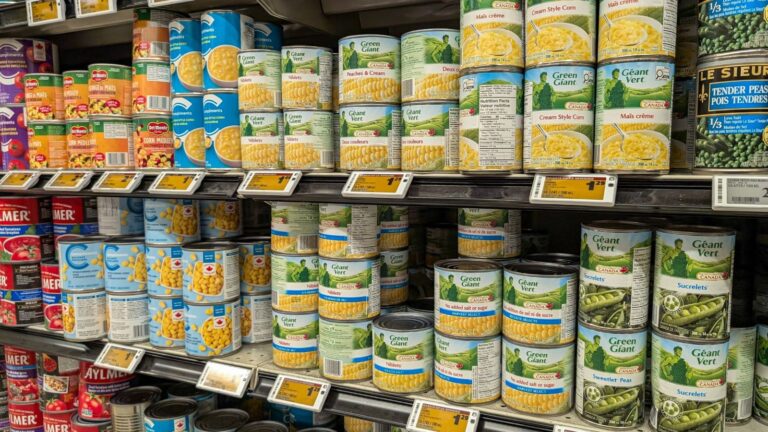
The trade restrictions concern specified canned vegetable goods rather than every vegetable product sold in Canada. Customs guidance for the earlier provisional safeguard identified products including canned corn, peas, green beans, wax beans, mixed vegetables, peas-and-carrots combinations, and certain varieties of beans and chickpeas. The relevant customs classifications determine whether an imported product falls within the scope of the measure, making precise product identification important for importers and distributors.
The earlier customs notice also distinguished vegetables packaged in metal cans from those sold in glass jars. Fresh, dried, and frozen vegetables were outside that provisional measure, as were certain prepared meals and substantially transformed vegetable products. The distinction concerning frozen vegetables is particularly important because the tribunal investigated both canned and frozen goods but found insufficient grounds to recommend a safeguard for the frozen category. Businesses should check the final implementing rules for the precise coverage beginning December 1, rather than assuming every product resembling a canned vegetable will face the same tariff. Differences in packaging, ingredients, and customs classification can materially affect import costs.
What the Tariffs Could Mean for Grocery Prices Across Canada
For Canadian households, the most immediate concern is whether additional import restrictions will make canned vegetables more expensive. A 50% tariff on above-quota imports does not automatically mean grocery prices will rise by the same percentage. Retail prices depend on wholesale agreements, transportation expenses, retailer margins, available inventories, and whether businesses absorb part of the additional costs. Products imported within the quota or originating from exempt countries will not face the new safeguard tariff.
Even so, affordability remains an important concern. Statistics Canada reported that grocery prices increased 2.0% year over year in October 2026, while the overall price of groceries had risen 31.9% compared with October 2020. Against that backdrop, further pressure on basic food products could be particularly difficult for households already managing higher living expenses. The actual effect of the vegetable safeguard remains uncertain. It will depend partly on how quickly quota allowances are used, how suppliers respond, and whether Canadian processors can provide competitively priced alternatives.
Why the Decision Matters for Farmers in Ontario and Quebec
The potential benefits extend beyond the companies that package vegetables into cans. Canadian farmers who grow crops for processing rely on factories and food manufacturers to purchase their harvests. When processors lose business to imported finished products, demand for domestically grown vegetables can weaken. Supporting Canadian canning operations could therefore help preserve purchasing relationships between farmers and processors, particularly for sweet corn, peas, beans, and carrots.
Ontario and Quebec have especially significant interests in the outcome. According to agricultural production figures highlighted by Farms.com, Ontario accounted for approximately 58.6% of Canada’s field vegetable production in 2025, while Quebec represented another 30.7%. Together, the provinces produced nearly 90% of the country’s field vegetables, although those figures include crops destined for markets other than canning. National field vegetable production exceeded 2.5 million tonnes in 2025, with farm-gate value surpassing $1.82 billion. Those numbers illustrate the broader economic importance of the vegetable industry and why maintaining dependable domestic processing facilities matters to farming communities.
The Tariff Will Gradually Decrease Before the Measures Expire in 2029
Although the initial 50% tariff is substantial, Ottawa has designed the safeguard to become less restrictive over time. The government confirmed that the import quota will gradually expand from 13 million kilograms in the first year to slightly more than 13.5 million kilograms toward the end of the measure. Meanwhile, the tariff on shipments exceeding the quota will decline from 50% to 40%. The arrangement is intended to comply with World Trade Organization rules requiring safeguard measures to become progressively less restrictive.
The tribunal originally recommended increasing the quota by 2% annually, bringing it to 13.26 million kilograms in the second year and approximately 13.53 million kilograms in the third. Its recommended tariff schedule was 50%, 45%, and 40%, respectively. Ottawa’s November 25 announcement confirmed the starting and ending figures without spelling out every intermediate step. The government’s decision to reserve quota portions for particular trading partners also differs from the tribunal’s recommendation for quarterly allocations without country-specific reservations. Importers will therefore need to examine the final administrative rules carefully when planning shipments and negotiating supply contracts.
Several Countries Are Exempt, and More Products Could Qualify for Exclusions
Despite the broad reach of the safeguard, Canada is maintaining exemptions for several trading partners. According to the Department of Finance, the measure will not apply to qualifying imports originating in Mexico, Chile, Israel, Colombia, South Korea, Panama, Peru, and certain developing countries. These exclusions reflect Canada’s international trade obligations and mean that the new 50% tariff will not apply equally to every overseas supplier. Importers may consequently reconsider where they source particular products, although availability, transportation costs, and existing commercial relationships will continue influencing those decisions.
Ottawa is also preparing a separate process to examine whether additional canned vegetable products should be excluded. The Canadian International Trade Tribunal has been directed to begin that inquiry by February 1, 2027. Businesses and other interested parties will be permitted to request exclusions for products that are not currently manufactured domestically and have no commercially viable Canadian production plan. The tribunal will review the evidence and recommend appropriate exclusions. This provision could help prevent restrictions from unnecessarily affecting specialty products that Canadian processors cannot currently supply, while preserving protection for goods that compete directly with domestic production.
Ottawa Faces a Bigger Test of Food Security, Competition, and Affordability
Protecting domestic food production is only one part of maintaining a competitive and resilient grocery system. In October 2026, Canada’s Competition Bureau confirmed that Nortera Foods and B&G Foods had abandoned a proposed transaction involving the Green Giant and Le Sieur Canadian vegetable businesses. The bureau had previously sought to block the deal over concerns that greater concentration in the canned and frozen vegetable market could produce higher prices and fewer choices. That intervention highlights a broader challenge: helping Canadian processors compete with imports while ensuring competition remains strong within Canada.
The country’s dependence on imported food adds another dimension. Agriculture and Agri-Food Canada’s National Food Security Strategy estimates that imports account for approximately 45% of preserved fruits and vegetables consumed in Canada, with 58% of those imports originating in the United States. Those figures cover a broader product category than the new canned vegetable safeguard, but they illustrate how closely Canadian food supplies are connected to international trade. Ultimately, Ottawa’s decision will be measured by whether it preserves domestic production and employment without imposing unnecessary costs on households or reducing access to affordable food.
This Options Discord Chat is The Real Deal
While the internet is scoured with trading chat rooms, many of which even charge upwards of thousands of dollars to join, this smaller options trading discord chatroom is the real deal and actually providing valuable trade setups, education, and community without the noise and spam of the larger more expensive rooms. With a incredibly low-cost monthly fee, Options Trading Club (click here to see their reviews) requires an application to join ensuring that every member is dedicated and serious about taking their trading to the next level. If you are looking for a change in your trading strategies, then click here to apply for a membership.