35,000+ smart investors are already getting financial news, market signals, and macro shifts in the economy that could impact their money next with our FREE weekly newsletter. Get ahead of what the crowd finds out too late. Click Here to Subscribe for FREE.
A classified Pentagon directive has introduced fresh uncertainty into one of North America’s most important military partnerships, even as Canadian officials insist cooperation with the United States remains unchanged.
U.S. Defense Secretary Pete Hegseth reportedly issued new restrictions on military engagement with Canada, prompting questions about Washington’s intentions toward its longtime ally. Canadian Defence Minister David McGuinty said on November 21, 2026, that he had not seen the document and had detected no disruption to existing military operations.
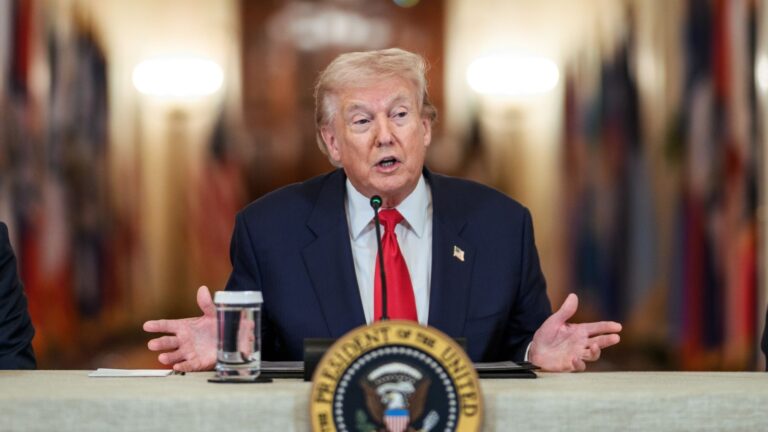
The Pentagon maintains that critical arrangements involving NORAD, NATO and intelligence sharing remain protected. American lawmakers have also suggested the restrictions primarily concern informal meetings and conferences. Nevertheless, the development arrives amid President Donald Trump’s increasingly confrontational relationship with Ottawa, raising concerns about whether political disagreements are beginning to influence the military relationship that has helped secure North America for generations.
A Classified Pentagon Memo Raises Questions About Military Cooperation
Trump’s Pentagon Restricts Military Contacts With Canada as Ottawa Says It Hasn’t Seen the Secret Memo
- A Classified Pentagon Memo Raises Questions About Military Cooperation
- Ottawa Says Military Operations Are Continuing Despite the Secret Directive
- A Republican Senator Says the Restrictions Focus on Informal Military Contacts
- NORAD, NATO and Intelligence Cooperation Remain Protected
- The Halifax Security Forum Becomes a Flashpoint in the Dispute
- Trump’s Trade War and Annexation Remarks Have Deepened the Divide
- Canada’s Rising Defence Spending Adds Another Layer to the Dispute
- Arctic Security Shows Why Canada and the U.S. Still Need Each Other
- Ottawa Is Expanding Military Partnerships Beyond Washington
- American Lawmakers Warn That the Relationship Cannot Be Taken for Granted
The controversy began with a report published by The Washington Post on November 20, citing U.S. officials familiar with a classified directive circulated the previous week. According to those officials, Defense Secretary Pete Hegseth had placed new limits on aspects of Washington’s military engagement with Canada. The newspaper said it had not reviewed the memo itself, leaving important details unanswered: which meetings require authorization, who approves requests and whether the rules apply to future exchanges already being planned. That uncertainty matters because a restriction on diplomatic contact is not the same as a suspension of military operations.
The Pentagon’s public explanation was considerably narrower than some of the alarm surrounding the report. Chief spokesperson Sean Parnell said engagements with Canada were being directed toward concrete U.S. defence objectives, including security across the shared continent and Canada’s NATO responsibilities. The department did not release the classified text, and there was no public evidence that it had ordered American forces to stop working with their Canadian counterparts. For now, the strongest confirmed conclusion is that a directive exists, while the precise boundaries of its restrictions remain undisclosed.
Ottawa Says Military Operations Are Continuing Despite the Secret Directive
At the Halifax International Security Forum on November 21, Canadian Defence Minister David McGuinty faced questions about a document he said he had not seen. Rather than describe the memo’s contents, he pointed to what military officials were reporting to him: cooperation was continuing. McGuinty said he had checked with senior Canadian military leaders and that they had found no evidence of a change in the working relationship. His response was a reassurance about current operations, not a claim to know every provision in Washington’s classified guidance.
He offered examples far removed from the political argument. Canadian and American vessels were working together in the Caribbean against drug trafficking, their militaries remained connected through missile-related systems, and fighter aircraft continued to be scrambled when North American airspace needed protecting. Such missions depend on established procedures and the ability to share information quickly. McGuinty described the relationship as business as usual, but his lack of access to the document left a separate question: whether new approval requirements could affect less-visible exchanges in the months ahead.
A Republican Senator Says the Restrictions Focus on Informal Military Contacts
Republican Senator Mike Rounds offered the clearest public account of what the restrictions might actually do. After receiving information from a Pentagon liaison, the South Dakota senator said the policy appeared to focus on informal contact rather than joint missions. He described approval requirements for U.S. defence personnel wishing to attend Canadian think-tank events or social gatherings and said meetings involving senior flag officers would be limited to those advancing departmental objectives. That is a different picture from any suggestion that the United States has severed military ties with Canada.
Rounds also indicated that much of the guidance resembled practices already in place for roughly a year or more. If his description is complete, the immediate operational consequences may be modest. Still, conferences and informal conversations are not simply ceremonial extras. They allow commanders, researchers and civilian specialists to exchange concerns before those concerns become emergencies. His remarks were based on a briefing rather than a publicly released copy of the memo, so the extent of any additional restrictions has yet to be independently established.
NORAD, NATO and Intelligence Cooperation Remain Protected
The Pentagon explicitly excluded three sensitive areas from the reported restrictions: defence intelligence cooperation, work through NATO and the North American Aerospace Defense Command, better known as NORAD. That carve-out is crucial because NORAD is not an occasional joint exercise. Established in 1958, it is a permanent binational command responsible for aerospace warning, aerospace control and maritime warning. Its surveillance and command arrangements help Canadian and American forces identify possible threats and coordinate responses across one connected airspace.
A routine radar alert or fighter interception illustrates why this distinction matters. When an aircraft approaches a sensitive area, personnel cannot treat the border as an administrative pause while political officials debate diplomatic protocol. Both governments rely on procedures designed for rapid coordination. Canada and the United States also participate in the wider Five Eyes intelligence partnership with Britain, Australia and New Zealand. Although the Pentagon specifically promised continued defence intelligence sharing, that assurance should not be mistaken for the release of the secret directive itself. Officials have described what is protected, but not every category of contact that might be constrained.
The Halifax Security Forum Becomes a Flashpoint in the Dispute
The timing placed the dispute directly in the spotlight at the Halifax International Security Forum, held in Nova Scotia from November 20 to 22. The event brought together senior Canadian defence officials, international policymakers, scholars and a bipartisan delegation from the U.S. Congress. Now in its 18th year, the gathering has traditionally given military and civilian leaders opportunities to compare assessments beyond formal negotiating rooms. That made it an unusually revealing setting for questions about whether American officials would need permission for precisely those kinds of conversations.
The complication had already been building. According to the Associated Press, restrictions introduced in 2025 prevented Pentagon officials from attending the forum, even though defence leaders from previous Republican and Democratic administrations had participated. American senators nevertheless attended in 2026, and Rounds used the occasion to explain his understanding of Hegseth’s directive. No interruption of a combat mission was required for the moment to become uncomfortable. A security conference devoted to strengthening cooperation had become a place where allies were asking whether ordinary professional contact was being discouraged.
Trump’s Trade War and Annexation Remarks Have Deepened the Divide
The memo did not emerge in a political vacuum. Since returning to the White House, Trump has repeatedly suggested that Canada could become the 51st U.S. state while imposing tariffs that have damaged the tone of bilateral relations. Canadian officials have answered with countermeasures, including tariffs on certain American steel and aluminum products. During a May 2025 Oval Office meeting, Prime Minister Mark Carney rejected the notion that Canada could be bought or absorbed, insisting that the country’s sovereignty was not negotiable. Those exchanges changed the atmosphere surrounding ordinary dealings between the neighbours.
The disagreement was still active when news of the military directive surfaced. On November 20, 2026, Trump said he was seeking a fair trade agreement with Canada but that more work was needed. The overlap of trade friction and defence restrictions makes the memo politically significant even if its operational effect is small. However, the publicly available reporting does not establish that Trump personally ordered specific limits on military meetings or that the classified directive was intended as retaliation for a particular Canadian trade position. Those remain separate questions from the confirmed diplomatic strain.
Canada’s Rising Defence Spending Adds Another Layer to the Dispute
Defence spending is another important part of the background. Trump has long argued that NATO partners should shoulder a greater share of the cost of their own security, and Rounds suggested the newly disclosed guidance might have been intended to reinforce that message to Canada. Yet Ottawa’s spending plans were already changing before the memo became public. The federal government says it reached NATO’s former benchmark of spending 2% of gross domestic product on defence in the 2025–26 fiscal year, a milestone announced by Carney in March 2026.
The next commitment is considerably larger. At NATO’s 2025 Hague summit, allies agreed to move toward spending 5% of GDP annually on defence and related security needs by 2035. That figure has two parts: at least 3.5% for core military requirements and up to 1.5% for areas such as critical infrastructure, cyber resilience and industrial capacity. Canada’s 2026 budget outlines additional investments, but meeting a spending ratio does not automatically resolve arguments about equipment, readiness or procurement. The Pentagon’s pressure and Ottawa’s larger commitments can therefore coexist with a military relationship that continues to function.
Arctic Security Shows Why Canada and the U.S. Still Need Each Other
No part of the partnership better illustrates their shared security interests than the Arctic. Canada’s northern approaches form part of the wider North American defence perimeter, where early warning can matter far more than the location of an international boundary. Ottawa has committed $38.6 billion over 20 years to modernizing its contributions to NORAD, including surveillance, command systems, weapons and northern infrastructure. Those investments are intended to improve the ability to detect and respond to threats long before they approach major population centres.
One concrete example is Canada’s Arctic Over-the-Horizon Radar program. In June 2026, Ottawa formalized arrangements with Australia to obtain technology for a system designed to detect threats at long range across northern approaches. The broader program exceeds $6 billion, with an initial capability anticipated in December 2029. Although the equipment is being developed through an Australian partnership, its purpose includes strengthening NORAD’s shared picture of potential dangers. That is why a dispute over permitted meetings cannot be treated as the entire defence relationship: Canada’s infrastructure plans and American coordination remain deeply connected, even as Ottawa seeks a wider group of suppliers.
Ottawa Is Expanding Military Partnerships Beyond Washington
Canada is also trying to build more defence options beyond its traditional dependence on U.S. suppliers. At Halifax on November 21, McGuinty announced that Canada had formally joined the NATO Innovation Fund, becoming its 25th participating ally and the first from North America. Ottawa committed more than $100 million, with Canadian technology companies gaining a pathway to investment from a fund with over €1 billion of deployable capital. The initiative targets fields such as artificial intelligence, quantum technology, advanced communications and autonomous systems.
The timing was striking, but Canadian officials did not present the decision as an immediate response to Hegseth’s memo. McGuinty said the drive to diversify military partnerships began roughly 18 months earlier. Canada is also pursuing more sovereign communications capabilities, including alternatives to reliance on Starlink for remote operations. Those efforts reflect a broader calculation that national defence requires dependable technology and the ability to choose between suppliers. Diversification does not necessarily mean abandoning American cooperation; it can instead reduce the risks of relying too heavily on any single foreign government or company when political conditions change.
American Lawmakers Warn That the Relationship Cannot Be Taken for Granted
Reaction among U.S. lawmakers revealed two different concerns. Rounds, a Republican, emphasized that the memo appeared to leave operations intact and largely formalized practices already in place. Democratic Senator Tim Kaine criticized the tone as unnecessary, while Senator Chris Coons warned that Washington should not widen divisions with a close ally when other countries are strengthening their own partnerships. Their comments came from a bipartisan congressional delegation attending the same Halifax conference where Canadian officials were trying to understand a document they had not seen.
The practical test now lies beyond the memo’s initial headlines. If NORAD coordination, intelligence exchanges and joint missions continue without interruption, the immediate military consequences may prove limited. If approval requirements discourage useful discussions between officers and researchers, the costs could be harder to measure and slower to surface. Publicly, Ottawa has identified no operational breakdown, and the Pentagon has promised to protect core defence arrangements. What remains unresolved is how far the classified restrictions reach and whether Washington will provide enough clarity for Canadian officials to plan future cooperation confidently. The relationship is functioning; the uncertainty around its rules is the new problem.
This Options Discord Chat is The Real Deal
While the internet is scoured with trading chat rooms, many of which even charge upwards of thousands of dollars to join, this smaller options trading discord chatroom is the real deal and actually providing valuable trade setups, education, and community without the noise and spam of the larger more expensive rooms. With a incredibly low-cost monthly fee, Options Trading Club (click here to see their reviews) requires an application to join ensuring that every member is dedicated and serious about taking their trading to the next level. If you are looking for a change in your trading strategies, then click here to apply for a membership.