35,000+ smart investors are already getting financial news, market signals, and macro shifts in the economy that could impact their money next with our FREE weekly newsletter. Get ahead of what the crowd finds out too late. Click Here to Subscribe for FREE.
A potentially dramatic shift in American diplomacy has put Ukraine’s NATO membership back on the negotiating table, raising questions about whether territorial concessions could become part of an agreement to end Russia’s war.
U.S. envoys Jared Kushner and Steve Witkoff have reportedly discussed offering Ukraine membership in the Western military alliance in exchange for withdrawing from territory it still controls in the Donbas region. However, the proposal remains under discussion, with no agreement between Ukraine, Russia, and NATO members.
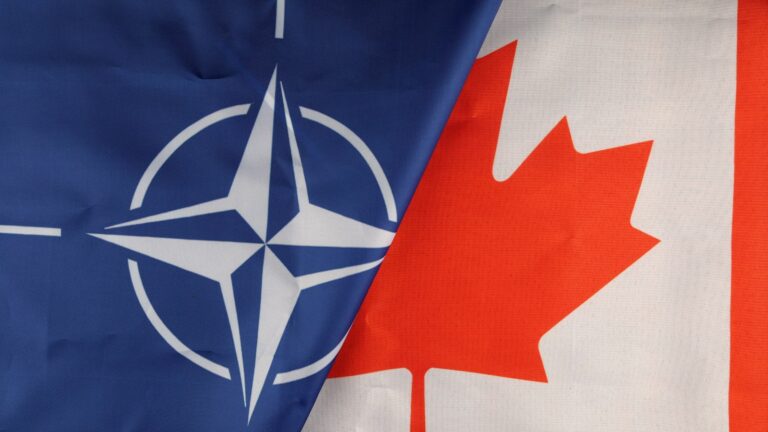
For Canada, the implications are significant. As a founding member of NATO, Canada would have to approve Ukraine’s admission alongside every other alliance member. The possibility places Ottawa in a consequential position as Western governments debate how to end the fighting without leaving Ukraine vulnerable to another Russian invasion.
American Negotiators Have Put NATO Membership Back on the Table
Trump Envoys Discuss Ukraine Joining NATO in Exchange for Territory — a Deal Requiring Canada’s Approval
- American Negotiators Have Put NATO Membership Back on the Table
- Washington Is Considering Two Very Different Peace Arrangements
- The Donbas Is More Than Territory on a Negotiating Map
- Why Canada Must Approve Any Ukrainian NATO Membership
- Ottawa Supports Ukraine’s NATO Ambitions but Rejects Forced Territorial Changes
- Russia Is Rejecting Even Compromised Versions of NATO Protection
- European Allies Are Divided Over Ukraine’s NATO Future
- NATO’s Article 5 Protection Would Fundamentally Change the Stakes
- Ukraine’s Citizens Could Have the Final Say on Territorial Concessions
- Canada’s Next Decisions Could Shape the Outcome of Peace Negotiations
The possibility of Ukraine joining NATO has resurfaced during diplomatic discussions involving American, Ukrainian, Russian, and European representatives. According to reporting published by The Wall Street Journal on November 20, 2026, Kushner and Witkoff have explored whether NATO membership could be offered in exchange for Kyiv withdrawing from territory in eastern Ukraine. The idea was discussed during meetings in Abu Dhabi on November 10–11 and in Dublin on November 12, where American representatives met Ukrainian President Volodymyr Zelenskyy and European officials. The discussions suggest Washington is examining options previously considered politically unrealistic.
However, raising an idea during negotiations is considerably different from formally offering NATO membership. It remains unclear whether President Donald Trump has endorsed the proposal or whether American officials consider it a realistic outcome. Trump previously opposed Ukrainian membership, citing Russia’s objections and the danger of a wider confrontation. A U.S. official has emphasized that multiple proposals are being explored and that any final settlement would need agreement from Ukraine and Russia. For now, the talks represent an attempt to identify possible compromises rather than evidence that a breakthrough has occurred.
Washington Is Considering Two Very Different Peace Arrangements
American negotiators have reportedly discussed two potential approaches to resolving the conflict. The first would involve Ukraine relinquishing the remaining parts of the Donbas region under its control in exchange for full NATO membership. That arrangement could provide Kyiv with access to the alliance’s collective-defence system, fundamentally changing its long-term security relationship with Western countries. In theory, the arrangement would exchange a painful territorial concession for a stronger guarantee against future aggression. Whether Ukrainian citizens or NATO governments would accept such a trade remains an entirely separate question.
The second option would freeze the conflict along the existing front line, allowing Ukraine to retain territory it currently controls while receiving security guarantees through a separate international treaty. The United States and potentially European governments would participate in those arrangements without Ukraine becoming a NATO member. Unlike full membership, these guarantees would depend on specifically negotiated commitments and enforcement mechanisms. A ceasefire that leaves forces in place would also not necessarily amount to legal recognition of Russian sovereignty over occupied territory. Both approaches face substantial obstacles, particularly because Kyiv and Moscow continue to disagree about borders, military deployments, and the country’s future security alignment.
The Donbas Is More Than Territory on a Negotiating Map
The Donbas region, consisting of the Donetsk and Luhansk regions of eastern Ukraine, has been central to the conflict since Russian-backed forces seized territory there in 2014. Russia currently occupies most of the region, but Ukrainian forces continue to hold strategically important positions in Donetsk. An assessment published by the Institute for the Study of War on November 19 estimated that Ukraine still controlled slightly more than 20% of Donetsk Oblast. That territory includes important defensive positions around cities such as Sloviansk and Kramatorsk, which form part of a fortified network developed over years of fighting.
For Ukrainian military planners, surrendering those positions could mean losing infrastructure and defensive lines that protect territory farther west. The human consequences are equally important. Donetsk regional authorities reported in mid-November that approximately 57,500 residents remained in Ukrainian-controlled parts of the region, including about 1,600 children. Thousands have already been evacuated as fighting threatens communities and essential services. Families who have spent years rebuilding their lives face the possibility of being displaced again. These realities help explain why Zelenskyy has resisted proposals that treat the remaining Ukrainian-held Donbas as an easily negotiable concession.
Why Canada Must Approve Any Ukrainian NATO Membership
Despite Washington’s influence over NATO, the United States cannot independently authorize another country to join the alliance. Article 10 of the North Atlantic Treaty requires unanimous agreement among existing members before a new country can be invited. With 32 members currently participating, that means every government, including Canada’s, must support Ukraine’s admission. Following an invitation, accession protocols would need to be signed and accepted by existing members through their respective national procedures. A single government refusing to consent could prevent Ukraine from becoming a full member, regardless of American support or Ukrainian willingness to accept a proposed settlement.
Canada’s role is established through decades of participation in NATO’s enlargement process. Ottawa was the first alliance member to ratify the accession protocols for Finland and Sweden, which joined in 2023 and 2024 respectively. A Ukrainian application would require Canadian agreement at the alliance level and completion of the applicable domestic approval process. This does not automatically mean a separate vote in Canada’s House of Commons would be required. Importantly, Canada’s approval would be necessary for NATO membership itself, not necessarily for every component of a separate Ukraine-Russia peace agreement. The distinction matters because diplomatic negotiations cannot replace NATO’s established accession requirements.
Ottawa Supports Ukraine’s NATO Ambitions but Rejects Forced Territorial Changes
Canada has consistently supported Ukraine’s eventual membership in NATO, making its position different from governments that have expressed reservations about admitting the country. During Zelenskyy’s visit to Calgary on September 10, 2026, Prime Minister Mark Carney signed a declaration reaffirming Canada’s support for Ukraine’s integration into the alliance. The document described Ukraine’s path toward membership as irreversible and committed Canada to helping modernize Ukrainian defence institutions. It also emphasized respect for Ukraine’s internationally recognized borders and rejected attempts to redraw those boundaries through military force.
That combination of commitments creates an important distinction for Ottawa. Supporting Ukraine’s membership does not mean Canada has endorsed exchanging Ukrainian territory for an invitation. On November 19, Defence Minister David McGuinty represented Carney at a meeting of the Coalition of the Willing and reiterated that any settlement must protect Ukraine’s sovereignty, independence, and territorial integrity. He also stressed that Ukraine must participate fully in decisions about its future. For Canadian policymakers, the challenge is therefore broader than simply deciding whether Ukraine belongs in NATO. They must consider whether any proposed arrangement would deliver lasting security while respecting the principles Canada has repeatedly defended.
Russia Is Rejecting Even Compromised Versions of NATO Protection
One of the largest obstacles to the proposed arrangement is Russia’s continued opposition to Ukrainian membership in NATO. On November 20, Russian Deputy Foreign Minister Sergei Ryabkov rejected suggestions that Ukraine could receive security arrangements resembling membership in the alliance. His comments followed statements from Kushner indicating that American negotiators believed Moscow had become more receptive to guarantees based on NATO’s Article 5 collective-defence principle. The conflicting accounts illustrate how far the parties remain from a shared understanding of Ukraine’s future security. A guarantee that Washington views as a potential compromise may still be considered unacceptable by Moscow.
Russian negotiating demands reportedly go considerably further than preventing Ukraine from joining NATO. According to The Wall Street Journal, a document circulated during discussions called for Ukraine to abandon its membership ambitions, restrictions on Western military deployments and equipment in the country, and an end to Western weapons deliveries. Moscow also reportedly demanded that NATO reduce its military posture in Eastern Europe toward 1997 levels. European negotiators characterized the demands as maximalist opening positions. Those proposals would affect not only Ukraine but also the broader European security order. Consequently, even a Ukrainian willingness to discuss territorial concessions would not necessarily persuade Russia to accept a NATO-based peace settlement.
European Allies Are Divided Over Ukraine’s NATO Future
European governments are also approaching the NATO membership question from different perspectives. Following a November 19 summit in Berlin, French President Emmanuel Macron said Ukraine’s admission to the alliance deserved renewed consideration. He argued that Ukraine’s experienced military could strengthen European security rather than simply create additional obligations for existing members. Germany has taken a more cautious approach, with reporting indicating that German officials were reluctant to pursue the membership question during the Berlin discussions. These differences demonstrate that European support for Ukraine does not necessarily translate into agreement on when or how the country should enter NATO.
The disagreement matters because NATO’s unanimous-consent requirement gives each member substantial influence over enlargement. Finland and Sweden experienced this process after applying for membership in 2022, when objections and ratification delays from existing allies complicated their accession. Ukraine presents an even more difficult case because it remains involved in an active war with Russia. European leaders must weigh the benefits of deterring future aggression against the possibility of assuming direct collective-defence obligations involving an unresolved conflict. Without a common position among NATO governments, American diplomatic support alone would not guarantee Ukrainian membership.
NATO’s Article 5 Protection Would Fundamentally Change the Stakes
At the centre of the debate is Article 5 of the North Atlantic Treaty, the provision establishing NATO’s collective-defence commitment. Under this principle, an armed attack against one member is considered an attack against all. Each ally is then required to assist through measures it considers necessary, potentially including military force. For Ukraine, gaining this protection would represent a significant departure from its current position as a country receiving extensive Western assistance without formal NATO membership. The prospect of such a guarantee explains why Ukrainian officials have continued pursuing admission despite years of opposition from Moscow.
However, full NATO membership and a separate treaty offering NATO-style protections are not interchangeable. A bilateral or multilateral security agreement could provide strong commitments, but its effectiveness would depend on its precise language, participating governments, military capabilities, and enforcement arrangements. Following the November 19 Berlin meeting, European leaders outlined possible guarantees involving continued military assistance, American-led ceasefire monitoring, and a multinational force supported by Washington. These measures remain proposals rather than a finalized security framework. The central challenge is ensuring any arrangement would deter another invasion without creating uncertainty about how participating countries would respond if Russia attacked again.
Ukraine’s Citizens Could Have the Final Say on Territorial Concessions
Even if American negotiators persuaded Russia and NATO members to support a settlement, Ukraine’s own democratic and constitutional requirements would remain a major obstacle. Zelenskyy has repeatedly rejected surrendering Ukrainian territory to Russia. Nevertheless, he acknowledged in November that a comprehensive settlement offering credible security guarantees, a strong Ukrainian military, and reconstruction funding could potentially be put before the Ukrainian public. Such a decision would extend beyond the presidency because Article 73 of Ukraine’s Constitution reserves questions concerning changes to national territory for an all-Ukrainian referendum. Any agreement involving formal territorial concessions would therefore face substantial domestic legal and political scrutiny.
Organizing such a referendum would also be extremely difficult under current conditions. Ukrainian law prohibits national referendums while martial law remains in force, and the wartime restrictions were extended in October 2026. Millions of Ukrainians have experienced displacement, while soldiers remain deployed and substantial territory is under Russian occupation. Ensuring meaningful participation by affected citizens would be a significant challenge. For Ukrainians whose homes lie in the contested Donbas, the issue is particularly personal. A negotiated withdrawal could determine whether families return to their communities, whether local institutions remain under Ukrainian authority, and how the country defines its future borders.
Canada’s Next Decisions Could Shape the Outcome of Peace Negotiations
Canada’s involvement in Ukraine’s defence has already extended well beyond diplomatic statements. In September 2026, the federal government reported that its combined assistance commitments to Ukraine had exceeded $26 billion since Russia’s full-scale invasion began in 2022. Ottawa has supplied military equipment, provided financial and humanitarian assistance, supported reconstruction, and maintained military training through Operation UNIFIER, which has been extended until 2029. Canada has also participated in the Coalition of the Willing, working with European and American partners to develop security arrangements intended to prevent renewed Russian aggression. Those investments give Ottawa a substantial interest in the outcome of the negotiations.
The coming diplomatic discussions could force Canada and its allies to confront difficult decisions about territorial concessions, collective defence, and the credibility of Western security commitments. If a formal Ukrainian NATO accession proposal emerges, Canada’s consent would be indispensable. If negotiators instead pursue security guarantees outside NATO, Ottawa would need to determine what responsibilities it is prepared to accept under any arrangement it joins. For now, no binding settlement has been announced, and significant disagreements remain between Ukraine, Russia, and NATO governments. The possibility of trading territory for membership has reopened a major debate, but resolving it will require far more than an agreement between Washington and Kyiv.
This Options Discord Chat is The Real Deal
While the internet is scoured with trading chat rooms, many of which even charge upwards of thousands of dollars to join, this smaller options trading discord chatroom is the real deal and actually providing valuable trade setups, education, and community without the noise and spam of the larger more expensive rooms. With a incredibly low-cost monthly fee, Options Trading Club (click here to see their reviews) requires an application to join ensuring that every member is dedicated and serious about taking their trading to the next level. If you are looking for a change in your trading strategies, then click here to apply for a membership.