35,000+ smart investors are already getting financial news, market signals, and macro shifts in the economy that could impact their money next with our FREE weekly newsletter. Get ahead of what the crowd finds out too late. Click Here to Subscribe for FREE.
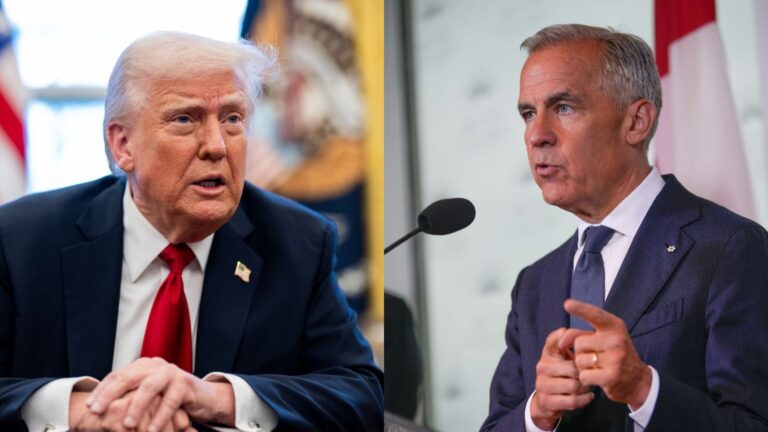
Trade talks between Ottawa and Washington have acquired an unexpected new bargaining chip: a pipeline associated with one of North America’s most contentious energy projects. At a White House news conference on November 20, U.S. President Donald Trump claimed Prime Minister Mark Carney wants to build a Keystone pipeline for the United States. The remark followed their meeting in China and earlier suggestions that an oil project could feature in a broader trade deal.
But a presidential comment is not a signed agreement. Ottawa has announced no new bilateral pipeline arrangement, and the company developing a related proposal has yet to make its final investment decision. Understanding the difference matters for workers, oil producers, landowners and communities along a possible route.
Trump Puts Keystone Back Into the Trade Conversation
Trump Says Carney Wants a Keystone Pipeline for the U.S., but No New Pipeline Agreement Has Been Announced
- Trump Puts Keystone Back Into the Trade Conversation
- Ottawa’s Account of the Meeting Does Not Confirm a Pipeline Deal
- Keystone and Keystone XL Are Not the Same Pipeline
- The Cancellation Still Shapes What Is Possible Today
- Prairie Connector Is the More Concrete Proposal
- Signed Shipping Contracts Still Fall Short of Construction Approval
- Canadian Oil Remains Important to American Refineries
- The Trade Deficit Argument Tells Only Part of the Story
- Communities Along the Route Have Questions of Their Own
- What Would Turn Trump’s Statement Into a Real Commitment?
Trump raised the pipeline during a November 20 White House news conference after meeting Carney at the APEC summit in Shenzhen. He said the prime minister wanted to “build a Keystone pipeline for us” and suggested Washington welcomed that prospect. But he immediately added that Canada would have to do considerably more to secure an acceptable trade arrangement. His remarks were framed as part of a negotiation, not as the announcement of a completed infrastructure agreement. For producers, the comments reignited debate over a pipeline abandoned years ago.
This was not his first reference to Keystone. On November 1, Trump said the two countries had the outlines of a trade deal and asserted that Canada would build and pay for a pipeline. He identified no financing plan or project contract. Repeating the idea can increase political pressure without resolving who would construct the line or what either government has promised.
Ottawa’s Account of the Meeting Does Not Confirm a Pipeline Deal
Carney and Trump met on November 18 in Shenzhen, the Prime Minister’s Office confirmed. That account said they discussed work toward a mutually beneficial trade arrangement intended to support jobs, affordability and Canadian sovereignty. It said the leaders would remain in contact. It did not announce a pipeline commitment, a construction schedule or an agreement to pay for a new cross-border oil project. That does not mean the subject never arose privately.
Canada’s trade minister, Dominic LeBlanc, offered another reminder of the unfinished negotiations on November 19. He said Ottawa was actively pursuing interim relief from existing U.S. tariffs but had not reached terms good enough for Canada’s economic interests. Steel, aluminum and automotive trade remained central concerns. For a factory worker worried about production moving south, or a business facing higher import costs, the difference between diplomatic optimism and an enforceable agreement is far more than a technicality.
Keystone and Keystone XL Are Not the Same Pipeline
The original Keystone is not a project awaiting revival. Since 2010, it has carried crude oil from Hardisty, Alberta, across the Prairies into the United States. Its network serves refineries in the Midwest and Gulf Coast. The Canada Energy Regulator describes Keystone as one of western Canada’s most important crude-export routes. In 2024, ownership of the existing system passed from TC Energy to South Bow through a corporate spinoff.
Keystone XL was a separate, proposed expansion. Its planned Canadian section would have stretched roughly 529 kilometres from Alberta toward the Saskatchewan–Montana border, adding capacity to move as much as 830,000 barrels of crude per day toward American markets. It was never completed. When Trump uses the shorter name “Keystone,” that can obscure the difference between an operating pipeline, an abandoned megaproject and a newer, commercially distinct proposal. Those distinctions determine which facilities, permits and companies are actually involved.
The Cancellation Still Shapes What Is Possible Today
Keystone XL became a symbol of competing economic and environmental priorities. Supporters viewed the proposed line as a way to expand Canadian oil exports and support construction employment along its route. Opponents challenged the climate consequences of expanding oil-sands transportation and the risks associated with a major new pipeline corridor. Changing U.S. administrations left companies and communities deeply uncertain about its future.
On January 20, 2021, President Joe Biden revoked the presidential permit for the cross-border project. TC Energy suspended construction and formally terminated Keystone XL that June, after reviewing its options with the Alberta government. The regulator reported that 146 kilometres of pipe had already been installed in Canada before work stopped. That unfinished infrastructure matters now because it may still have commercial value. Yet the existence of unused pipe does not automatically revive the original approval process or settle environmental and land-use questions for a different proposal.
Prairie Connector Is the More Concrete Proposal
Trump may have been referring to South Bow’s Prairie Connector, although he did not name it. South Bow says the project would run from Hardisty, Alberta, to the international border and connect with infrastructure being developed by U.S. partner Bridger Pipeline. Its Canadian section would cover roughly 530 kilometres, including about 380 kilometres of new pipe and 150 kilometres of preserved pipe from the abandoned Keystone XL effort.
The wider network would move crude through Montana toward Guernsey, Wyoming. South Bow and Bridger are also working on a proposed Liberty Bridge connection to Cushing, Oklahoma, where oil could access existing routes to Gulf Coast markets. This is not the same U.S. alignment as the original Keystone XL. Reusing pipe and previously studied corridors could ease development. But the project remains a proposal rather than an operating route, and its completion depends on additional decisions by companies and regulators.
Signed Shipping Contracts Still Fall Short of Construction Approval
Prairie Connector already has commercial customer commitments. In its third-quarter 2026 filings, South Bow reported binding 20-year transportation contracts covering 465,000 barrels per day from nine customers. Those contracts suggest there are companies prepared to pay for pipeline capacity if the project is built. They are not, however, a new Canada–U.S. government agreement, nor do they establish that Ottawa has undertaken to finance construction.
Trump also granted Bridger Pipeline Expansion a presidential permit on April 30, 2026, authorizing facilities at the Montana–Canada border. The permit does not replace the other laws, environmental reviews, land rights and approvals needed for the longer route. South Bow says it must still refine costs, obtain regulatory certainty, secure financing and engage affected communities. Its targeted final investment decision remains mid-2027. While the project steadily moves forward, a border permit and shipping contracts do not amount to a construction green light.
Canadian Oil Remains Important to American Refineries
Trump’s criticism of Canadian energy imports presents a paradox. The two countries already have a deeply integrated oil business. According to the Canada Energy Regulator, Canada supplied 63.4 per cent of all crude oil imported by the United States in 2025. American energy data show the U.S. received an average of about 3.9 million barrels of Canadian crude per day that year. Those oil flows do not depend on a new pipeline.
There are technical reasons. Much of Alberta’s output is heavy crude, while a significant share of American domestic production is lighter oil. Some large U.S. refineries efficiently process heavy grades, making Canadian supply commercially attractive despite plentiful domestic production. For Canadian producers, additional export capacity could increase access to buyers. For U.S. refiners, it could widen supply options. Neither benefit, however, guarantees cheaper gasoline or proves that a specific project makes financial sense.
The Trade Deficit Argument Tells Only Part of the Story
At the same November 20 news conference, Trump put America’s trade deficit with Canada at roughly US$80 billion. Official U.S. figures offer a different benchmark: the Bureau of Economic Analysis reported a goods-trade deficit with Canada of US$46.4 billion for 2025 on a census basis. Measures vary, but a trade deficit does not mean one country has been cheated. It measures trade in both directions.
Energy helps explain that imbalance. Americans purchase large amounts of Canadian crude because their refineries need it and the countries are connected by pipelines. Canada’s energy regulator calculated that 90.1 per cent of Canadian crude exports went to the United States in 2025. Ottawa is seeking access to other markets, reducing the consequences of dependence on any single customer. Adding another U.S.-bound pipeline could strengthen an important trading relationship while also deepening an existing vulnerability for Canadian exporters.
Communities Along the Route Have Questions of Their Own
A pipeline proposal carries local consequences. It can cross farmland, grazing country, waterways and places that carry cultural significance. In an October investigation, Grist and Montana Free Press described farmers who welcomed the possibility of payments for pipeline easements, particularly after difficult agricultural seasons. The same reporting documented concerns among Fort Peck tribal leaders about how a spill near their reservation could affect drinking-water systems. The perspectives do not divide neatly into two camps.
The U.S. Bureau of Land Management is preparing an environmental impact statement for the Bridger expansion, and its review includes land, water, wildlife and cultural considerations. South Bow says it is consulting landowners and Indigenous and Tribal Nations before making an investment decision. The questions are practical as well as political: who bears the disruption of construction, who benefits financially, and what protections would apply if something went wrong? Trade rhetoric alone cannot answer them.
What Would Turn Trump’s Statement Into a Real Commitment?
Several milestones would make the pipeline proposal concrete. Both governments could clarify whether their negotiations offer approvals, policy assurances or public money. Developers must resolve permits, land agreements, financing and connections. South Bow would also need to announce a positive final investment decision. Until those steps occur, a presidential endorsement should not be mistaken for a funded and authorized new pipeline.
Timing matters. LeBlanc has said an interim tariff arrangement could help lead into broader talks over the Canada–United States–Mexico trade agreement, while important sectoral duties may remain. Linking an oil project to those negotiations could increase its political significance, but it cannot erase the company’s independent commercial hurdles. As of November 21, 2026, the clearest conclusion is limited but consequential: Trump says Carney wants a Keystone pipeline, a related private-sector proposal is advancing, and neither government has announced the new bilateral pipeline deal implied by the rhetoric.
This Options Discord Chat is The Real Deal
While the internet is scoured with trading chat rooms, many of which even charge upwards of thousands of dollars to join, this smaller options trading discord chatroom is the real deal and actually providing valuable trade setups, education, and community without the noise and spam of the larger more expensive rooms. With a incredibly low-cost monthly fee, Options Trading Club (click here to see their reviews) requires an application to join ensuring that every member is dedicated and serious about taking their trading to the next level. If you are looking for a change in your trading strategies, then click here to apply for a membership.