35,000+ smart investors are already getting financial news, market signals, and macro shifts in the economy that could impact their money next with our FREE weekly newsletter. Get ahead of what the crowd finds out too late. Click Here to Subscribe for FREE.
An online sale can feel irresistible when the original price is crossed out and a countdown timer warns that the savings are about to vanish. But how much of that pressure reflects what is actually happening behind the screen?
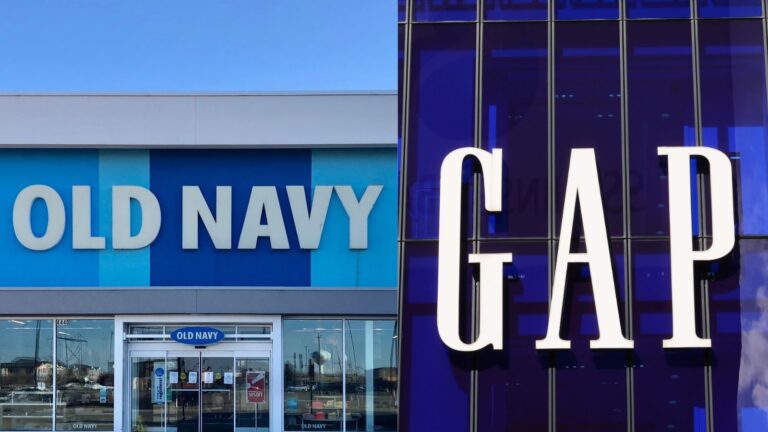
Canada’s Competition Bureau is examining promotional claims made by Old Navy and Gap, two apparel brands operated by Gap Inc. On November 18, 2026, the federal watchdog announced that a Federal Court order requires the retailers to produce records and written information for an ongoing investigation.
Investigators are examining the authenticity of regular prices, limited-time offers, stock warnings, popularity messages and advertised discounts.
Neither retailer has been found to have broken the law. The investigation centres on a fundamental promise of retail advertising: that the savings being promoted, and the urgency surrounding them, are genuine.
A Federal Court Order Moves the Investigation Forward
Canada Investigates Old Navy and Gap’s Sale Prices and Countdown Warnings as Federal Court Orders Records
- A Federal Court Order Moves the Investigation Forward
- The Real Meaning Behind an Advertised Regular Price
- Countdown Timers Are Being Examined for Genuine Deadlines
- Low-Stock Warnings Could Create Pressure to Purchase
- Popularity Claims Are Another Part of the Investigation
- Price Drop and Best Deal Claims Must Be Supported by Evidence
- CBC’s Earlier Price Tracking Raised Questions About Old Navy Discounts
- Canada Has Taken Action Against Similar Retail Marketing Tactics
- Gap Says It Is Cooperating as Potential Legal Consequences Draw Attention
- Black Friday Makes the Investigation Especially Relevant for Canadian Shoppers
The Federal Court’s order gives investigators access to something more revealing than promotional banners displayed to shoppers: records and written information from the retailers themselves. Both Old Navy and Gap operate physical stores and e-commerce websites in Canada, selling clothing and accessories under their respective brands. The information gathered could help investigators assess whether the companies have evidence to support the marketing claims they make. A discount is a statement about an item’s regular or previous price, while a countdown is a statement about when an opportunity ends.
The case is identified as Commissioner of Competition v. GAP (Canada Inc.) et al., 2026 FC 1416, dated November 17, one day before the Competition Bureau’s public announcement. Under Section 11 of the Competition Act, courts can require businesses to produce information relevant to an active inquiry. This authority allows investigators to examine evidence that may not be publicly accessible. Importantly, such an order does not mean that deceptive advertising has occurred. The Bureau is gathering information to determine whether particular marketing practices raise concerns under federal law.
The Real Meaning Behind an Advertised Regular Price
A crossed-out price creates a powerful impression. If a sweatshirt is advertised at $35 instead of a supposed regular price of $70, customers naturally see the possibility of saving $35. However, Canadian competition rules require retailers to substantiate the reference prices used in such comparisons. The regular amount cannot simply be an inflated figure chosen to make a discount appear more attractive. A product that is almost continuously sold below its advertised regular price can raise questions about whether the displayed savings accurately represent its usual selling conditions.
The Competition Bureau identifies two principal tests for establishing legitimate reference prices. Under the volume test, more than half of sales must occur at or above the claimed price during a reasonable period. The time test considers whether the product was genuinely offered at that price or higher for a substantial period, in good faith. The applicable circumstances can vary, particularly for seasonal merchandise. Investigators therefore have reason to examine historical prices, promotional schedules and transaction records. A genuine bargain and a misleading savings comparison can sometimes display exactly the same checkout price.
Countdown Timers Are Being Examined for Genuine Deadlines
Countdown clocks can transform an ordinary shopping decision into a race against time. A customer browsing for winter clothing might hesitate over a purchase until a digital clock suggests the discount will disappear within minutes. Such messages are among the practices being examined in the Old Navy and Gap investigation. The central issue is whether advertised deadlines accurately reflect the terms of the promotion. Limited-time offers are not automatically misleading, provided the restrictions are genuine and communicated accurately to customers.
The Competition Bureau has previously warned that countdown timers can become deceptive when they expire or reset while the advertised discount remains available. Academic research supports the importance of examining these tactics. A 2023 study published in Cleaner and Responsible Consumption found that limited-time messages influenced purchasing selections and were particularly effective among four online marketing techniques tested. Such findings help explain why inaccurate deadlines could influence consumer behaviour. Instead of evaluating a product based on its value, a shopper may focus on avoiding a supposedly disappearing opportunity. Whether that happened in the particular promotions under investigation remains to be determined.
Low-Stock Warnings Could Create Pressure to Purchase
Promotional pressure is not limited to prices and countdown clocks. Messages suggesting that merchandise is selling quickly or that only a few items remain can encourage shoppers to make immediate decisions. For clothing purchases, this pressure can be particularly effective when customers are searching for a specific size or colour. The Competition Bureau has confirmed that representations about limited product availability are part of its investigation into Old Navy and Gap. Genuine inventory warnings can be useful, but inaccurate ones can create a misleading impression of scarcity.
The difficulty for consumers is determining what a stock warning actually represents. A notification might refer to inventory for one size, a particular location or another limited category, without making that distinction obvious. The Bureau’s guidance states that scarcity claims should be accurate and that repeated low-stock warnings warrant scrutiny if merchandise remains readily available. Investigators may need to compare representations with the information supporting them to establish whether customers received a truthful picture. No publicly announced finding establishes that Old Navy or Gap used inaccurate inventory warnings. Their practices remain under examination.
Popularity Claims Are Another Part of the Investigation
Online retailers sometimes display information suggesting that other shoppers are viewing or purchasing the same product. These messages can make merchandise appear especially desirable and create concern that waiting could mean losing an opportunity. The Competition Bureau says its investigation includes representations about consumer interest, including how many people have viewed or purchased merchandise. The technique is often associated with social proof, where individuals interpret the behaviour of others as an indication of a product’s popularity, desirability or value.
The issue is whether the advertised activity reflects genuine consumer behaviour. In a 2023 publication examining online scarcity tactics, the Bureau discussed inventory counters that used arbitrary numbers rather than actual stock information. That discussion concerned broader online marketing practices, not a finding about Old Navy or Gap. International research also illustrates the wider problem. The OECD reported that more than 76% of websites examined in a 2024 international review displayed at least one potential dark commercial pattern. For Canadian investigators, the relevant question is more specific: whether the popularity claims under examination were accurate and presented without creating a misleading overall impression.
Price Drop and Best Deal Claims Must Be Supported by Evidence
Claims about previous prices can appear more convincing than general advertising about big savings. Expressions such as “Price Drop” and “Best Deal in 30 days” suggest that a retailer has compared its current offer against an identifiable pricing history. The Competition Bureau has specifically included these types of representations in its investigation. For shoppers, the difference matters because such statements communicate something beyond the amount charged at checkout. They suggest that a purchase offers measurable value compared with what was available earlier.
Determining whether a past-price claim is accurate can require information that ordinary customers cannot easily obtain. Relevant questions could include whether the same product was previously offered at the stated price, whether the advertised comparison covers the appropriate period and whether different sizes or styles affect the comparison. These are possible areas of examination, not established deficiencies in either company’s practices. The Bureau’s ordinary selling price guidance emphasizes that businesses must support savings representations with genuine pricing evidence. A convincing promotional label therefore needs more than an attractive design. Its underlying numbers must accurately support the impression presented to consumers.
The federal investigation comes after an earlier examination of Old Navy’s promotional practices attracted public attention. In February 2025, CBC Marketplace reported tracking prices for 10 clothing items between May and December 2024. Its research found that the monitored products were advertised on sale for at least half the tracking period. One men’s T-shirt never appeared at its regular price during the checks, while a pair of men’s shorts was discounted approximately 98% of the time. Such findings demonstrated how frequently repeated promotions can complicate the meaning of an advertised discount.
CBC also documented a women’s shirt advertised for $19.99 alongside a three-day sale countdown. When the countdown ended, the price did not return to a higher regular amount. Instead, it fell to $15.99. Gap Inc. declined to comment on Marketplace’s findings at that time. The observations came from a limited sample and did not constitute a legal determination that Old Navy violated competition law. The Bureau has also not publicly established that the current investigation resulted from CBC’s reporting. Nevertheless, the examples provide concrete context for concerns about reference prices, repeated promotions and countdown deadlines.
Canada Has Taken Action Against Similar Retail Marketing Tactics
The Competition Bureau has previously challenged businesses over combinations of inflated regular prices and questionable urgency messages. In September 2023, the watchdog announced that The Dufresne Group and its affiliates had agreed to pay a $3.25-million penalty, along with $100,000 in costs, to settle concerns about furniture marketing. Investigators had concluded that certain products were advertised using inflated regular prices and that some promotions continued after countdown timers expired. The companies also agreed to improve their compliance practices. That concluded enforcement matter differs from the ongoing investigation involving Old Navy and Gap.
Other retailers have faced information-gathering proceedings without an immediate finding of wrongdoing. In November 2024, the Bureau obtained a Federal Court order involving Leon’s and The Brick concerning potential issues with regular prices and limited-time promotions. During November 2025, the agency also reported an increase in complaints about inflated reference prices, prompting a warning to businesses ahead of Black Friday. These developments show that scrutiny of retail discounts is not confined to a particular clothing company or shopping season. Accurate pricing representations remain an established federal enforcement priority.
Gap Says It Is Cooperating as Potential Legal Consequences Draw Attention
Gap Inc. says it is cooperating with the Competition Bureau’s investigation. In a statement reported by Canadian news outlets following the November 18 announcement, the company said it takes its responsibility to provide clear and accurate information to customers seriously. It also emphasized that the Bureau has not found wrongdoing by either brand. That distinction remains important throughout the process. Investigators are examining potentially misleading practices, while the retailers have an opportunity to provide records and explanations relevant to the concerns identified.
The potential consequences of proven deceptive marketing can be substantial, although no penalty has been imposed against Old Navy or Gap in this investigation. Under Canada’s civil deceptive-marketing provisions, corporate monetary penalties can reach the greater of $10 million for a first violation or an amount calculated from the benefit derived from the conduct. Where that benefit cannot reasonably be determined, the applicable alternative can be 3% of annual worldwide gross revenue. Courts may also order businesses to stop prohibited practices or publish corrective notices. These are possible legal remedies, not indications that either retailer will necessarily face sanctions.
Black Friday Makes the Investigation Especially Relevant for Canadian Shoppers
The investigation comes shortly before Black Friday on November 27, 2026, when promotional messages are especially prominent across Canadian retail websites and stores. For shoppers, the most useful assessment of a bargain goes beyond the advertised percentage reduction. Comparing an item’s price over multiple days, examining similar merchandise and calculating the actual amount payable can provide a clearer picture of value. When a countdown appears, recording the displayed price and checking whether the offer remains available after its deadline can help determine whether the urgency was meaningful.
Consumers who suspect misleading claims can report their concerns through the Competition Bureau’s official complaint process. Details such as the product, date, advertised price and promotional message can help document what was displayed. A complaint alone does not establish that a business has broken the law, and the investigation’s eventual outcome remains uncertain. For Old Navy and Gap, the next step involves providing information required by the Federal Court order and allowing investigators to evaluate it. For Canadians comparing holiday discounts, the broader lesson is straightforward: a genuine sale should withstand scrutiny of its price history, without relying on pressure to make an immediate purchase.
This Options Discord Chat is The Real Deal
While the internet is scoured with trading chat rooms, many of which even charge upwards of thousands of dollars to join, this smaller options trading discord chatroom is the real deal and actually providing valuable trade setups, education, and community without the noise and spam of the larger more expensive rooms. With a incredibly low-cost monthly fee, Options Trading Club (click here to see their reviews) requires an application to join ensuring that every member is dedicated and serious about taking their trading to the next level. If you are looking for a change in your trading strategies, then click here to apply for a membership.