35,000+ smart investors are already getting financial news, market signals, and macro shifts in the economy that could impact their money next with our FREE weekly newsletter. Get ahead of what the crowd finds out too late. Click Here to Subscribe for FREE.
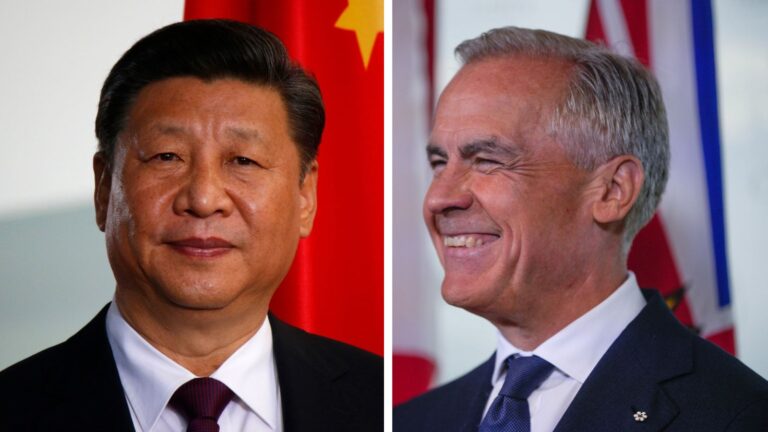
Canada’s automotive industry is facing a potentially historic shift as Prime Minister Mark Carney signals that Chinese automakers could become an alternative if trade negotiations with U.S. President Donald Trump fail to protect Canadian manufacturing jobs.
Speaking in Cambodia on November 16, 2026, Carney warned that American trade policies have weakened the deeply integrated North American automotive industry, forcing Canada to consider new international partnerships.
His remarks come ahead of a planned meeting with Chinese President Xi Jinping, where automotive investment is expected to be discussed.
With thousands of Canadian manufacturing jobs tied to cross-border production, the possibility of Chinese companies establishing operations in Canada raises major questions about employment, investment, vehicle prices, and the country’s economic relationship with its largest trading partner.
Carney Warns Canada Cannot Rely Entirely on American Automakers
Carney Says Canada Could Turn to Chinese Automakers if Trump Fails to Protect Canadian Auto Jobs
- Carney Warns Canada Cannot Rely Entirely on American Automakers
- More Than Three-Quarters of Canadian Auto Assembly Jobs Depend on U.S. Demand
- The Stellantis Crisis Shows Why Canadian Auto Jobs Are at Risk
- Carney Wants Chinese Companies to Build Vehicles in Canada, Not Just Import Them
- Doug Ford and Canadian Auto Unions Are Warning About the Risks
- Chinese Electric Vehicles Could Become More Affordable, but the Benefits Are Not Guaranteed
- Canada Is Also Looking Beyond China for New Automotive Investment
- Carney’s Upcoming Meeting With Xi Jinping Could Help Determine Canada’s Next Steps
Carney’s latest comments represent a significant warning about the future of Canada’s automotive relationship with the United States. For decades, Canadian factories have operated as essential components of a North American production system dominated by Ford, General Motors, and Stellantis. However, the prime minister believes Washington’s increasingly protectionist approach is undermining that arrangement. Speaking at the Francophonie Summit in Phnom Penh, Cambodia, he emphasized the importance of keeping Canadian automotive workers employed and productive, regardless of how negotiations with Washington unfold.
When asked whether the possibility of Chinese investment was intended to pressure Trump, Carney responded, “It’s not leverage. But action, reaction.” His message was that Canada would need to pursue other opportunities if American trade policies prevented Canadian factories from operating at their full potential. Importantly, Carney did not announce a new agreement with a Chinese automaker. Instead, he identified China, Europe, and Japan as potential sources of future investment if the existing North American manufacturing relationship continues to weaken.
Trump Trade Negotiations Have Become a Critical Test for Canadian Manufacturing
Canada and the United States remain engaged in difficult negotiations over the future of their trading relationship. On November 14, Carney revealed that he had recently held a lengthy conversation with Trump and senior American officials, describing progress toward a possible agreement. Nevertheless, he stressed that Ottawa would not accept terms that left Canadian automotive manufacturing economically unviable. Negotiations had already broken down in August over American demands that Canadian officials considered unacceptable, underscoring how challenging reaching a new arrangement has become.
The disagreement extends beyond political messaging. American tariffs introduced in 2025 imposed a 25% duty on affected vehicle imports, although qualifying vehicles receive an exemption for their U.S.-origin content under the Canada-United States-Mexico Agreement. Qualifying automotive parts also receive important exemptions. Canada responded with retaliatory measures targeting certain American-made vehicles. For manufacturers deciding where to invest billions of dollars in future production, these trade rules can influence whether expansion happens in Ontario, Michigan, or elsewhere. Carney’s challenge is securing predictable access to the American market while preventing Canada from becoming merely a customer for vehicles manufactured south of the border.
More Than Three-Quarters of Canadian Auto Assembly Jobs Depend on U.S. Demand
Statistics Canada data illustrate why the automotive trade dispute carries such enormous consequences. In 2024, approximately 76.4% of employment in Canada’s automobile and light-duty motor vehicle manufacturing industry was attributable to American demand. That represented roughly 27,000 jobs connected directly or indirectly to producing Canadian-built vehicles for the United States. The industry’s dependence on American customers makes it especially vulnerable to changes in tariffs, production decisions, and cross-border trade agreements.
The relationship is also much more complicated than simply shipping finished cars across the border. Engines, transmissions, electrical components, and other parts can move between Canada, the United States, and Mexico several times during production. A vehicle assembled in Ontario may contain components manufactured across North America, while American assembly plants often rely on Canadian suppliers. This interconnected system developed over decades and cannot easily be replaced overnight. The concern for Canadian workers is that manufacturers could gradually reorganize these supply chains around American plants if trade barriers make Canadian production more expensive or unpredictable.
The Stellantis Crisis Shows Why Canadian Auto Jobs Are at Risk
The dispute surrounding Stellantis offers a particularly stark example of the pressures facing Canadian auto manufacturing. The company abandoned plans to build the Jeep Compass at its Brampton, Ontario, facility and shifted the planned production to Illinois. More than 2,000 Canadian workers have been left without jobs, while Stellantis has signed an agreement to sell the idled factory to Canadian armoured vehicle manufacturer Roshel. For workers who had been expecting the plant to resume vehicle production, the developments have raised serious questions about their employment prospects.
Ottawa has responded forcefully. On November 12, Industry Minister Mélanie Joly announced that the federal government had issued Stellantis a formal notice alleging breaches of its funding agreement. The company was given 30 days to address the alleged violations or face potential legal action. In 2022, Ottawa committed up to $529 million to help retool Stellantis facilities in Brampton and Windsor for electrified vehicle production. The dispute demonstrates why government officials are increasingly concerned that Canadian plants could lose future vehicle programs even after receiving substantial public investment.
Canada Has Already Opened Its Market to Thousands of Chinese Electric Vehicles
Carney’s latest comments build on an important trade agreement reached with China in January 2026. Under that arrangement, Canada eliminated its previous 100% surtax on Chinese electric vehicles and established an annual import quota beginning at 49,000 vehicles. Within that quota, eligible vehicles face a much lower tariff of 6.1%. The new system took effect on March 1 and represented a significant departure from the trade barriers Canada had previously maintained alongside the United States.
The arrangement also provides for the quota to increase by 6.5% annually, with a growing share reserved for lower-priced electric vehicles. The initial allocation represented less than 3% of Canada’s new-vehicle market, limiting its immediate scale. In return, China agreed to reduce trade barriers affecting Canadian agricultural exports, including canola. Ottawa has presented the agreement as an opportunity to encourage Chinese investment in Canadian automotive manufacturing while improving access to China’s market for Canadian producers. However, allowing imported vehicles into Canada is fundamentally different from securing factories, research facilities, and permanent manufacturing jobs on Canadian soil.
Carney Wants Chinese Companies to Build Vehicles in Canada, Not Just Import Them
One of the most important distinctions in Carney’s proposal is the difference between selling Chinese vehicles in Canada and manufacturing them domestically. The prime minister has indicated that future Chinese investment would need to include meaningful production activity, appropriate labour standards, and manufacturing facilities capable of supporting Canadian employment. He also wants domestic supply chains to expand over time, potentially incorporating Canadian minerals and other materials used in electric vehicle batteries and components.
Such requirements could have significant implications for communities with existing automotive facilities and skilled manufacturing workforces. Rather than importing completed vehicles from overseas, a Chinese automaker could potentially establish a Canadian assembly operation supported by local suppliers, engineers, logistics companies, and battery producers. That could create opportunities extending beyond the factory itself. However, these remain potential outcomes rather than confirmed investments. Canada would still need to negotiate commercial commitments, establish workable regulatory arrangements, and attract manufacturers willing to invest substantial capital. The central question is whether opening the Canadian market can eventually produce durable Canadian jobs instead of simply increasing competition for companies already operating here.
Doug Ford and Canadian Auto Unions Are Warning About the Risks
Not everyone agrees that closer automotive cooperation with China would benefit Canadian workers. Ontario Premier Doug Ford has strongly criticized the federal government’s decision to allow Chinese electric vehicles into the Canadian market at reduced tariffs. On November 16, Ford reiterated concerns that state-supported Chinese imports could undermine domestic manufacturing employment. He has also warned that closer automotive ties with China could complicate Canada’s access to the much larger American market, where automakers depend on integrated production arrangements.
Unifor, Canada’s largest private-sector union, has also expressed significant reservations. In January, national president Lana Payne criticized the agreement to reduce barriers on Chinese electric vehicles, arguing that low-cost imports could weaken domestic investment and threaten Canadian jobs. Union members in Oshawa also passed a motion opposing Chinese-owned EV imports that could displace Canadian production. Their concerns expose a difficult policy dilemma: attracting Chinese capital might help create new manufacturing opportunities, but importing inexpensive vehicles without meaningful Canadian production could place additional pressure on existing factories and parts suppliers. For workers, the distinction between the two outcomes is crucial.
Chinese Electric Vehicles Could Become More Affordable, but the Benefits Are Not Guaranteed
For Canadian consumers, increased competition from Chinese automakers could eventually provide additional choices in a market where purchasing a new vehicle remains a major household expense. Chinese manufacturers have developed extensive electric vehicle production capabilities, and Canada’s import agreement is partly designed to improve access to lower-priced models. By the fifth year of the arrangement, half of the annual quota is scheduled to be reserved for vehicles with an import value of C$35,000 or less. However, that threshold refers to the value of vehicles entering Canada, not necessarily their final dealership prices.
Early import figures also suggest the transition may be gradual. According to data reported by Electric Autonomy Canada, 15,603 vehicles entered Canada under the new quota between March and August 2026, followed by just 603 in September. Importantly, Chinese-built vehicles are not necessarily vehicles from Chinese-owned brands; Tesla has also manufactured vehicles in Shanghai for export. Consumers could eventually benefit from a wider selection and stronger price competition, but lower tariffs alone do not guarantee significant savings. Vehicle safety requirements, distribution networks, servicing, and dealership costs will still influence what Canadians can actually purchase.
Canada Is Also Looking Beyond China for New Automotive Investment
Although Chinese manufacturers have attracted considerable attention, Carney has made clear that Canada’s potential alternatives extend beyond Beijing. European and Japanese automakers are also among the companies Ottawa could seek to attract if the traditional North American manufacturing arrangement becomes less reliable. Canada already has a history of automotive cooperation with Japanese manufacturers, while partnerships involving European and South Korean businesses have helped establish parts of its growing electric vehicle battery supply chain. Expanding these relationships could reduce Canada’s dependence on decisions made by American automakers.
The federal government has already outlined measures intended to strengthen domestic automotive investment. In February 2026, Ottawa announced an automotive strategy that included up to $3 billion from the Strategic Response Fund to support industrial investment, alongside additional regional support. In October, Canada and Ontario jointly announced another $2.5 billion in funding commitments over two years for automotive capital projects, including upgraded production lines and modern equipment. These measures reflect a broader effort to make Canadian factories more competitive. However, public incentives alone cannot guarantee new vehicle production; manufacturers must also see sufficient demand, predictable trade rules, and a compelling business case for investing in Canada.
Carney’s Upcoming Meeting With Xi Jinping Could Help Determine Canada’s Next Steps
Carney’s planned meeting with Chinese President Xi Jinping in Shenzhen this week could provide an early indication of how seriously both governments intend to pursue deeper automotive cooperation. The two leaders already established a framework for increased trade earlier in 2026, but attracting major automotive manufacturing investments would require much more detailed negotiations. Decisions about factory locations, labour protections, supply contracts, technology, and long-term market access would all need to be addressed before any significant new production could begin.
For now, Carney continues to describe negotiations with Washington as Canada’s priority. Preserving the existing North American automotive system would protect an industrial relationship built over generations, while diversification could offer new opportunities if that relationship deteriorates. The challenge is ensuring that efforts to attract Chinese investment do not create additional trade problems with the United States or weaken domestic manufacturers already facing intense competition. For Canadian workers, the outcome will ultimately be measured by factories remaining productive, new investments materializing, and sustainable jobs being created. Whether those opportunities come from American, Chinese, European, or Japanese manufacturers, the stakes for Canada’s automotive future are considerable.
This Options Discord Chat is The Real Deal
While the internet is scoured with trading chat rooms, many of which even charge upwards of thousands of dollars to join, this smaller options trading discord chatroom is the real deal and actually providing valuable trade setups, education, and community without the noise and spam of the larger more expensive rooms. With a incredibly low-cost monthly fee, Options Trading Club (click here to see their reviews) requires an application to join ensuring that every member is dedicated and serious about taking their trading to the next level. If you are looking for a change in your trading strategies, then click here to apply for a membership.