35,000+ smart investors are already getting financial news, market signals, and macro shifts in the economy that could impact their money next with our FREE weekly newsletter. Get ahead of what the crowd finds out too late. Click Here to Subscribe for FREE.
A political relationship that began with disagreements over provincial authority has produced an unexpected breakthrough on one of Quebec’s most urgent social issues. Prime Minister Mark Carney and Quebec Premier Paul St-Pierre Plamondon held their first face-to-face meeting on November 15, 2026, in Cambodia, where the sovereigntist leader said Ottawa agreed to let Quebec choose projects supported by federal homelessness funding.
The development comes as homelessness continues to rise across Quebec and both governments face pressure to deliver practical solutions. Beyond the political significance, the understanding could influence how billions of dollars in federal housing investments reach communities. However, the financial details and formal terms remain unresolved, making the next stage of negotiations crucial.
A First Meeting Halfway Around the World
Carney Agrees to Let Quebec Choose Homelessness Projects After First Meeting With Sovereigntist Premier
- A First Meeting Halfway Around the World
- Quebec Says It Secured Control Over Homelessness Project Selection
- Quebec’s Homelessness Crisis Has Grown by 20 Percent
- Plamondon Has Made Homelessness a Personal Political Priority
- Ottawa’s Homelessness Plan Involves Nearly $30 Billion
- Quebec’s Demand Reflects a Long-Running Fight Over Provincial Authority
- Research Suggests Permanent Housing Must Be Part of the Solution
- The Biggest Challenge May Be Turning Funding Into Coordinated Services
- Political Cooperation Does Not Mean Quebec’s Sovereignty Dispute Is Over
- An Economic Summit Adds Another Dimension to the Relationship
- The Next Test Is Whether Quebec Residents See Results
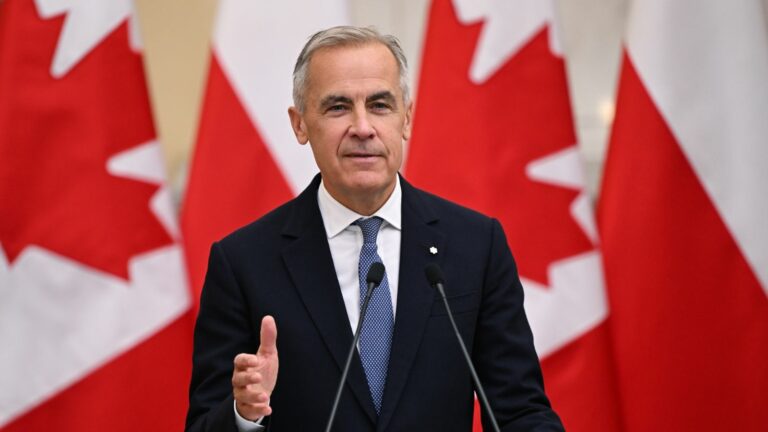
The first face-to-face meeting between Carney and St-Pierre Plamondon took place in Phnom Penh, Cambodia, during the 20th Francophonie Summit. The November 15 encounter lasted approximately 45 minutes, about 15 minutes longer than originally planned. It marked an important moment in relations between Ottawa and Quebec following the Parti Québécois victory in the October 5 provincial election, which brought a sovereigntist minority government to power.
The location itself was unusual. St-Pierre Plamondon had previously insisted that his first official meeting with Carney take place in Quebec City, while Ottawa proposed alternative locations. Neither side initially secured its preferred arrangement. Instead, the leaders met thousands of kilometres from Canada, with Canadian and Quebec flags displayed together. Despite their earlier disagreements, the atmosphere was reportedly cordial. Carney emphasized their shared interests in fighting homelessness, improving affordability and strengthening the economy. The two leaders even exchanged personal telephone numbers, establishing a direct communication channel that could become important as their governments confront more difficult disagreements.
Quebec Says It Secured Control Over Homelessness Project Selection
The most significant outcome was St-Pierre Plamondon’s announcement that Carney had agreed to let Quebec determine which homelessness projects would receive support through the federal funding framework. In a statement issued by the Quebec premier’s office, the provincial government said Ottawa would cooperate with Quebec’s project-selection process and coordinate financial contributions through the homelessness summit Quebec is organizing.
That commitment addresses a central concern for the Parti Québécois government: ensuring that federal money supports initiatives chosen according to provincial and community priorities. Quebec would be able to pursue projects suited to its own circumstances rather than simply adopting a uniform national approach. However, an important distinction remains. The November 15 announcement was an assurance reported by the Quebec premier, not a published bilateral funding agreement. No specific Quebec allocation, project list or detailed financial conditions were announced as part of the meeting. The understanding therefore represents a potentially important political commitment, but its practical effect will depend on the agreements and program rules that follow.
Quebec’s Homelessness Crisis Has Grown by 20 Percent
The urgency behind the negotiations becomes clearer when examining Quebec’s homelessness statistics. According to preliminary provincial figures released in April 2026, an estimated 12,077 people experienced visible homelessness across 15 participating regions during the April 15, 2025, count. That represented an increase of 1,873 people, or approximately 20 percent, compared with the 2022 count. Nearly 80 percent of those counted spent the night in temporary accommodation, while roughly 16 percent were in outdoor locations, including encampments.
Montreal remained the largest centre of the crisis, with approximately 5,036 people counted. However, the problem has increasingly spread beyond the province’s biggest city. Abitibi-Témiscamingue, the Laurentians, Côte-Nord, Laval and Saguenay–Lac-Saint-Jean all recorded increases exceeding 50 percent. The figures also have limitations: a one-night count does not capture everyone who experiences homelessness throughout the year, particularly people temporarily staying with friends or relatives. For governments allocating resources, that means the number of people requiring assistance could be considerably larger than the visible count suggests.
Plamondon Has Made Homelessness a Personal Political Priority
St-Pierre Plamondon has placed homelessness near the centre of his government’s agenda since taking office. During the September 2026 election campaign, the Parti Québécois pledged to invest $1 billion over four years with the objective of reducing homelessness by 50 percent by 2030. The proposed investment included $400 million for adapted housing and $600 million for social programs and prevention. After becoming premier, he also took responsibility for the homelessness portfolio himself, reinforcing its political importance.
The new government moved quickly with an emergency announcement on October 23. Quebec committed an additional $28 million to support approximately 200 winter-response projects across 16 regions. Combined with previously allocated money, the total funding for emergency winter measures reached $46 million. Officials expected the additional investment to help create more than 1,000 temporary shelter and warming spaces over the colder months. These measures address immediate survival needs, but they cannot independently resolve the underlying shortage of stable housing. That is why the agreement with Ottawa matters: Quebec’s longer-term objectives will require sustained investments beyond seasonal emergency assistance.
Ottawa’s Homelessness Plan Involves Nearly $30 Billion
Carney’s federal government has proposed a much larger national response through Budget 2026. The plan includes $11.2 billion over four years beginning in 2027–28, alongside another $17.8 billion in subsequent years, as part of an effort to put Canada on a path toward ending homelessness within a decade. The strategy combines emergency support, permanent housing, rental assistance and health-related services rather than relying on shelters alone.
The broader commitments include $6.5 billion to renew and strengthen Reaching Home and support for veteran homelessness, $5.5 billion for the Canada Housing Benefit, and $10 billion through Build Canada Homes to support approximately 25,000 supportive and transitional homes nationwide. Another $5 billion is designated for an Integrated Supports Fund, while $2 billion would support mental-health and addictions infrastructure. These are national commitments, not amounts assigned specifically to Quebec. The distinction is important because the province’s share has not been established through the November 15 meeting. Ottawa has also made clear that provincial and territorial governments will be expected to finance ongoing services and operations associated with many federally supported housing projects.
Quebec’s Demand Reflects a Long-Running Fight Over Provincial Authority
Quebec’s insistence on selecting its own projects is part of a broader disagreement about the federal government’s involvement in provincial responsibilities. Housing, social services and health-related programs involve overlapping funding and delivery arrangements, creating frequent debates about which government should establish priorities. The Parti Québécois has been particularly vocal about protecting Quebec’s jurisdiction and limiting federal conditions attached to financial assistance.
That position was formally reflected in a November 13, 2026, communiqué issued following a meeting of federal, provincial and territorial housing ministers. Quebec stated that it intended to retain control over housing planning, organization and management and sought its share of federal funding without conditions that infringed on its responsibilities. There is already a history of cooperation: the Reaching Home program has operated in Quebec through federal-provincial agreements that recognize local priorities and provincial service structures. The new understanding with Carney therefore builds on an established model. Its political significance lies in Quebec receiving a renewed assurance of project-selection authority under a major new funding initiative.
Research Suggests Permanent Housing Must Be Part of the Solution
Expanding emergency shelters can protect people during severe weather, but research increasingly emphasizes the importance of preventing homelessness and helping people remain permanently housed. A May 2026 study published by the Quebec research organization CIRANO identified rental prices as a significant structural predictor of homelessness. Its review also found that Housing First programs, which provide permanent housing with psychosocial assistance, can reduce the expensive use of public services, particularly health care.
The study estimated the annual economic costs associated with homelessness in Quebec at a conservative $776 million for 2022–23, including approximately $445 million in spending by community organizations. These figures illustrate why preventing homelessness can have consequences beyond individual housing budgets. For example, someone leaving an emergency shelter may need rental assistance, stable housing and continuing mental-health support to avoid returning to homelessness. Funding only one of those services may leave important needs unmet. Quebec’s control over project selection could help align these interventions with existing provincial health and social-service networks, although any improvement will ultimately depend on implementation.
The Biggest Challenge May Be Turning Funding Into Coordinated Services
Even when governments agree on priorities, delivering homelessness programs requires substantial coordination. Federal authorities can contribute construction capital, financing and program funding, while provinces and municipalities often manage the services, staffing and local approvals needed to make projects function. Budget 2026 explicitly recognizes this division, proposing that Ottawa support housing construction while provincial and territorial partners take responsibility for many ongoing operational and support costs.
The November 13 federal-provincial-territorial housing communiqué also shows that much of the administrative work remains unfinished. Ministers committed to advancing negotiations on bilateral agreements before the spring 2027 economic update, with senior officials assigned to develop a work plan. Quebec’s planned homelessness summit in early 2027 could provide an opportunity to connect provincial priorities with potential federal contributions. But project selection alone will not guarantee faster construction or better services. Agreements will still need to address eligibility, financing, operational responsibilities and results. A development cannot provide lasting benefits simply because its construction is funded; residents must also have access to the assistance needed to maintain stable housing.
Political Cooperation Does Not Mean Quebec’s Sovereignty Dispute Is Over
The November meeting stands in contrast to the tensions that developed shortly after the Parti Québécois returned to power. In October, St-Pierre Plamondon declined to participate in the Canada–European Union summit in Montreal after Ottawa refused to provide him with an official speaking opportunity. The Quebec premier argued that his province deserved a greater role in international discussions affecting its interests, while the federal government maintained its position concerning the format of the summit.
Those disagreements have not disappeared. The Parti Québécois remains committed to Quebec sovereignty, and its minority-government status adds another dimension to provincial politics. Carney, meanwhile, has emphasized cooperation with provincial governments while maintaining Ottawa’s authority over international negotiations. Their accommodation on homelessness suggests that the two leaders can separate certain practical policy questions from their deeper constitutional differences. That distinction may be politically valuable for both. Quebec can defend its authority while pursuing financial assistance, and Ottawa can demonstrate that it is prepared to cooperate with a sovereigntist government on shared social priorities. Neither outcome, however, settles the debate over Quebec’s political future.
An Economic Summit Adds Another Dimension to the Relationship
Homelessness was not the only area where the two leaders found common ground. St-Pierre Plamondon also announced Carney’s support for Quebec’s initiative to organize an international economic gathering in Quebec City in 2027. The proposed meeting would bring together economic and foreign-trade ministers from Francophonie countries, along with businesses interested in expanding commercial relationships. It is a separate initiative from Quebec’s planned homelessness summit.
The development is significant because both governments are seeking opportunities to diversify trade amid uncertainty surrounding relations with the United States. Quebec and Ottawa have different constitutional perspectives, but they share an interest in attracting investment and strengthening economic opportunities. Other matters, including immigration, housing, the Alto high-speed rail project and more detailed discussions about U.S. trade relations, were not fully resolved during the Cambodia meeting. The premier’s office said the leaders agreed to continue discussions and meet again in the coming weeks. Their ability to maintain that communication will provide an early indication of whether the constructive opening can extend beyond homelessness and economic diplomacy.
The Next Test Is Whether Quebec Residents See Results
The strongest measure of the agreement will not be the cordial atmosphere in Cambodia but whether it produces projects that improve living conditions. Quebec’s 2025 homelessness count identified more than 12,000 people experiencing visible homelessness on a single night, while the new provincial government has promised to cut that problem dramatically by 2030. Ottawa has set its own national objective of putting Canada on a path to end homelessness within 10 years. Both ambitions are substantial, and neither can be achieved through a political announcement alone.
The coming months should clarify how much federal funding Quebec can access, how projects will be selected and what measurable outcomes will be expected. Emergency shelter capacity, new supportive homes, successful transitions into permanent housing and reductions in repeat homelessness are all relevant indicators of progress. Municipalities and community organizations will also need sufficient resources to deliver programs consistently. For people facing another winter without secure accommodation, the practical question is whether government cooperation will produce reliable help quickly enough. Carney and St-Pierre Plamondon have established an opening. Turning it into lasting housing solutions will be the more difficult—and consequential—task.
This Options Discord Chat is The Real Deal
While the internet is scoured with trading chat rooms, many of which even charge upwards of thousands of dollars to join, this smaller options trading discord chatroom is the real deal and actually providing valuable trade setups, education, and community without the noise and spam of the larger more expensive rooms. With a incredibly low-cost monthly fee, Options Trading Club (click here to see their reviews) requires an application to join ensuring that every member is dedicated and serious about taking their trading to the next level. If you are looking for a change in your trading strategies, then click here to apply for a membership.