35,000+ smart investors are already getting financial news, market signals, and macro shifts in the economy that could impact their money next with our FREE weekly newsletter. Get ahead of what the crowd finds out too late. Click Here to Subscribe for FREE.
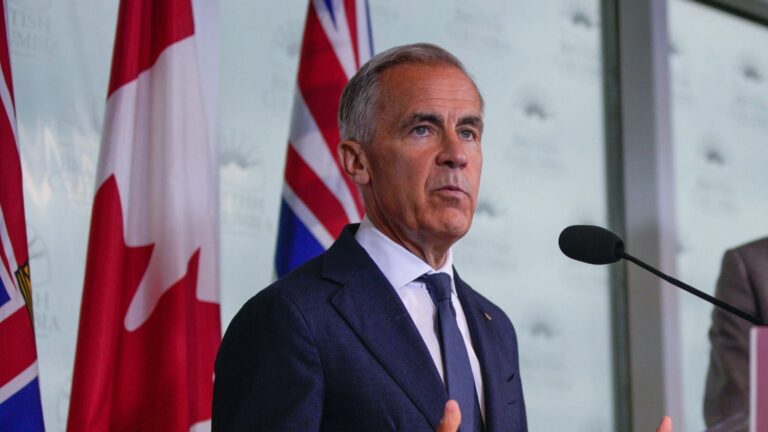
Prime Minister Mark Carney has committed up to $560 million in Canadian funding to protect tropical forests overseas, adding another major international environmental commitment at a time when government spending priorities remain under scrutiny at home.
Announced November 15, 2026, during a meeting with Brazilian President Luiz Inácio Lula da Silva in Manila, the four-year commitment will support an international conservation fund designed to reward countries for protecting their forests.
The announcement raises a familiar question about Canada’s financial priorities: how much should Ottawa commit to global environmental protection while Canadians face pressures involving housing affordability, everyday expenses and public services?
The government argues that protecting tropical forests benefits the global climate, including Canada. Yet the financial structure, potential benefits and accountability of this commitment deserve a closer examination.
Carney Announces a $560-Million Commitment During International Summit
Carney Commits Up to $560 Million to Protect Tropical Forests Abroad as Canadians Debate Spending Priorities
- Carney Announces a $560-Million Commitment During International Summit
- How the Tropical Forest Forever Facility Will Work
- Why Protecting Tropical Forests Matters Beyond Their Borders
- At Least 20% of Conservation Payments Must Support Indigenous Communities
- Canada’s Contribution Comes From an Existing Climate-Finance Commitment
- Rising Living Costs Make International Spending Politically Sensitive
- Ottawa Has Also Committed Billions to Environmental Protection at Home
- Canada’s Pledge Comes as the Global Fund Faces a Major Funding Deadline
- The Commitment Also Strengthens Canada’s Relationship With Brazil
- Accountability Will Determine Whether the Investment Delivers Results
Prime Minister Mark Carney announced Canada’s commitment on November 15, 2026, after meeting Brazilian President Luiz Inácio Lula da Silva on the sidelines of the Association of Southeast Asian Nations summit in Manila, Philippines. The government pledged an initial contribution of up to $560 million over four years to the Tropical Forest Forever Facility, an international initiative supported by Brazil and Norway. The announcement forms part of Ottawa’s broader international climate financing strategy and its efforts to strengthen relationships with major emerging economies.
Importantly, the $560 million represents a maximum commitment rather than money already transferred. Government documents confirm that Canada’s contribution will take the form of a loan financed through an existing international climate finance allocation managed by Global Affairs Canada. The funding is intended to help launch and capitalize the facility, allowing it to attract additional investment. That distinction matters when evaluating the announcement against other federal spending priorities.
How the Tropical Forest Forever Facility Will Work
Unlike conventional international aid programs that provide grants for individual conservation projects, the Tropical Forest Forever Facility is designed to create an ongoing financial incentive for keeping forests intact. The initiative will combine capital from governments, philanthropic organizations and private investors. That money will be invested in a diversified portfolio of financial assets, with net investment returns used to make conservation payments to eligible tropical forest countries. Payments will depend on verified forest protection rather than simply participating in the program.
The proposed system could eventually support more than one billion hectares of tropical forests across over 70 countries. Its financing model has contemplated payments of approximately US$4 annually for each eligible hectare, subject to conservation performance and available funding. Countries experiencing deforestation or forest degradation could receive reduced payments. The approach attempts to make protecting forests financially rewarding, although its long-term success will depend on investment returns, reliable monitoring and participating governments maintaining strong conservation policies.
Why Protecting Tropical Forests Matters Beyond Their Borders
Tropical forests are essential to global climate stability because they store enormous quantities of carbon, support biodiversity and help regulate rainfall. Their destruction can release stored greenhouse gases while reducing the capacity of ecosystems to absorb future emissions. These consequences extend beyond the countries where deforestation occurs, affecting environmental conditions, agricultural systems and economic stability across international borders.
Research published by the World Resources Institute in April 2026 found that approximately 4.3 million hectares of tropical primary rainforest disappeared during 2025. Although this represented a 36% decline from the record losses recorded in 2024, the amount of forest lost remained 46% higher than a decade earlier. Agricultural expansion, human activity and increasingly destructive fires remain important sources of pressure. For Canada, the government’s argument is that international forest protection addresses climate risks that cannot be contained within national boundaries. However, the environmental justification for spending abroad does not eliminate questions about whether the particular financing mechanism will deliver measurable results or whether its benefits justify the public money committed.
At Least 20% of Conservation Payments Must Support Indigenous Communities
One of the Tropical Forest Forever Facility’s central provisions requires at least 20% of its conservation payments to benefit Indigenous Peoples and local communities. These populations often depend directly on forests for food, livelihoods, cultural traditions and economic security. Many also play important roles in managing territories threatened by illegal logging, mining and agricultural expansion. The financial commitment is designed to recognize that effective conservation depends on the people living in and protecting forest ecosystems.
However, the requirement does not mean that 20% of Canada’s $560-million loan will automatically be paid to Indigenous communities. It applies to conservation payments generated by the facility, and the actual amounts will depend on its performance. Organizations involved in forest conservation have also raised concerns about how funding will reach communities, whether local representatives will have sufficient decision-making authority and how land rights will be protected. Ensuring that money reaches the intended beneficiaries will be an important test of the program’s credibility.
Canada’s Contribution Comes From an Existing Climate-Finance Commitment
The government has emphasized that the tropical forest contribution is not an entirely new funding allocation being added to its international climate commitments. Instead, the loan will come from financing already included in Canada’s broader international climate strategy. Ottawa’s 2026 Spring Economic Update outlined nearly $6 billion in additional international climate-related funding, contributing to an overall goal of more than $13 billion in climate financing for developing countries by 2031.
This distinction is important because a loan is financially different from a grant. A loan creates an expectation of repayment, although the government’s backgrounder does not specify the interest rate, repayment timetable or final risk exposure associated with Canada’s particular commitment. That leaves legitimate questions about how much the arrangement could ultimately cost taxpayers and how financial losses would be handled. Even when money comes from an existing funding envelope, policymakers must decide which eligible programs deserve support. The issue is therefore not simply whether the government has announced new spending, but whether this investment represents an effective use of public financial resources.
Rising Living Costs Make International Spending Politically Sensitive
For many Canadian households, government spending decisions are being judged against a difficult financial backdrop. Statistics Canada’s October 2026 Labour Force Survey found that 29.7% of Canadians aged 15 and older lived in households reporting difficulty meeting their financial needs during the previous four weeks. That was an increase from 27.7% in October 2025. Meanwhile, consumer prices rose 3.1% year over year in September 2026, and grocery prices remained approximately 33% higher than in September 2020.
Housing adds another layer of pressure. Statistics Canada reported in September 2026 that 23.2% of Canadian households had spent at least 30% of their income on shelter costs in 2024, meeting the statistical definition of unaffordable housing. Against that backdrop, international commitments involving hundreds of millions of dollars naturally invite questions about competing priorities. These economic figures do not establish how Canadians collectively feel about the tropical forest pledge. They do, however, illustrate why a government promising affordability improvements must clearly explain the benefits and financial risks of investments made overseas.
Ottawa Has Also Committed Billions to Environmental Protection at Home
Although the latest announcement focuses on tropical ecosystems outside Canada, the Carney government has also introduced substantial domestic conservation commitments. In March 2026, Ottawa launched its $3.8-billion A Force of Nature strategy, intended to protect and restore important habitats, expand conservation areas and support Indigenous-led environmental stewardship. The strategy contributes to Canada’s ambition of protecting 30% of its lands and waters by 2030. In September, Carney also announced $1.2 billion in measures to strengthen marine conservation, ocean monitoring and protection of coastal ecosystems.
Nevertheless, environmental pressures within Canada remain substantial. According to an October 2026 federal wildfire update, approximately 4.5 million hectares burned during the year’s wildfire season, forcing more than 33,750 people from their homes. Those events highlight the continuing need for domestic prevention, emergency preparedness and adaptation. Canada’s international conservation financing does not automatically replace domestic environmental programs, but the government faces the challenge of demonstrating that both sets of commitments produce worthwhile results while public resources remain limited.
Canada’s Pledge Comes as the Global Fund Faces a Major Funding Deadline
The Tropical Forest Forever Facility was officially launched during the COP30 climate summit in Belém, Brazil, in November 2025, but securing sufficient capital remains a major challenge. The initiative has been working toward an initial target of US$10 billion in sponsor capital by the end of 2026. On November 11, a coalition of philanthropic organizations announced plans to contribute US$88 million, while reporting that the facility remained approximately US$2.1 billion short of that initial goal. Canada’s subsequent commitment could help narrow the gap.
The funding deadline carries particular importance because Norway, one of the facility’s largest backers, has attached conditions to its proposed contribution of up to US$3 billion, including reaching the US$10-billion threshold. Ottawa’s announcement also describes a much larger long-term ambition: attracting $35 billion from sponsoring governments and organizations to mobilize as much as $140 billion in additional private investment. Those figures represent financing goals, not money already secured. The facility still needs sufficient capital, investor confidence and a sustainable financial model to deliver conservation payments at the scale envisioned.
The Commitment Also Strengthens Canada’s Relationship With Brazil
Beyond environmental protection, the announcement has diplomatic significance. Brazil is Canada’s largest merchandise trading partner in South America, with bilateral merchandise trade reaching approximately $14.7 billion in 2025, according to the Prime Minister’s Office. During their Manila meeting, Carney and Lula discussed opportunities to strengthen cooperation involving trade, critical minerals, energy and defence. Canada’s support for the tropical forest initiative therefore came alongside conversations about a broader economic and strategic relationship between the two countries.
The timing also reflects Canada’s wider efforts to diversify international partnerships. During the same visit to Manila, Carney announced the conclusion of trade negotiations with the Philippines and substantial progress toward an agreement with ASEAN. Supporting a major Brazilian environmental initiative places Canada alongside countries pursuing collective approaches to climate financing while reinforcing Ottawa’s engagement with South America. However, environmental cooperation should not be confused with a guaranteed economic return. There is no established evidence that Canada’s forest-financing commitment will produce specific trade concessions, new contracts or measurable commercial benefits for Canadian businesses.
Accountability Will Determine Whether the Investment Delivers Results
The ultimate measure of Canada’s commitment will be what the facility accomplishes after the announcement. The World Bank serves as trustee of the facility’s Financial Intermediary Fund and interim host of its secretariat, while Luxembourg is designated to host the investment arm. The United Nations Food and Agriculture Organization is also helping develop forest-monitoring requirements. Satellite technology will be important for measuring changes in forest cover, although researchers caution that gradual degradation, selective logging and other environmental damage can be difficult to capture accurately.
For Canadian taxpayers, meaningful accountability will require more than promises about future forest protection. Important information includes the final terms of Canada’s loan, amounts actually disbursed, financial performance, verified conservation results and how much funding reaches Indigenous Peoples and local communities. Transparent reporting will also be necessary to determine whether participating countries are genuinely protecting additional forest rather than merely receiving payments for existing practices. Canada’s $560-million commitment represents a significant opportunity to support international conservation, but its public value cannot be established by the size of the announcement alone. The eventual results will determine whether the investment demonstrates effective environmental leadership and responsible financial management.
This Options Discord Chat is The Real Deal
While the internet is scoured with trading chat rooms, many of which even charge upwards of thousands of dollars to join, this smaller options trading discord chatroom is the real deal and actually providing valuable trade setups, education, and community without the noise and spam of the larger more expensive rooms. With a incredibly low-cost monthly fee, Options Trading Club (click here to see their reviews) requires an application to join ensuring that every member is dedicated and serious about taking their trading to the next level. If you are looking for a change in your trading strategies, then click here to apply for a membership.