35,000+ smart investors are already getting financial news, market signals, and macro shifts in the economy that could impact their money next with our FREE weekly newsletter. Get ahead of what the crowd finds out too late. Click Here to Subscribe for FREE.
A major shakeup inside the White House is raising new questions about the future of Canada–U.S. trade relations, with President Donald Trump promoting one of his most influential advisers at a particularly sensitive moment for North American economic ties.
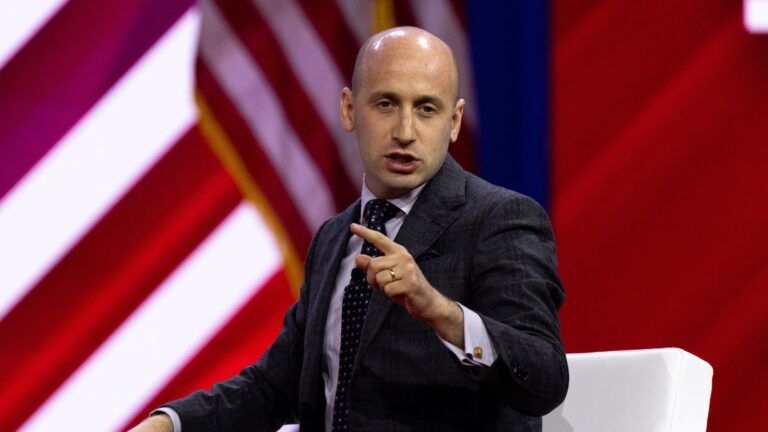
On November 6, 2026, Trump announced that Stephen Miller would replace Susie Wiles as White House chief of staff, effective November 9. The decision comes after Republicans suffered significant losses in the U.S. midterm elections and as Canada confronts continuing uncertainty surrounding tariffs and the future of the Canada–United States–Mexico Agreement (CUSMA).
Although Miller is best known for his uncompromising approach to immigration and domestic policy, his expanded authority could influence how Washington handles major international disagreements. For Canadian businesses, manufacturers and policymakers, the central question is whether his promotion will make difficult trade negotiations even harder.
A White House Leadership Change With Major Implications for Canada
Trump’s Stephen Miller Promotion Raises Questions About Canada’s Trade Negotiations and Washington’s Next Moves
- A White House Leadership Change With Major Implications for Canada
- Stephen Miller’s Hard-Line Approach Could Reshape Washington’s Priorities
- CUSMA’s Uncertain Future Makes the Timing Particularly Important
- Canada’s Trade Negotiations Were Showing Signs of Progress Before the Promotion
- Existing Tariffs Are Already Putting Pressure on Canadian Industries
- Canada’s Automotive Industry Faces One of the Biggest Risks
- Canadian Jobs and Economic Growth Could Be Caught in the Middle
- Democratic Midterm Victories Create a New Challenge for Trump
- Canada Is Expanding Trade Relationships Beyond the United States
- Washington’s Next Decisions Will Determine Whether Trade Tensions Ease or Escalate
Trump’s decision to promote Stephen Miller represents one of the most consequential personnel changes of his second administration. Miller, previously deputy chief of staff for policy and homeland security adviser, will become the president’s top White House aide on November 9. He replaces Susie Wiles, who helped manage Trump’s successful 2024 presidential campaign and subsequently became the first woman to serve as White House chief of staff. Trump praised Wiles while announcing that she would move to his political operation. The transition follows Republican losses in both chambers of Congress during the November 3 midterm elections, creating a more challenging political environment for the administration.
For Canada, the significance extends beyond the personalities involved. The White House chief of staff helps control presidential access, coordinate major policy decisions and establish priorities across the administration. Miller’s appointment does not automatically change American trade policy or make him the country’s chief trade negotiator. However, it places an adviser closely associated with Trump’s most confrontational policies in a position to influence how competing recommendations reach the president. That distinction matters when decisions about Canadian tariffs, manufacturing investments and continental trade agreements require coordination among several powerful American officials.
Stephen Miller’s Hard-Line Approach Could Reshape Washington’s Priorities
Miller’s political career has been built around an aggressive interpretation of presidential authority and an uncompromising approach to implementing Trump’s agenda. He joined Trump’s 2016 presidential campaign and subsequently became one of the principal architects of the administration’s immigration policies. During Trump’s second term, his responsibilities expanded beyond immigration into broader domestic and national security decisions. His promotion follows a midterm election in which voters expressed considerable frustration with the administration. Nevertheless, reporting from Reuters indicates that senior administration figures expect Miller to reinforce existing policies rather than encourage a major change in direction.
That approach has implications for how the White House responds to economic concerns. Reuters reported on November 8 that some business lobbyists were uneasy about Miller’s promotion, fearing he would be less receptive to corporate arguments than Wiles. For Canadian trade officials, the concern is not that Miller has announced a new tariff strategy. He has not. Instead, his leadership could make it more difficult for business groups to secure compromises based on supply-chain disruptions, consumer prices or investment risks. His willingness to defend Trump’s priorities could become increasingly important when political objectives and economic interests collide.
CUSMA’s Uncertain Future Makes the Timing Particularly Important
Canada’s trade relationship with the United States is already undergoing one of its most significant periods of uncertainty in decades. On July 1, 2026, representatives from Canada, Mexico and the United States participated in the first scheduled joint review of CUSMA, known in the United States as USMCA. Washington declined to extend the agreement in its existing form, citing unresolved concerns about trade practices and economic imbalances. That decision did not terminate the agreement. Instead, it triggered a process of annual reviews that will continue until the countries agree on an extension or the agreement reaches its eventual expiration.
The next review is scheduled for 2027, and the Office of the United States Trade Representative has already opened a consultation process. American businesses, organizations and interested parties have until January 12, 2027, to submit comments on the agreement’s operation. Miller’s promotion arrives during this preparation period, when policy priorities and negotiating positions are still being developed. Although formal trade authority remains with designated U.S. officials, White House leadership could influence which demands receive presidential attention. The distinction is especially important because refusing to extend CUSMA is not equivalent to withdrawing from it.
Canada’s Trade Negotiations Were Showing Signs of Progress Before the Promotion
Despite months of confrontation, Canadian and American officials recently reported encouraging movement toward a potential trade agreement. Prime Minister Mark Carney said on November 3 that negotiations had become more intensive following discussions with Trump. Carney indicated that Washington had stepped back from several demands concerning Canadian language protections, cultural policies and the country’s ability to negotiate independent trade agreements. He described the American position as asking less while offering more, although he emphasized that important disagreements remained unresolved. Trump also expressed optimism about reaching an agreement, suggesting that the two governments were approaching a mutually acceptable arrangement.
Those developments marked a significant improvement from August, when Canada suspended formal negotiations after rejecting American demands that Ottawa considered unacceptable. The breakdown was followed by additional tariffs and Canadian retaliation, leaving businesses facing higher costs and uncertain market access. However, negotiations had not produced a finalized agreement before Miller’s appointment. That creates a delicate situation for Ottawa. Any understandings reached with previous White House officials may still require approval at the highest political level. Miller’s arrival introduces uncertainty about the administration’s negotiating process, but there is no confirmed evidence that he has reversed the progress Carney described.
Existing Tariffs Are Already Putting Pressure on Canadian Industries
Canada’s immediate economic challenge is the extensive system of tariffs Washington has introduced since Trump’s return to office. In August 2026, the United States imposed additional 50% duties on approximately $27.6 billion worth of Canadian goods, prompting Ottawa to announce matching retaliatory measures. The affected products include manufactured goods, industrial materials and consumer products. These country-specific measures operate alongside separate American tariffs on sectors such as steel, aluminum and automobiles. Importantly, goods that qualify under CUSMA are not necessarily protected from every tariff. Some American measures explicitly apply to covered products regardless of their preferential trade-agreement status.
The consequences extend well beyond large multinational corporations. An Ontario manufacturer selling machinery to an American customer may face substantially different costs than a competitor producing the same equipment inside the United States. Canadian companies importing American components can also encounter higher costs because of retaliatory tariffs. These pressures influence pricing, hiring and decisions about where future production should occur. Ottawa has introduced financial assistance and other measures for affected industries, but such programs cannot fully replace predictable access to the American market. Miller’s promotion has not created any additional tariffs; the concern is whether negotiations under the new White House leadership will deliver meaningful relief from those already imposed.
Canada’s Automotive Industry Faces One of the Biggest Risks
Few Canadian industries have more at stake in the trade negotiations than automotive manufacturing. The industry’s dependence on the American market is substantial: more than 90% of Canadian-made vehicles are exported to the United States, according to federal government information. Canadian factories operate within production networks where engines, components and completed vehicles routinely move across international borders. Trump’s tariff policies have complicated these arrangements, with manufacturers facing additional expenses and uncertainty about future investment. On August 24, Trump threatened to increase tariffs on Canadian cars, trucks and automotive parts to 50% beginning January 1, 2027.
That threat remains particularly important because a higher tariff could change the economics of assembling vehicles in Canada for American buyers. The existing U.S. automotive tariff framework includes exemptions for certain qualifying components and the American content of eligible vehicles, making the actual cost more complicated than a single headline rate. Nevertheless, an additional escalation could encourage automakers to reconsider production allocations and future investments. For communities dependent on automotive employment, those decisions have consequences extending from assembly plants to parts suppliers and local businesses. Miller has not publicly announced a specific automotive trade proposal following his promotion, but his influence over administration priorities could matter as Washington considers whether to pursue tariff relief or another escalation.
Canadian Jobs and Economic Growth Could Be Caught in the Middle
The economic consequences of prolonged trade tensions are already measurable. In an October 20 assessment, Canada’s Parliamentary Budget Officer estimated that trade measures introduced since early 2025 could reduce the country’s real GDP by 1.4% over five years compared with a scenario without the additional restrictions. If the tariffs remain permanent, the assessment projected employment could decline by as many as 185,000 jobs at the peak of their impact. These figures are projections, not job losses that have already occurred. They illustrate the potential cost of allowing the current trade conflict to continue without a durable resolution.
Individual manufacturers are experiencing the uncertainty more immediately. Reuters reported on November 5 that Canadian kitchen cabinet producers were preparing for American tariffs scheduled to double to 50% in January. Quebec-based manufacturer Cabico, which previously shipped approximately 90% of its products to the United States, has reduced shipments and eliminated jobs. Its founder has even considered moving some production south of the border. Such decisions demonstrate why Canada’s negotiations involve more than diplomatic disagreements. For workers facing reduced hours, layoffs or uncertainty about their employers’ future, the success or failure of trade discussions can have a direct effect on household finances and community stability.
Democratic Midterm Victories Create a New Challenge for Trump
Miller’s promotion comes as the balance of political power in Washington is changing. Democrats won control of both the House of Representatives and the Senate in the November 3 midterm elections, creating an opportunity to challenge Trump’s tariff policies through legislation and congressional oversight. Democratic Senator Ron Wyden, who is expected to lead the Senate Finance Committee when the new Congress convenes, has identified tariffs on Canadian goods as a potential priority for repeal. Senate Democratic leader Chuck Schumer also introduced legislation in September intended to eliminate several of Trump’s trade measures.
Carney welcomed these developments on November 6, arguing that restoring freer trade would benefit American families and workers as well as Canadians. However, he acknowledged that he had not discussed potential tariff-repeal legislation directly with Democratic lawmakers. Congressional opposition also does not guarantee that the duties will disappear. Trump retains substantial executive authority over trade and could veto legislation reversing his policies, requiring support from two-thirds of both chambers to override him. For Ottawa, the election creates an additional source of political pressure on Washington but not an immediate alternative to negotiations. Miller’s promotion may strengthen Trump’s determination to defend his policies against that pressure.
Canada Is Expanding Trade Relationships Beyond the United States
While Ottawa continues negotiating with Washington, the federal government is also pursuing a longer-term strategy to reduce Canada’s dependence on the American market. Budget 2026 reaffirmed the government’s objective of doubling exports to non-U.S. destinations by 2035, potentially generating approximately $300 billion in additional annual trade. On November 4, Carney announced plans to travel to Ireland, the Philippines, Cambodia and China between November 11 and 19. The trip will include discussions aimed at strengthening commercial partnerships, attracting investment and expanding Canadian access to international markets.
These efforts could become increasingly important if Washington maintains a more confrontational trade policy. Canada already has free trade agreements covering 51 countries, providing Canadian businesses with access to consumers across Europe, Asia and other regions. However, replacing American demand would be extraordinarily difficult for industries built around integrated North American production. An Ontario automotive plant cannot simply redirect all its vehicles to Asia without addressing transportation costs, regulatory requirements and existing supply arrangements. Diversification therefore offers a longer-term economic safeguard rather than an immediate substitute for a functioning Canada–U.S. trade relationship. Miller’s promotion adds another reason for Ottawa to strengthen alternative partnerships while continuing to seek an acceptable agreement with Washington.
Washington’s Next Decisions Will Determine Whether Trade Tensions Ease or Escalate
The immediate question is how Miller will approach his new responsibilities once he formally becomes White House chief of staff on November 9. Canada’s negotiating relationships with American officials remain important. Canadian Trade Minister Dominic LeBlanc said on November 4 that the U.S. election results would not change Ottawa’s negotiating approach and indicated he expected further discussions with Commerce Secretary Howard Lutnick and U.S. Trade Representative Jamieson Greer. Those officials remain central to resolving outstanding disagreements. At the same time, the prospect of additional American automotive tariffs on January 1, 2027, creates an important deadline for manufacturers and government negotiators.
Several developments will provide clearer evidence of Washington’s direction: whether bilateral discussions intensify, whether proposed tariff reductions receive presidential approval, whether American officials introduce new demands, and how the administration prepares for the 2027 CUSMA review. The White House is also experiencing personnel changes beyond Miller’s appointment, underscoring the importance of monitoring who gains responsibility for major policy decisions. For Canada, the challenge is to preserve recent negotiating progress without surrendering essential economic interests or national sovereignty. Miller’s promotion may signal a harder-edged White House, but its consequences for Canadian trade will ultimately depend on the decisions Trump makes and the agreements both governments are prepared to accept.
This Options Discord Chat is The Real Deal
While the internet is scoured with trading chat rooms, many of which even charge upwards of thousands of dollars to join, this smaller options trading discord chatroom is the real deal and actually providing valuable trade setups, education, and community without the noise and spam of the larger more expensive rooms. With a incredibly low-cost monthly fee, Options Trading Club (click here to see their reviews) requires an application to join ensuring that every member is dedicated and serious about taking their trading to the next level. If you are looking for a change in your trading strategies, then click here to apply for a membership.