35,000+ smart investors are already getting financial news, market signals, and macro shifts in the economy that could impact their money next with our FREE weekly newsletter. Get ahead of what the crowd finds out too late. Click Here to Subscribe for FREE.
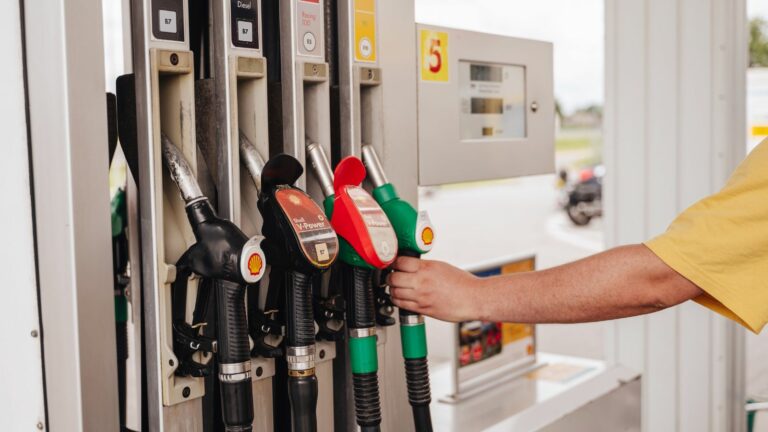
Canada’s grocery shoppers may be heading into another expensive winter, even as recent inflation figures suggest some relief at supermarket checkouts. A dramatic increase in diesel costs, combined with renewed trade tensions between Canada and the United States, is threatening to push food prices higher.
Statistics Canada reported that diesel producer prices surged 75% in August 2026 compared with the same month last year. Economists warn that higher transportation costs could eventually affect everything from fresh vegetables to packaged groceries.
The timing is particularly concerning. As Canada’s growing season ends, supermarkets increasingly depend on imported produce transported over long distances.
Meanwhile, President Donald Trump’s escalating trade dispute with Ottawa is creating additional costs for Canadian farmers and food manufacturers, raising concerns that households already struggling with expensive groceries could face another financial squeeze.
Canada’s 75% Diesel Price Increase Is Raising Alarms
Canadian Diesel Prices Rose 75% in a Year, and Economists Warn Trump’s Trade Fight Will Add to Grocery Pressure
- Canada’s 75% Diesel Price Increase Is Raising Alarms
- Higher Diesel Costs Affect Nearly Everything in a Grocery Store
- Winter Could Make Fresh Vegetables Particularly Vulnerable
- The Iran Conflict Is Behind Much of the Fuel Price Shock
- Trucking Companies and Railways Are Already Passing On Higher Costs
- Trump’s Trade Fight Is Creating Another Layer of Food Inflation Risk
- Farm Credit Canada Estimates Hundreds of Millions in Potential Tariff Costs
- Grocery Prices Are Already 29% Higher Than Five Years Ago
- Economists Expect More Canadians to Change Their Shopping Habits
- Grocery Stores May Delay Price Increases, but That Relief Has Limits
- Ottawa Has Extended Fuel-Tax Relief, but Bigger Price Pressures Remain
Statistics Canada’s latest producer-price figures reveal the scale of the energy shock affecting Canadian businesses. According to the agency’s September 17 release, diesel fuel prices charged by Canadian producers increased 75% year over year in August 2026. Prices also climbed 9.6% compared with July, making diesel one of the largest contributors to rising petroleum product prices during the month. The broader Industrial Product Price Index increased 13.5% annually, illustrating how energy costs have become part of a wider increase in manufacturing expenses.
The distinction between producer and retail prices is important. The 75% increase measures prices received by petroleum producers rather than a uniform increase at every Canadian fuel pump. Nevertheless, retail diesel has also become substantially more expensive. By late September, national pump prices had surpassed $2.64 per litre, according to reporting by The Canadian Press. For trucking companies, farmers, and businesses operating diesel-powered equipment, these increases represent genuine operating expenses. Unlike optional purchases that can be postponed, fuel is necessary to keep food moving through the economy.
Higher Diesel Costs Affect Nearly Everything in a Grocery Store
Diesel plays a much larger role in Canada’s food supply chain than most shoppers encounter directly. Farmers depend on it to operate tractors, combines, irrigation equipment, and transport vehicles. Once crops are harvested, diesel-powered trucks move agricultural products to processors, distribution centres, and supermarkets. Refrigerated trailers also require energy to preserve temperature-sensitive foods during transportation. Consequently, higher fuel prices can affect a product several times before it reaches the checkout counter.
University of Guelph food economist Mike von Massow explained to The Canadian Press on October 9 that rising diesel prices tend to push food costs higher across multiple categories. The economic effect is cumulative rather than confined to trucking companies. A food processor might face more expensive incoming ingredients, while the wholesaler purchasing its products pays additional freight charges. The retailer then encounters higher delivery costs when stocking shelves. Not every increase is immediately passed along, but businesses eventually must decide how much they can absorb without undermining profitability. That is why a diesel price shock can influence groceries long after the original fuel increase occurs.
Winter Could Make Fresh Vegetables Particularly Vulnerable
Canada’s approaching winter creates another concern for economists examining food inflation. During warmer months, domestically grown produce helps reduce dependence on long-distance transportation. Local farms can supply many grocery staples, shortening the distance between harvesting, distribution, and consumption. However, as temperatures fall, Canadian supermarkets increasingly rely on vegetables and fruit transported from the United States and overseas. These shipments can involve lengthy journeys, refrigerated equipment, and several transportation companies.
Von Massow identified Thanksgiving as a possible turning point for grocery prices because Canada’s food supply gradually shifts away from the domestic harvest. Fresh vegetables may be especially vulnerable because transportation and refrigeration account for meaningful portions of their final cost. A refrigerated truck bringing lettuce or tomatoes from an American growing region must cover fuel expenses regardless of how much customers are willing to pay. Retailers may initially absorb some additional costs, but prolonged increases become harder to manage. The actual impact will vary by product, supplier, and region. Still, economists are warning that the benefits of Canada’s summer growing season could fade just as elevated transportation costs begin reaching supermarket shelves.
The Iran Conflict Is Behind Much of the Fuel Price Shock
The extraordinary increase in diesel prices is closely connected to the conflict involving Iran and disruptions to international energy supplies. The war has affected shipping through the Strait of Hormuz, a critical passage for oil and petroleum products leaving the Persian Gulf. Reduced shipments, refinery disruptions, and uncertainty surrounding energy exports have tightened supplies of diesel and other refined fuels. These conditions affect Canadian prices because petroleum products are traded in international markets, even when the fuel itself is refined domestically.
The Canadian Press reported on September 29 that retail diesel prices were approximately 59% higher than before the Iran war, reaching levels above previous Canadian records. Similar pressures have affected American and European markets. In early October, G7 countries announced plans to release 100 million barrels of oil and refined petroleum products from emergency reserves to ease the international shortage. However, analysts have cautioned that restoring stable supplies could take time. Refineries, pipelines, shipping networks, and storage systems cannot immediately compensate for months of disruption. Even a diplomatic improvement would not necessarily produce an equally rapid reduction in transportation costs.
Trucking Companies and Railways Are Already Passing On Higher Costs
The transportation industry provides some of the clearest evidence of how expensive diesel has become. Mike Millian, president of the Private Motor Truck Council of Canada, told The Canadian Press that a round-trip truck shipment between Montreal and Toronto that would have cost approximately $850 at the beginning of the year could now cost around $1,400. Fuel is a major component of trucking expenses, alongside wages, maintenance, insurance, and equipment. Such increases can significantly alter the economics of delivering relatively inexpensive products over long distances.
Rail transportation is experiencing similar pressure. Canadian National Railway and Canadian Pacific Kansas City fuel-surcharge schedules indicated that some October charges were as much as 73% higher than levels recorded in early August. Those additional expenses can spread through distribution networks before appearing in wholesale and retail prices. Independent grocery businesses may be especially exposed because their profit margins are relatively thin. Gary Sands of the Canadian Federation of Independent Grocers warned that a retailer operating with margins around 2% has limited capacity to absorb repeated transportation surcharges. For shoppers, that creates the possibility of higher prices even when the underlying cost of producing a food item has not changed substantially.
Trump’s Trade Fight Is Creating Another Layer of Food Inflation Risk
Canada’s food sector is dealing with more than expensive fuel. The latest escalation in President Trump’s trade dispute introduced additional uncertainty for agricultural businesses and manufacturers operating across the border. On August 22, 2026, Washington implemented 50% tariffs on selected Canadian products covering approximately C$27.6 billion in trade. Ottawa responded on September 8 with counter-tariffs of 15%, 25%, and 50% on targeted American imports. The affected categories include agricultural equipment, dairy products, steel, appliances, and other manufactured goods.
These measures do not mean every American food product entering Canada suddenly faces a tariff. The restrictions apply to specified products, with rates determined by their classifications. However, tariffs on agricultural machinery, food ingredients, and packaging-related materials can increase costs for businesses involved in food production. Randall Bartlett, deputy chief economist at Desjardins, warned in comments published October 9 that renewed trade tensions could contribute to higher grocery inflation. Farmers already facing increased fuel bills may also encounter additional expenses when purchasing equipment or production inputs. The combination creates a separate inflation risk beyond the global energy shortage.
Farm Credit Canada Estimates Hundreds of Millions in Potential Tariff Costs
Research from Farm Credit Canada provides a clearer picture of how trade restrictions could affect food manufacturers. In a September 23 economic update, the federal agricultural lender reported that Canadian food and beverage manufacturing sales reached C$88.1 billion during the first half of 2026, increasing 4% from a year earlier. However, the increase was primarily driven by higher prices rather than larger sales volumes. Its analysis warned that rising energy, transportation, and trade-related costs were making the outlook more challenging.
The report identified approximately C$1.1 billion in American agricultural and food products imported during 2025 that are now covered by Canada’s countermeasures. It also identified roughly C$6.8 billion in tariffed American products potentially used by food manufacturers, including machinery, industrial materials, and packaging. Under assumptions involving a full year of tariffs, Farm Credit Canada’s model indicated potential costs of C$260 million to C$500 million. Those figures are conditional estimates, not costs already passed directly to shoppers. Companies may reduce their exposure by changing suppliers, renegotiating contracts, or obtaining tariff relief. Nevertheless, the research demonstrates how trade policy can increase production expenses across food processing businesses.
Grocery Prices Are Already 29% Higher Than Five Years Ago
The threat of another increase arrives when Canadian households are still adjusting to years of higher food prices. Statistics Canada reported that grocery inflation slowed to 2.8% in August 2026, down from 3.1% in July. For the first time since July 2024, grocery prices were increasing more slowly than the broader Consumer Price Index, which stood at 3%. That represented encouraging progress after repeated periods of rapid food inflation.
However, slower inflation does not mean groceries are becoming cheaper. Statistics Canada calculated that food purchased from stores cost 29% more in August 2026 than in August 2021. Its national average retail-price data for August included $16.75 per kilogram of ground beef, $4.83 for a dozen eggs, and $5.49 for two litres of milk. These figures illustrate the substantial spending required for ordinary household staples, although actual prices vary by location and retailer. For families already managing expensive housing, transportation, and utilities, another period of rising grocery costs would compound existing affordability difficulties. Even modest additional increases can matter when the starting point is already considerably higher than five years earlier.
Economists Expect More Canadians to Change Their Shopping Habits
Another period of food inflation could affect not only household budgets but also what Canadians choose to eat. Amar Singh, senior director of Canadian retail insights at Kantar, warned that consumers may increasingly substitute cheaper products, reduce discretionary purchases, and limit purchases of more expensive fresh produce. Lower-income households are particularly vulnerable because essential food expenses consume a greater proportion of their available income. A family with limited flexibility may respond by purchasing fewer premium products or simplifying meals rather than increasing its grocery budget.
The Bank of Canada’s second-quarter 2026 consumer expectations survey supports concerns about changing spending patterns. Approximately 70% of respondents expected the Middle East conflict to contribute to inflation over the next year. Households anticipating substantial price increases were more likely to report plans to purchase cheaper essentials, reduce discretionary spending, or drive less. Such reactions can create additional difficulties for retailers and food manufacturers. Reduced spending may leave stores with excess inventory or encourage businesses to cut back on product variety. Economists therefore see affordability as a broader economic issue, not simply a question of how much individual grocery items cost.
Grocery Stores May Delay Price Increases, but That Relief Has Limits
One reason shoppers have not necessarily experienced the full effect of higher diesel costs is that retail prices often respond gradually to changes elsewhere in the supply chain. University of Ottawa marketing professor Michael Mulvey explained that retailers generally prefer stable prices because frequent increases can discourage customers. Transportation agreements, supplier contracts, and established purchasing schedules may also delay the transmission of higher fuel expenses. However, those same arrangements can slow price reductions when operating costs eventually decline.
The Bank of Canada’s second-quarter 2026 Business Outlook Survey provides additional evidence of this process. Nearly three-quarters of surveyed businesses reported higher costs associated with the Middle East war. Among businesses experiencing those increases, approximately 40% were not passing them along, while about 25% were passing them through only partially. Roughly one-third expected to pass on the full increase over the subsequent year. These findings cover businesses across the economy rather than grocery retailers alone, but they highlight why price changes can unfold over months. For consumers, the concern is that earlier energy shocks could continue influencing purchases well into the winter.
Ottawa Has Extended Fuel-Tax Relief, but Bigger Price Pressures Remain
The federal government has attempted to reduce energy costs through a temporary suspension of federal fuel excise taxes. Initially introduced on April 20, 2026, the measure eliminated 10 cents per litre in federal excise tax on gasoline and four cents per litre on diesel. On September 2, Finance Minister François-Philippe Champagne announced that the suspension would continue until January 31, 2027, followed by a temporary 50% reduction in the normal excise-tax rate during February and March. The government said the extension was intended to support households and businesses, including transportation, agricultural, and food distribution operations.
The relief provides some savings, but the suspension cannot fully offset increases resulting from international fuel shortages. A four-cent reduction in diesel taxes is relatively small compared with the substantial price increases recorded this year. Meanwhile, Canadian farmers, processors, and retailers must also navigate renewed American tariffs and uncertainty surrounding future trade arrangements. Whether grocery inflation accelerates will depend on fuel markets, the Canadian dollar, harvest conditions, business pricing decisions, and the duration of trade restrictions. For Canadian households, the immediate concern is straightforward: the recent slowdown in supermarket inflation may prove difficult to maintain if transportation and production costs remain elevated through the winter.
This Options Discord Chat is The Real Deal
While the internet is scoured with trading chat rooms, many of which even charge upwards of thousands of dollars to join, this smaller options trading discord chatroom is the real deal and actually providing valuable trade setups, education, and community without the noise and spam of the larger more expensive rooms. With a incredibly low-cost monthly fee, Options Trading Club (click here to see their reviews) requires an application to join ensuring that every member is dedicated and serious about taking their trading to the next level. If you are looking for a change in your trading strategies, then click here to apply for a membership.