35,000+ smart investors are already getting financial news, market signals, and macro shifts in the economy that could impact their money next with our FREE weekly newsletter. Get ahead of what the crowd finds out too late. Click Here to Subscribe for FREE.
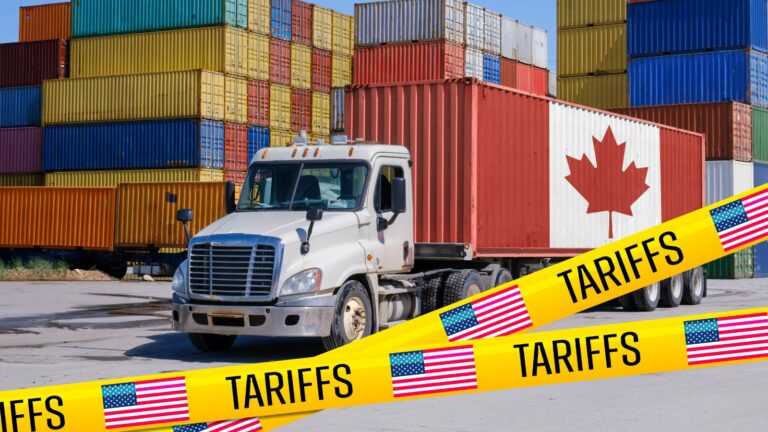
Donald Trump’s trade war with Canada has become an unexpected political liability for a Republican Senate candidate in one of America’s most closely watched elections.
During a heated debate in Grand Rapids, Michigan, on October 8, Republican Mike Rogers faced questions about his changing position on tariffs targeting Canada. Rogers revealed that he had contacted the White House and spoken with the U.S. commerce secretary in an effort to secure a trade agreement.
The exchange highlighted growing frustration in a state where Canadian trade supports manufacturers, suppliers, and thousands of jobs. With the November midterm elections approaching, Rogers is attempting to distance himself from some of Trump’s policies while maintaining his Republican credentials. His Democratic opponent, Abdul El-Sayed, argues that the change comes only after months of supporting measures that have raised costs and unsettled Michigan’s economy.
Canada Tariffs Become a Flashpoint Within Minutes of the Debate
Trump’s Canada Tariffs Become a U.S. Senate Debate Flashpoint as Michigan Republican Says He Called the White House
- Canada Tariffs Become a Flashpoint Within Minutes of the Debate
- Rogers Says He Contacted the White House to Push for a Trade Deal
- A Canadian Beer Advertisement Signals a Political Shift
- El-Sayed Attacks Trump’s Tariff Strategy but Leaves Room for Targeted Duties
- Michigan’s Economic Dependence on Canada Makes the Dispute Particularly Serious
- The Detroit–Windsor Auto Industry Shows Why Tariffs Can Hurt Both Countries
- The Tariff Dispute Has Escalated Into Retaliation and Import Restrictions
- Michigan Polls Show Strong Opposition to Trump’s Canadian Tariffs
- Claims About Tariffs Costing Michigan Households Thousands Require Context
- Michigan’s Senate Race Could Increase Pressure on Washington to Resolve the Trade Fight
It took less than 10 minutes for Donald Trump’s tariffs on Canada to become a major issue during Michigan’s first televised U.S. Senate debate on Thursday, October 8. Republican Mike Rogers and Democrat Abdul El-Sayed met in Grand Rapids for an hourlong confrontation that repeatedly shifted between economic policy and personal criticism. Moderator Rick Albin questioned Rogers about his recently released campaign advertisement calling for an end to the trade dispute, particularly because the former congressman had previously defended the administration’s tariffs.
The exchange exposed a difficult political balancing act. Rogers has generally supported Trump’s economic agenda, but Michigan’s unusually close commercial relationship with Canada makes the trade dispute especially sensitive. El-Sayed used the opportunity to challenge his opponent’s consistency, arguing that Michigan families and businesses were already dealing with the consequences of decisions Rogers had supported. The debate covered other major issues, including health care, immigration, gasoline prices, and the Iran war. Nevertheless, the opening discussion about Canada demonstrated how international trade has become a practical concern for voters in a state heavily dependent on manufacturing.
Rogers Says He Contacted the White House to Push for a Trade Deal
Rogers made one of the debate’s most consequential statements when he claimed to have personally contacted the Trump administration about resolving the dispute with Canada. He told viewers, “I have actually called the White House this week,” adding that he had spoken with the commerce secretary about reaching an agreement. Rogers said he wanted negotiations completed and acknowledged that some American tariffs on Canadian products had become excessively high. He also argued that Canada maintained trade barriers affecting American exports and that negotiators should pursue an agreement addressing both sides’ concerns.
The comments were significant because Rogers was presenting himself as someone capable of influencing the administration rather than simply defending its decisions. After the debate, he told reporters that Americans had initially been led to expect a quick settlement of the Canadian tariff dispute, but that progress had failed to materialize. His message was that Washington needed to finish the negotiations. However, his account of contacting administration officials was a campaign statement, not confirmation that a new agreement had been reached or that the White House had accepted his position. That distinction matters for Canadian businesses hoping for concrete relief from existing restrictions.
A Canadian Beer Advertisement Signals a Political Shift
The debate followed a campaign advertisement released by Rogers on October 7 that openly challenged Trump’s approach to Canada. In the advertisement, the Republican candidate appeared in a neighbourhood bar holding a bottle of Labatt Blue, a familiar Canadian beer brand with strong connections to Michigan’s border communities. Rogers declared that “Canada is not our enemy” and called for the tariff war to end immediately. He framed the issue around lowering prices for businesses and consumers, promising to bring Republicans and Democrats together if elected to the Senate.
The message marked a noticeable departure from Rogers’ earlier position. In August and September, he had described tariffs as necessary components of Trump’s economic strategy, although he cautioned that they were not appropriate for every situation. His latest advertisement came only weeks after another campaign message calling for a quick end to the Iran war, which he had previously supported. Together, the shifts suggest an effort to appeal to voters frustrated by higher living costs without completely abandoning his relationship with Trump. El-Sayed, however, argues that the changes reflect electoral pressure rather than a genuine reassessment of economic policy.
El-Sayed Attacks Trump’s Tariff Strategy but Leaves Room for Targeted Duties
Democratic candidate Abdul El-Sayed used the debate to criticize both Trump and Rogers over the economic consequences of the Canadian trade dispute. He described the president’s approach as “ham-fisted, chaotic, self-serving” and argued that Michigan residents were paying for an unpredictable trade strategy. El-Sayed questioned why Rogers had supported the administration’s tariffs for months before suddenly calling for an end to the dispute. His criticism focused on the argument that tariffs imposed without a coherent industrial strategy could undermine the manufacturing jobs they were supposed to protect.
However, El-Sayed did not promise to eliminate every tariff if elected. He said carefully designed duties could protect American industries when paired with policies that encourage domestic investment and production. That position is broadly consistent with comments made by United Auto Workers President Shawn Fain, who has supported strategic trade protections while opposing the administration’s sweeping actions against Canada. The distinction reveals an important point for Canadian policymakers: opposition to Trump’s current tariff strategy does not necessarily translate into support for unrestricted trade. Both Senate candidates have indicated that some trade barriers could remain appropriate, leaving differences over how and when they should be used.
Michigan’s Economic Dependence on Canada Makes the Dispute Particularly Serious
Few American states have as much economic exposure to Canada as Michigan. According to the Office of the United States Trade Representative, Michigan exported approximately US$23.2 billion in goods to Canada during 2025. That represented roughly 39% of the state’s total merchandise exports, making Canada its largest international customer. Mexico ranked second at approximately US$16.6 billion. These figures illustrate why Canadian trade is not simply a foreign-policy issue for Michigan: it is closely connected to employment, production, investment, and the financial health of local communities.
The relationship extends well beyond the largest automobile manufacturers. Federal trade data show that 13,631 companies exported goods from Michigan locations in 2024, with approximately 88% classified as small or medium-sized enterprises. Not every one of those companies exports to Canada, but the figures demonstrate the breadth of Michigan’s exporting economy. Transportation equipment alone accounted for approximately US$25.2 billion of Michigan’s worldwide merchandise exports in 2025. For a smaller machine shop supplying components to a larger manufacturer, an unexpected increase in cross-border costs can affect cash flow, production schedules, and decisions about hiring additional workers. That economic exposure helps explain why Rogers is emphasizing trade negotiations as a priority.
The Detroit–Windsor Auto Industry Shows Why Tariffs Can Hurt Both Countries
The automobile industry provides one of the clearest examples of how closely Canada and Michigan depend on each other. Manufacturers in Detroit and Windsor operate within a highly integrated North American production network in which vehicle components can cross the border multiple times before final assembly. Canadian government descriptions of the industry have estimated that some automotive parts cross the international boundary as many as six times during production. Additional tariffs can therefore increase costs for companies operating on either side of the border, depending on the products and customs rules involved.
Industry representatives have warned that inconsistent trade policies are making long-term planning more difficult. In July, the Ann Arbor-based Center for Automotive Research reported that automotive companies and suppliers were delaying investment programs, reducing capital spending, and absorbing additional costs because of tariff uncertainty. The human consequences have also become apparent in Windsor. John D’Agnolo, president of Unifor Local 200, told Michigan Public in September that unpredictable tariffs were complicating negotiations and discouraging companies from committing to new production programs. His concerns illustrate why the dispute matters beyond political speeches. Decisions made in Washington can influence whether a Canadian or American factory receives new equipment, expands production, or secures future employment for its workers.
The Tariff Dispute Has Escalated Into Retaliation and Import Restrictions
The current dispute intensified during the summer after Washington announced additional tariffs on selected Canadian imports. The Trump administration imposed 50% duties on specified product categories, with Canada identifying approximately C$27.6 billion worth of affected goods. These measures were not a universal 50% tariff on everything imported from Canada, an important distinction given the complexity of existing North American trade rules. Ottawa responded on September 8 with countermeasures covering approximately C$27.6 billion of imports from the United States, applying rates of 15%, 25%, or 50% depending on the product.
The confrontation subsequently extended beyond ordinary customs duties. On September 8, the White House announced import restrictions affecting selected Canadian alcoholic beverages, dairy-related products, and other goods, with prohibitions taking effect on September 29. Washington defended its measures as responses to what it described as discriminatory Canadian trade practices, while Ottawa maintained that its retaliation was necessary to protect Canadian economic interests. The escalation has created additional uncertainty for exporters already navigating the Canada–United States–Mexico Agreement. Although the United States declined to extend the agreement in its existing form during the July 2026 joint review, the agreement itself remains in force. Consequently, a political call to end the tariff dispute would still require difficult negotiations over specific trade measures and market-access disagreements.
Michigan Polls Show Strong Opposition to Trump’s Canadian Tariffs
Public opinion helps explain why Canada has become such a sensitive issue in Michigan’s Senate campaign. A WDIV-TV and Detroit News survey published in September found that 64.2% of likely Michigan voters opposed Trump’s 50% tariffs on selected Canadian goods, while only 28.6% supported them. The survey also found that 61.5% believed the tariffs were bad for Michigan’s economy. Those results suggest that a substantial portion of the electorate views the trade confrontation as an economic threat rather than a straightforward effort to protect domestic industries.
Concern about household expenses was even more pronounced. Approximately 71.5% of respondents expected the Canadian tariffs to increase the prices they paid for goods, compared with just 6.2% who believed prices would decline. The survey included 600 likely voters interviewed between August 31 and September 3, with a reported margin of error of four percentage points. A separate Washington Post–Schar School survey later found that 68% of Michigan independents disapproved of the levies. Neither survey determines how people will vote in November, but the findings help explain why Rogers is changing his messaging. In a competitive Senate race, dissatisfaction among independent voters could become especially consequential.
Claims About Tariffs Costing Michigan Households Thousands Require Context
The financial consequences of tariffs have become a central campaign argument, but some widely circulated estimates require careful interpretation. The National Taxpayers Union Foundation estimated that tariffs imposed through executive actions had generated approximately US$23 billion in additional costs associated with goods imported into Michigan since January 2025. Dividing that estimated total by the number of Michigan households produced a figure of approximately US$5,619 per household. The calculation attracted considerable attention from political candidates, journalists, and business organizations concerned about the economic impact of Trump’s trade policies.
However, that figure does not mean every Michigan family personally paid an additional US$5,619. PolitiFact examined the claim in September and explained that the calculation distributes estimated statewide import tariff costs across households, even though many imported products are eventually sold elsewhere in the United States. Michigan is an important distribution and manufacturing centre for automobiles and parts, meaning businesses elsewhere can ultimately bear some of those expenses. Importers may also absorb costs rather than passing them entirely to customers. The figure therefore helps illustrate the scale of Michigan’s exposure but should not be presented as a typical household bill. The broader concern remains valid: tariffs can increase expenses throughout supply chains, even when their precise impact on individual families is difficult to measure.
Michigan’s Senate Race Could Increase Pressure on Washington to Resolve the Trade Fight
The political stakes extend well beyond the debate stage. Michigan’s Senate seat is becoming vacant because Democratic Senator Gary Peters is retiring, creating a closely contested election between Rogers and El-Sayed on November 3. Republicans are seeking to preserve their congressional majority, while Democrats need a net gain of four Senate seats to take control of the chamber. Rogers previously lost Michigan’s 2024 Senate contest to Democrat Elissa Slotkin by fewer than 20,000 votes, underscoring how narrow statewide elections can become. With tariffs emerging as a source of voter dissatisfaction, the Republican candidate has a strong incentive to demonstrate independence from policies that may be unpopular locally.
Rogers is also part of a broader political development. An October 7 Reuters review found that Republican candidates in 41 of 62 competitive congressional races had either disagreed with Trump on particular policies or attempted to create distance from him. For Ottawa, that trend may signal increasing political resistance to a prolonged trade conflict, although resistance from candidates does not guarantee a change in White House policy. Rogers and El-Sayed are scheduled to meet again on October 21, offering another opportunity to debate trade and affordability. Ultimately, the significance of Rogers’ reported White House intervention will depend less on campaign messaging than on whether Washington and Ottawa can produce a negotiated outcome that provides greater certainty for businesses, workers, and consumers on both sides of the border.
This Options Discord Chat is The Real Deal
While the internet is scoured with trading chat rooms, many of which even charge upwards of thousands of dollars to join, this smaller options trading discord chatroom is the real deal and actually providing valuable trade setups, education, and community without the noise and spam of the larger more expensive rooms. With a incredibly low-cost monthly fee, Options Trading Club (click here to see their reviews) requires an application to join ensuring that every member is dedicated and serious about taking their trading to the next level. If you are looking for a change in your trading strategies, then click here to apply for a membership.