35,000+ smart investors are already getting financial news, market signals, and macro shifts in the economy that could impact their money next with our FREE weekly newsletter. Get ahead of what the crowd finds out too late. Click Here to Subscribe for FREE.
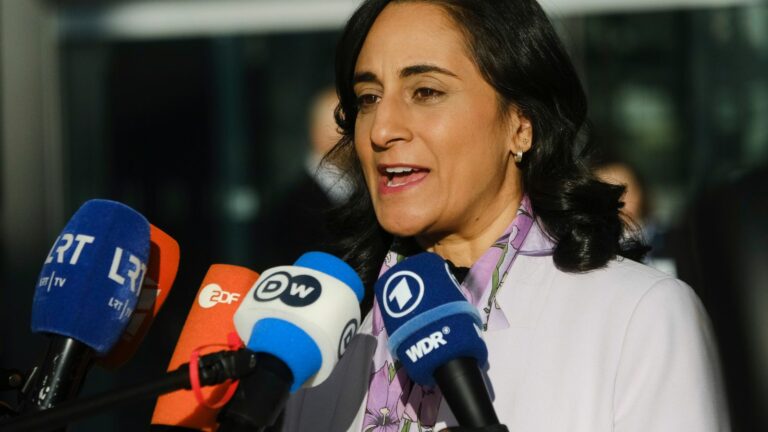
Canada’s annual address to the United Nations carried a phrase that is rapidly becoming central to Ottawa’s foreign policy: strategic autonomy. Foreign Affairs Minister Anita Anand told the General Assembly on September 26 that Canada wants greater freedom in strategic fields as economic integration becomes more vulnerable to pressure from major powers. Her message arrived during an unusually strained period in Canada–U.S. relations, with trade negotiations suspended and new American restrictions approaching.
Yet Anand did not describe autonomy as isolation. Instead, she linked it to stronger partnerships among middle powers, deeper trade diversification, critical minerals, energy, defence production, emerging technology and international law. The result was a message about building more options for Canada without abandoning the alliances and economic relationships that remain fundamental to the country.
Strategic Autonomy Moves From Policy Phrase to UN Centrepiece
Anand Puts ‘Strategic Autonomy’ at Centre of Canada’s UN Message as U.S. Pressure Grows
- Strategic Autonomy Moves From Policy Phrase to UN Centrepiece
- U.S. Pressure Gives the Strategy Its Immediate Urgency
- Carney’s Middle-Power Strategy Sits Behind Anand’s Language
- Europe Is Becoming the Biggest Test of the New Approach
- Trade Numbers Show How Difficult Diversification Will Be
- Defence and the Arctic Give Autonomy a Hard-Power Dimension
- Multilateralism Creates Both an Opportunity and a Tension
- Ukraine and the Middle East Show an Issue-by-Issue Approach
- Energy, Critical Minerals and New Trade Deals Supply the Economic Tools
- Implementation Will Decide Whether Autonomy Becomes More Than a Message
Anand’s choice of language was significant because it placed strategic autonomy near the heart of Canada’s formal message to the world. She argued that great powers are retreating from some forms of economic co-operation and that Canada needs enough independence in strategically important areas to reduce its vulnerability to coercion. She identified emerging technologies, critical minerals, defence production and energy among the fields where greater resilience matters. The concept was not introduced as a sudden departure: Global Affairs Canada’s 2026–27 departmental plan already lists deeper partnerships that strengthen strategic autonomy and protect Canadian sovereignty as a departmental priority.
The setting gave the idea additional weight. This was Canada’s national statement at the 81st UN General Assembly, rather than a domestic policy speech or partisan event. Anand urged middle powers to act collectively and described the international order as being rebuilt in real time. Drawing on her Nova Scotia roots, she used a maritime analogy about the tide not waiting, reinforcing the government’s argument that adapting to geopolitical change cannot be postponed. At the same time, her prescription depended heavily on partnerships, suggesting that Ottawa’s definition of autonomy is closer to having more choices than attempting to operate alone.
U.S. Pressure Gives the Strategy Its Immediate Urgency
Anand did not make American tariffs the centrepiece of her UN address, but the deterioration in Canada–U.S. economic relations formed an unavoidable backdrop. Prime Minister Mark Carney suspended bilateral trade negotiations on August 21 after saying proposed U.S. terms did not meet Canada’s objectives. Ottawa said Washington intended to impose 50% tariffs on roughly C$28 billion of Canadian goods, prompting Canada to announce matching measures. The White House has presented the dispute differently, accusing Canada of discriminatory treatment in several sectors and arguing that stronger U.S. measures are justified.
The pressure has continued. A September 8 White House proclamation ordered an import ban, effective September 29, on specified Canadian products that had already been subject to additional duties. Washington alleges Canada maintained discriminatory automobile policies and stopped negotiating in good faith; Ottawa disputes the broader U.S. characterization of the trade relationship and says preserving policy independence and sovereignty was one of its negotiating objectives. That clash helps explain why “strategic autonomy” now carries economic as well as diplomatic meaning. It is about whether Canada can absorb pressure from its overwhelmingly important neighbour without having every major domestic policy choice determined by access to the U.S. market.
Carney’s Middle-Power Strategy Sits Behind Anand’s Language
Anand’s UN speech closely fits the broader foreign-policy framework Carney has developed during 2026. Rather than suggesting Canada can compete with the largest powers on its own, the government has increasingly emphasized coalitions of countries with substantial economic and diplomatic weight but without superpower status. Anand told the General Assembly that middle powers could play a central role in constructing the emerging international framework. Her focus on collective action therefore matters as much as the word “autonomy”: Canada is trying to gain room to manoeuvre by multiplying dependable relationships.
The approach also helps explain why Ottawa rejects the idea that strategic autonomy means simple self-sufficiency. In his September 17 address to the European Parliament, Carney said the objective was “collective resilience,” not an attempt to produce everything domestically. He pointed to artificial intelligence, semiconductors, critical minerals, clean energy, payment systems, vaccines and space communications as areas where countries inevitably depend on one another. The policy challenge is therefore to prevent dependence on one supplier, country or platform from becoming overwhelming. Anand translated that economic argument into diplomatic language at the UN: middle powers, working together, can create alternatives that none could realistically create independently.
Europe Is Becoming the Biggest Test of the New Approach
Europe has become the most visible testing ground for Ottawa’s diversification strategy. In Strasbourg, Carney proposed much deeper Canada–EU cooperation in critical minerals, defence manufacturing, artificial intelligence and computing capacity, energy, space and payment systems. European Commission President Ursula von der Leyen had raised the possibility of a new form of associate relationship with Canada, an idea Ottawa welcomed while stressing that the arrangement has yet to be defined. Carney also said Canada was not trying to build a rival geopolitical bloc, but rather a network strong enough to prevent any single power from dictating national choices.
That distinction matters because geography cannot be negotiated away. The United States sits beside Canada, buys an enormous share of Canadian production and participates in supply chains that have developed over generations. Europe can expand Canada’s options, but it cannot rapidly replace the U.S. economy. The Associated Press noted that a proposed EU associate status does not yet exist and that European markets remain far smaller destinations for Canadian exports than the United States. Ottawa’s European strategy is therefore better understood as adding economic and security depth rather than replacing one dominant relationship with another.
Trade Numbers Show How Difficult Diversification Will Be
Canada has already recorded measurable movement away from its traditional trade concentration. Statistics Canada reported that the U.S. share of Canadian merchandise exports fell from 75.9% in 2024 to 71.7% in 2025. Merchandise exports to countries other than the United States rose 17.2% during 2025, while total merchandise trade with non-U.S. partners climbed 14.3% to C$553 billion. Those numbers provide evidence that exporters can broaden their customer base, but they also reveal the scale of the starting point: more than seven dollars out of every ten in merchandise exports still went south of the border.
The Bank of Canada has similarly cautioned against treating diversification as something that can happen overnight. Governor Tiff Macklem said in September that exporters are increasingly looking beyond the United States, frequently by expanding business with overseas customers they already know. More than two-thirds of Canadian exporters surveyed by the Bank said they planned to enter or expand into new markets over the next two years. Even so, Macklem noted that geography strongly favours continued U.S. dominance. Strategic autonomy, viewed through those numbers, is therefore a long-term effort to reduce excessive concentration rather than a realistic attempt to sever deep continental commerce.
Defence and the Arctic Give Autonomy a Hard-Power Dimension
Economic resilience is only part of Ottawa’s definition. Anand used her UN remarks to reaffirm what she called Canada’s “ironclad” commitment to NATO while emphasizing sovereignty and Arctic security. That combination illustrates the government’s attempt to balance autonomy with alliances: building greater Canadian capacity does not necessarily require weakening collective defence. At the 2026 NATO summit, Ottawa reiterated a path toward meeting the alliance’s new 5%-of-GDP defence and security investment target by 2035 and highlighted investments in submarines, icebreakers, aircraft, missiles, cyber capabilities and military communications.
The Arctic is where that philosophy becomes especially tangible. In March, the federal government announced a northern package valued at more than C$40 billion, including C$32 billion for military operating locations in Yellowknife, Inuvik, Iqaluit and Goose Bay. Ottawa has framed those investments as allowing Canada to assume more responsibility for the defence of its own territory while continuing to work through NATO and NORAD. The plan also connects military infrastructure with transportation, critical minerals and Northern development. Strategic autonomy, in that context, means possessing enough domestic infrastructure and capability to make sovereignty practical, rather than relying primarily on diplomatic declarations that Canadian territory will be defended.
Multilateralism Creates Both an Opportunity and a Tension
Anand’s emphasis on autonomy might sound at first like a retreat from international institutions, but her UN message pointed in the opposite direction. During the General Assembly week, Canada joined Australia, Barbados, Brazil, the European Union, India and Kenya in launching the Partners for Multilateralism coalition, which is intended to promote international law and practical co-operation across issues such as artificial intelligence, health security and digital transformation. Anand also met the president of the General Assembly and discussed multilateralism, UN reform and AI. Ottawa’s model therefore treats international institutions as one way middle powers can preserve influence when bilateral relationships become more unpredictable.
That approach also creates uncomfortable tests. Anand reiterated Canada’s support for the International Criminal Court at a time when the Trump administration was preparing possible sanctions against the institution. Reuters reported that Washington had already sanctioned individual ICC judges and prosecutors and was considering measures against the court itself. Domestically, the federal NDP has criticized the Carney government for not responding more forcefully to U.S. sanctions affecting Canadian-born ICC judge Kimberly Prost. The criticism highlights a recurring challenge for Ottawa: defending international legal institutions while managing a relationship with a neighbouring administration that is openly hostile to some of those institutions.
Ukraine and the Middle East Show an Issue-by-Issue Approach
Canada’s positions on major conflicts provide another indication that strategic autonomy is not being presented as neutrality. Days before the UN address, Anand rejected Russia’s 2026 State Duma voting in occupied Ukrainian territories and reaffirmed Canadian support for Ukraine’s sovereignty, independence and territorial integrity. At the NATO summit in July, Ottawa said its multifaceted assistance to Ukraine since 2022 had exceeded C$25.5 billion, including more than C$8.5 billion in military assistance. Anand’s General Assembly remarks again connected sovereignty and international law to Canada’s broader foreign-policy outlook.
On the Middle East, Ottawa has pursued a different set of policies. Canada recognized the State of Palestine in 2025 while maintaining that Hamas must disarm and have no future governing role and that Israelis and Palestinians should ultimately live in secure states alongside each other. During this year’s UN meetings, Carney announced an additional C$100 million for Palestinian humanitarian and stabilization needs, bringing federal assistance for Palestinian civilians since October 2023 to more than C$600 million. These positions show that Ottawa’s use of “autonomy” is not synonymous with equidistance between competing actors. The government continues to take substantive positions, while emphasizing that they should be grounded in Canadian policy choices and international law.
Energy, Critical Minerals and New Trade Deals Supply the Economic Tools
Strategic autonomy ultimately requires markets and infrastructure, not simply diplomatic language. Ottawa is pursuing negotiations with India, ASEAN and the Philippines, with the federal government saying it wants to double Canadian exports to markets beyond the United States over the next decade. Canada–ASEAN merchandise trade reached C$52.5 billion in 2025, up 23.7% from the previous year, while goods and services trade with India reached C$30.4 billion. Negotiations on a Canada–UAE Comprehensive Economic Partnership Agreement were also concluded in July, adding another prospective route for trade and investment.
Energy is becoming part of the same strategy. Anand told Reuters during UN week that Canada could explore an LNG partnership with France and said discussions with other countries covered LNG, nuclear power and renewable energy. Canada’s first LNG export cargo from the LNG Canada project in British Columbia departed in June, giving the country direct Pacific access to global LNG markets. Meanwhile, critical-mineral policy is increasingly being linked to European defence, clean technology and supply-chain security. Each initiative is relatively small beside the U.S. relationship on its own; collectively, Ottawa hopes they create a wider network of buyers, investors and strategic partners.
Implementation Will Decide Whether Autonomy Becomes More Than a Message
The largest question is whether Canada can turn diplomatic diversification into enough physical and commercial capacity to change its economic exposure. Federal plans include a C$5-billion Trade Diversification Corridors Fund for ports, railways, airports and highways, a C$1.5-billion fund for infrastructure serving critical-mineral projects and C$1 billion for Arctic infrastructure. The government has also allocated billions in support for businesses affected by trade disruptions. Those programs demonstrate the scale of investment Ottawa believes is necessary because a trade agreement is useful only when Canadian businesses can competitively reach the market it opens.
There are encouraging signs, but also significant risks. The Bank of Canada said non-energy exports rose 14.5% in the second quarter of 2026 and business investment increased at an annualized 8.8% rate. Yet Macklem warned that renewed U.S. tariffs could roughly halve fourth-quarter growth to below 1% if they remained in place, largely because uncertainty can delay hiring and investment. That tension captures the practical challenge behind Anand’s UN message. Strategic autonomy is not a declaration that dependence has ended. It is a multi-year attempt to build enough trade routes, defence capacity, technology, energy infrastructure and diplomatic partnerships that Canada has more choices when a larger power applies pressure.
This Options Discord Chat is The Real Deal
While the internet is scoured with trading chat rooms, many of which even charge upwards of thousands of dollars to join, this smaller options trading discord chatroom is the real deal and actually providing valuable trade setups, education, and community without the noise and spam of the larger more expensive rooms. With a incredibly low-cost monthly fee, Options Trading Club (click here to see their reviews) requires an application to join ensuring that every member is dedicated and serious about taking their trading to the next level. If you are looking for a change in your trading strategies, then click here to apply for a membership.