35,000+ smart investors are already getting financial news, market signals, and macro shifts in the economy that could impact their money next with our FREE weekly newsletter. Get ahead of what the crowd finds out too late. Click Here to Subscribe for FREE.
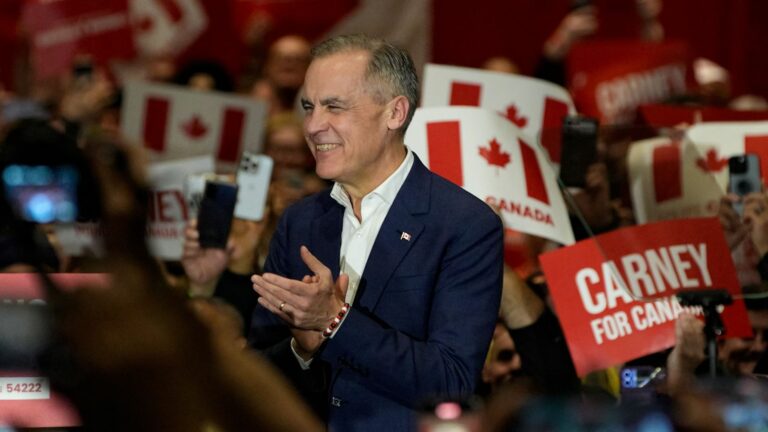
Canada’s attempt to build a less U.S.-dependent economy has suddenly acquired a very large number. Prime Minister Mark Carney’s government says the inaugural Canada Investment Summit generated nearly $500 billion in new investment commitments, spanning infrastructure, artificial intelligence, energy, critical minerals, defence and Canadian businesses.
The headline is significant, but it requires context. Much of the total consists of financing commitments and capital that institutions intend to mobilize over several years, rather than money already spent on construction. At the same time, the announcements offer a revealing picture of Ottawa’s economic strategy: attract global capital, encourage Canadian institutions to invest more at home, accelerate major projects and develop markets beyond the United States. With trade tensions continuing to reshape North America, the government is betting that investment can become a new source of economic resilience.
Ottawa’s Nearly $500 Billion Headline Is Really Several Different Kinds of Money
Carney Government Claims Nearly $500 Billion in New Investment Commitments as Canada Builds Beyond U.S. Dependence
- Ottawa’s Nearly $500 Billion Headline Is Really Several Different Kinds of Money
- Canadian Pension Capital Is Being Asked to Find More Opportunities at Home
- Canada’s Banks Account for the Largest Share of the Commitment Total
- Saskatchewan’s AI Project Shows What the Investment Drive Could Look Like on the Ground
- Carney Is Pairing Investment Pledges With a Major Business Tax Change
- The $500 Billion Announcement Sits Beside an Even Larger Project Pipeline
- Trade Data Are Beginning to Show More Activity Outside the United States
- Europe Is Becoming a Bigger Part of Ottawa’s Diversification Strategy
- The Real Measure Will Be How Much of the Announced Capital Actually Gets Deployed
The Prime Minister’s Office said the September 15 Canada Investment Summit resulted in nearly $500 billion in new investment commitments. The package included almost $100 billion attributed to pension funds, insurers and institutional investors; nearly $325 billion in financing commitments from major banks; more than $14 billion that investment funds intend to mobilize; and Bell Canada’s planned $52.5-billion artificial-intelligence infrastructure expansion in Saskatchewan. The publicly identified amounts come to roughly $480 billion, explaining the government’s broader description of the package as “nearly” half a trillion dollars.
That distinction matters because these commitments are not economically identical. A pension fund putting equity into an infrastructure project represents something different from a bank offering lending, underwriting or advisory capacity. Some investments will also unfold over five or ten years, while proposed projects may still require customers, permits, commercial agreements or regulatory approvals. Ottawa is therefore describing a pipeline of capital rather than a single cheque arriving in the Canadian economy. The scale is nevertheless noteworthy because it shows major financial institutions positioning themselves around the government’s investment agenda.
Canadian Pension Capital Is Being Asked to Find More Opportunities at Home
One of the summit’s most concrete themes was an effort to put more Canadian institutional money into Canadian assets. CPP Investments and Brookfield Asset Management launched the Maple Fund, a framework designed to pursue as much as $50 billion in equity investments in large infrastructure and strategic industries. Each organization could contribute up to $25 billion over an initial five-year period. Ontario Teachers’ Pension Plan separately announced an objective of investing an additional $10 billion in Canada by the end of 2027, provided opportunities meet its return requirements.
PSP Investments also expects its Canadian holdings to grow substantially, with chief executive Deborah Orida saying its Canadian pension investments are expected to rise by 30% to 40% and eventually pass $100 billion. Sun Life, meanwhile, announced a $5-billion, five-year Canadian infrastructure initiative targeting digital technology, energy, transportation and logistics. The common thread is important: these institutions are not describing public spending programs. They are looking for commercially viable investments capable of producing long-term returns for pensioners, policyholders and shareholders while financing infrastructure and businesses inside Canada.
The biggest piece of Ottawa’s nearly $500-billion figure comes from Canadian banks, which the government says committed almost $325 billion in new financing. TD announced a five-year, $150-billion initiative covering energy, critical minerals, defence and aerospace, digital infrastructure, artificial intelligence and broader infrastructure. TD says the commitment can include lending, underwriting, advisory work and other financing activities. BMO separately plans to mobilize as much as $70 billion over ten years for sectors including electricity, pipelines, transportation, mining, AI computing, defence, security and oil and gas.
Ottawa also counts more than $100 billion of planned Scotiabank financing, $2 billion from CIBC aimed at smaller defence and dual-use businesses, and nearly $1.5 billion that RBC intends to mobilize around high-growth Canadian technology companies. Those figures illustrate why “financing commitment” is the most useful description. Banks are creating capacity to lend, arrange debt, raise equity and help customers finance projects; they are not necessarily investing those entire amounts directly from their own balance sheets. Actual deployment will depend on viable companies, projects, borrowers and market conditions emerging over the commitment periods.
Saskatchewan’s AI Project Shows What the Investment Drive Could Look Like on the Ground
Few announcements gave the summit’s huge numbers a more tangible form than Bell Canada’s Saskatchewan plans. Bell and the provincial government announced a path toward a 1.2-gigawatt AI infrastructure hub, with total capital investment potentially reaching $52.5 billion. The federal government said the expansion could create about 4,500 jobs, while Bell describes a project that would eventually combine an initial 300-megawatt development with up to 900 megawatts of additional capacity.
There are important conditions attached to that vision. Bell’s September announcement described the expansion agreement as a non-binding memorandum of understanding, with additional development proceeding in phases as customers are secured and subject to commercial agreements, permits, approvals and environmental requirements. The additional 900 megawatts would rely on partner-developed natural-gas generation rather than simply drawing that entire load from Saskatchewan’s existing grid. For communities around Regina, that means the headline investment could translate into years of construction, engineering and technical work if the planned phases proceed. It also demonstrates how AI infrastructure has become part of Canada’s broader economic-sovereignty strategy.
Carney Is Pairing Investment Pledges With a Major Business Tax Change
The government is not relying exclusively on summits and institutional commitments. It also unveiled what it calls the Productivity Mega Deduction, which would permanently allow businesses to immediately expense a much broader range of eligible capital investments. Department of Finance estimates indicate roughly two-thirds of investment in capital assets could qualify for immediate expensing under the proposal, including many investments in machinery, computer systems, transportation infrastructure, resource development and other productive assets.
Finance Canada estimates the measure would cost the federal government about $36 billion over five years. Its modelling says the change would reduce Canada’s marginal effective tax rate on new business investment from about 13% to 6.4%, although such estimates depend on tax assumptions and the mix of investments being compared. The policy is designed to improve the economics of buying equipment or developing projects in Canada by allowing businesses to recover tax deductions sooner. Ottawa estimates the resulting economic activity could eventually reach as much as roughly $22 billion annually, but those figures are projections rather than guaranteed outcomes. The practical question is whether lower investment costs cause businesses to move projects from planning documents into construction.
The $500 Billion Announcement Sits Beside an Even Larger Project Pipeline
The summit commitments are also distinct from another large number regularly cited by the Carney government: the potential value of projects being advanced through the Major Projects Office. The office currently lists 18 projects and nine broader transformative strategies. Its public dashboard identifies approximately $192 billion in new investment associated with the portfolio and describes the initiatives as potentially enabling roughly $500 billion in future private-sector investment.
Those figures should not be added automatically to the investment-summit announcements. Some capital commitments could ultimately finance projects that are already part of Canada’s wider infrastructure pipeline, creating the possibility of overlap. That is why project execution will be more informative than increasingly large headline totals. Ottawa created the Major Projects Office partly to coordinate federal decision-making and shorten approval timelines for major developments such as mines, ports, energy infrastructure and trade corridors. Scotiabank’s Growth Institute recently estimated that Canada has more than $1 trillion of projects in its broader inventory, but also stressed that Canada’s historical challenge has been converting promising project inventories into completed productive assets. Capital availability solves only one part of that equation.
Trade Data Are Beginning to Show More Activity Outside the United States
The investment strategy is unfolding alongside measurable changes in Canada’s export mix. Statistics Canada reported that merchandise exports to countries other than the United States climbed 7.4% in July 2026 to a record $25.6 billion. Non-U.S. destinations accounted for 33.7% of Canadian goods exports that month. Increased shipments to markets including the Netherlands, China and Germany contributed to the gain. At the same time, exports to the United States dropped 6.6% from June to $50.5 billion.
That does not mean Canada has escaped its dependence on the American market. July’s numbers still indicate that roughly two-thirds of Canadian merchandise exports went to the United States, and the two economies remain deeply integrated through energy, automobiles, agriculture, manufacturing and cross-border supply chains. The more realistic interpretation is diversification at the margin: every additional port connection, energy customer, mineral buyer or technology market outside the United States provides Canadian companies with another potential source of demand. Building those alternatives at scale, however, is a multi-year process rather than an immediate substitute for the enormous American market next door.
Europe Is Becoming a Bigger Part of Ottawa’s Diversification Strategy
The investment summit coincided with an increasingly visible Canadian push toward Europe. Carney has been pursuing deeper economic and security cooperation with the European Union while emphasizing that Canada will remain closely connected to the United States. The EU is already Canada’s second-largest trading partner for combined goods and services. Global Affairs Canada says Canada-EU trade reached approximately $178.6 billion in 2025, while Europe is also an important source of foreign direct investment in Canada.
Canada already has a major economic bridge to the region through the Comprehensive Economic and Trade Agreement, but Ottawa is pursuing additional cooperation in areas including defence, critical minerals, artificial intelligence, energy and digital infrastructure. The government has also highlighted Canada’s network of free-trade agreements, which provides preferential access to markets containing about 1.5 billion consumers. The economic logic is diversification rather than isolation: Canada can continue selling enormous quantities of goods to the United States while simultaneously building infrastructure capable of moving energy, minerals, agricultural goods, technology and manufactured products toward Europe and Asia. That distinction is central to understanding what Ottawa means by greater “strategic autonomy.”
The Real Measure Will Be How Much of the Announced Capital Actually Gets Deployed
Large investment commitments can change expectations quickly, but factories, mines, data centres and trade corridors take years to finance, approve and construct. The Bank of Canada’s second-quarter Business Outlook Survey found that corporate investment intentions remained relatively strong, with more businesses considering productivity improvements, equipment upgrades and AI integration. Yet the Bank’s broader economic outlook still said business investment remained on a lower path than it had been before U.S. tariffs were imposed, illustrating how trade uncertainty continues to influence corporate decisions.
That leaves the government with a demanding execution phase. Tax advantages must remain predictable, regulatory processes need to reach decisions, electricity and transportation infrastructure must keep pace with proposed industrial development, and individual projects still have to earn acceptable returns. The nearly $500-billion summit figure is therefore better understood as evidence of financing appetite than proof that Canada has already experienced a half-trillion-dollar investment boom. If substantial portions eventually become operating mines, AI facilities, ports, power systems, factories and export infrastructure, the announcements could materially broaden Canada’s economic base. Until then, the difference between commitments and completed investment remains the number worth watching.
This Options Discord Chat is The Real Deal
While the internet is scoured with trading chat rooms, many of which even charge upwards of thousands of dollars to join, this smaller options trading discord chatroom is the real deal and actually providing valuable trade setups, education, and community without the noise and spam of the larger more expensive rooms. With a incredibly low-cost monthly fee, Options Trading Club (click here to see their reviews) requires an application to join ensuring that every member is dedicated and serious about taking their trading to the next level. If you are looking for a change in your trading strategies, then click here to apply for a membership.