35,000+ smart investors are already getting financial news, market signals, and macro shifts in the economy that could impact their money next with our FREE weekly newsletter. Get ahead of what the crowd finds out too late. Click Here to Subscribe for FREE.
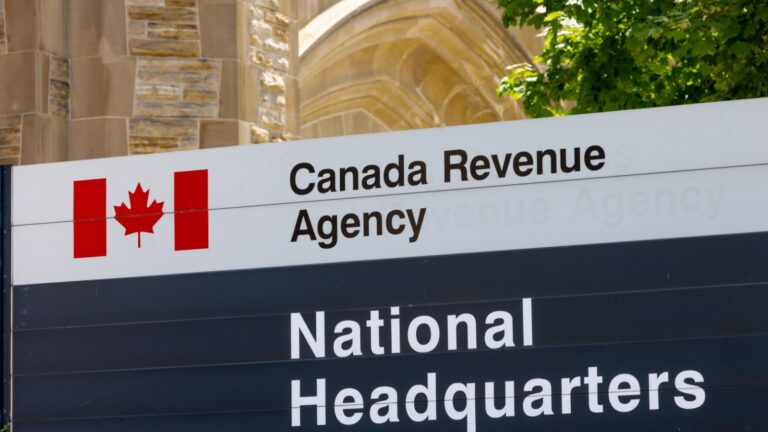
Ottawa is trying to turn tax certainty into an investment advantage. As Prime Minister Mark Carney hosts global investors in Toronto, the federal government has ordered the Canada Revenue Agency to prioritize advance income tax ruling requests tied to investments of at least $1 billion in Canada. The change took effect September 14 and is designed to give major investors earlier clarity on how Canadian income tax law will apply before they commit capital.
It arrives as the government pursues an ambitious goal of catalysing $1 trillion in total investment over five years, with energy, critical minerals, infrastructure, defence and technology at the centre of the pitch. The policy is narrow, but strategically important: Ottawa is betting that reducing uncertainty around tax treatment can help turn boardroom interest into financing decisions, construction schedules and long-lived Canadian assets.
A $1-Billion Threshold Opens the Fast Lane
Carney Government Gives $1B-Plus Investments Priority at CRA as Ottawa Chases Global Capital
- A $1-Billion Threshold Opens the Fast Lane
- What an Advance Tax Ruling Actually Buys
- The Spring Economic Update Set the Stage
- The Timing Is Tied Directly to Carney’s Investment Summit
- Canada Has Stronger Investment Numbers to Sell
- Ottawa Wants More Greenfield Investment, Not Just Takeovers
- Tax Certainty Is Only One Part of Ottawa’s De-Risking Strategy
- Big Financial Commitments Show the Scale Ottawa Is Trying to Unlock
- The Fast Lane Raises Capacity and Fairness Questions
- The Bigger Bet Is Diversifying Canada’s Economic Relationships
The new rule is straightforward. Advance income tax ruling requests connected to investments of $1 billion or more in Canada will receive priority treatment from the CRA. The measure uses the existing Advance Income Tax Rulings program rather than creating a separate tax regime for multinational companies or mega-projects. Finance Minister François-Philippe Champagne framed the change around certainty, arguing that investors considering major commitments need predictable tax treatment before making irreversible financing decisions.
That distinction matters. A priority ruling does not cut the corporate tax rate, waive taxes or guarantee that a project will be profitable. It gives an eligible investor faster access to a process that can produce a binding CRA view on how existing income tax law applies to a proposed transaction. For projects measured in billions, ambiguity over tax treatment can alter expected returns, debt structures and investment-committee decisions. Ottawa is therefore targeting uncertainty itself as a barrier to investment.
What an Advance Tax Ruling Actually Buys
Advance income tax rulings are designed for transactions still being contemplated. The CRA describes them as written decisions explaining how specific provisions of Canadian income tax law will apply to a definite proposed transaction. When the facts are fully and accurately disclosed and the transaction is implemented as described, the ruling is regarded as binding on the agency. That gives companies something more useful than informal guidance: a tax position they can incorporate into financial models before committing capital.
The program already has a formal service framework. The CRA’s general target is to issue a ruling within 90 business days after receiving all essential information, and the service operates on a cost-recovery basis. For 2026-27, the hourly fee is $306.50. Ottawa has not publicly attached a specific shorter deadline to the new priority lane. Its value is therefore best understood as queue priority and greater administrative attention, not an instant decision or guaranteed approval date.
The Spring Economic Update Set the Stage
The September announcement did not come from nowhere. In the Spring Economic Update, Ottawa said the CRA would prioritize advance ruling requests related to large-scale nation-building projects, including housing and infrastructure, as well as investments that improve productivity or strengthen critical sectors. Clean-economy projects and investments potentially eligible for federal clean-economy tax credits were specifically identified. What was missing was a simple numerical threshold showing investors when priority treatment would apply.
The new $1-billion cutoff supplies that bright line. Tax professionals have noted that an easily applied metric can make the policy more predictable for companies deciding whether to seek a ruling. It also fits the Carney government’s broader effort to remove procedural obstacles rather than rely on one subsidy or tax credit. For investors comparing jurisdictions, certainty about process can matter alongside the headline tax rate. A clear threshold signals that unusually large capital commitments will move to the front of the administrative queue.
The Timing Is Tied Directly to Carney’s Investment Summit
Ottawa unveiled the measure as hundreds of executives, asset managers and public-sector leaders gathered in Toronto for Canada’s first national investment summit on September 14 and 15. The event is hosted by the federal government with CPP Investments and PSP Investments, giving Ottawa direct access to institutions accustomed to evaluating infrastructure, energy and other long-duration assets. The government’s stated objective is to catalyse $1 trillion in total investment in Canada over the next five years.
The scale of the audience explains why a technical CRA change received political attention. Canadian governments and companies are presenting more than 160 potential projects spanning energy, mining, transportation, digital infrastructure and other sectors. The challenge is not simply convincing investors that Canada has resources and projects. It is convincing them those opportunities can move from concept to execution with enough speed and predictability to compete against projects in the United States, Europe, Asia and the Middle East.
Canada Has Stronger Investment Numbers to Sell
Ottawa is making its pitch from a stronger starting point than Canada had a few years ago. Statistics Canada reported that foreign direct investment inflows reached $96.8 billion in 2025, the highest annual level since 2007. By year-end, the stock of foreign direct investment in Canada had climbed to about $1.6 trillion. In the second quarter of 2026, foreign direct investment inflows totalled $25.9 billion, up from a revised $18.8 billion in the first quarter.
Those figures support the government’s argument that international capital is already interested in Canada. They also show how deeply foreign ownership and financing are embedded in the economy. U.S. investors remained the largest source of foreign direct investment stock in 2025, while European investors represented another major share. Ottawa’s opportunity is to turn that financial interest into more productive assets: mines, power systems, factories, ports, data centres and transportation networks that expand capacity rather than merely changing ownership of assets that already exist.
Ottawa Wants More Greenfield Investment, Not Just Takeovers
The composition of investment matters as much as the headline total. Statistics Canada said merger-and-acquisition activity accounted for $43.6 billion of foreign direct investment in 2025, while Reuters reported that much of Canada’s recent investment growth has come through acquisitions and that greenfield development remains limited. Buying an existing Canadian company can bring capital and expertise, but it does not automatically create a new mine, terminal, manufacturing line or power plant.
That is where faster tax certainty could matter most. Large greenfield projects can require years of planning and combine equity, debt, tax assumptions, construction contracts and regulatory approvals. The Bank of Canada has repeatedly identified uncertainty and weak business investment as constraints on growth and productivity, even as investment intentions improved in 2026. A binding tax ruling cannot solve every problem, but it can remove one variable from a project model. For investors comparing several countries, fewer unresolved variables can influence which proposal reaches a final investment decision first.
Tax Certainty Is Only One Part of Ottawa’s De-Risking Strategy
The CRA initiative sits beside a larger effort to make major projects easier to finance and approve. The federal Major Projects Office is coordinating nation-building proposals across energy, critical minerals, transportation and other sectors. The government’s investment-summit material says 27 initiatives represent more than $192 billion in investment and more than 330,000 jobs. Ottawa has also used the Building Canada Act to create a more consolidated federal pathway for projects designated as being in the national interest.
Still, an advance tax ruling is not a construction permit. It does not replace environmental review, provincial approvals, Indigenous consultation, financing agreements or commercial negotiations. The Building Canada Act preserves consultation obligations and environmental and Indigenous-rights safeguards, while some treaty-based assessment processes must be completed before federal conditions can be finalized. The CRA change is therefore one part of a broader risk-reduction strategy: tax certainty can improve a project’s bankability, but execution still depends on regulatory coordination, community acceptance, engineering and economics.
Big Financial Commitments Show the Scale Ottawa Is Trying to Unlock
The investment summit has already been accompanied by large financing announcements. TD Bank said it would mobilize $150 billion over five years through lending, underwriting, advisory work and other financing activities focused on energy, critical minerals, defence, digital infrastructure and transportation. Scotiabank separately committed more than $100 billion in financing, underwriting and investment capacity for Canadian companies and projects tied to the country’s growth agenda.
Those figures are not the same as $250 billion of new physical investment; much of the money represents financing capacity that will support projects if viable transactions emerge. But they illustrate the capital pool Ottawa is trying to connect with Canadian opportunities. Bell’s Saskatchewan AI infrastructure plans offer a more concrete example: an expansion announced during the summit could create a path to a 1.2-gigawatt AI infrastructure hub, subject to commercial agreements, approvals and customer commitments. Projects of that magnitude are precisely the kind that can cross the CRA’s new $1-billion threshold.
The Fast Lane Raises Capacity and Fairness Questions
Prioritizing one group of files raises questions about what happens to everyone else. The CRA’s regular service standard remains 90 business days once all essential information has been received, and tax specialists have warned that moving billion-dollar requests ahead could slow other rulings unless staffing or resources are adjusted. The September announcement did not identify new dedicated funding for the ruling program, even though Ottawa expects the policy to support a larger pipeline of major investment proposals.
There is also an obvious threshold effect. A $900-million project can be economically significant, employ hundreds of people and still fall outside the new numerical fast lane. Ottawa can argue that billion-dollar projects carry exceptional complexity, financing needs and economy-wide impact, making prioritization rational. The test will be whether the CRA can deliver faster certainty for mega-projects without degrading service for ordinary corporate taxpayers. If bottlenecks simply move elsewhere in the queue, some of the investment benefit could be offset.
The Bigger Bet Is Diversifying Canada’s Economic Relationships
The tax-ruling policy also fits a geopolitical strategy. The United States remains Canada’s dominant economic partner and was still the largest source of foreign direct investment stock in 2025, but the Carney government is trying to reduce the risks created by heavy dependence on one market. That effort has become more urgent amid renewed Canada-U.S. trade tensions. At the same time, Ottawa is deepening investment and trade relationships with Europe and other regions while emphasizing Canada’s network of free-trade agreements.
For global investors, the sales pitch is that Canada can offer resources, skilled workers, legal stability and access to multiple major markets while trade relationships become less predictable. The CRA fast lane is a small but practical part of that pitch. Its success will not be measured by how many priority files are opened. It will be measured by whether more billion-dollar proposals reach final investment decisions, break ground and add productive capacity. That is the outcome Ottawa needs if its $1-trillion ambition is to become more than a summit slogan.
This Options Discord Chat is The Real Deal
While the internet is scoured with trading chat rooms, many of which even charge upwards of thousands of dollars to join, this smaller options trading discord chatroom is the real deal and actually providing valuable trade setups, education, and community without the noise and spam of the larger more expensive rooms. With a incredibly low-cost monthly fee, Options Trading Club (click here to see their reviews) requires an application to join ensuring that every member is dedicated and serious about taking their trading to the next level. If you are looking for a change in your trading strategies, then click here to apply for a membership.