35,000+ smart investors are already getting financial news, market signals, and macro shifts in the economy that could impact their money next with our FREE weekly newsletter. Get ahead of what the crowd finds out too late. Click Here to Subscribe for FREE.
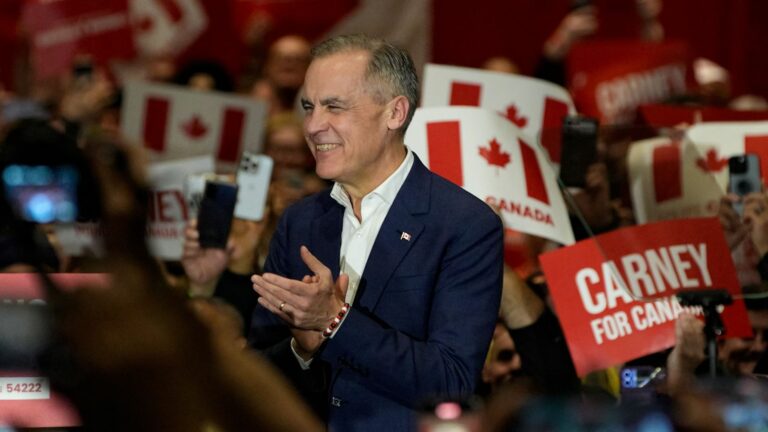
Canada’s effort to reduce its economic vulnerability to the United States is moving from political speeches to a much bigger financial test. Prime Minister Mark Carney is preparing to put a roughly C$1-trillion investment ambition in front of global investors as Ottawa looks for capital to expand infrastructure, energy, critical minerals, transportation and other strategic industries.
The push comes as trade friction with U.S. President Donald Trump makes Canada’s longstanding dependence on the American market increasingly uncomfortable. The goal is not to sever an economic relationship built over generations. It is to give Canada more options. A major investment gathering in Toronto on September 14 and 15 is expected to become one of the clearest demonstrations yet of how Carney intends to finance that shift.
The $1-Trillion Figure Is a Target for Mobilizing Capital
Carney Takes $1-Trillion Break-From-America Bet to Global Investors as Trump Fight Escalates
- The $1-Trillion Figure Is a Target for Mobilizing Capital
- Toronto Will Become the Showroom for the Strategy
- Trump Has Turned Diversification Into an Urgent Economic Question
- Infrastructure Is the Foundation of the Entire Bet
- Canada’s Banks and Insurers Are Being Asked to Do More
- Domestic Money Alone Will Not Get Canada to $1 Trillion
- A “Break From America” Cannot Mean Economic Decoupling
- Critical Minerals Could Become One of Canada’s Strongest Cards
- Announcements Are Easier Than Delivering Investable Projects
- Carney Is Betting Trump’s Pressure Can Produce a Lasting Reset
The most important detail surrounding the C$1-trillion figure is what it does—and does not—represent. Ottawa is not preparing to write a trillion-dollar government cheque. The broader ambition is to catalyze approximately C$1 trillion in investment over five years by drawing money from Canadian companies, pension funds, banks, insurers, institutional investors and international capital providers. That distinction matters because private money will have to carry much of the burden.
For Carney, the scale is part of the message. Canada cannot meaningfully diversify its economy through a handful of factories or isolated infrastructure projects. Transportation corridors, electricity systems, mines, processing facilities, data infrastructure and manufacturing plants require tens of billions of dollars at a time. The strategy therefore depends on convincing investors that Canada has enough investable projects—and enough regulatory certainty—to absorb capital on a scale rarely attempted through a coordinated national investment push.
Toronto Will Become the Showroom for the Strategy
The Canada Investment Summit scheduled for Toronto on September 14 and 15 is expected to bring Carney and Ontario Premier Doug Ford together with major investors, asset managers and business leaders. Rather than selling a single project, the gathering is designed around a larger proposition: Canada can become a destination for global capital at the same moment it is being forced to reconsider the risks of excessive economic concentration in the United States.
Several investment commitments already illustrate what that pitch could look like. BMO has been associated with plans for as much as C$70 billion in financing and investment in strategic Canadian sectors over a longer horizon, while Sun Life has announced a C$5-billion Canadian investment initiative over five years. Power Sustainable has also been linked to more than C$10 billion in planned investment. Individually, those figures are far below a trillion dollars. Collectively, they show the model Ottawa wants to multiply.
Trump Has Turned Diversification Into an Urgent Economic Question
Canadian governments have talked about trade diversification for decades, but geography repeatedly pulled the economy back toward the United States. Roughly three-quarters of Canadian merchandise exports have traditionally gone south of the border, reflecting deeply integrated supply chains in vehicles, energy, metals, agriculture and manufacturing. That relationship delivered enormous efficiency when the trading rules were predictable. It also created a concentrated risk when Washington became more willing to use tariffs as economic leverage.
Trump’s renewed tariff battles have changed the political calculation. Disputes involving Canadian manufactured goods, metals and vehicles have forced governments and companies to ask what happens when the country’s biggest customer also becomes its biggest source of policy uncertainty. Carney’s investment strategy is essentially an attempt to answer that question with new capacity: more domestic processing, more east-west infrastructure and more commercial links with markets beyond North America.
Infrastructure Is the Foundation of the Entire Bet
Attracting money is only useful if Canada has projects capable of putting it to work. That is why transportation, logistics, energy and digital infrastructure sit near the centre of the investment push. A new mine has limited strategic value if its product cannot reach a port efficiently. A manufacturing plant becomes less competitive when electricity connections, rail capacity or permitting take years longer than expected. The trillion-dollar ambition therefore depends on building the physical systems connecting resources with customers.
Recent investment announcements reflect that emphasis. Sun Life’s five-year Canadian plan covers areas including energy, digital technology, transportation and logistics, with approximately C$1.5 billion contemplated for infrastructure equity investments. That portion depends on legislative changes affecting how federally regulated insurers can invest. The example exposes both the opportunity and the challenge: Ottawa wants large pools of institutional capital financing nation-building assets, but regulations, project structures and acceptable investment returns still have to line up.
Canada’s Banks and Insurers Are Being Asked to Do More
Major Canadian financial institutions control enormous pools of capital, making them essential to any strategy measured in hundreds of billions of dollars. BMO’s planned commitment of up to C$70 billion over 10 years gives the investment campaign a substantial domestic anchor. The focus includes strategic areas such as transportation and critical minerals—sectors Ottawa increasingly views through the combined lenses of productivity, national resilience and trade diversification.
Sun Life adds another dimension because insurers are natural long-term investors. Infrastructure assets can generate cash flows for decades, potentially matching the long-duration liabilities insurers carry. Sun Life’s announced C$5-billion deployment over five years includes a planned C$1.5-billion infrastructure-equity component, subject to changes to the federal Insurance Companies Act. Power Sustainable’s planned investment of more than C$10 billion over five years adds another pool of private capital. The real test will be whether dozens more institutions make comparable decisions after the summit.
Domestic Money Alone Will Not Get Canada to $1 Trillion
Even commitments worth tens of billions of dollars quickly look smaller when placed beside a C$1-trillion ambition. That is why the global-investor audience matters. Canada needs to compete for capital controlled by international pension plans, sovereign wealth funds, infrastructure specialists, private-equity firms and asset managers that can choose projects virtually anywhere in the world. Those investors will not commit money simply because Canada wants greater independence from Washington; they will compare returns, timelines and political risks.
Canada does have advantages to sell. It offers large reserves of minerals, substantial electricity resources, established financial institutions, sophisticated pension investors and access to major markets through multiple trade agreements. Yet every global fund also has alternatives in Europe, Asia, the United States and emerging economies. Carney’s challenge is therefore to convert Canada’s political argument about resilience into an investment argument about returns. Global capital ultimately responds more reliably to bankable projects than to patriotic appeals.
A “Break From America” Cannot Mean Economic Decoupling
The political language surrounding Canada’s shift can sound dramatic, but the country cannot realistically replace the United States as its dominant economic partner in the near term. Canadian and U.S. production systems are intertwined, particularly in the automotive industry, where components can cross the border repeatedly before a completed vehicle reaches a customer. Oil, natural gas, electricity, food, machinery and countless intermediate goods also move through highly developed cross-border networks.
That reality makes diversification different from divorce. Carney’s strategic objective is better understood as reducing the cost of a future disruption rather than eliminating the American relationship. If Canada develops additional ports, processing facilities, transmission capacity and overseas customers, companies gain alternatives when U.S. policy changes abruptly. Even modest diversification can strengthen negotiating leverage. The central question is whether Canada can build those alternatives quickly enough to matter while preserving the enormous commercial value generated by continental trade.
Critical Minerals Could Become One of Canada’s Strongest Cards
Few sectors capture the diversification strategy better than critical minerals. Canada possesses significant deposits of materials used in batteries, electricity networks, defence technology and advanced manufacturing. Governments have spent years arguing that those resources could help allied countries reduce dependence on concentrated foreign supply chains. Turning mineral potential into actual exports, however, requires mines, processing capacity, roads, railways, power and customers willing to sign long-term agreements.
This is where Carney’s investment campaign intersects with industrial policy. A lithium, nickel, graphite or copper project may require billions of dollars before producing meaningful revenue, while processing and transportation can require additional investments. Private investors therefore need confidence that permitting timelines, Indigenous partnerships, infrastructure access and commodity economics will support the project. If Canada can solve those constraints, critical minerals could attract international capital while creating export markets beyond the United States. If it cannot, large resource estimates will remain largely theoretical.
Announcements Are Easier Than Delivering Investable Projects
Canada has no shortage of investment ambitions. The harder problem has often been moving from announcements to construction. Large projects can face overlapping environmental reviews, Indigenous consultation requirements, infrastructure bottlenecks, labour shortages, financing challenges and disputes between different levels of government. Some of those safeguards serve important purposes, but uncertainty over how long decisions will take can reduce the value of a project to investors comparing jurisdictions.
Carney’s government has responded by emphasizing faster approvals for projects considered nationally important and by trying to reduce internal economic barriers. That approach may improve Canada’s sales pitch, but investors will judge it by actual timelines rather than legislation alone. A C$1-trillion target magnifies the issue: achieving it would require a sustained pipeline of projects capable of reaching financial close year after year. The summit can generate headlines and commitments. Construction starts, capital spending and completed assets will determine whether the strategy changes Canada’s economy.
Carney Is Betting Trump’s Pressure Can Produce a Lasting Reset
The politics surrounding the investment push are unusually significant. Trump’s trade pressure has given Ottawa a powerful argument for changing economic policy: dependence that once looked efficient can become dangerous when the rules governing the relationship are unpredictable. Carney is effectively trying to use that disruption to accelerate investments Canada has discussed for years, from trade corridors and electricity systems to mineral processing and advanced manufacturing.
Success would be measured by more than reaching a headline C$1-trillion figure. Canada would need higher business investment, faster productivity growth, larger non-U.S. export markets and enough infrastructure to give companies genuine choices about where they sell. Failure would leave the country with impressive announcements but many of the same structural vulnerabilities. The Toronto summit is therefore best viewed as an opening test. Global investors will soon show whether Canada’s break-from-America strategy looks like a compelling commercial opportunity—or primarily a response to political turbulence in Washington.
This Options Discord Chat is The Real Deal
While the internet is scoured with trading chat rooms, many of which even charge upwards of thousands of dollars to join, this smaller options trading discord chatroom is the real deal and actually providing valuable trade setups, education, and community without the noise and spam of the larger more expensive rooms. With a incredibly low-cost monthly fee, Options Trading Club (click here to see their reviews) requires an application to join ensuring that every member is dedicated and serious about taking their trading to the next level. If you are looking for a change in your trading strategies, then click here to apply for a membership.