35,000+ smart investors are already getting financial news, market signals, and macro shifts in the economy that could impact their money next with our FREE weekly newsletter. Get ahead of what the crowd finds out too late. Click Here to Subscribe for FREE.
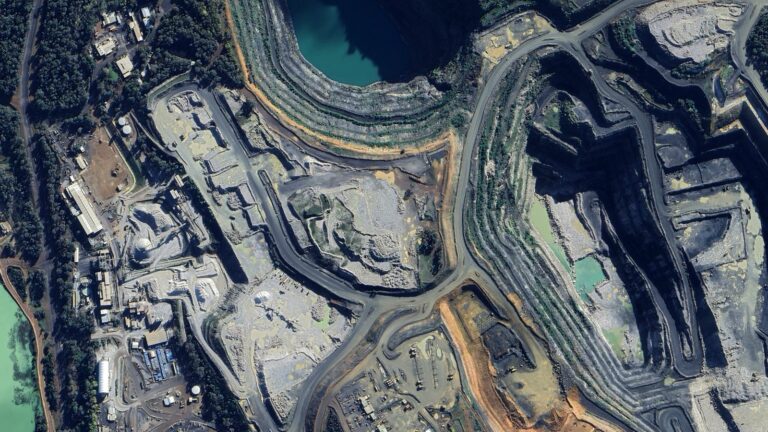
A working lithium mine in Quebec is preparing for a much bigger role in North America’s battery supply chain. Elevra Lithium’s North American Lithium operation in La Corne has outlined a C$366 million brownfield expansion that would lift average annual spodumene concentrate production after expansion to 373,000 tonnes, compared with 199,000 tonnes under the no-expansion case.
The plan arrives as governments and manufacturers are looking for more secure sources of battery materials closer to home. Rather than building an entirely new mine, Elevra intends to expand an operating site through three stages, bringing additional production online from 2027 through 2029. The strategy combines higher throughput, ore sorting and new processing capacity while aiming to push unit costs lower — a combination that could make the Quebec operation increasingly important during an unpredictable lithium market.
Nearly Twice as Much Lithium Concentrate
Quebec Lithium Operation Plans C$366M Expansion to Nearly Double Output as North America Hunts for Supply
- Nearly Twice as Much Lithium Concentrate
- Growth Is Being Split Into Three Stages
- The Economics Depend on More Than Higher Volume
- Lower Costs Are Almost as Important as Higher Output
- Existing Reserves Give the Plan a Long Runway
- Federal Backing Helps Fund the Build
- Quebec Already Has the Infrastructure Advantage
- North America Is Still Searching for More Supply
- A Canadian Customer Could Keep More Value at Home
- Strong Numbers Do Not Remove Lithium’s Risks
The headline number from Elevra’s new pre-feasibility study is 373,000 tonnes of spodumene concentrate annually once the expanded operation reaches its post-ramp-up production profile. That compares with 199,000 tonnes a year in the unexpanded base case, putting the proposed increase close to a doubling of current long-term output expectations. The concentrate is expected to contain 5.4% lithium oxide, a grade commonly expressed in the industry as SC5.4.
The new estimate is also substantially higher than Elevra was forecasting only months ago. Its May 2026 expansion study envisioned annual production capacity of 338,000 tonnes. Elevra says the additional improvement largely comes from higher mill feed grades generated through ore sorting. That matters because an expansion is not simply about pushing more rock through machinery. If sorting equipment can reject more waste material before milling, the plant can concentrate its effort on higher-value ore, extracting more finished product from the tonnes moving through the operation.
Growth Is Being Split Into Three Stages
Rather than attempting one large shutdown and rebuild, Elevra is dividing the C$366 million development into three stages. Stage 1, budgeted at C$92 million, is intended to optimize the existing mill and raise processing to the operation’s currently permitted average rate of 4,500 tonnes per day. Elevra expects the first phase to increase annual spodumene concentrate production by roughly 15% to 20%, with incremental production beginning around mid-2027.
Stage 2 carries an estimated C$101 million cost and is designed to lift milling, flotation and filtration capacity to 6,500 tonnes per day from mid-2028. A temporary mobile crushing system would initially feed that larger processing operation. Stage 3, the biggest component at C$173 million, would replace temporary and existing crushing infrastructure with a permanent circuit and add further ore-sorting capacity. Completion is targeted for mid-2029. Spreading the work across several years allows production growth to arrive before the entire expansion is finished.
The Economics Depend on More Than Higher Volume
Elevra’s pre-feasibility study assigns the overall expanded North American Lithium operation a post-tax net present value of about C$3.22 billion using an 8% discount rate. Looking specifically at the expansion rather than the mine as a whole, the company estimates an incremental post-tax NPV of C$943 million, an internal rate of return of 49.9% and a post-tax payback period of 34 months.
Those figures are projections rather than guaranteed financial outcomes, but they illustrate why brownfield developments can be attractive when compared with building a new mine from scratch. North American Lithium already has a pit, concentrator, utilities, workforce and transportation links. The C$366 million initial capital estimate also includes C$73 million in contingency. Elevra classifies it as an AACE Class 4 estimate with a target accuracy range of plus or minus 40%, an important qualification when examining the headline cost. Mining projects can change materially as engineering, construction and operating conditions become clearer.
Lower Costs Are Almost as Important as Higher Output
Producing more lithium would be less compelling if every additional tonne were expensive. Elevra’s study therefore places considerable emphasis on unit costs. Under the expansion case, average life-of-mine C1 operating costs are estimated at C$876 per tonne of concentrate, compared with C$1,048 per tonne for the unexpanded base case. After the expansion is fully operating, the company expects C1 costs to fall to approximately C$851 per tonne.
All-in sustaining costs are forecast at about C$918 per tonne after expansion. The mechanism is relatively straightforward: a larger plant can spread fixed labour, infrastructure and site costs across more saleable tonnes, while ore sorting is expected to improve the quality of material reaching the mill. The PFS also draws on actual salaries, consumable costs, maintenance spending and existing contracts from the operating mine rather than relying entirely on assumptions from a hypothetical greenfield project. Even so, lithium prices remain the ultimate test of how valuable those cost savings become.
Existing Reserves Give the Plan a Long Runway
The production forecast is backed entirely by Proven and Probable Ore Reserves rather than depending on speculative future discoveries. Elevra’s latest PFS uses 47.2 million tonnes of reserves grading 1.12% lithium oxide, consisting of about 0.2 million tonnes classified as Proven and 47 million tonnes classified as Probable. Those reserves support a revised 20-year mine life under the expansion scenario.
That distinction matters in mining economics. Mineral resources can identify potentially valuable material underground, but reserves have reached a higher level of technical and economic confidence. Elevra states that no Inferred Mineral Resources are included in the expansion production target or economic analysis. The broader North American Lithium property has also benefited from significant resource growth in recent years. The company reported a 95-million-tonne Mineral Resource at 1.15% lithium oxide in its FY2026 reporting. A substantial existing geological inventory gives operators more flexibility to optimize future mine sequencing, although actual grades and recoveries still influence profitability year by year.
Federal Backing Helps Fund the Build
The expansion is unusual in another respect: Elevra says the full development is already funded. A May financing package included a US$196 million, or A$275 million, institutional share placement alongside an agreement for the Canada Growth Fund to invest approximately US$102 million through up to C$145 million of convertible notes. The federal government publicly described the investment as support for expanding Canada’s largest operating lithium mine.
The Canada Growth Fund component is structured in two tranches. Elevra reported an upfront C$65 million tranche and a further C$80 million conditional tranche, with conditions applying to the latter. The company also completed a separate share purchase plan. By June, Elevra had held a groundbreaking ceremony at the Quebec operation and ordered long-lead equipment intended to reduce scheduling risk. Public participation does not eliminate construction or commodity-market risk, but it shows how critical-mineral policy is increasingly moving beyond government strategy papers and into direct financial support for projects considered strategically important.
Quebec Already Has the Infrastructure Advantage
North American Lithium sits at La Corne in Quebec’s Abitibi-Témiscamingue region, roughly 60 kilometres north of Val-d’Or, one of Canada’s established mining centres. The site is not an undeveloped deposit waiting for roads and power. It is an operating open-pit mine and spodumene concentrator with year-round road and rail access and access to Quebec’s hydroelectric electricity system. Operations were successfully restarted in March 2023 after the property’s earlier history of development and shutdown.
That existing footprint explains much of the brownfield strategy. Skilled workers, processing equipment and transport connections are already present, reducing some of the infrastructure challenges that can delay new critical-mineral mines. Ottawa said in May that the expansion is expected to support approximately 252 existing jobs in the area. For communities around established mining districts, that dimension can be as tangible as the production figures: an expansion means years of engineering, maintenance, operating and supplier activity tied to an asset that is already part of the regional economy.
North America Is Still Searching for More Supply
The strategic case extends far beyond Quebec. The International Energy Agency’s 2026 critical-minerals outlook says lithium demand is expected to increase more than threefold by 2040 under its stated-policies scenario, the strongest growth among the major energy minerals it tracks. The IEA also sees lithium supply gaps persisting through 2035 based on currently announced projects, even though the projected shortage has narrowed as additional projects advance.
American dependence adds another layer. The U.S. Geological Survey estimates that batteries accounted for 88% of global lithium end use in 2025. It also assessed U.S. net import reliance for lithium at greater than 50%, while commercial-scale domestic lithium production remained limited. Battery manufacturing, electric vehicles and stationary energy storage therefore create demand for a material whose mine and refining supply chains remain geographically concentrated. An operating Quebec producer cannot fill that gap by itself, but hundreds of thousands of additional tonnes from an established North American mine can become strategically meaningful in a market where governments increasingly value location alongside price.
A Canadian Customer Could Keep More Value at Home
More production only strengthens supply security if there is somewhere regional to process it. Elevra took a significant step in August by signing a binding supply agreement with British Columbia-based Mangrove Lithium. The arrangement covers an initial seven-year term, with another seven-year renewal possible. Contracted volumes are scheduled at 122,000 dry metric tonnes in the first year and 144,000 tonnes annually from the second year on a take-or-pay basis, subject to conditions around Mangrove’s planned facility.
Mangrove proposes a 20,000-tonne-per-year lithium-carbonate-equivalent conversion operation in Eastern Canada. Its agreement with Elevra contains market-linked pricing, a floor that Elevra expects to sit above NAL production costs and no price ceiling. The deal is conditional on milestones including financing, a positive final investment decision and commercial operation. If completed, it could connect Quebec spodumene directly with Canadian lithium conversion rather than sending all concentrate overseas, addressing what Canadian officials have described as a missing middle between domestic mineral resources and battery-grade chemicals.
Strong Numbers Do Not Remove Lithium’s Risks
The expansion arrives in an industry that has already demonstrated how quickly expectations can change. Lithium prices fell sharply after their 2022 peak as new supply entered the market and EV growth expectations shifted, before rebounding strongly through 2025 and early 2026. The IEA reported that lithium prices more than doubled during that recovery, yet remained far below their earlier peak. Investment by lithium-focused companies also fell around 40% in 2025, highlighting the difficulty of financing long-life projects through commodity cycles.
Elevra’s own PFS identifies commodity prices, exchange rates, ore head grades and recoveries as major sensitivities. Capital estimates carry uncertainty, and the company must still execute three construction stages while maintaining an operating mine. Those caveats are important because a C$3.22 billion projected NPV is not the same as cash already earned. What distinguishes North American Lithium is that expansion work is occurring at an operating, funded asset with existing reserves and infrastructure. If the schedule and operating assumptions hold, Quebec could enter the next lithium cycle with considerably more production already in place.
This Options Discord Chat is The Real Deal
While the internet is scoured with trading chat rooms, many of which even charge upwards of thousands of dollars to join, this smaller options trading discord chatroom is the real deal and actually providing valuable trade setups, education, and community without the noise and spam of the larger more expensive rooms. With a incredibly low-cost monthly fee, Options Trading Club (click here to see their reviews) requires an application to join ensuring that every member is dedicated and serious about taking their trading to the next level. If you are looking for a change in your trading strategies, then click here to apply for a membership.