35,000+ smart investors are already getting financial news, market signals, and macro shifts in the economy that could impact their money next with our FREE weekly newsletter. Get ahead of what the crowd finds out too late. Click Here to Subscribe for FREE.
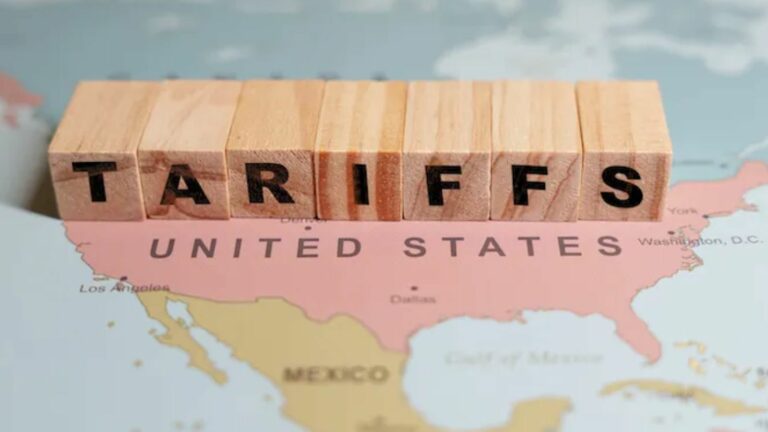
Canada’s long-running trade dispute with the United States is entering a sharper and more expensive phase. At 12:01 a.m. on September 8, Ottawa is scheduled to impose new counter-tariffs on $27.6 billion worth of U.S. goods, matching the latest American measures at rates of 15%, 25% and 50%. The move follows the collapse of negotiations in August and a new 50% U.S. tariff on a targeted group of Canadian exports. Trade experts are warning that retaliation may strengthen Canada’s bargaining position while also raising costs and exposing vulnerable industries to further pressure. Carleton University professor Fen Osler Hampson has cautioned that an escalating tariff war could become “painful,” leaving both governments to test how much economic strain businesses, workers and households are willing to endure.
Retaliation Is About to Move From Threat to Reality
Trade Experts Warn Canada-U.S. Tariff Fight Is ‘Going to Be Painful’ as Retaliation Nears
- Retaliation Is About to Move From Threat to Reality
- Why the August Trade Talks Fell Apart
- Canada’s Exposure Makes Every Escalation More Dangerous
- Job Losses Could Spread Beyond the Industries Named
- Retaliation Can Also Raise Prices at Home
- Steel, Aluminum and Manufacturing Sit Near the Centre
- Ottawa Is Pairing Tariffs With a $7.5 Billion Support Package
- Businesses Are Already Rewriting Their Supply Chains
- The Next U.S. Move Could Determine Whether the Fight Spirals
- CUSMA Still Provides a Large Economic Safety Valve
- The Real Risk Is a Long Period of Uncertainty
Canada’s next round of counter-tariffs is scheduled to begin just after midnight on September 8. The federal government says the measures will cover $27.6 billion in U.S. imports and apply rates of 15%, 25% or 50%, depending on the product. Ottawa designed the package as a dollar-for-dollar, rate-for-rate response to new American duties that took effect August 22. Steel, dairy, appliances, agricultural equipment, pulp and paper, plastics and electronics are among the sectors caught in the Canadian measures.
The details matter because this is not a single blanket tariff applied to everything crossing the border. Some steel and aluminum products that already faced 25% Canadian counter-tariffs are set to rise to 50%, while selected appliances and dairy products face 25% rates. Existing Canadian counter-tariffs on U.S. autos remain in place. Goods already in transit when the measures take effect are excluded, reducing disruption for shipments moving through the supply chain.
Why the August Trade Talks Fell Apart
The immediate escalation traces back to the breakdown of negotiations in Washington on August 21. Canadian officials said the United States introduced final terms that Ottawa considered unfair and economically damaging, leading Prime Minister Mark Carney to suspend the talks rather than sign an agreement. The failed negotiations had aimed to preserve tariff-free access under CUSMA while reducing U.S. duties on Canadian industries such as steel, aluminum and vehicles.
Washington has offered a different account, arguing that Canada rejected a generous package and pressed for concessions the United States was unwilling to provide. Since the collapse, the relationship has remained frozen for now. Carney and Canada-U.S. Trade Minister Dominic LeBlanc have said they remain willing to negotiate if the American approach changes. U.S. Trade Representative Jamieson Greer has also indicated that Washington is considering options for responding to Canada’s September 8 tariffs, keeping the risk of another retaliatory round alive.
Canada’s Exposure Makes Every Escalation More Dangerous
The imbalance in economic exposure is one reason trade specialists are cautious about a prolonged fight. Statistics Canada reported that exports to the United States fell 6.6% in July, while imports from the U.S. rose 1.8%. Canada’s merchandise trade surplus with its southern neighbour consequently narrowed from $10.3 billion in June to $5.9 billion in July. Even after months of diversification efforts, roughly two-thirds of Canadian merchandise exports were still going to the American market.
That dependence sits behind Hampson’s warning about which country has the greater tolerance for pain. Canada and the United States exchanged nearly $3.5 billion in goods and services every day in 2025, making the relationship integrated. There is movement elsewhere: exports to countries other than the United States rose 7.4% in July to a record $25.6 billion, representing 33.7% of total exports. But building alternative markets at that scale takes time, infrastructure and long-term contracts.
Job Losses Could Spread Beyond the Industries Named
The biggest concern for many households is not the tariff rate itself but what happens to employment when export orders fall. University of Calgary economist Trevor Tombe has estimated that the new 50% U.S. tariffs could place more than 87,000 Canadian jobs at risk if they remain in force. His estimate includes roughly 52,000 jobs directly tied to affected industries and another 35,000 in suppliers and services connected to those exporters.
The potential damage is broader than a factory floor. Tombe’s analysis points to transportation, warehousing, wholesale trade and professional services as areas that can weaken when exporters cut production. Ontario, Quebec and British Columbia carry some of the largest estimated exposures. The timing is uncomfortable: Statistics Canada reported that employment fell by 42,000 in August, while unemployment remained at 6.4%. Manufacturing employment rose by 22,000 that month, but the latest trade shock adds uncertainty to hiring and investment decisions.
Retaliation Can Also Raise Prices at Home
Counter-tariffs are designed to pressure U.S. producers and improve the competitive position of Canadian firms, but Ottawa has acknowledged that they come with domestic costs. In announcing the response, Carney said the government was acting reluctantly because tariffs would raise prices and reduce choice for Canadians. Tombe estimates the September measures could add roughly $4 billion in costs across the economy and lift average consumer prices by about 0.25%.
The burden may not be distributed evenly. Tombe estimates that a family with children could face about $250 in additional annual costs, while households earning under $30,000 could lose more than 0.5% of their disposable income from the price effects. The Bank of Canada has warned that new U.S. tariffs and Canadian countermeasures will increase costs for businesses and could feed into consumer prices over time. That creates a trade-off: retaliation may be strategically defensible while still making purchases more expensive.
Steel, Aluminum and Manufacturing Sit Near the Centre
Industrial supply chains are exposed because tariffs can hit products and the materials used to make them. Ottawa’s September package raises Canadian counter-tariffs on U.S. steel and aluminum products from 25% to 50%, matching American rates. Furniture and clothing and apparel are also included at the 50% level, while appliances, dairy products and steel and aluminum derivatives are listed at 25%. These rates can alter sourcing decisions for manufacturers that rely on cross-border inputs today.
The Bank of Canada has tried to separate sector-level pain from the picture. It estimates that products targeted by U.S. measures represent about 5% of Canadian exports to the United States, so the economy-wide hit may be limited. But the central bank warns that industries could be hit hard and that uncertainty can cause firms outside tariffs to delay investment or hiring. That effect is harder to measure and may last beyond the duties themselves.
Ottawa Is Pairing Tariffs With a $7.5 Billion Support Package
The federal response is not limited to duties at the border. Ottawa has announced $7.5 billion in new and enhanced support for workers and businesses, building on nearly $25 billion in assistance introduced since U.S. tariffs began. The package includes another $1.5 billion for the Regional Tariff Response Initiative and a $500 million liquidity stream through the Business Development Bank of Canada’s Pivot to Grow program.
The government is also putting $2 billion into the Canada Strong Diversification Fund and $3.5 billion into rapid-response supports for workers and employers, including employment-insurance flexibilities, workplace training and a worker-retention program. Those measures reflect a reality of trade wars: even firms that survive higher tariffs may face a cash-flow squeeze before finding new customers or suppliers. Ottawa is also keeping a tariff-remission process open for exceptional cases, including when a business cannot reasonably source a necessary input domestically or from a non-U.S. supplier.
Businesses Are Already Rewriting Their Supply Chains
Some Canadian companies are responding by reducing dependence on U.S. suppliers rather than waiting for a political settlement. The Financial Times reported that Chapman’s Ice Cream is working to replace more than 70% of the American ingredients it uses with Canadian or international sources by mid-2027. Other firms have leaned into Canadian-made products, searched for European customers or sourced goods through countries that avoid bilateral tariff barriers.
Those decisions line up with a shift visible in trade data. Statistics Canada reported that exports to non-U.S. destinations reached a record $25.6 billion in July. Diversification, however, is not a substitute for the American market. Supply chains depend on transportation networks, regulatory approvals, customer relationships and scale. A manufacturer can change a supplier faster than Canada can rebuild an export corridor. The dispute may accelerate that transition, but adjustment costs arrive before the benefits of a more diversified trade structure are realized.
The Next U.S. Move Could Determine Whether the Fight Spirals
Canada’s September 8 tariffs may not be the final step. Greer has said the United States has developed options for responding, and watchers expect Washington to consider whether another round would increase leverage or deepen damage. The Trump administration has shown how quickly pressure can shift sectors: after the August talks failed, President Donald Trump threatened 50% tariffs on Canadian cars, trucks and automotive parts beginning January 1, 2027.
That threat matters before implementation because the North American auto industry plans production months in advance. Investment, model allocation and supplier contracts can be influenced by uncertainty about border costs. Hampson argues escalation could become a test of political endurance rather than a narrow trade calculation. Yet there are constraints on both sides. Canadian retaliation raises domestic prices, while U.S. tariffs can disrupt companies that depend on Canadian components and customers. The danger is that each response creates pressure for another.
CUSMA Still Provides a Large Economic Safety Valve
Despite the confrontation, most Canada-U.S. trade remains inside the trade framework. Canadian trade officials say more than 98% of tariff lines and more than 99.9% of bilateral trade can avoid certain U.S. tariffs when goods satisfy CUSMA rules of origin. That protection is significant, although it does not shield products covered by Section 232 measures such as steel, aluminum, autos and other strategic categories.
CUSMA itself remains in force until 2036, even though its review process has become part of the political dispute. The agreement’s existence means companies retain a legal structure for much of the trade crossing the border. It also creates a possible path back from escalation if both governments decide predictable rules are more valuable than another tariff round. For businesses, the immediate task is technical as well as political: document origin carefully, understand which tariff regime applies and preserve access wherever the agreement still offers protection.
The Real Risk Is a Long Period of Uncertainty
The damaging outcome may not be an overnight collapse but months of unstable rules. The Bank of Canada has warned that new tariffs make growth uncertain and can lead companies to postpone investment and hiring when they are not targeted. Its September rate decision kept the policy rate at 2.25% while noting that trade measures could raise business costs and feed into consumer prices.
That is why the dispute looks like a test of endurance. Canada has fiscal supports, a CUSMA framework and signs of export diversification, but none eliminates the cost of losing reliable access to its largest market. The United States has reasons to avoid endless escalation because Canadian goods, customers and intermediate inputs are embedded in American supply chains. A negotiated reset remains possible, but until talks resume, companies are likely to plan around higher costs and uncertainty rather than assume the old relationship will quickly return.
This Options Discord Chat is The Real Deal
While the internet is scoured with trading chat rooms, many of which even charge upwards of thousands of dollars to join, this smaller options trading discord chatroom is the real deal and actually providing valuable trade setups, education, and community without the noise and spam of the larger more expensive rooms. With a incredibly low-cost monthly fee, Options Trading Club (click here to see their reviews) requires an application to join ensuring that every member is dedicated and serious about taking their trading to the next level. If you are looking for a change in your trading strategies, then click here to apply for a membership.