35,000+ smart investors are already getting financial news, market signals, and macro shifts in the economy that could impact their money next with our FREE weekly newsletter. Get ahead of what the crowd finds out too late. Click Here to Subscribe for FREE.
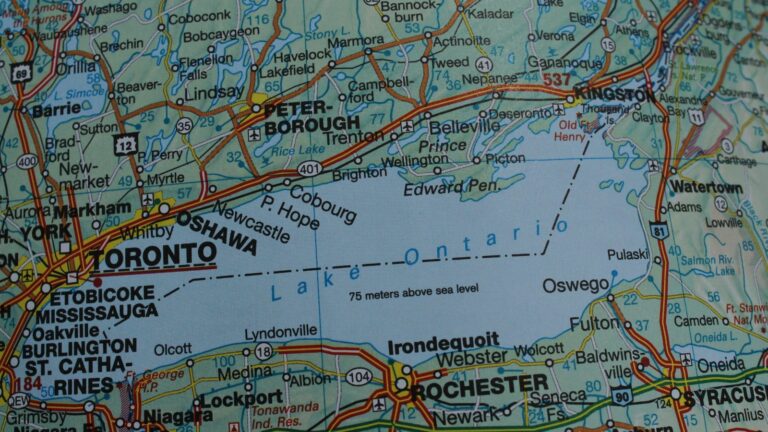
A fight over the name of one of North America’s Great Lakes has become an unusually personal symbol of worsening U.S.-Canada relations. After President Donald Trump ordered the U.S. government to refer to Lake Ontario as “Lake America,” several Americans who have built their lives north of the border reacted with embarrassment, frustration and disbelief.
Some described the move as beneath the presidency. Others questioned how Washington could effectively claim naming authority over water shared with another sovereign country. London, Ontario, resident Chris Kubinski summed up his reaction in two words: “childish” and “bizarre.” Their responses come as national polling shows the renaming is unpopular inside the United States as well, turning what began as a symbolic presidential gesture into another flashpoint in a much larger political and economic dispute.
Trump Turned a Provocation Into Federal Policy
Americans Living in Canada Turn on Trump’s ‘Lake America’ Move, Calling It ‘Childish’ and ‘Bizarre’
- Trump Turned a Provocation Into Federal Policy
- Americans in Canada Were Among the Sharpest Critics
- The Name Has Survived More Than Two Centuries of Political Change
- Washington Cannot Rename Canada’s Half of the Lake
- Google and Apple Made the Dispute Visible on Millions of Screens
- Canada Answered With a Very Large Reminder
- Most Americans Do Not Support the New Name Either
- The Lake Fight Grew Out of a Much Bigger Trade Breakdown
- More Than a Million Americans Have Connections to Life in Canada
- Congress Is Now Fighting Over What the Lake Should Be Called
Trump initially raised the idea of changing Lake Ontario’s name as tensions with Canada intensified, but the proposal became official U.S. policy on August 27, 2026. Executive Order 14422 instructed the Interior secretary, working with the U.S. Board on Geographic Names, to rename the lake “Lake America” and update the federal Geographic Names Information System.
The order directed federal agencies to use the new name on government maps, documents and communications. The White House justified the change by emphasizing American economic and security contributions to the Great Lakes, including the role of U.S. Coast Guard icebreakers. It specifically noted that the Coast Guard supplies nine of the 11 icebreaking vessels operating on the Great Lakes. What might otherwise have remained provocative political rhetoric therefore acquired a practical consequence: U.S. federal databases and maps were ordered to treat a centuries-old geographic name differently from Canada.
Americans in Canada Were Among the Sharpest Critics
Ben Davis, a retired law professor who moved from Virginia to Quebec in February 2025, told The Canadian Press that the renaming was far beneath the office of the U.S. president. His criticism reflected something deeper than disagreement over cartography. For Davis, the episode illustrated how political conflict between two closely connected countries had spilled into territory that previously seemed immune from partisan battles.
Other Americans living in Canada responded similarly. Dawna E. Wade, who moved from North Carolina to Annapolis Royal, Nova Scotia, argued that Lake Ontario was not Trump’s to rename unilaterally. Chris Palermo, originally from Long Island and now living in Hamilton with his Canadian wife, characterized the change as a useless reaction to the breakdown in negotiations. Those accounts are individual experiences rather than representative polling of every American in Canada, but together they show how uncomfortable the dispute has become for people with personal ties to both countries.
The Name Has Survived More Than Two Centuries of Political Change
Lake Ontario was not named by the modern Canadian government. Its name reaches back centuries and is rooted in Indigenous languages spoken long before Canada or the United States existed in their present forms. Historical accounts offer somewhat different linguistic spellings and translations, but the name “Ontario” is widely traced to Indigenous terminology associated with the lake, often translated along the lines of a beautiful, great or shining body of water.
There is also unusually strong documentary evidence for the name’s longevity. The Treaty of Canandaigua, signed in 1794 between the United States and the Six Nations during George Washington’s presidency, explicitly refers to “Lake Ontario.” Davis pointed to that history when criticizing Trump’s order. The Seneca Nation has also called for the executive order to be rescinded, arguing that the original name reflects Indigenous history and appears in a treaty that has endured for more than 230 years.
Washington Cannot Rename Canada’s Half of the Lake
The executive order has real consequences inside the U.S. federal government, but its geographic authority has clear limits. Lake Ontario physically straddles the international boundary between Ontario and New York. Canada’s federal water agency identifies it as the easternmost Great Lake crossing the Canada-U.S. border, with a surface area of approximately 18,960 square kilometres. Reuters has reported that roughly 52% of the lake lies on the Canadian side.
That means Washington can determine terminology used by American federal agencies, but it cannot force Canada to change its official geographic name. Canadian maps, government records and institutions continue to use Lake Ontario. The distinction helps explain why two people looking at what is physically the same lake can now encounter different labels depending on which country’s official naming system is being used. The lake itself has not changed jurisdiction, ownership or international boundaries because of the executive order.
Google and Apple Made the Dispute Visible on Millions of Screens
The controversy became far more tangible once digital mapping companies reacted. Google Maps changed the lake’s label to “Lake America” for users in the United States after the federal Geographic Names Information System was updated. Canadian users continued to see Lake Ontario, while users in some other countries were shown both names. Apple subsequently made a similar change for its U.S. Maps users.
For Americans living in Canada, that corporate response was particularly frustrating. Palermo told The Canadian Press he was disappointed that major technology companies adopted the U.S. designation. Not every mapping company followed the same path. MapQuest kept Lake Ontario and attracted a burst of attention, with the Associated Press reporting that its app climbed to the top of Apple’s free-app rankings in both Canada and the United States. An obscure naming rule had suddenly become something ordinary smartphone users could see simply by opening a map.
Canada Answered With a Very Large Reminder
Canadian leaders responded with both formal objections and highly visible symbolism. Prime Minister Mark Carney said the lake would continue to be called Lake Ontario in Canada, emphasizing that its name and Indigenous roots predate both Canadian Confederation and American independence. Ontario Premier Doug Ford responded even more physically: a large “Lake Ontario. Now and Always.” sign was unveiled at Fifty Point Conservation Area in Grimsby.
Ford said Trump could call the lake whatever he wanted, but maintained that Canadians and much of the rest of the world would continue using its established name. Opposition was not exclusively Canadian either. New York Governor Kathy Hochul rejected the renaming, underscoring that resistance exists on the American side of the border as well. The episode became an unusual contest in which governments, politicians and technology companies were displaying different names for the same internationally shared body of water.
Most Americans Do Not Support the New Name Either
The Americans interviewed in Canada are not statistically representative of U.S. opinion, but nationwide polling points in the same direction. A Reuters/Ipsos poll of 1,023 U.S. adults found that 63% opposed Trump’s renaming of Lake Ontario, while only 14% supported it. About one-fifth either had not heard enough about the change or were uncertain about their position.
A separate Economist/YouGov poll also found substantial opposition, with 68% strongly or somewhat disapproving and 17% approving. Even Republican opinion was divided rather than overwhelmingly supportive. That distinction matters because the controversy can easily be framed simply as Canadians objecting to an American president. The available polling indicates something broader: large numbers of Americans also see little reason to replace the familiar name. In other words, the frustration expressed by Americans living north of the border is part of a wider domestic argument inside the United States itself.
The Lake Fight Grew Out of a Much Bigger Trade Breakdown
The timing of the executive order was not accidental. U.S.-Canada trade negotiations collapsed on August 21 after several days of talks failed to produce a final agreement. Shortly afterward, Washington imposed 50% tariffs on roughly $20 billion worth of selected Canadian imports. Canada responded by announcing retaliatory tariffs on about $20 billion in annual U.S. imports, covering hundreds of products and scheduled to begin September 8.
Trump had explicitly connected his initial Lake America threat to deteriorating relations with Ontario. That backdrop explains why the renaming has been interpreted less as an isolated geographic decision and more as another weapon in the political confrontation. The dispute now reaches from industrial supply chains and household products to maps and historic place names. For residents with families, careers or identities spanning the border, that expansion makes the conflict harder to compartmentalize. Trade policy can feel abstract; changing the name on a familiar lake does not.
More Than a Million Americans Have Connections to Life in Canada
The reaction also matters because Americans living in Canada are not a tiny or easily defined group. The Association of Americans Resident Overseas estimated approximately 1.05 million Americans in Canada in 2023 using a methodology that includes several categories of U.S. citizens and people with American connections. Other government estimates are lower, illustrating how difficult expatriate populations are to measure precisely. Academic work published in 2026 similarly identified Canada as one of the largest destinations for Americans living abroad.
Their experiences differ dramatically. Some arrived for work or family decades ago, while others moved more recently. Kubinski, for example, came to Canada with his family as a child in the 1970s and later became a Canadian citizen. He told The Canadian Press that Trump’s earlier rhetoric about Canada becoming a “51st state” contributed to his decision to renounce U.S. citizenship. Against that background, Lake America was not merely an eccentric name change. For him, it reinforced a longer pattern of rhetoric he had already rejected.
Congress Is Now Fighting Over What the Lake Should Be Called
The conflict has gone beyond presidential orders, premiers and mapping applications. On August 31, Democratic Rep. Debbie Dingell introduced the Hands Off Our Great Lakes Act in the U.S. House of Representatives. The legislation would prohibit federal officials from renaming any of the five Great Lakes and would explicitly nullify Executive Order 14422. It was referred to the House Committee on Natural Resources.
The same day, Republican Rep. Jimmy Patronis introduced competing legislation called the Lake America Act, which would formally establish “Lake America” in federal law and require government documents and maps to adopt the designation. It, too, went to the Natural Resources Committee. Neither proposal becoming law was guaranteed simply because it was introduced, but their existence demonstrates how far the dispute has travelled. A name used for centuries is now the subject of competing congressional bills—and, for some Americans living in Canada, a striking example of how rapidly the relationship between two longtime neighbours has changed.
This Options Discord Chat is The Real Deal
While the internet is scoured with trading chat rooms, many of which even charge upwards of thousands of dollars to join, this smaller options trading discord chatroom is the real deal and actually providing valuable trade setups, education, and community without the noise and spam of the larger more expensive rooms. With a incredibly low-cost monthly fee, Options Trading Club (click here to see their reviews) requires an application to join ensuring that every member is dedicated and serious about taking their trading to the next level. If you are looking for a change in your trading strategies, then click here to apply for a membership.