35,000+ smart investors are already getting financial news, market signals, and macro shifts in the economy that could impact their money next with our FREE weekly newsletter. Get ahead of what the crowd finds out too late. Click Here to Subscribe for FREE.
A weekend built around horses, competition and Indigenous tradition has been overshadowed by grief at Enoch Cree Nation after a community member died following an incident during an Indian Relay event on September 5. Chief and Council confirmed the loss in a statement issued overnight, extending condolences to the family and saying the Nation was working with the appropriate authorities.
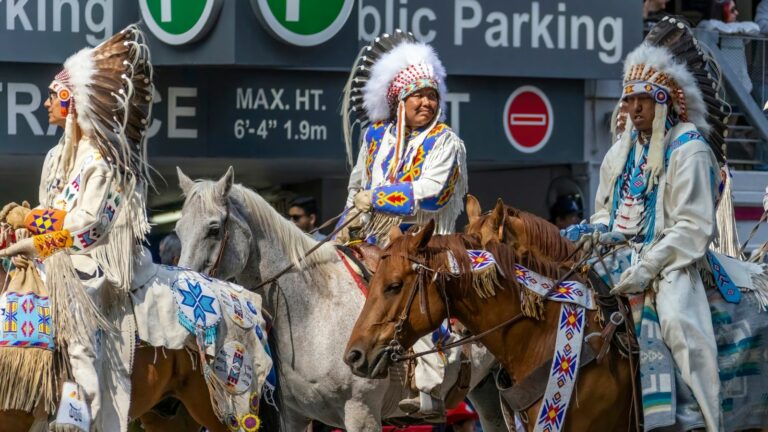
Few details about what happened have been released, and the Nation has explicitly asked that speculation be avoided while the investigation continues. The tragedy occurred during a major community gathering—the sixth annual River Cree Cup World Championship Indian Relay Races, an event designed to showcase elite horsemanship and a living Indigenous sporting tradition. For Enoch Cree Nation, however, the immediate focus has shifted away from competition and toward a family and community facing an unexpected loss.
A Community Confirms a Painful Loss
Enoch Cree Nation Mourns Community Member After Fatal Incident at Indian Relay Event
- A Community Confirms a Painful Loss
- A Major Weekend of Racing Turned Somber
- Enoch Cree Nation Is Closely Tied to the Edmonton Region
- Indian Relay Carries Meaning Beyond Competition
- Relay Racing Depends on an Entire Team
- Alberta Has Become a Major Home for Indian Relay
- High-Speed Equestrian Sport Carries Real Risks
- The Investigation Now Matters More Than Rumour
- Privacy Has Become Part of the Nation’s Public Message
- A Celebration of Culture Now Carries a Different Memory
Enoch Cree Nation announced that one of its community members had died after an incident during the evening Indian Relay event at the Enoch Rodeo Grounds. Chief and Council expressed condolences directly to the person’s family, saying the wider community was grieving and holding them in its thoughts and prayers. The statement did not name the deceased or provide details about how the incident unfolded.
That restraint is significant. In the hours after a fatal incident at a public sporting event, eyewitness accounts and social-media posts can quickly create an incomplete or misleading picture. Enoch Cree Nation instead emphasized that authorities were investigating and that it would fully support that work. As of early September 6, no official account had established the sequence of events or a cause. The Nation said additional information would be shared when appropriate, placing the family’s privacy ahead of public demands for immediate answers.
A Major Weekend of Racing Turned Somber
The death occurred during what had been planned as one of Enoch Cree Nation’s largest Indigenous sporting weekends of the year. The River Cree Cup World Championship was scheduled from September 4 through September 6 at Enoch Race Park, with gates opening in the afternoon and Indian Relay competition beginning after a grand entry. It was the sixth edition of the annual event.
Organizers had advertised $200,000 in cash and prizes, including a $70,000 first-place award and team buckles. The program included several categories, among them Youth Relay, Little Braves, Lady Warrior, Chief Race and the Billy Lapotac Memorial Warrior race. Those details show the scale of the gathering: it was not simply a single horse race but a multi-day event involving competitors, horses, families, spectators and organizers. Against that backdrop, news of a community member’s death transformed an occasion intended for celebration into one marked by mourning.
Enoch Cree Nation Is Closely Tied to the Edmonton Region
Enoch Cree Nation describes itself as a proud First Nation within Treaty No. 6 territory and uses the Cree name maskêkosihk, translated by the Nation as “People of the land of the medicine.” Its lands sit immediately west of Edmonton, making Enoch both a distinct First Nation government and one of the Alberta capital region’s closest Indigenous neighbours.
The relationship with Edmonton extends beyond geography. The two governments signed a memorandum of understanding in 2017 and maintain a stewardship relationship covering matters such as land-use planning, emergency services, recreation and economic development. Indigenous Services Canada reported 2,894 registered members of Enoch Cree Nation in its 2021 population figures, including 1,892 living on reserve or Crown land. Those numbers help explain why a death described simply as the loss of a “community member” can reverberate so widely. In tightly connected communities, public gatherings are often filled with relatives, friends, teammates and families whose relationships extend across generations.
Indian Relay Carries Meaning Beyond Competition
Indian Relay racing combines remarkable athleticism with traditions rooted in Indigenous horse cultures of the Plains. Riders compete bareback and must control horses travelling at considerable speed before completing rapid exchanges. Travel Alberta describes the sport as requiring precision, teamwork and horsemanship, while Indigenous racing events around the province increasingly present Relay as both elite competition and an expression of living culture.
Its roots run deeper than the modern rodeo arena. Academic research on Native North American horse racing has found that racing historically carried social significance connected with prestige, competition and community identity. Scholar Peter Mitchell has argued that the survival of Indigenous racing traditions through rodeo and Indian Relay reflects the enduring values attached to those practices. That history matters when considering the emotional weight surrounding the Enoch tragedy. The event was not merely entertainment brought to the community; it was connected to a sporting tradition that Indigenous families and competitors have continued to maintain and reshape over generations.
Relay Racing Depends on an Entire Team
Although spectators naturally focus on the rider racing around the track, Indian Relay is fundamentally a team sport. A conventional race involves a rider completing laps on different horses and making rapid transitions between them. Team members waiting in the exchange area must manage powerful animals while helping the rider move efficiently from one horse to another. Successful exchanges can determine the outcome within seconds.
That combination of rider skill, horse handling and split-second teamwork is a major part of the sport’s appeal. It also explains why Indian Relay communities frequently describe themselves in family-like terms. Riders may draw the cheers, but handlers, horse owners, trainers and relatives make competition possible. At the 2026 River Cree Cup, categories ranging from youth events to specialized races highlighted the way participation can extend across different ages and roles. When tragedy occurs in such an environment, its impact therefore reaches beyond a single competitor or team and into a much broader network.
Alberta Has Become a Major Home for Indian Relay
The Enoch event forms part of a much wider Indian Relay circuit across Alberta. During the 2026 season, competitions and cultural gatherings featuring Relay racing were promoted in places including Grande Prairie, Medicine Hat, Mînî Thnî and Lloydminster. Some events combine racing with drumming, dancing, Indigenous markets, food and cultural programming, bringing spectators into contact with traditions extending well beyond the track.
That growing visibility has helped Indian Relay reach audiences who may have had little previous exposure to Indigenous horse racing. Travel Alberta has promoted the sport as a distinctive part of the province’s summer cultural calendar, emphasizing bareback riding, rapid horse exchanges and the relationship between riders and their teams. The River Cree Cup occupied an important place within that landscape, presenting itself as a world championship and offering substantial prize money. Saturday’s fatal incident now places a deeply painful moment within a season that had otherwise demonstrated the sport’s growing profile and cultural reach.
High-Speed Equestrian Sport Carries Real Risks
Indian Relay’s speed and rapid exchanges are central to its excitement, but high-speed equestrian competition inherently carries risk. Broader research into horse racing and competitive equestrian sports has repeatedly identified falls, head injuries, fractures and other trauma among riders. A systematic review published in the sports-medicine literature found that head and neck injuries are among the equestrian injuries most closely associated with fatal outcomes.
Historical U.S. jockey data also illustrates the physical forces involved. Research covering thousands of professional racing injuries found that being thrown from a horse was a major mechanism behind several categories of injury. Those findings provide general context only; they do not establish what happened at Enoch. The Nation has released no information connecting Saturday’s death with a fall, collision, horse exchange or any other specific mechanism. Until investigators provide findings, applying general racing risks to this individual case would go beyond the evidence currently available.
The Investigation Now Matters More Than Rumour
One of the clearest messages from Enoch Cree Nation’s statement was its refusal to speculate. Chief and Council said the Nation was working with the appropriate authorities as they investigated the incident and would support that process fully. No public statement available early September 6 identified which agencies were leading the investigation or described what evidence was being reviewed.
That leaves several basic questions unanswered, including exactly how the incident occurred and whether any additional factors contributed to the fatal outcome. Those questions are legitimate, particularly after a death at an organized sporting event, but credible answers depend on evidence rather than assumptions. Investigations into serious incidents can involve witness interviews, medical findings, venue information and other records before a reliable sequence can be established. For now, the most accurate description remains the limited one provided by Enoch Cree Nation: a community member died following an incident during the Indian Relay event, and authorities are investigating.
Privacy Has Become Part of the Nation’s Public Message
Enoch Cree Nation specifically asked media organizations to respect the privacy of both the family and the broader community. That request carries particular importance before the deceased has been publicly identified by the Nation. Publishing an unconfirmed name or circulating graphic descriptions based on second-hand accounts could create additional distress while relatives and community members are grieving.
The Nation’s communication also reflects an important distinction between public interest and public curiosity. A fatal incident at a major event naturally requires scrutiny, particularly when questions about circumstances and safety may eventually need answers. But those questions can be examined without treating a family’s loss as spectacle. The statement leaves open the possibility of further information once officials determine it is appropriate to release. Until then, restraint protects not only accuracy but also the dignity of the person who died. The absence of detail should not be treated as an invitation to invent it.
A Celebration of Culture Now Carries a Different Memory
Before the weekend began, organizers described the River Cree Cup as three days of racing, culture, competition and community. The program, substantial prize pool and range of race categories reflected years of work involved in establishing the event. Enoch Cree Nation had also recruited community members for employment connected with the 2026 Relay Race, demonstrating how the gathering extended beyond the competitors themselves.
The death of a community member has inevitably changed the meaning of this year’s event. Yet it would also be inaccurate to let the tragedy erase the cultural importance of Indian Relay or the people who sustain it. Both realities can exist together: a tradition can remain a source of pride while a particular gathering becomes associated with profound loss. As authorities establish what happened, Enoch Cree Nation has made its immediate priority clear. The focus is on the bereaved family, a grieving community and allowing verified information to emerge in its proper time.
This Options Discord Chat is The Real Deal
While the internet is scoured with trading chat rooms, many of which even charge upwards of thousands of dollars to join, this smaller options trading discord chatroom is the real deal and actually providing valuable trade setups, education, and community without the noise and spam of the larger more expensive rooms. With a incredibly low-cost monthly fee, Options Trading Club (click here to see their reviews) requires an application to join ensuring that every member is dedicated and serious about taking their trading to the next level. If you are looking for a change in your trading strategies, then click here to apply for a membership.