35,000+ smart investors are already getting financial news, market signals, and macro shifts in the economy that could impact their money next with our FREE weekly newsletter. Get ahead of what the crowd finds out too late. Click Here to Subscribe for FREE.
Three federal byelections delivered three Liberal victories on August 31, but one result towered over the others. In Chicoutimi—Le Fjord, a Quebec riding held by the Conservatives since 2018, Liberal Daniel Gobeil captured 51.3% of the preliminary vote while Conservative Régis Gaudreault managed just 12.5%.
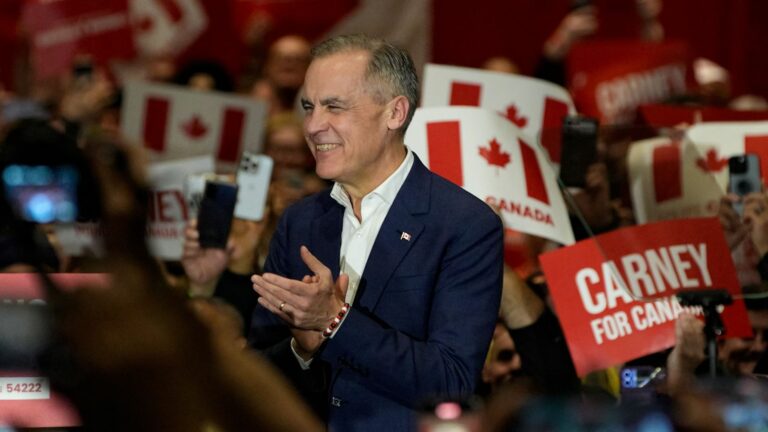
The scale of the reversal matters because Chicoutimi—Le Fjord sits in a region where aluminum, forestry and dairy are woven directly into the local economy — sectors that have been exposed to an intensifying Canada-U.S. trade confrontation. The Liberals also comfortably retained Beaches—East York in Toronto and North Vancouver—Capilano in British Columbia, giving Prime Minister Mark Carney a clean sweep just as his government is asking Canadians to support a tougher stance against Donald Trump’s tariffs.
Chicoutimi—Le Fjord Delivers the Night’s Political Earthquake
The raw numbers in Chicoutimi—Le Fjord show how dramatically the riding moved in barely 16 months. Conservative Richard Martel won the seat in the April 2025 federal election with 34.1% of the vote, narrowly ahead of the Bloc Québécois at 31.2% and the Liberals at 31.1%. The three parties were separated by only about three percentage points. In Monday’s byelection, that competitive three-way race disappeared. Liberal Daniel Gobeil won 16,235 votes, or 51.3%, while Bloc candidate Caroline Dubé finished second with 32.9%. Conservative Régis Gaudreault received 3,962 votes, equivalent to 12.5%. In percentage-point terms, Conservative support dropped 21.6 points from the 2025 result while the Liberal share increased 20.2 points. The Bloc, meanwhile, remained remarkably close to where it had been, suggesting much of the dramatic movement occurred between the Liberals and Conservatives rather than representing a wholesale restructuring of every party’s local support. Elections Canada reported 42.2% turnout, with all 212 polls reporting in its preliminary count.
That shift occurred in a constituency where the trade fight with Washington is unusually tangible. Quebec government labour-market information describes aluminum as an important economic pillar of Saguenay—Lac-Saint-Jean and says the region has more forestry workers than any other region in the province. Ottawa had already announced nearly $6.8 million in tariff-response funding for six local aluminum manufacturers and one industry organization in May, projects expected to support more than 350 jobs. Into that environment stepped Gobeil, a dairy farmer who had served as president of Les Producteurs de lait du Québec since 2020 before resigning to seek the Liberal nomination. His family’s Ferme du Fjord includes about 200 cattle, 125 lactating cows and more than 1,000 acres under cultivation. That background gave the Liberals a candidate closely identified with supply management at the same moment U.S. pressure on Canadian dairy policy was again becoming politically sensitive. Gobeil told supporters after his victory that Ottawa would have to stand behind aluminum and forestry workers while protecting supply management. The combination of local candidate credibility and a national trade confrontation gave the contest stakes well beyond a conventional midterm byelection.
Toronto and North Vancouver Show a Liberal Hold — but Not a Uniform Surge
The two Liberal-held ridings produced comfortable victories without showing the same enormous partisan swing seen in Quebec. In Beaches—East York, Liberal Tanveer Shahnawaz won 18,361 votes, or 55.7%, comfortably ahead of New Democrat Shannon Devine at 25.8% and Conservative Jim Syrbos at 15.5%. Shahnawaz was not entirely new to local voters: he had managed the constituency office of former Liberal MP and cabinet minister Nate Erskine-Smith. The seat became vacant after Erskine-Smith left federal politics amid plans to pursue opportunities in Ontario politics. His departure presented the Liberals with the familiar challenge of transferring a popular incumbent’s support to a new candidate. They succeeded comfortably, but their share declined from the 67.7% Erskine-Smith captured in the 2025 general election. The more striking movement came from the NDP. Devine, who had also contested the riding in 2025, climbed from 6.9% to 25.8%, nearly quadrupling her vote share and moving into second place. Conservative support fell from 23.5% to 15.5%.
North Vancouver—Capilano was steadier. Liberal Braeden Caley, a former deputy chief of staff to Carney, secured 58.6% against Conservative Stephen Curran’s 29.2%. That result closely resembled the 2025 election, when former Liberal cabinet minister Jonathan Wilkinson took 59.8% while Curran — the same Conservative candidate — received 33.7%. Wilkinson subsequently left Parliament to become Canada’s ambassador to the European Union. Rather than suffering a major incumbent-loss penalty, the Liberals therefore maintained almost all of their previous percentage support under Caley. The Conservatives slipped by roughly 4.5 percentage points, while Green candidate Shelley Luce rose to 8.7%, compared with the Greens’ 1.7% showing in the riding in 2025. Taken together, Toronto and North Vancouver complicate any claim that Monday produced a nationwide Liberal wave. Liberal vote share actually declined from its 2025 level in both seats. What the party demonstrated instead was an ability to defend two strongholds while simultaneously making a much more consequential breakthrough in Quebec. The sweep is politically powerful precisely because three quite different local contests all ended the same way.
The Results Strengthen Carney — but By-elections Still Come With Warning Labels
For Carney, the political timing could hardly be more favourable. The victories arrived after Canada-U.S. trade negotiations broke down in August and amid another escalation in tariffs between Ottawa and Washington. Abacus Data polling conducted from August 21 to 26 found that 71% of Canadian adults believed the federal government was right to suspend negotiations rather than accept the American terms, despite the possibility of greater economic uncertainty. Sixty per cent approved of Carney’s handling of the negotiations, including 63% in Quebec. Another Abacus measure put national voting intentions at 45% Liberal and 35% Conservative immediately before the byelections. Those numbers make it plausible that Chicoutimi—Le Fjord reflected something larger than candidate selection alone. They do not establish that tariffs caused the result, but the alignment is difficult to ignore: a government enjoying broad approval on the U.S. file captured a tariff-exposed riding that the Conservatives had won less than a year and a half earlier. The Liberal victories were reported as bringing the party to 173 seats in the 343-seat House of Commons, strengthening a majority that had already emerged through changes in parliamentary membership since the 2025 election.
The pressure now falls most heavily on Pierre Poilievre’s Conservatives. Losing Chicoutimi—Le Fjord would have been painful even in a close race; falling from 34.1% to 12.5% and finishing nearly 39 percentage points behind the Liberals is substantially harder to dismiss. Yet there are important reasons not to treat three byelections as a miniature general election. Turnout ranged from roughly 40% to 46% across the three ridings, and decades of Canadian political-science research show that byelections behave differently from nationwide contests. A study of 121 Canadian federal byelections between 1963 and 2008 found that government-party performance can reflect changes in national opinion while smaller parties and independents can also outperform their general-election results. Monday offered examples of both patterns: the Liberals benefited from a favourable national environment, while the NDP surged locally in Beaches—East York and the Greens improved sharply in North Vancouver—Capilano. That makes the safest conclusion narrower but still significant. Carney emerged stronger, the Liberals demonstrated that their political coalition remains durable, and the Conservatives received an unmistakable warning from a Quebec riding where Trump’s trade pressure has become part of everyday economic politics.
This Options Discord Chat is The Real Deal
While the internet is scoured with trading chat rooms, many of which even charge upwards of thousands of dollars to join, this smaller options trading discord chatroom is the real deal and actually providing valuable trade setups, education, and community without the noise and spam of the larger more expensive rooms. With a incredibly low-cost monthly fee, Options Trading Club (click here to see their reviews) requires an application to join ensuring that every member is dedicated and serious about taking their trading to the next level. If you are looking for a change in your trading strategies, then click here to apply for a membership.