35,000+ smart investors are already getting financial news, market signals, and macro shifts in the economy that could impact their money next with our FREE weekly newsletter. Get ahead of what the crowd finds out too late. Click Here to Subscribe for FREE.
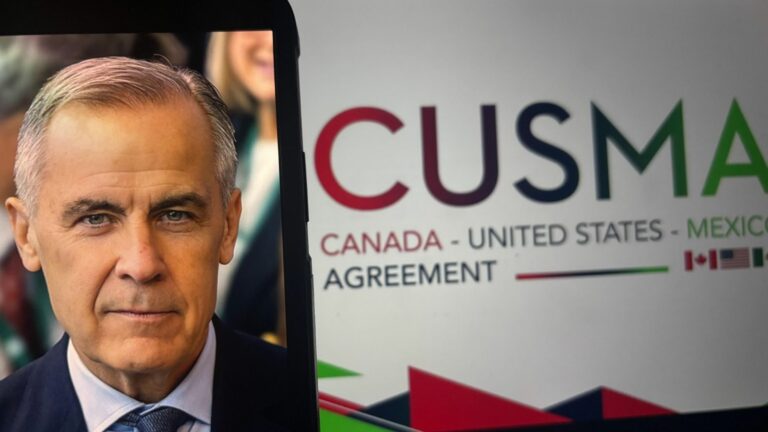
Confidence in the familiar Canada-U.S. economic relationship has fallen to a strikingly low level. A new Abacus Data poll finds only 17% of Canadians expect Canada, the United States and Mexico to ultimately renew or update CUSMA while maintaining a close trading relationship. Far more expect either a tougher, more restrictive version of continental trade or a deeper rupture that forces Canada to build economic relationships elsewhere.
The result lands at an unusually tense moment. The United States declined to extend CUSMA at its July 1, 2026 joint review, new U.S. tariffs have taken effect, Ottawa has suspended broader trade negotiations and Canadian countermeasures are approaching. Yet CUSMA itself remains legally in force, creating a widening gap between what the agreement still provides on paper and what Canadians increasingly expect from the relationship in practice.
The 17% Figure Marks a Sharp Loss of Confidence
Only 17% of Canadians Expect CUSMA to Survive With Close U.S. Trade Relationship: Poll
- The 17% Figure Marks a Sharp Loss of Confidence
- The Poll Captures a Country Expecting Structural Change
- CUSMA Is Still in Force — but Its Clock Is Running
- July 1 Changed the Political Meaning of the Agreement
- A More Restrictive CUSMA Is the Most Common Single Expectation
- Nearly Three in Ten Are Preparing for a Break
- The Undecided Quarter Matters More Than It Looks
- Canadians Have Given Ottawa Room to Reject a Bad Deal
- Few Expect the Immediate Dispute to End Cleanly
- Alberta Stands Out for Its Pessimism
- Age Differences Are Smaller Than the Overall Anxiety
- Partisan Divides Shape the Preferred Endgame
- Canadians Are Split on Whether U.S. Resource Gains Are a Problem
- Economic Integration Makes a Clean Break Hard to Imagine
- The Auto Sector Shows Why New Barriers Could Hurt Quickly
- Diversification Is Already Accelerating — but It Has Limits
- Business Wants Resilience Without Giving Up North America
The headline number is significant because it measures more than support for free trade. Only 17% of respondents expect CUSMA to be renewed or updated while Canada, the United States and Mexico continue to maintain a close trading relationship. Another 30% think the agreement will survive only with significant changes and more restrictions, while 29% expect it eventually to break down. Roughly one-quarter remain uncertain about what comes next.
That pessimism should not be mistaken for broad opposition to continental commerce. University of Calgary research released earlier in 2026 found 88% of Canadians supported having a trilateral free-trade agreement, while 73% supported closer economic cooperation with the United States. The contrast is revealing. Canadians can still see value in North American trade while becoming much less confident that the political conditions required to sustain the old relationship will survive. The 17% figure therefore looks less like a rejection of trade and more like a collapse in confidence in its predictability.
The Poll Captures a Country Expecting Structural Change
Abacus Data conducted its research online with 2,022 Canadian adults between August 21 and August 26, 2026, meaning responses were collected during one of the most consequential weeks in the recent trade confrontation. Participants were drawn from double opt-in partner panels, and the results were weighted using census data for age, gender, education and region. Abacus says a comparable probability-based sample would carry a margin of error of about 2.2 percentage points, 19 times out of 20.
Timing is particularly important. Respondents were not answering an abstract question about a possible future trade dispute. By then, Canada had suspended negotiations with Washington and the latest American tariffs were taking effect. That gives the CUSMA result a different character from polling conducted months earlier. Canadians were responding after seeing how quickly tariff threats could become actual trade barriers. In that environment, expectations about CUSMA increasingly reflect questions about economic security, reliability and the durability of agreements themselves.
CUSMA Is Still in Force — but Its Clock Is Running
One of the easiest points to misunderstand is that CUSMA did not expire when the United States declined to extend it at the July review. The agreement entered into force on July 1, 2020, with a 16-year term. Canada has confirmed that it remains fully operational through 2036 unless events lead to a different outcome. Canadian companies therefore continue to have access to the agreement’s existing rules and preferential North American market treatment where applicable.
What changed is the review path. CUSMA allowed the three countries to extend the agreement for another 16 years at the six-year joint review if they agreed by consensus. Canada and Mexico supported renewal on July 1, 2026, while the United States did not. Without consensus, the countries now move into annual reviews. They can still agree to a new 16-year extension at a later review. That means 2036 is not an imminent cliff, but uncertainty can persist year after year if the parties fail to reach agreement.
July 1 Changed the Political Meaning of the Agreement
The July 1 review was designed as a formal check on how CUSMA had operated during its first six years. Instead of providing another long runway for North American businesses, it produced an open-ended period of annual reconsideration. The U.S. Trade Representative publicly stated that Washington would not renew the agreement in its current form. Canada, meanwhile, emphasized that CUSMA remained in force and that Ottawa remained committed to securing its renewal.
For businesses, the distinction between legal access and political certainty matters enormously. A factory can technically enjoy CUSMA treatment today while management simultaneously questions whether future rules of origin, tariffs or sectoral provisions will look the same several years from now. Investment decisions in automotive manufacturing, energy infrastructure or advanced manufacturing often involve horizons measured in decades, not months. The review outcome therefore did not immediately close the border or erase CUSMA preferences, but it weakened one of the agreement’s most valuable qualities: the expectation that continental rules would remain comparatively stable.
A More Restrictive CUSMA Is the Most Common Single Expectation
The largest individual group in the Abacus poll, 30%, expects CUSMA to survive but with significant changes and tighter restrictions on trade. That scenario may be easier to imagine than either a return to the old relationship or complete termination. Washington has already identified disputes involving sectors and policies ranging from dairy and automobiles to digital services, government procurement and other market-access issues. Steel and aluminum have also remained prominent sources of friction.
Canadian stakeholders have warned against moving in exactly that direction. Global Affairs Canada’s consultations ahead of the review found strong support for preserving predictable, tariff-free North American market access. Businesses also cautioned that tougher rules of origin, unexpected tariffs and more complicated border procedures could raise costs and undermine investment. A narrower CUSMA would therefore still offer valuable market access, but it could look substantially different in practice. Companies might face more documentation, more sector-specific restrictions and more frequent disputes over which products qualify for preferential treatment.
Nearly Three in Ten Are Preparing for a Break
Another 29% of Canadians believe CUSMA will ultimately break down and that Canada will need to construct a different economic relationship with the United States and other countries. That is an extraordinary share for a country whose economic development has been deeply connected to progressively freer continental trade since the original Canada-U.S. Free Trade Agreement entered into force in 1989 and NAFTA followed in 1994.
The finding is consistent with other recent polling. In an Abacus poll conducted August 7–12, 55% said Canada should prepare to move on from CUSMA and strengthen trade relationships with other countries, compared with 34% who preferred continuing to work primarily on preserving and updating the North American agreement. That does not necessarily mean Canadians want to abandon the U.S. market. Geography, infrastructure and decades of investment make such a shift unrealistic in the near term. Instead, the results suggest growing support for reducing the economic risk created when one market carries overwhelming influence over Canadian exports.
The Undecided Quarter Matters More Than It Looks
About one-quarter of respondents did not know what future to expect for CUSMA. In ordinary political polling, uncertainty can sometimes be treated as background noise. In a trade dispute, however, uncertainty is itself economically meaningful. Companies delay factories, exporters reconsider contracts and households become more cautious when the rules governing major markets appear unstable. A population unsure where the country’s most important commercial relationship is heading reflects the same uncertainty confronting boardrooms and policymakers.
The uncertainty is understandable because CUSMA can still be extended. Annual reviews give Canada, Mexico and the United States repeated opportunities to reach a consensus before 2036. At the same time, current tariff measures show that significant trade barriers can emerge even while the agreement formally remains alive. Canadians are therefore being asked to evaluate two realities simultaneously: the legal framework continues to exist, but the broader economic relationship has become substantially less predictable. That makes the undecided group an important indicator of how unsettled the environment remains.
Canadians Have Given Ottawa Room to Reject a Bad Deal
The same Abacus research found 71% supported the Canadian government’s decision to suspend negotiations rather than accept the terms being offered by Washington, even though respondents were explicitly reminded that doing so could result in higher tariffs and greater economic uncertainty. Only 17% said Ottawa should have accepted the terms. Support for the decision also crossed partisan boundaries, including a majority of respondents who reported voting Conservative in the 2025 federal election.
That political space has become important because the economic cost is no longer theoretical. The United States imposed 50% tariffs on $27.6 billion worth of Canadian goods effective August 22. Ottawa responded by announcing counter-tariffs covering an equivalent $27.6 billion in U.S. imports, scheduled to begin September 8, with rates of 15%, 25% and 50% depending on the product. Canada also announced $7.5 billion in new and enhanced support for affected businesses and workers. Canadians are therefore backing a firm negotiating stance while increasingly recognizing that firmness carries a real price.
Few Expect the Immediate Dispute to End Cleanly
Canadians are not particularly confident that the current confrontation will disappear quickly. Only 15% in the Abacus poll expected Canada and the United States to return to negotiations and reach an agreement within days that removed most new tariffs. Another 32% expected the dispute to drag on before an eventual deal. Together, those responses left 47% expecting some form of agreement, but usually not an immediate one.
On the other side, 22% expected the dispute to escalate through additional tariffs or other measures, while 18% thought it could become a lasting feature of the bilateral relationship, potentially contributing to CUSMA’s eventual end. That makes the near-term outlook almost as divided as the longer-term one. Businesses trying to price goods, schedule production or sign contracts face a difficult environment when neither resolution nor escalation commands a clear majority expectation. The public appears to be preparing for prolonged instability rather than assuming another last-minute compromise will restore the previous trading environment.
Alberta Stands Out for Its Pessimism
Regional differences reveal how trade exposure does not necessarily translate into confidence. According to Abacus, 41% of Albertans expect CUSMA eventually to break down, the highest proportion of any region measured. Only 12% expect renewal or an update that preserves the close trading relationship. In British Columbia, 32% expect breakdown, compared with 29% in Ontario and 24% in Quebec and Saskatchewan-Manitoba.
Alberta’s pessimism is especially notable because the province sits at the centre of one of North America’s most integrated industries. Canada Energy Regulator data show Canada exported $157.5 billion worth of crude oil, refined petroleum products, natural gas and natural gas liquids to the United States in 2025. Canada supplied 63.4% of U.S. crude-oil imports and nearly all U.S. natural-gas imports. Much of that trade begins in Western Canada. For communities built around energy production, continental integration is not an economic theory; it is visible in pipelines, employment, investment decisions and government revenues.
Age Differences Are Smaller Than the Overall Anxiety
Expectations about CUSMA vary by age, but no generation displays particularly strong confidence in a return to the traditional relationship. Only 16% of respondents aged 18 to 29, 30 to 44, and 45 to 59 expected CUSMA to be renewed or updated while maintaining close trade ties. Among respondents aged 60 and older, the figure was only slightly higher at 18%.
Younger Canadians were more likely to expect CUSMA to survive in a more restrictive form: 37% of those aged 18 to 29 selected that outcome. Adults aged 45 to 59 were the most likely to anticipate an eventual breakdown, at 32%. The differences are meaningful but relatively modest beside the larger finding that optimism is weak across every age bracket. That broad distribution suggests anxiety about the trading relationship is not limited to people who remember earlier trade battles or, alternatively, to younger adults shaped by recent instability. It has spread across generations.
Partisan Divides Shape the Preferred Endgame
Political affiliation produces differences, although none of the major voter groups appears highly confident in preserving the current model. Among respondents who reported voting Liberal in 2025, 19% expected CUSMA to be renewed or updated with a close trading relationship. The comparable figures were 16% among Conservatives, 13% among New Democrats and 18% among Bloc Québécois voters.
Conservative voters were the most likely to expect complete breakdown, at 35%, compared with 27% of Liberals and 26% of New Democrats. Yet earlier Abacus research found Conservatives were also more inclined than other partisan groups to keep trying to preserve the agreement. That apparent tension is revealing: expecting an agreement to fail is not the same as wanting it to fail. Across the electorate, Canadians can disagree over negotiating tactics, concessions and diversification while sharing a remarkably low level of confidence that the established Canada-U.S. trade model will simply return to normal.
Canadians Are Split on Whether U.S. Resource Gains Are a Problem
The poll also tested a deeper question about how Canadians view mutual economic benefit. When asked whether an arrangement that allows the United States to benefit more from Canadian natural resources is inherently bad even when Canada benefits too, respondents divided almost perfectly. Forty-two percent accepted the idea that U.S. gains do not matter if Canada also benefits, while another 42% regarded disproportionate American benefit as a problem. Fifteen percent were unsure.
That split matters because resources are at the core of the bilateral relationship. Canada provided 63.4% of American crude-oil imports in 2025, nearly 100% of its imported natural gas, 97.9% of imported natural-gas liquids and more than 81% of imported electricity. These flows create revenue and employment in Canada while also strengthening U.S. energy security. The political challenge is therefore not simply deciding whether cooperation is useful. It is persuading Canadians that the benefits are sufficiently balanced, reliable and protected from sudden policy changes.
Economic Integration Makes a Clean Break Hard to Imagine
However pessimistic Canadians have become, the scale of the commercial relationship makes rapid economic separation highly improbable. Global Affairs Canada says roughly C$3.5 billion worth of goods and services crossed the Canada-U.S. border every day in 2025. The United States also remained the largest source of foreign direct investment stock in Canada and the largest destination for Canadian direct investment abroad.
Statistics Canada data underline how concentrated the relationship remains even after recent diversification. The U.S. accounted for 71.7% of Canada’s merchandise exports in 2025, down from 75.9% in 2024. Canada’s annual merchandise trade surplus with the United States was still $81.6 billion. For individual exporters, the implications can be even more dramatic. A manufacturer in southern Ontario or an energy producer in Alberta cannot necessarily replace an American buyer with a European or Asian customer overnight. Logistics, product standards, established supply chains and simple geography keep the two economies deeply connected regardless of the political climate.
The Auto Sector Shows Why New Barriers Could Hurt Quickly
Few industries demonstrate North American integration more clearly than automotive manufacturing. Statistics Canada reported that 94.1% of Canada’s domestic exports of motor vehicles and parts went to the United States in 2024. The federal government’s 2026 auto strategy similarly noted that more than 90% of Canadian-made vehicles and roughly 60% of Canadian-made auto parts were being exported to the American market.
That dependence developed because Canadian and American auto manufacturing operates as a regional system rather than two isolated national industries. Components can move across the border repeatedly before a finished vehicle reaches a dealership. Tariffs or tougher origin rules therefore risk affecting the same production chain multiple times, adding costs that eventually reach automakers, suppliers, workers or consumers. This helps explain why the prospect of a more restrictive CUSMA matters even if the agreement technically survives. The difference between open and heavily conditioned market access can determine where future vehicle programs, battery investments and supplier contracts are placed.
Diversification Is Already Accelerating — but It Has Limits
Canada is not starting its diversification push from zero. Statistics Canada found merchandise exports to the United States declined in 2025 while shipments elsewhere rose substantially. On a customs basis, domestic goods exports to non-U.S. markets increased by $27.6 billion, or 15.8%. Global Affairs Canada’s 2026 State of Trade report found non-U.S. markets accounted for 32.8% of Canada’s total exports in 2025, their highest share in more than four decades.
Ottawa has set a goal of doubling non-U.S. exports over the next decade, with government plans emphasizing infrastructure, new trade agreements and expanded commercial relationships in Europe and the Indo-Pacific. Yet diversification is easier in some sectors than others. Statistics Canada has noted that steel, softwood lumber, automobiles and parts remain deeply embedded in North American networks. Canada can sell more energy, minerals, food, services and manufactured products overseas without quickly reproducing the enormous industrial ecosystem that already exists across the U.S. border.
Business Wants Resilience Without Giving Up North America
Canadian business and industry feedback provides an important counterweight to the bleakest interpretations of the poll. Global Affairs Canada received 5,143 submissions during its 2025 CUSMA consultations, including input from businesses, industry associations, labour organizations, provinces and territories, individuals and civil-society groups. Participants broadly emphasized preserving predictable, tariff-free, rules-based access across North America while also reducing Canada’s vulnerability through greater trade diversification.
That may be the most realistic reading of the 17% result. Canadians are not necessarily choosing between the United States and the rest of the world. Increasingly, they appear to want both continued access to the world’s largest economy next door and enough alternatives to make sudden American policy changes less damaging. CUSMA remains alive, annual reviews create opportunities for extension, and economic integration still gives every country powerful incentives to reach workable arrangements. What has changed is confidence. The political challenge is no longer merely preserving a trade agreement; it is rebuilding enough predictability that Canadians believe close continental trade can once again be relied upon.
This Options Discord Chat is The Real Deal
While the internet is scoured with trading chat rooms, many of which even charge upwards of thousands of dollars to join, this smaller options trading discord chatroom is the real deal and actually providing valuable trade setups, education, and community without the noise and spam of the larger more expensive rooms. With a incredibly low-cost monthly fee, Options Trading Club (click here to see their reviews) requires an application to join ensuring that every member is dedicated and serious about taking their trading to the next level. If you are looking for a change in your trading strategies, then click here to apply for a membership.